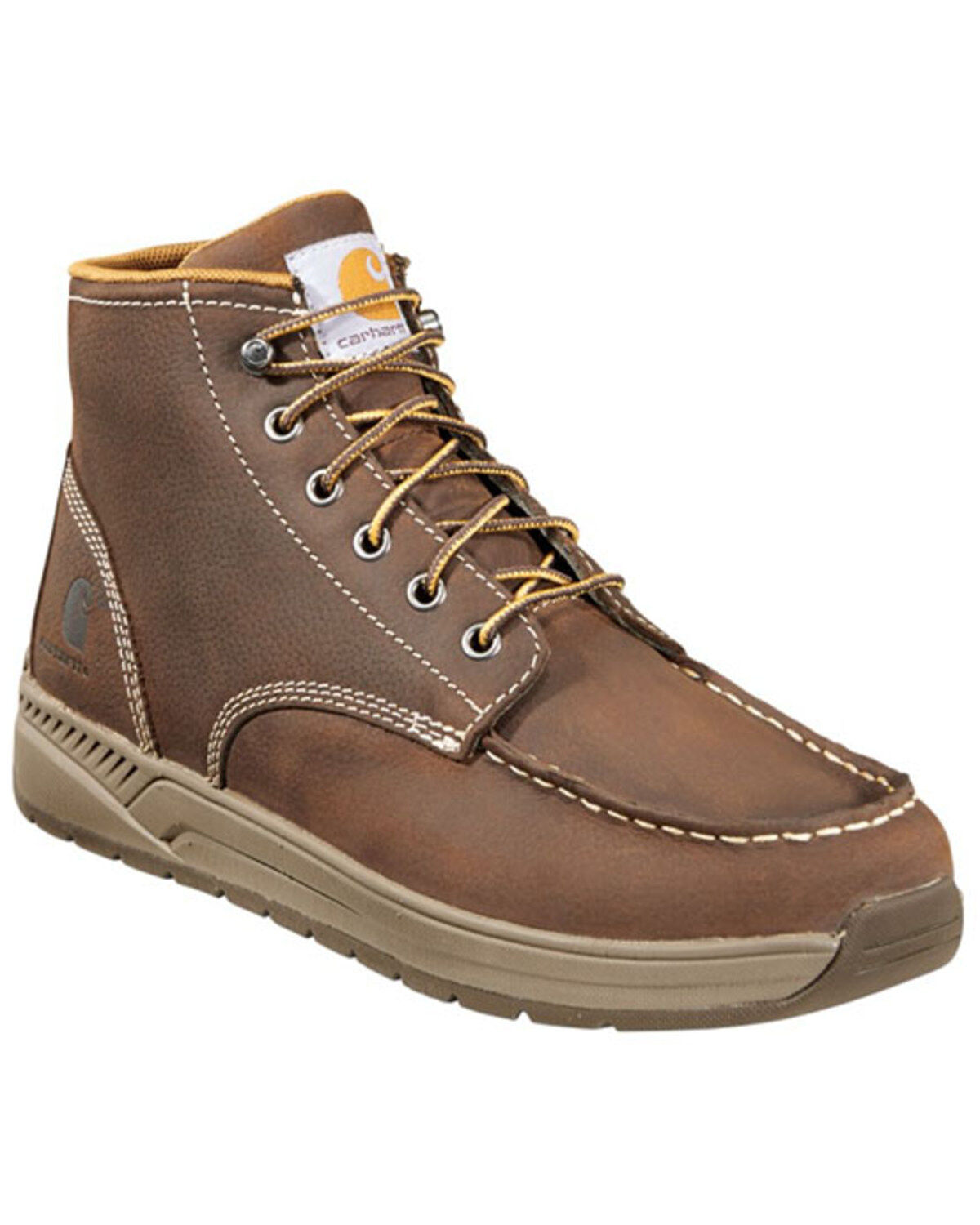
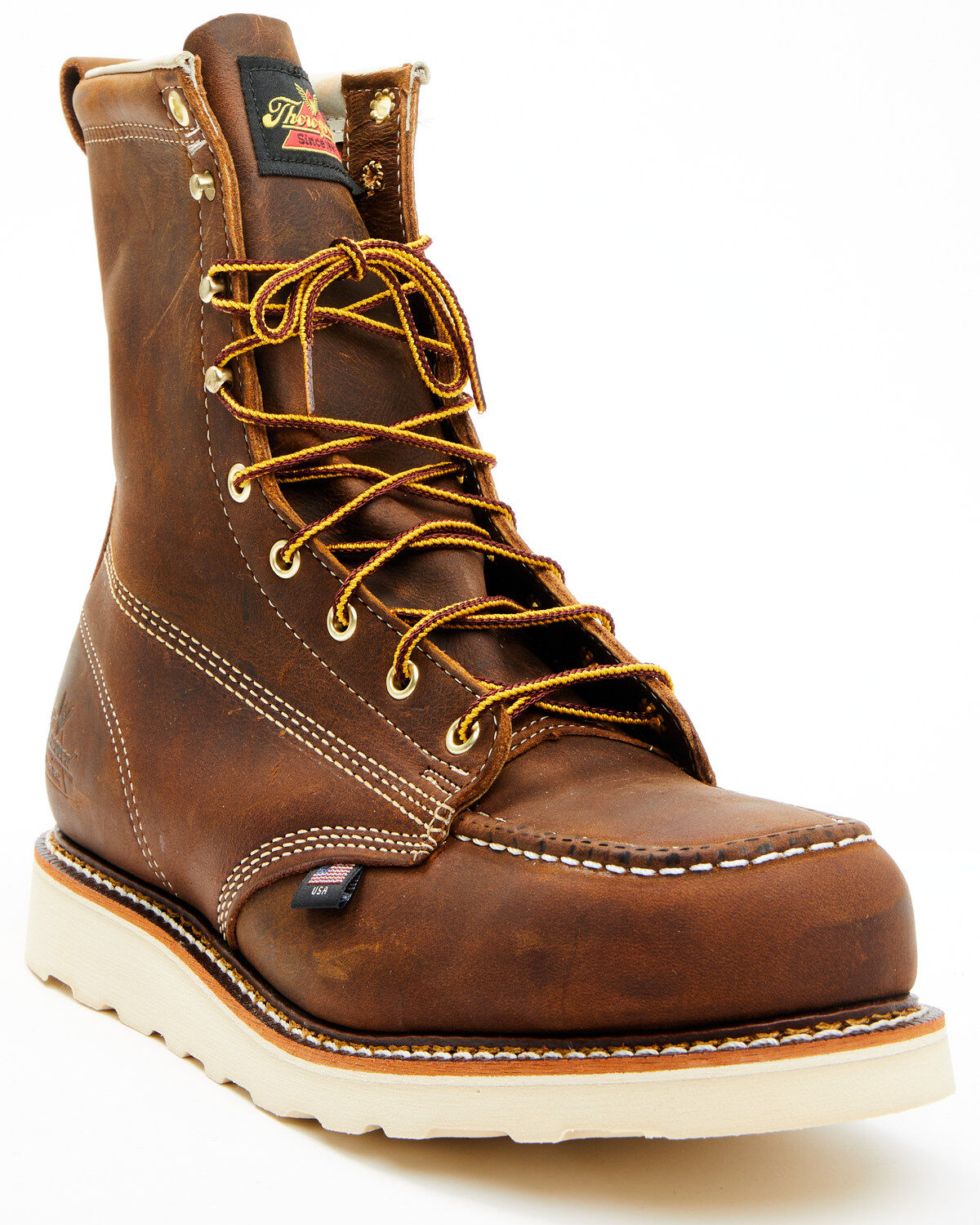
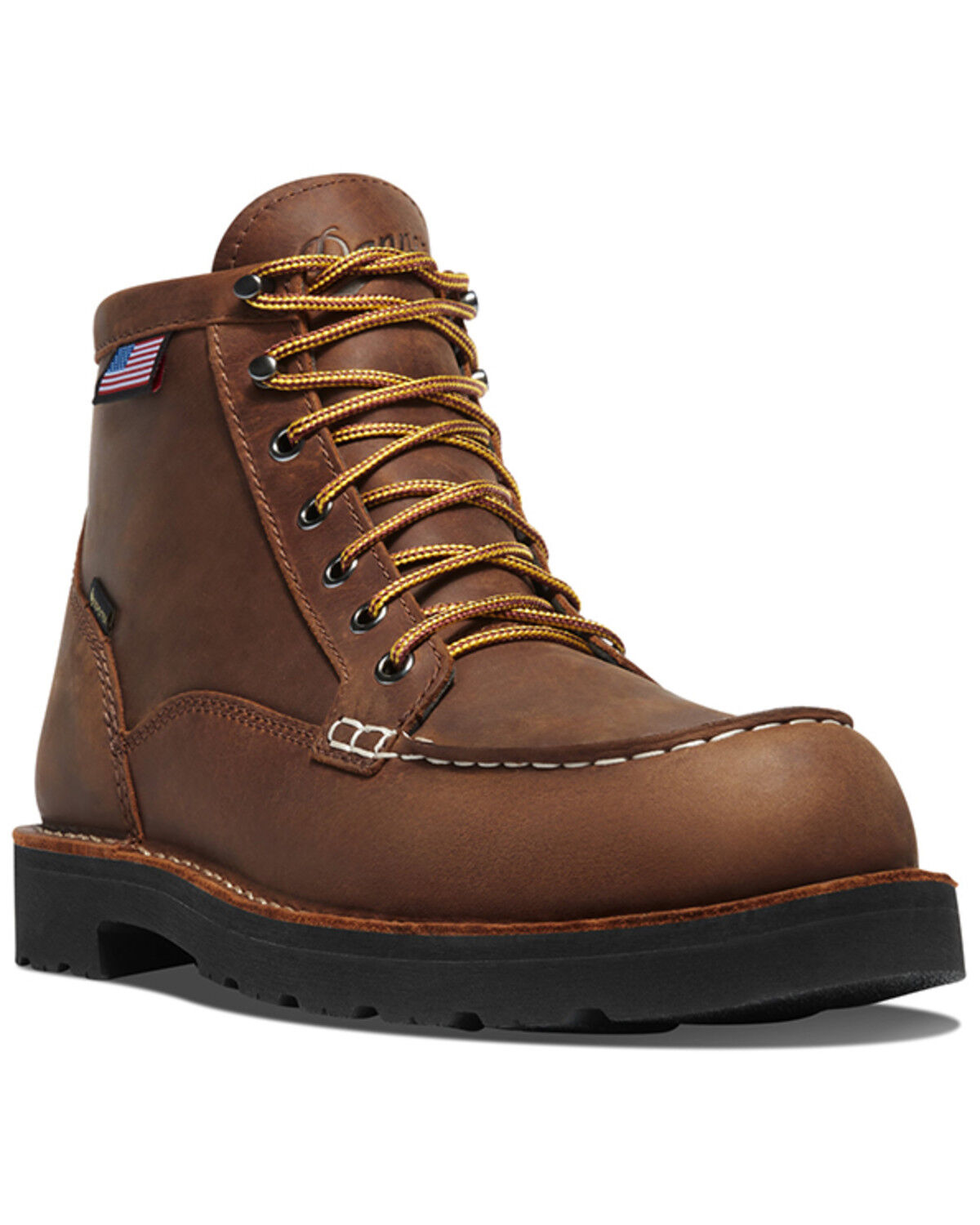
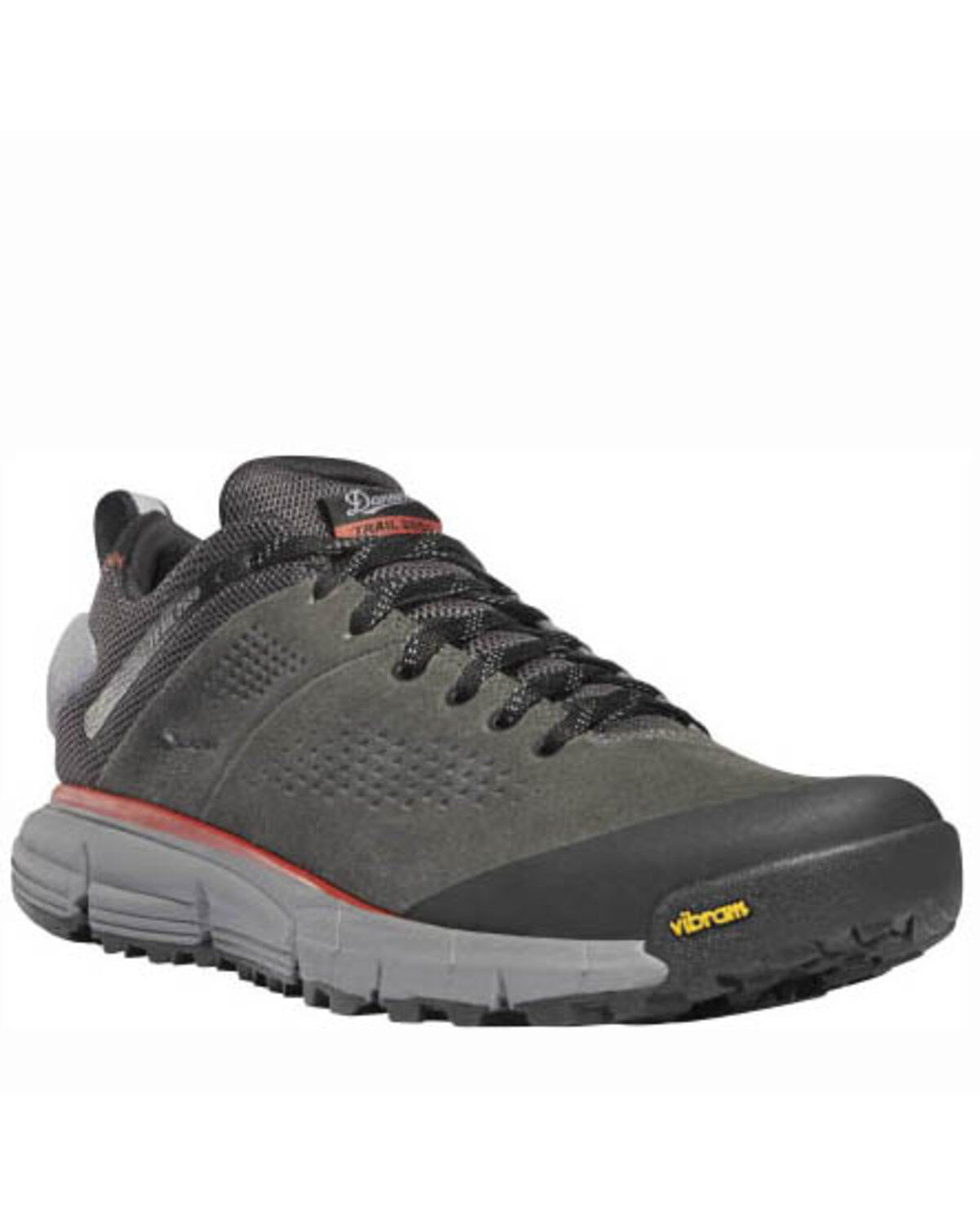
Men's Moc Toe Work Boots

Find men's moc toe work boots with the distinctive stitching that defines this classic workwear style. Browse the selection and compare sizing and listed features to choose a pair that fits your feet and meets your workplace requirements.

Read More

Shop Your Store: Shop Your Store: Find a Store

(Turn off Shop Your Store to see all items)

(Turn off Shop Your Store to see all items)

close
  • Recommended
  • Lowest Price
  • Highest Price
Skip pass products

End of products

Men's Moc Toe Work Boots

Men’s moc toe work boots are defined by the U-shaped stitching around the top of the toe, a detail drawn from moccasin construction. That raised seam gives the boots their recognizable shape, while the leather, sole, lining, and construction determine how they perform on the job. The style is a familiar choice for carpenters, plumbers, warehouse workers, and others who spend long stretches standing, walking, or working with their hands. A moc toe can offer a generous-looking forefoot, but the stitched shape alone does not guarantee extra room or flexibility. Those qualities depend on the boot’s design and fit. Leather uppers provide a sturdy outer layer that can gradually soften with wear, while reinforced stitching and well-built attachment points help withstand repeated bending and movement. Full-grain leather retains the hide’s natural surface and can develop character with regular use and proper care. Other leather finishes offer different textures and maintenance needs. Underfoot, wedge soles and defined-heel soles serve different purposes. A wedge sole has a broad contact area and is often favored for steady footing on concrete floors and other relatively level surfaces. Its shape can also leave fewer spaces for loose debris to collect beneath the arch. A defined heel creates a more pronounced step between the heel and forefoot, and deeper tread patterns may be better suited to uneven ground. Neither profile is right for every task. Floor surfaces, climbing requirements, and the amount of walking involved all matter. Boot height changes the feel as well: a shorter shaft leaves less material around the lower leg, while a taller shaft adds coverage and more lacing adjustment. For someone moving between a workshop floor, a delivery area, and an active jobsite, these construction details matter more than appearance alone. A dependable pair starts with a sole, upper, and overall build suited to the work.

Protection is a separate consideration from the moc toe design. Soft toe work boots do not contain a protective safety cap, and decorative toe stitching does not provide impact or compression protection. When a job calls for a steel safety toe, Moc Steel Toe Boots bring that protective construction to the same familiar silhouette. Any required protection should be confirmed in the boot’s specifications and safety markings, including the applicable ASTM standard and the employer’s requirements. Electrical hazard protection, puncture resistance, and slip resistance are separate features, not automatic benefits of a work boot or a particular toe material. An electrical hazard rating is not permission to work on energized equipment, and a slip-resistant outsole still requires care around oil, dust, and other floor contaminants. For work involving frequent water exposure, waterproof construction can help limit water entry, although the lining, seams, and condition of the boot affect performance. Fit deserves the same attention as safety features. Work socks take up space, and the socks worn on the job should be part of the fitting process. The heel should feel secure without excessive lifting, the midfoot should feel supported rather than squeezed, and the toes should have room to move without striking the front. A safety cap will not stretch like leather, so pressure against the toes is not something to dismiss as a break-in issue. Width matters as much as length, particularly across the ball of the foot. Feet can also become fuller after hours of standing, making the end of a normal workday a useful time to assess fit. Insoles influence both cushioning and available interior space; adding a thick insert can make an otherwise suitable boot too tight. Cushioning can soften repeated steps on hard floors, while a supportive footbed helps maintain a stable feel. The right balance depends on the wearer, the surface, and how much of the day is spent standing still versus walking, crouching, or carrying materials.

Long service life comes from sound construction, appropriate use, and regular care. Leather moc toe work boots benefit from having loose dirt brushed away before it works into seams and creases. The raised stitching around the toe deserves particular attention because grit can settle along that edge. A soft brush or damp cloth handles routine cleaning, while heavier buildup may call for a cleaner intended for the leather’s finish. Conditioning helps keep suitable leathers from becoming dry and stiff, but too much product can leave buildup or change the appearance. Suede and nubuck need treatments made for their surfaces rather than the same care used on smooth leather. Wet boots should dry naturally with airflow, away from direct heat that can damage leather and adhesives. Removing removable insoles can help the inside dry more thoroughly between wears. Rotating pairs also gives linings and footbeds more time to release moisture from daily use. Outsoles need attention beyond an occasional cleaning: worn tread, uneven heel wear, or separation at the sole can change how securely a boot meets the ground. Damaged uppers, exposed safety components, and persistent instability are reasons to assess whether a pair still belongs on the job. Some welted constructions allow professional resoling, though repair options depend on the boot’s design and condition. Laces, eyelets, and hooks are smaller parts worth checking because they keep the fit secure through repeated bending and pulling. For a gift, the most useful details are the recipient’s size, width, required safety features, and preferred sole shape. A worker who stands on a smooth shop floor may want something different from someone who crosses rough ground all day. Men’s moc toe work boots have a straightforward appearance, but their real value rests in the details that support a full day’s work: a secure fit, suitable protection, dependable traction, and materials that can be maintained.
Read More

FAQs