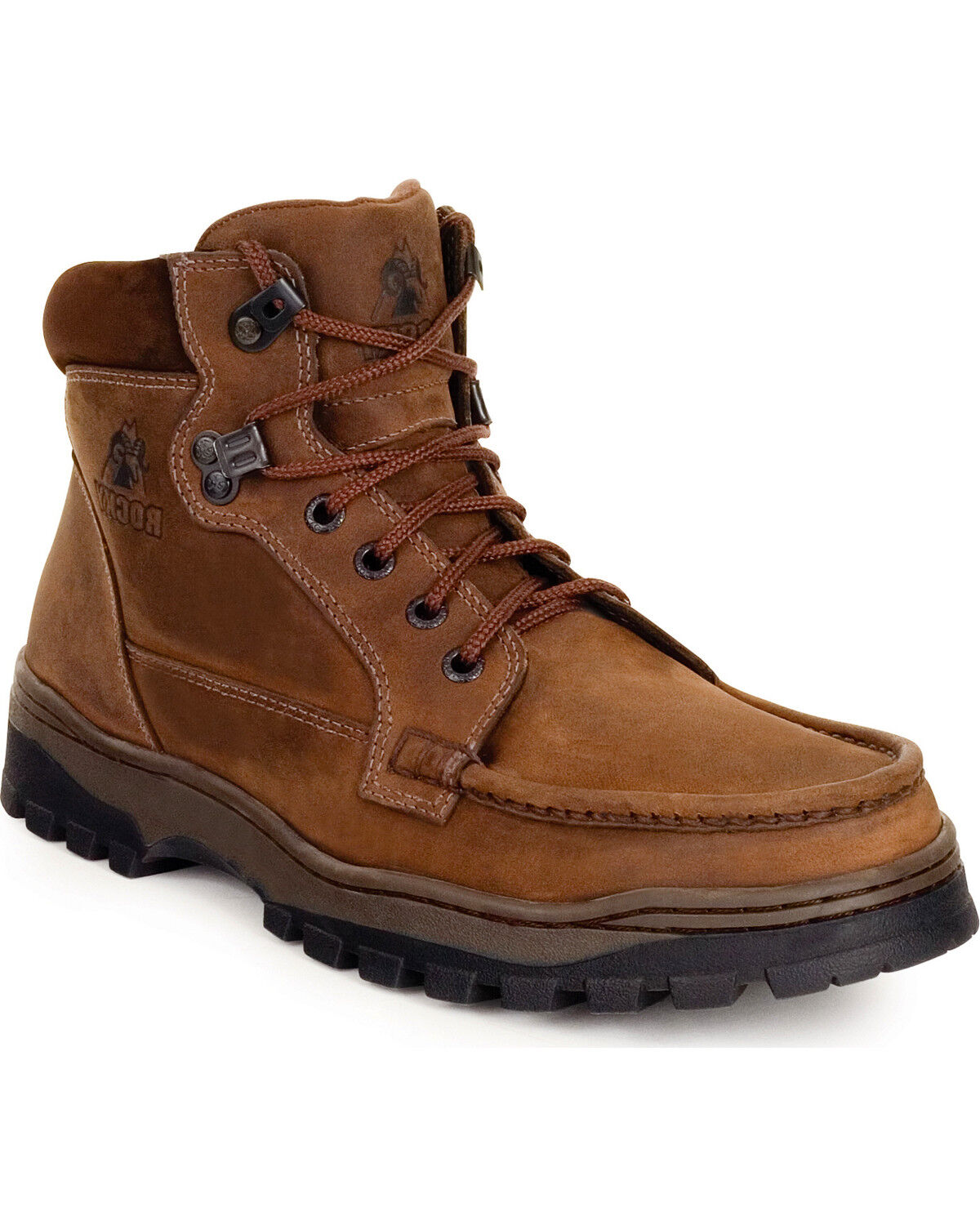
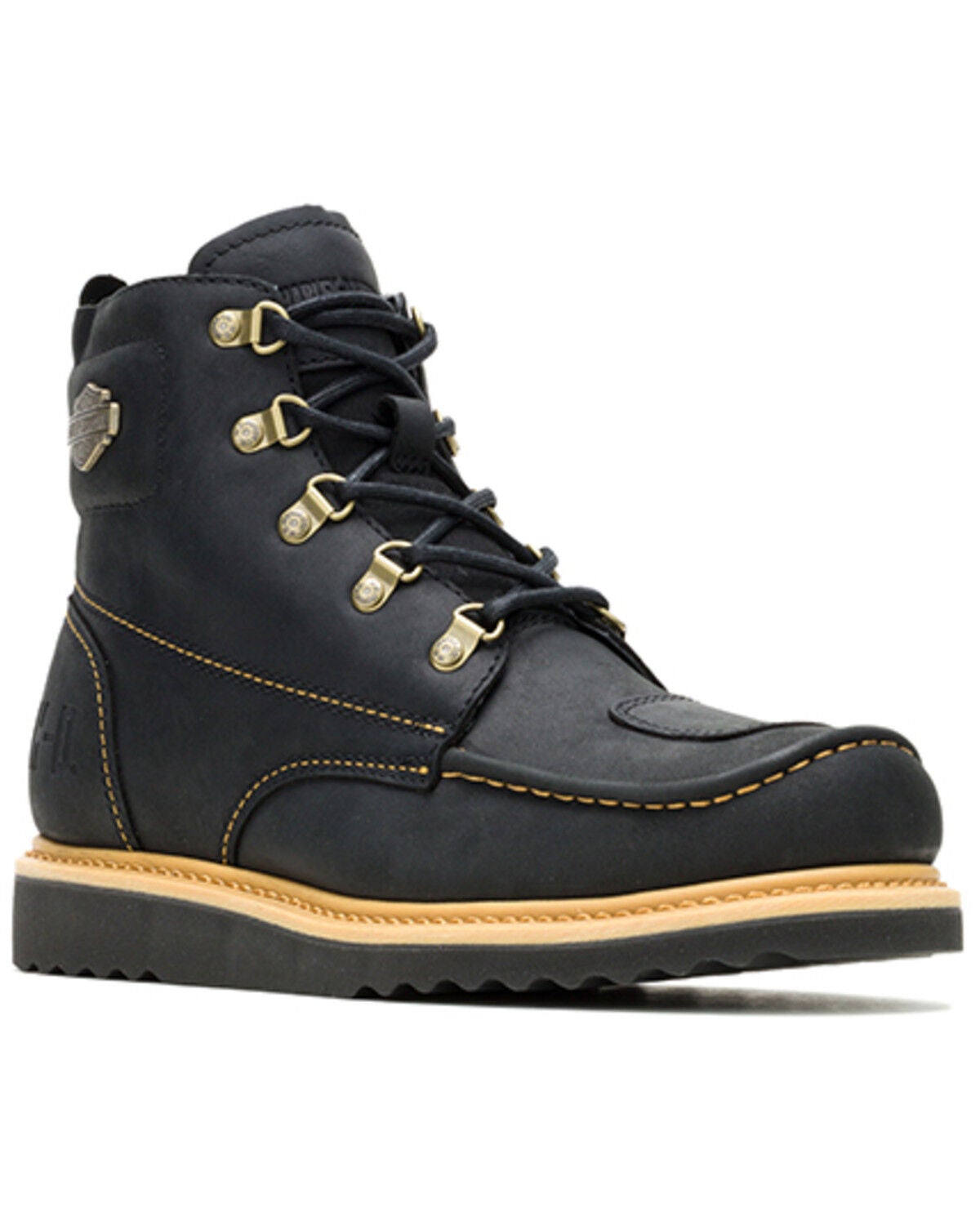
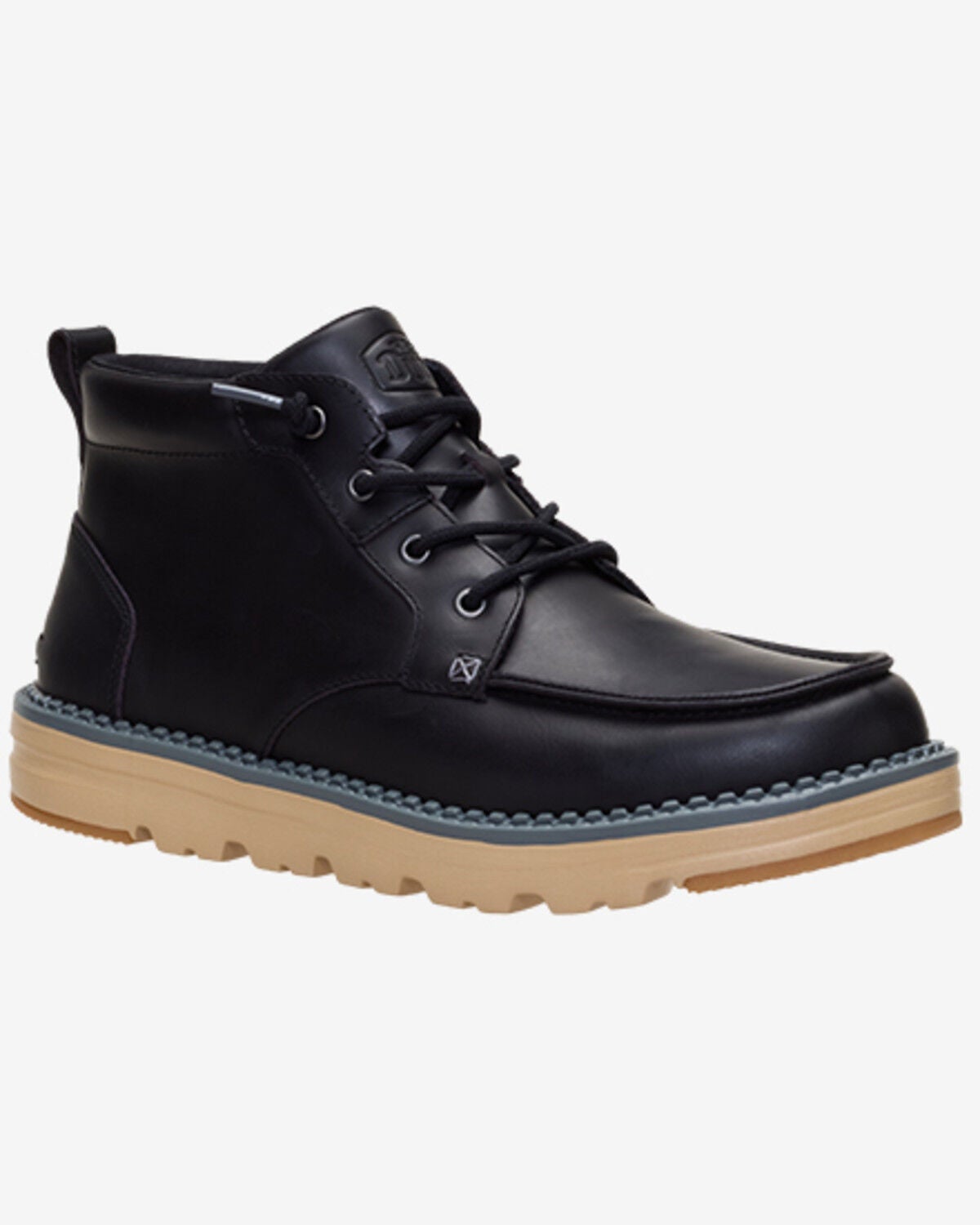
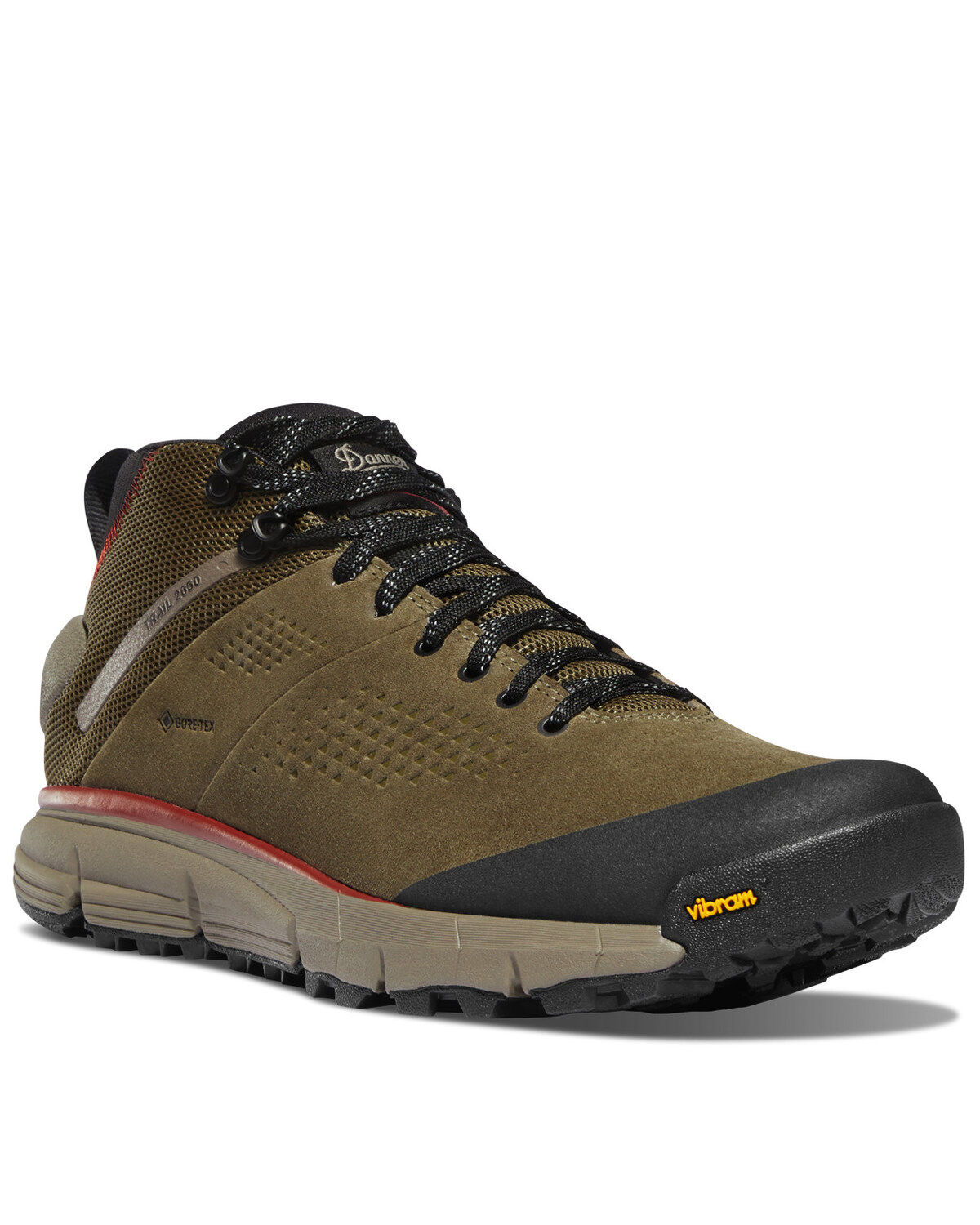
Men's Moc Toe Hiking Boots

Find men’s moc toe hiking boots with the distinctive toe stitching of a moc toe design in footwear made for hiking. Compare the available styles and check each pair’s fit, traction, and support features to find the right match for your time outdoors.

Shop Your Store: Shop Your Store: Find a Store

(Turn off Shop Your Store to see all items)

(Turn off Shop Your Store to see all items)

close
  • Recommended
  • Lowest Price
  • Highest Price
Skip pass products

End of products

Men's Moc Toe Hiking Boots

Men’s moc toe hiking boots bring a familiar stitched-toe profile to footwear built for time on the trail and beyond it. The raised seam around the front gives these boots their distinctive look, but the construction beneath that seam matters just as much. Toe shape alone does not determine traction, support, or how a boot handles uneven ground. For walks along packed dirt paths, gravel access roads, and established trails, the combination of outsole tread, underfoot cushioning, and a secure fit makes the difference. Deeper, spaced lugs can help grip loose surfaces and release debris, while a flatter outsole may feel more natural on pavement and firm paths. A broad contact area can feel steady underfoot, though it should not be mistaken for the grip needed on steep, rocky routes. Leather uppers offer a substantial feel and can develop character with regular wear. Full-grain leather generally keeps more of the hide’s original surface, while nubuck has a brushed texture that calls for different care. Textile panels can reduce overall weight and allow more flexibility, depending on the design. Interior linings also affect comfort, especially over several hours of walking. A waterproof membrane is a separate feature from a leather treatment that resists moisture, and the two should not be treated as interchangeable. Boot height is another practical distinction. A taller collar provides more coverage around the ankle, but height alone does not guarantee a supportive fit. Padding, heel structure, and lacing all influence how securely the boot sits against the foot. Men’s moc toe hiking boots can suit a morning walking the property, an afternoon at a campground, or a day that moves between town and a nearby trail. More demanding routes call for closer attention to the entire design, not just the rugged appearance. Hiking footwear is also separate from protective work footwear; a moc toe seam does not indicate a safety toe or a workplace safety rating.

Fit deserves particular attention in men’s moc toe hiking boots because a comfortable stance in place does not always translate to comfortable miles. The forefoot needs enough room for the toes to spread without sliding from side to side. A moc toe profile can look roomy, but the actual space depends on the last, which is the form used to shape the boot. Width, instep volume, and heel shape vary independently, so going up in length is not always the answer to a tight forefoot. A secure heel helps limit rubbing, while adequate space ahead of the toes becomes especially important on descents. The socks worn with the boots are part of that fit. A thicker hiking sock takes up more room than a thin everyday sock, and raised seams can become noticeable over a longer walk. An aftermarket footbed can change the interior space as well, particularly across the instep and around the heel. Lace-up construction allows adjustment through different parts of the foot, helping balance a snug midfoot with comfortable pressure across the toes. Padded tongues can soften contact from the laces, but overtightening is not a substitute for the right size and width. Underfoot, cushioning and structure serve different purposes. A softer footbed may feel comfortable immediately, while a firmer midsole can provide a steadier platform over uneven surfaces. Neither feel is automatically better for every wearer. The right balance depends on walking distance, terrain, and whether the day involves carrying a pack. A lighter boot can reduce the effort of repeated steps, while a more substantial build may provide the structure a wearer prefers. Leather may soften and flex with use, but break-in should not be expected to correct pinched toes, numbness, or persistent heel movement. Flex through the forefoot should also feel natural, allowing the foot to bend without forcing the heel to lift excessively.

Durability in men’s moc toe hiking boots comes from several parts working together: the upper, stitching, sole attachment, outsole compound, and the care the boots receive. Reinforcement around high-contact areas can help limit wear from repeated scuffs, while sound stitching helps the upper hold its shape. The visible moc toe seam deserves attention during cleaning because dust and grit can collect along its edges. Stitched and bonded sole constructions each have practical strengths, and a visible welt does not automatically mean a boot can be resoled. Repair options depend on the full construction and the condition of the upper. Regular care starts with removing loose dirt using a brush suited to the material. Smooth leather, nubuck, suede, and textile panels do not all respond well to the same cleaners or treatments. Leather conditioner can help suitable leather stay supple, but too much can alter its feel and appearance. Brushed leather generally needs products intended to preserve its texture rather than a heavy coating designed for smooth leather. After cleaning, boots need time to dry away from direct heat, which can damage leather and adhesives. Removable footbeds can be aired separately, and dry storage helps protect the lining between wears. Outsole wear matters as much as the condition of the upper; rounded tread edges and uneven wear can change how a boot feels on the trail. For a broader range of lace-up footwear for time outside, the Mens Outdoor Lace Up Boots collection offers another place to compare styles and construction. As a gift, moc toe hiking boots make the most sense when the recipient’s size, width, and usual activities are known. Someone who walks gravel paths with a dog may prefer a different balance of weight and tread than someone who regularly carries a pack over rocky ground. The most useful choice matches the wearer’s actual routine, with enough comfort for the distance and enough structure for the ground ahead.

FAQs