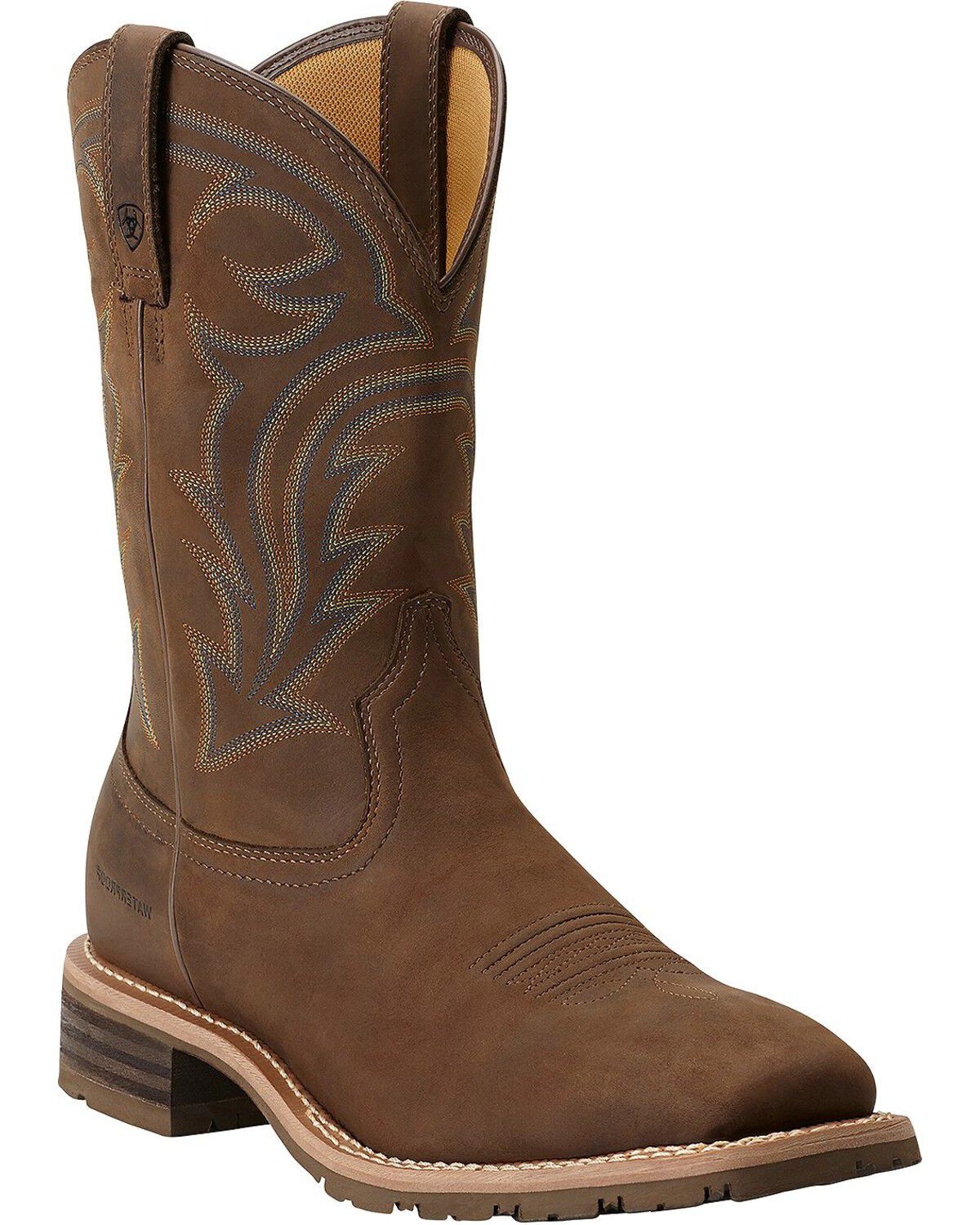
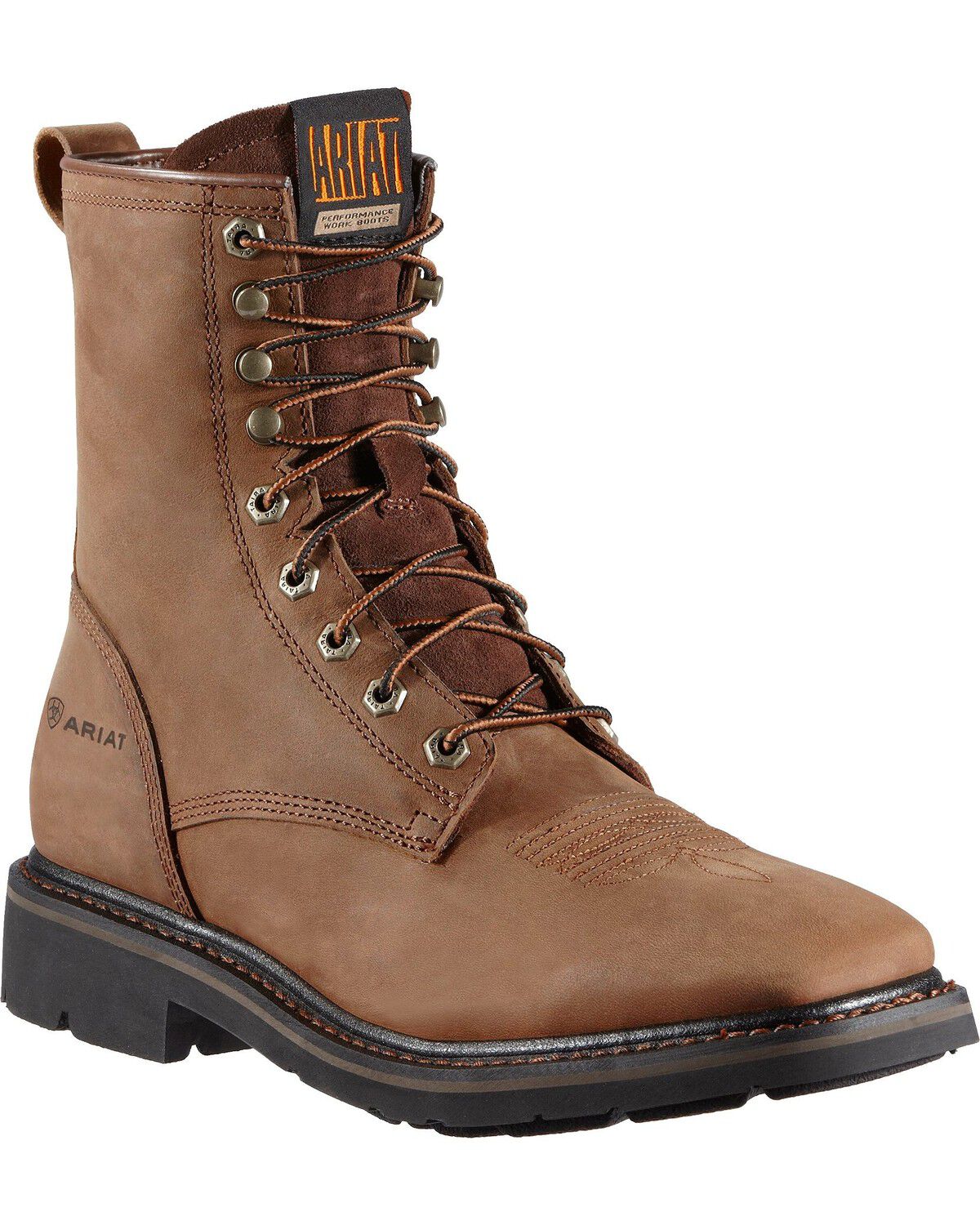
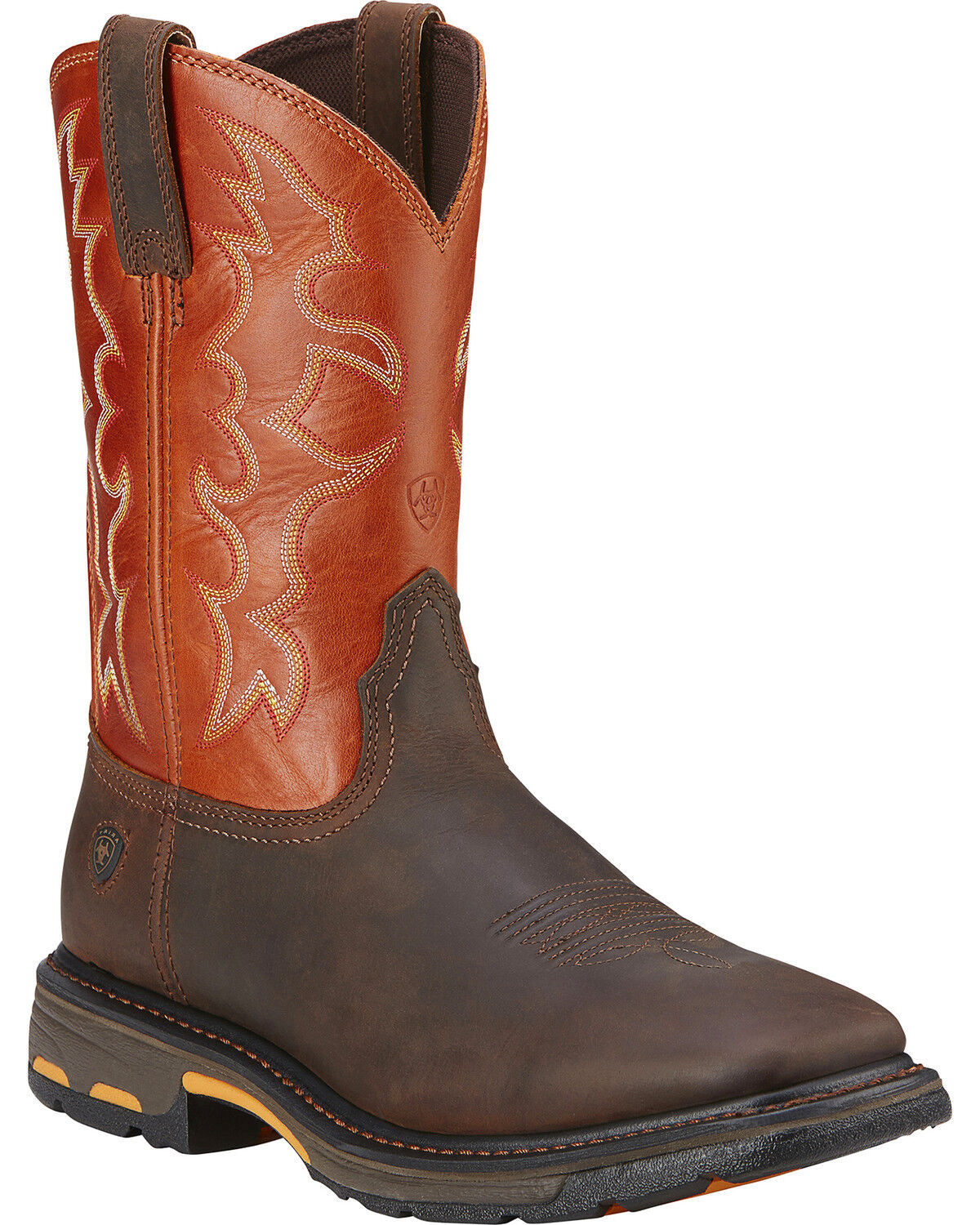
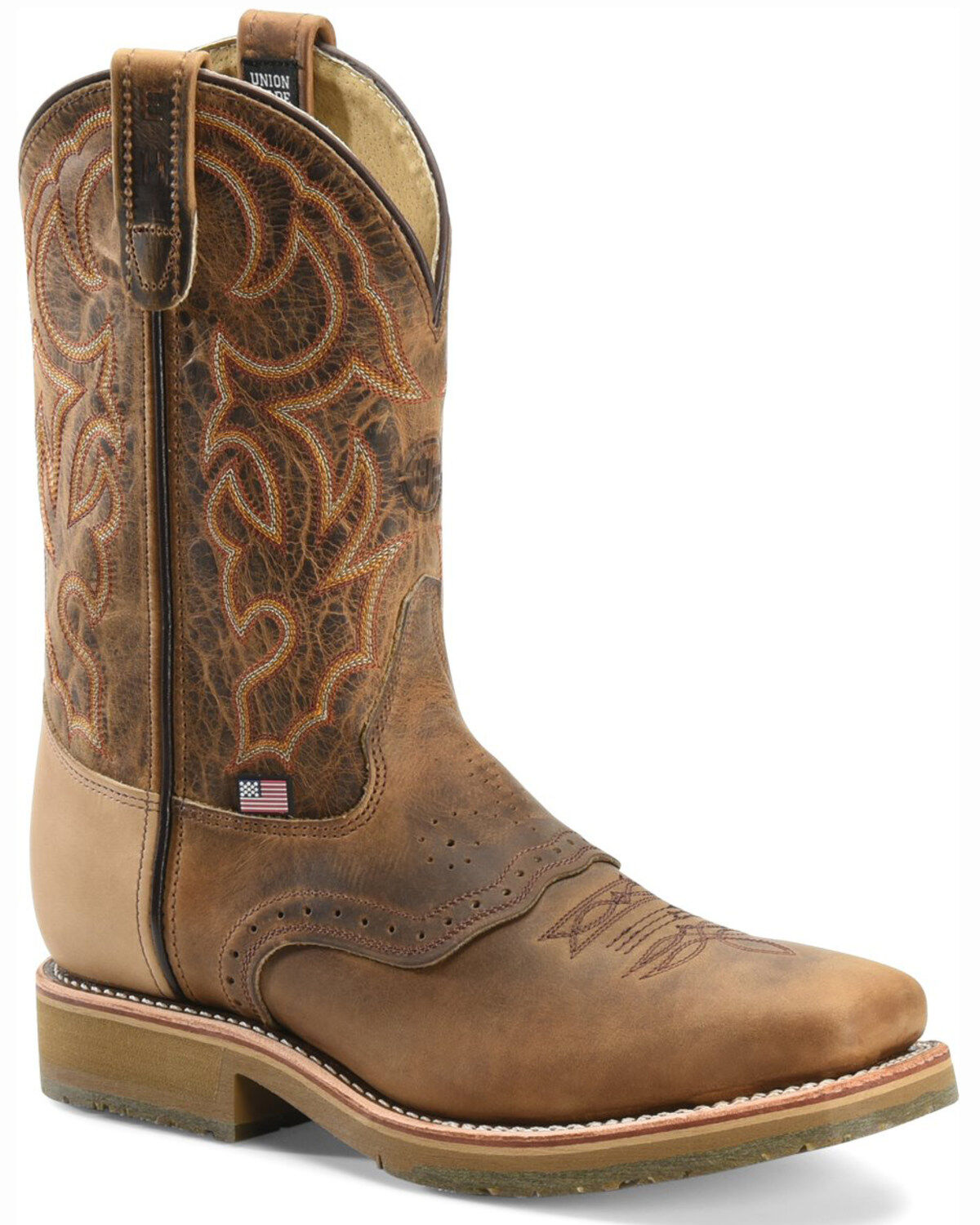
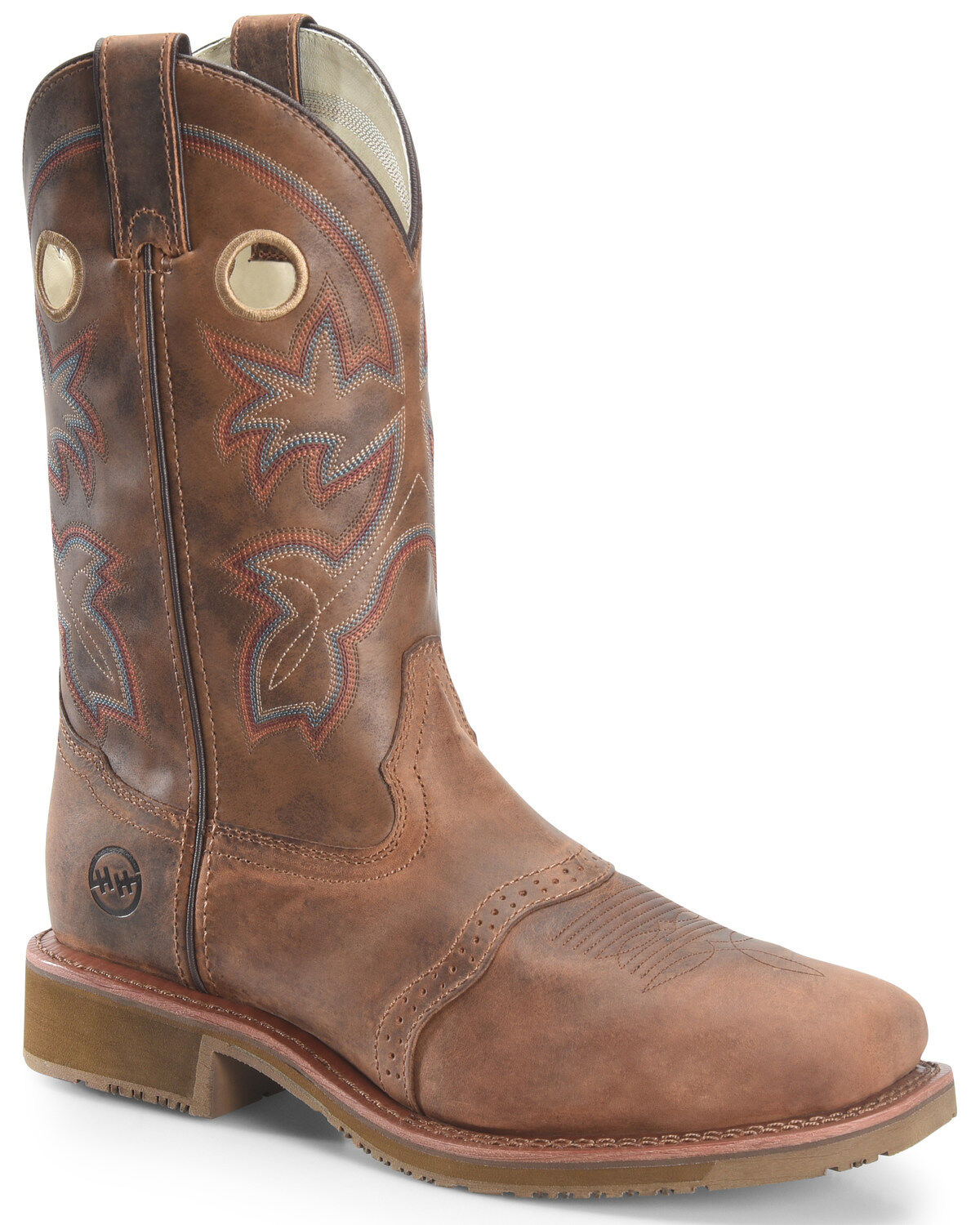
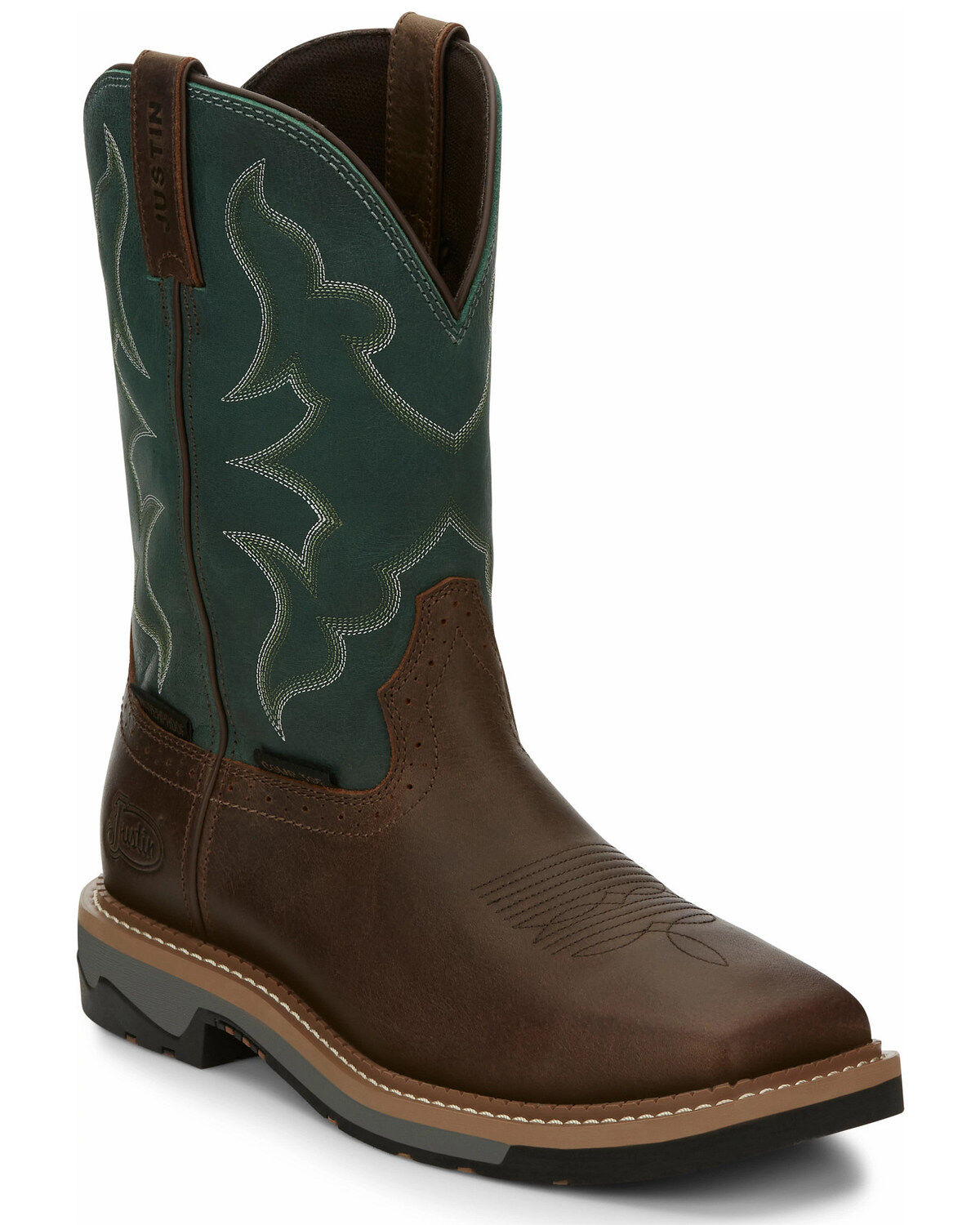
Men's Square Toe Work Boots

Shop men’s square toe work boots with a broad toe shape and a western look for the workday. Compare the available styles, sizes, and listed features to find a pair that fits your feet and your job’s requirements.

Shop Your Store: Shop Your Store: Find a Store

(Turn off Shop Your Store to see all items)

(Turn off Shop Your Store to see all items)

close
  • Recommended
  • Lowest Price
  • Highest Price
Skip pass products

End of products

Men's Square Toe Work Boots

Men’s square toe work boots pair a western profile with construction suited to demanding jobs. The squared front gives the boot a broad appearance, while the shaft, heel, and outsole determine how it feels and performs throughout the day. For men who move between a shop floor, a jobsite, and a truck cab, those details matter more than looks alone. A boot used for walking across concrete needs a different balance of cushioning and support than one worn around loose gravel, equipment, or uneven ground. Full-grain leather is a common upper material because it can handle repeated flexing and abrasion with proper care. Leather weight, finish, and reinforcement also affect how a boot breaks in and how easily it cleans up after work. Smooth leather generally wipes down more easily than roughout or suede, which require different cleaning methods. Fabric panels and linings can influence weight and the feel against the foot, while reinforced heel areas help the boot hold its shape. Underfoot, a cushioned insole can soften repeated steps, but cushioning alone does not account for stability. The midsole, shank, and outsole work together to support the foot as it bends, stands, and climbs. A defined heel may be useful for certain work settings, while a flatter sole can feel more natural for extended walking. Job requirements should lead that choice, especially when ladders or equipment are part of the day. Construction matters over the long haul, too. A welted boot may allow outsole replacement, depending on its design and condition, while other construction methods emphasize flexibility or lower weight. Neither approach makes every boot right for every job. Men working in construction, agriculture, maintenance, transportation, or a workshop can look for a build that matches their actual tasks. A sturdy shaft offers coverage around the ankle and lower leg, though a pull-on work boot should not be confused with specialized protective equipment. The best match balances the demands underfoot with a comfortable fit and the protection required on the job.

Fit deserves close attention with men’s square toe work boots because the toe shape does not tell the whole story. A square outline may offer a less tapered feel at the front, but usable room depends on the boot’s width, interior shape, and any protective toe cap. Toes should have space to move without striking the front or feeling pressure across the sides. The ball of the foot should sit near the boot’s natural flex point, and the instep should feel secure rather than squeezed. A pull-on boot can have a small amount of heel movement when new, but excessive slipping can cause rubbing and make the foot work harder with every step. Leather may soften with wear, yet a boot that is painfully tight is not a sound starting point. Trying boots with the socks worn on the job gives a more accurate sense of fit. Men who use orthotics should account for the space those inserts take up and whether the original footbed can be removed. Protective features need the same attention as fit. A square toe is a shape, not a safety rating, and soft toe work boots do not provide the same impact and compression protection as rated safety toe footwear. For jobs that require a steel cap, Men's Square Toe Steel Toe Boots focuses on that combination of shape and protection. The boot’s labeling and the employer’s footwear requirements should determine whether it is suitable for a particular task. Steel toe protection also does not replace a metatarsal guard when protection over the top of the foot is required. Outsole features deserve a separate check. Deep tread can help on loose surfaces, while other tread patterns are designed for flatter work floors. Slip resistance varies with the surface and the substances present, so no outsole should be treated as slip-proof. Electrical hazard and static-dissipative ratings serve different purposes and are not interchangeable. Waterproof construction may be relevant around washdowns or other wet work environments, but it should be verified rather than assumed from the leather exterior.

Routine care helps square toe work boots stay comfortable and hold up to daily use. Dirt left in seams and creases can grind against the material as the boot flexes, so brushing off loose debris is a useful habit after a shift. A soft brush and a lightly damp cloth are often enough for basic cleaning of smooth leather, with cleaners chosen for the particular finish. Mud packed into the outsole can hide damage and reduce how effectively the tread contacts the ground. Clearing it out also makes it easier to spot embedded debris, loose components, or worn sections. Leather conditioner can help suitable leather remain flexible, but the wrong treatment or too much product can change the finish and feel. Suede, roughout, fabric, and waterproof materials may need different products, so the manufacturer’s care directions matter. Boots that become damp during work or cleaning should dry with airflow at room temperature, away from direct heat that can damage leather, adhesives, or other components. Removable footbeds can be taken out for drying when the design allows. Rotating between pairs gives the interiors time to dry and can make daily wear more comfortable. Durability also means knowing when maintenance is no longer enough. Worn-down tread, separating soles, damaged uppers, and persistent pressure points deserve attention. A qualified boot repair professional may be able to address certain issues, but damaged safety footwear may require replacement rather than repair. Comfort that fades during a shift can also signal a compressed footbed or a fit problem worth checking. For men buying boots for themselves, familiar work habits offer useful direction: hours spent standing, repeated climbs into equipment, and the surfaces crossed each day all shape the choice. For a gift, an established size, preferred width, and confirmed workplace requirements are more useful than appearance alone. Men’s square toe work boots should earn their place through dependable construction, a secure fit, and features that suit the work. The western profile is part of the appeal, but everyday performance is what makes a pair worth wearing shift after shift.

FAQs