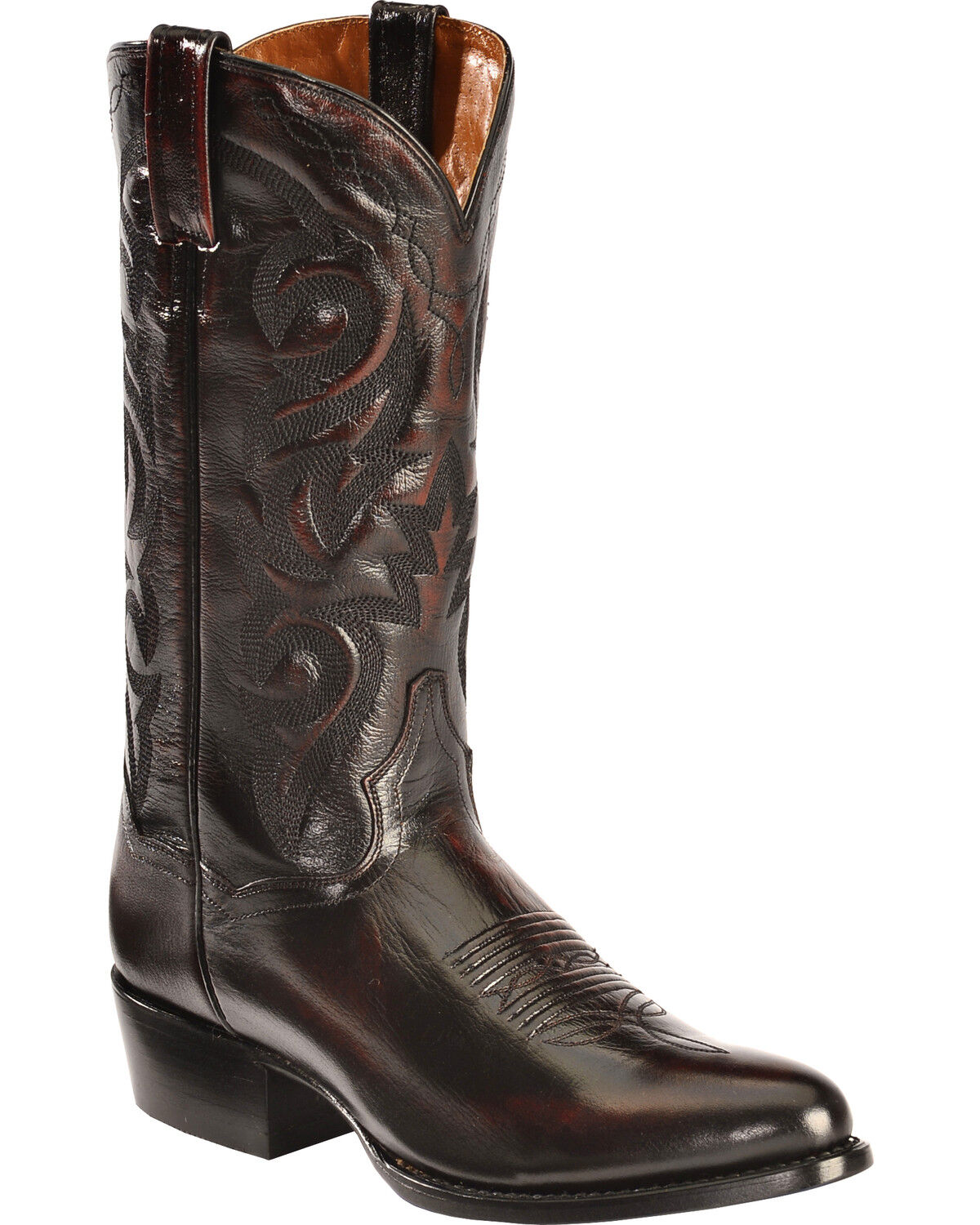
Men's Black Snake Skin Boots

Shop men's black snake skin boots for a distinctive western look to wear with jeans or dressier outfits. Browse the available cowboy boot styles, and review each pair’s product details for materials, sizing, and care before choosing.

Read More

Shop Your Store: Shop Your Store: Find a Store

(Turn off Shop Your Store to see all items)

(Turn off Shop Your Store to see all items)

close
  • Recommended
  • Lowest Price
  • Highest Price
Skip pass products

End of products

Men's Black Snake Skin Boots

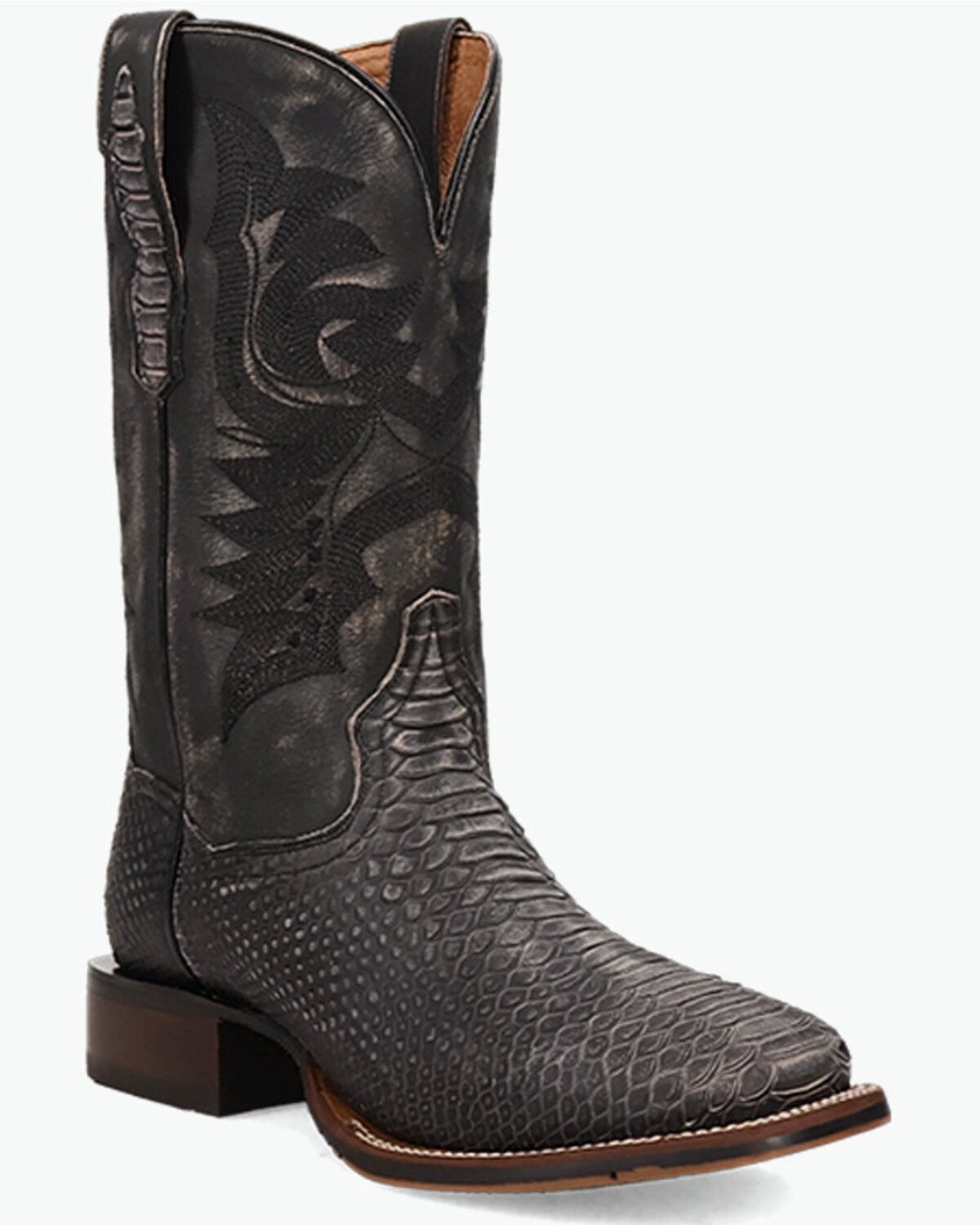
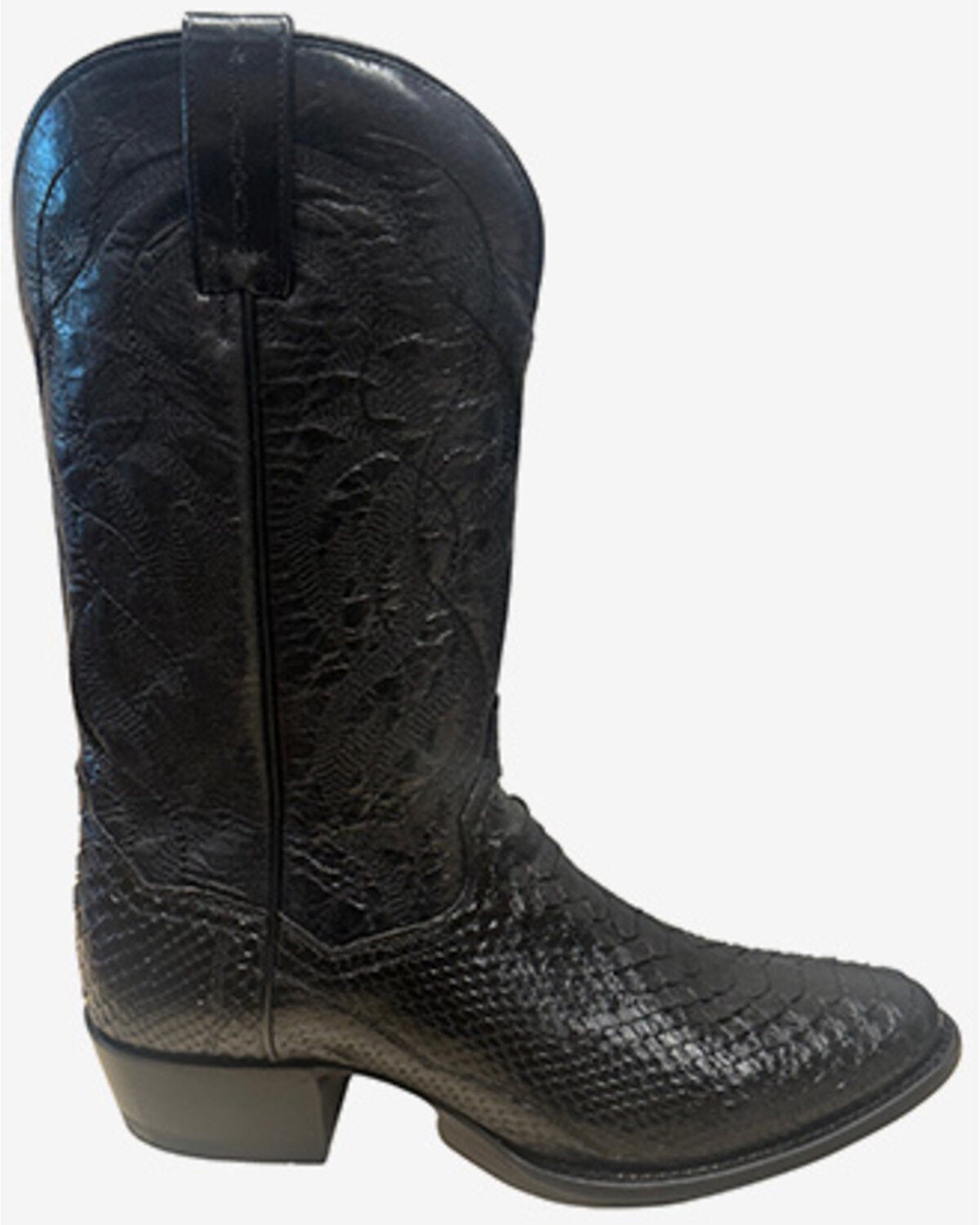
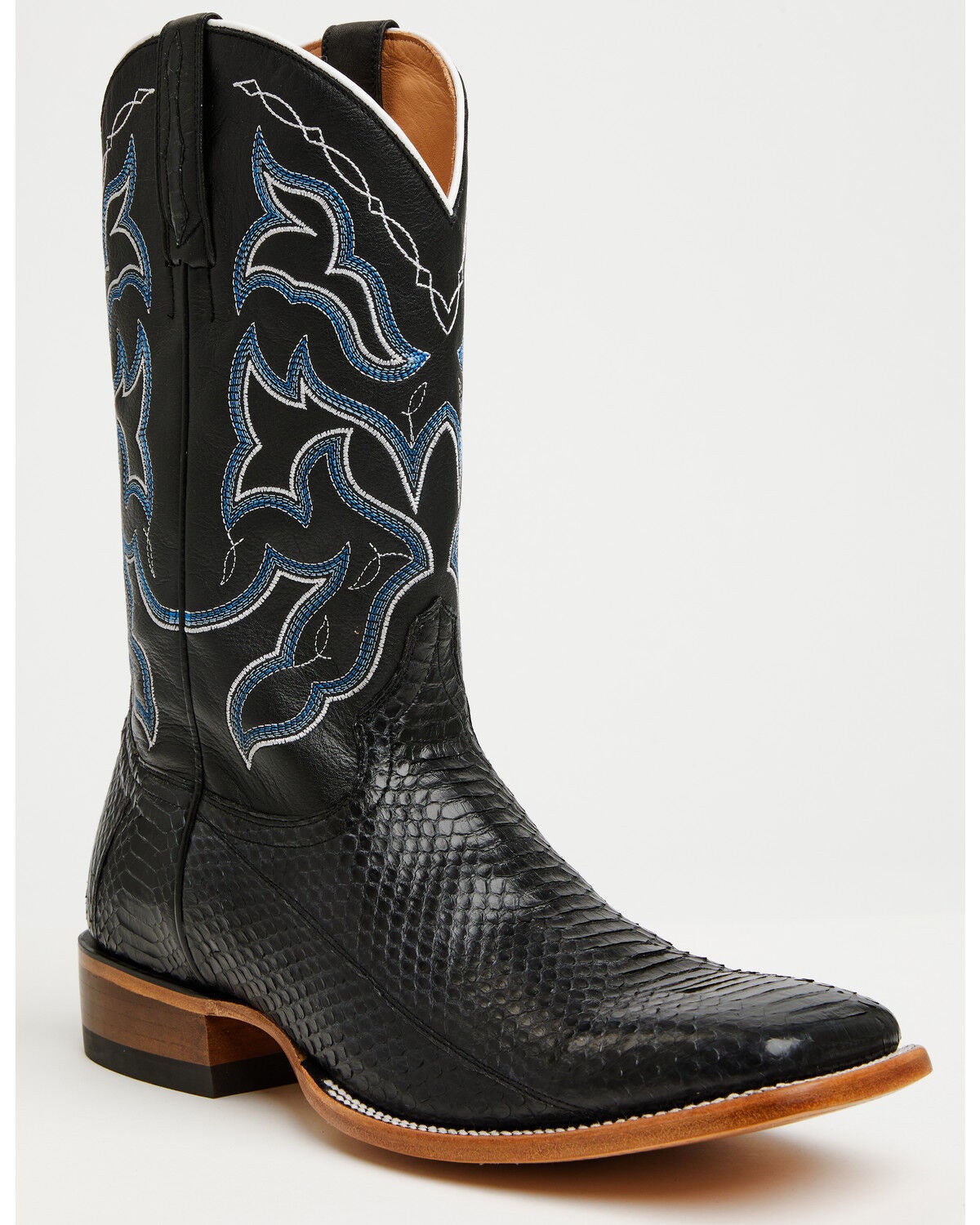
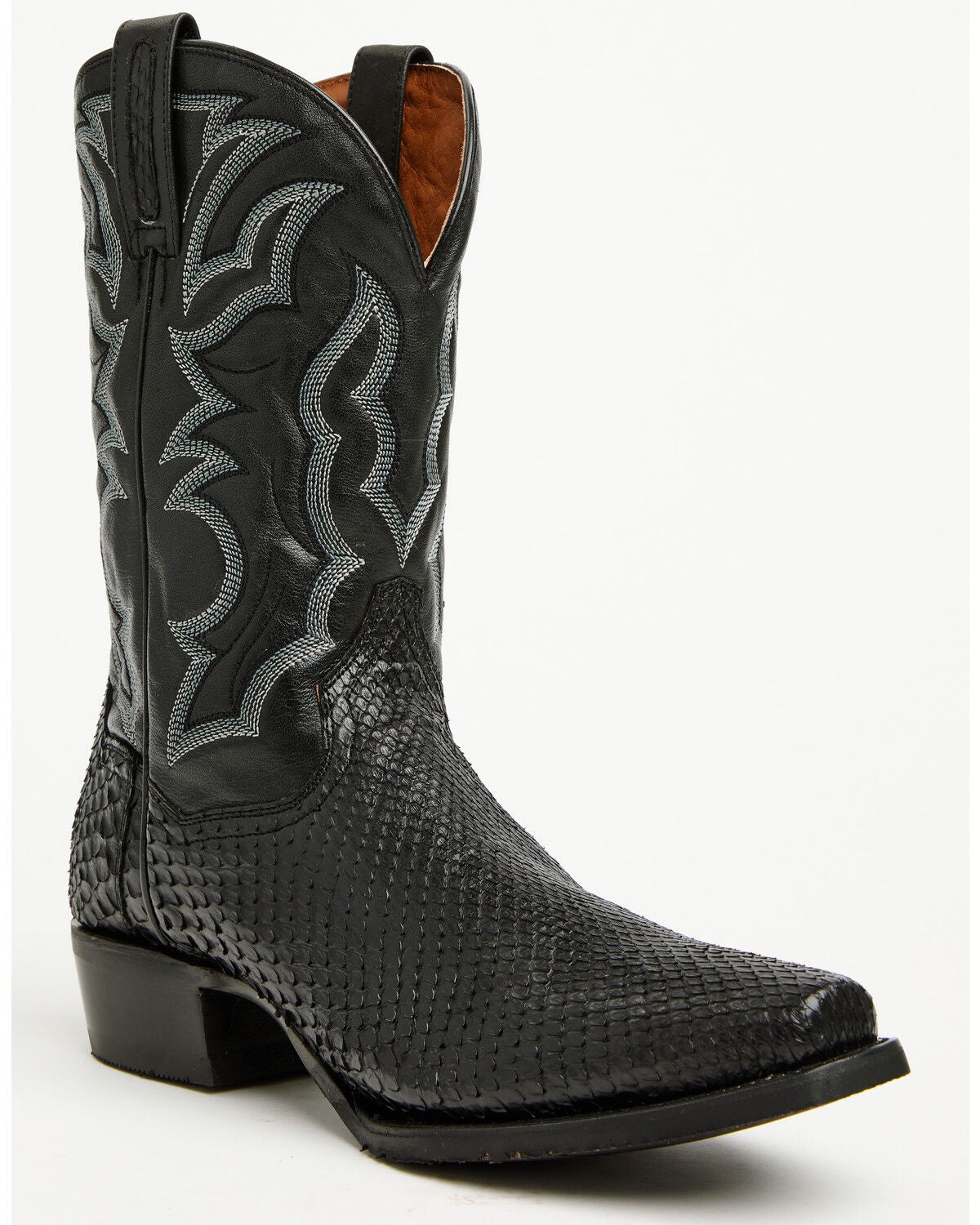
Men’s black snakeskin boots combine the distinct texture of exotic leather with the familiar shape of a western boot. Black keeps the look understated, while the scale pattern adds depth across the foot, especially where light catches the raised edges. Genuine snakeskin has natural variation, so scale size, arrangement, and surface character can differ from one pair to another. Python is one type of genuine snakeskin used in western footwear, but the material description matters more than appearance alone. Snake-embossed leather uses a pressed pattern to create a similar effect and is not the same material as genuine snakeskin. Construction can also combine materials, with a snakeskin vamp over the foot and a smooth leather shaft above it. That combination puts the texture where it remains visible beneath jeans while giving the upper a traditional western profile. Toe shape changes the overall impression. A broad square toe creates a substantial outline, a round toe offers a familiar cowboy boot shape, and a narrower toe gives the boot a sharper profile. Heel height, shaft stitching, and the finish of the leather further distinguish a restrained everyday look from something more dressed up. With dark straight-leg jeans and a solid western shirt, black snakeskin boots bring texture without requiring a loud outfit. With properly tailored trousers, they can suit a wedding, an evening out, or another occasion where polished footwear belongs. A trouser opening needs enough room to fall over the shaft rather than catch on it. Men who already wear cowboy boots may appreciate snakeskin as a different texture in a familiar silhouette, while someone new to western footwear may find black easier to coordinate with an existing wardrobe. The appeal is not limited to formal occasions. A well-chosen pair can work with ordinary denim, provided the construction suits the amount of walking and wear expected.

Fit determines whether men’s black snake skin boots become a regular part of that wardrobe or spend most of their time in the closet. A pull-on western boot should hold the instep securely without painful pressure, leave the toes free from crowding, and support the foot across its widest part. A small amount of heel movement can occur in a new pull-on boot while the sole is still firm, but excessive slipping or a foot that slides forward suggests the fit needs another look. Toe shape alone does not establish how much usable room a boot provides; the shape of the last, the width, and the interior dimensions all matter. Trying boots with the socks intended for regular wear gives a more useful impression than trying them with unusually thin or thick socks. Both feet deserve attention, since differences in size can make pressure noticeable on only one side. Genuine snakeskin should not be expected to stretch enough to correct a boot that starts out too tight. Comfort also depends on what sits beneath the foot. Cushioning, arch support, lining, and sole flexibility vary by construction, and each affects how a boot feels after several hours. A leather outsole gives a traditional finish, though smooth leather can offer limited traction on slick surfaces. Rubber outsoles may provide more grip, depending on their tread and compound. Neither the snakeskin upper nor a western silhouette establishes that a boot is suitable for demanding work. Tasks requiring protective toes, electrical hazard protection, or other safety features call for footwear with the appropriate ratings. For ordinary wear, examine how the sole is attached, how neatly the seams are finished, and whether the heel feels stable. Some stitched constructions can allow resoling by a qualified boot repair professional. Those details matter more to long-term use than texture alone, particularly for someone who plans to wear the boots often rather than reserve them for special occasions.

Genuine snakeskin rewards careful handling because its scales need different treatment from smooth cowhide. Dust can collect around scale edges, and rough scrubbing can catch or lift them. After wear, a soft, dry cloth moved gently in the direction the scales lie can remove loose surface dirt. Any cleaner or conditioner should be specifically suitable for the exact exotic leather and its finish, with the maker’s care directions taking priority. A product intended for ordinary leather is not automatically appropriate for snakeskin. Test an approved treatment in a small, less visible area before applying it more broadly, since even black leather can change in tone or sheen. Heavy applications of oil, wax, or polish can alter the surface and leave buildup between scales. Snakeskin boots also should not be treated as waterproof unless the construction is expressly described that way. If they become damp, blot away surface moisture and let them dry naturally, away from heaters and direct sunlight. Putting boots near strong heat can dry out the leather and strain the bonds between materials. Storage matters between wears, too. Boot trees or suitable supports can help maintain shape, while a dry location with airflow is better than sealing worn boots away with trapped moisture. Letting a pair rest between outings gives the lining time to dry. Check heel wear, loose stitching, and worn sole edges before small issues become larger repairs. For a gift, the recipient’s established boot size, preferred toe shape, and usual width are useful starting points, though fit still varies between constructions. Someone who favors subtle texture may prefer a darker, more uniform finish; someone who values the natural character of exotic leather may appreciate a more visible scale pattern. For comparison, men’s black alligator western boots offer a different exotic-leather texture with more defined tile-like scales. Black snakeskin has its own character: a layered surface that brings detail to a familiar western shape without relying on bright color. Proper fit, suitable use, and careful maintenance help preserve that character over time.
Read More

FAQs