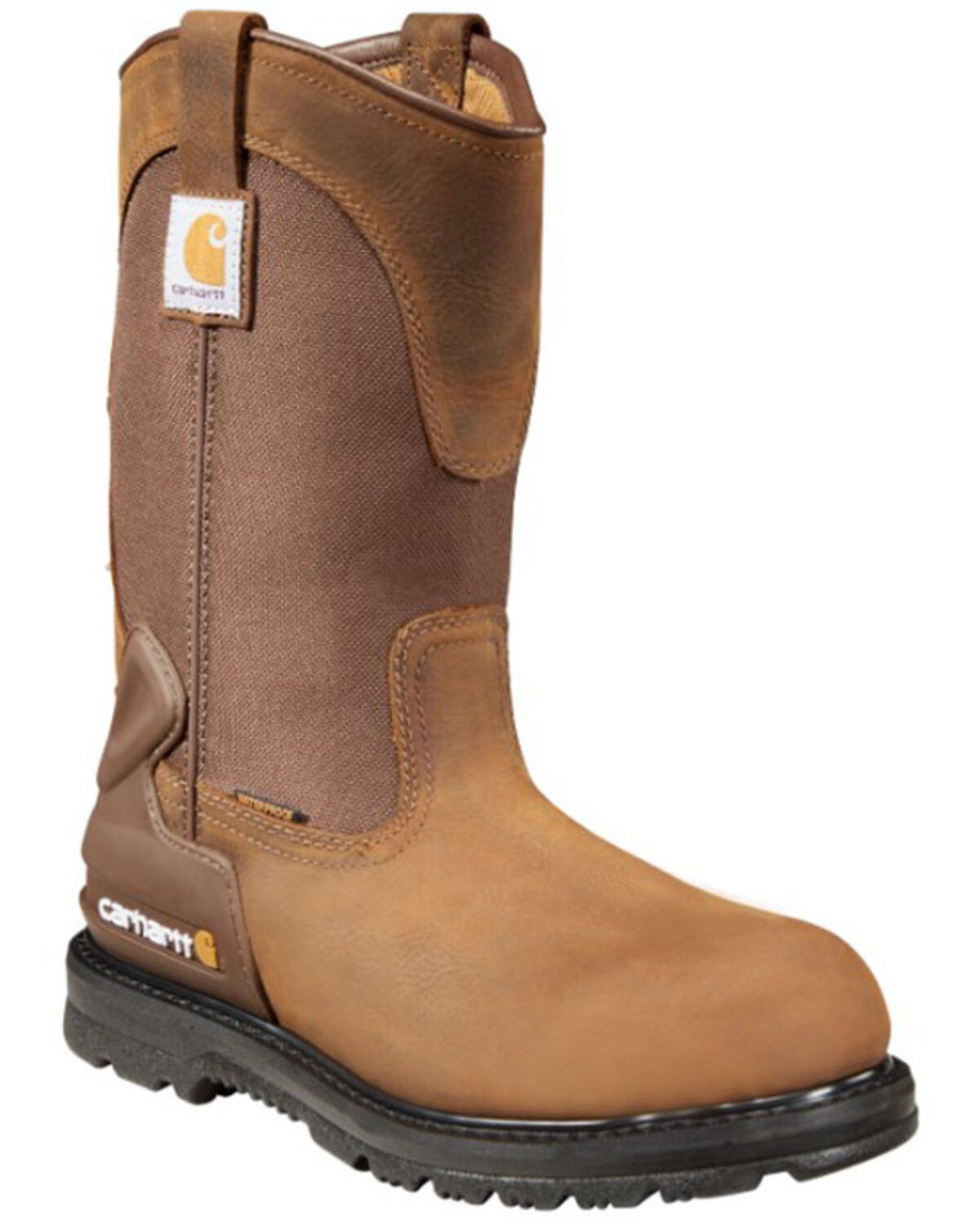
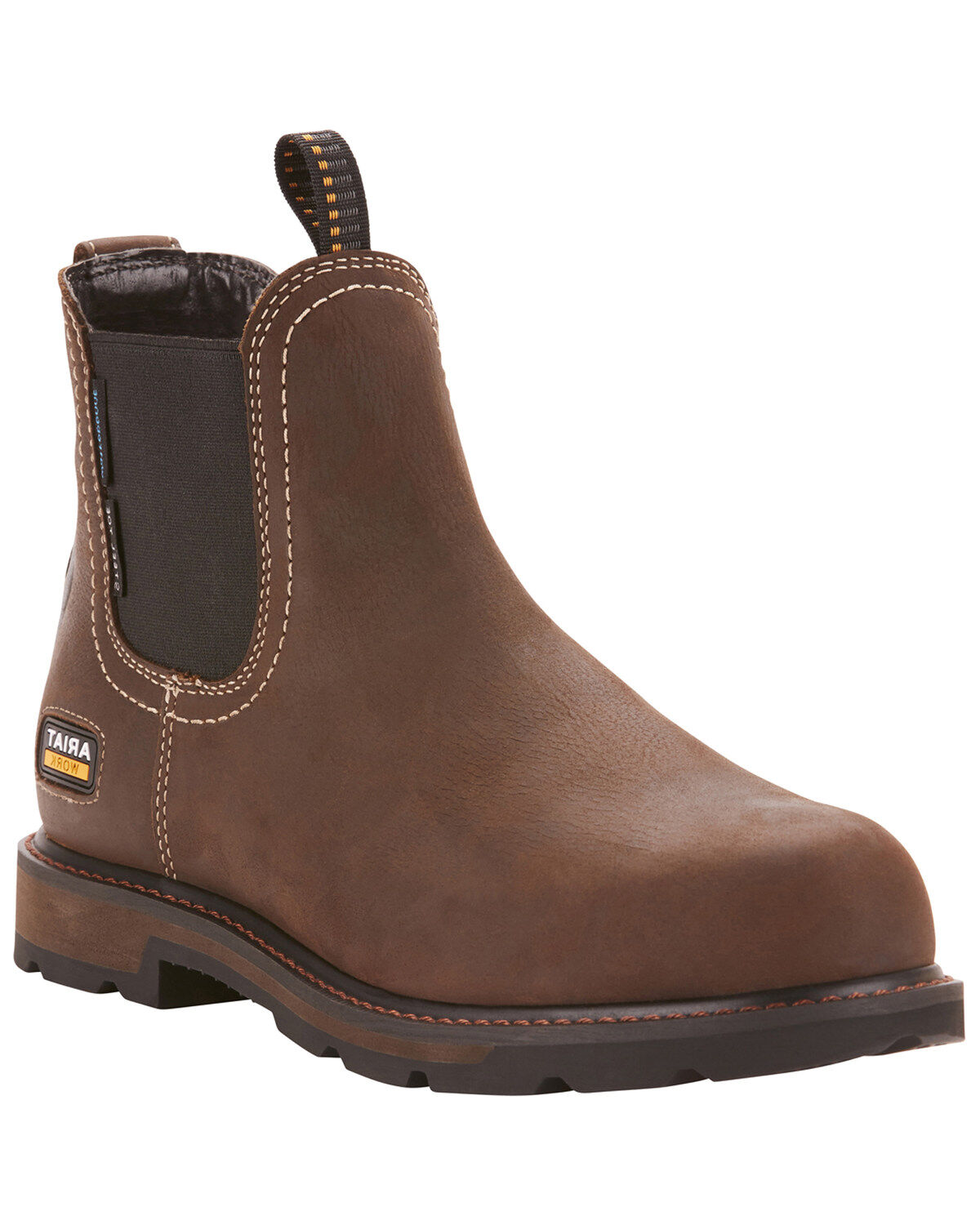
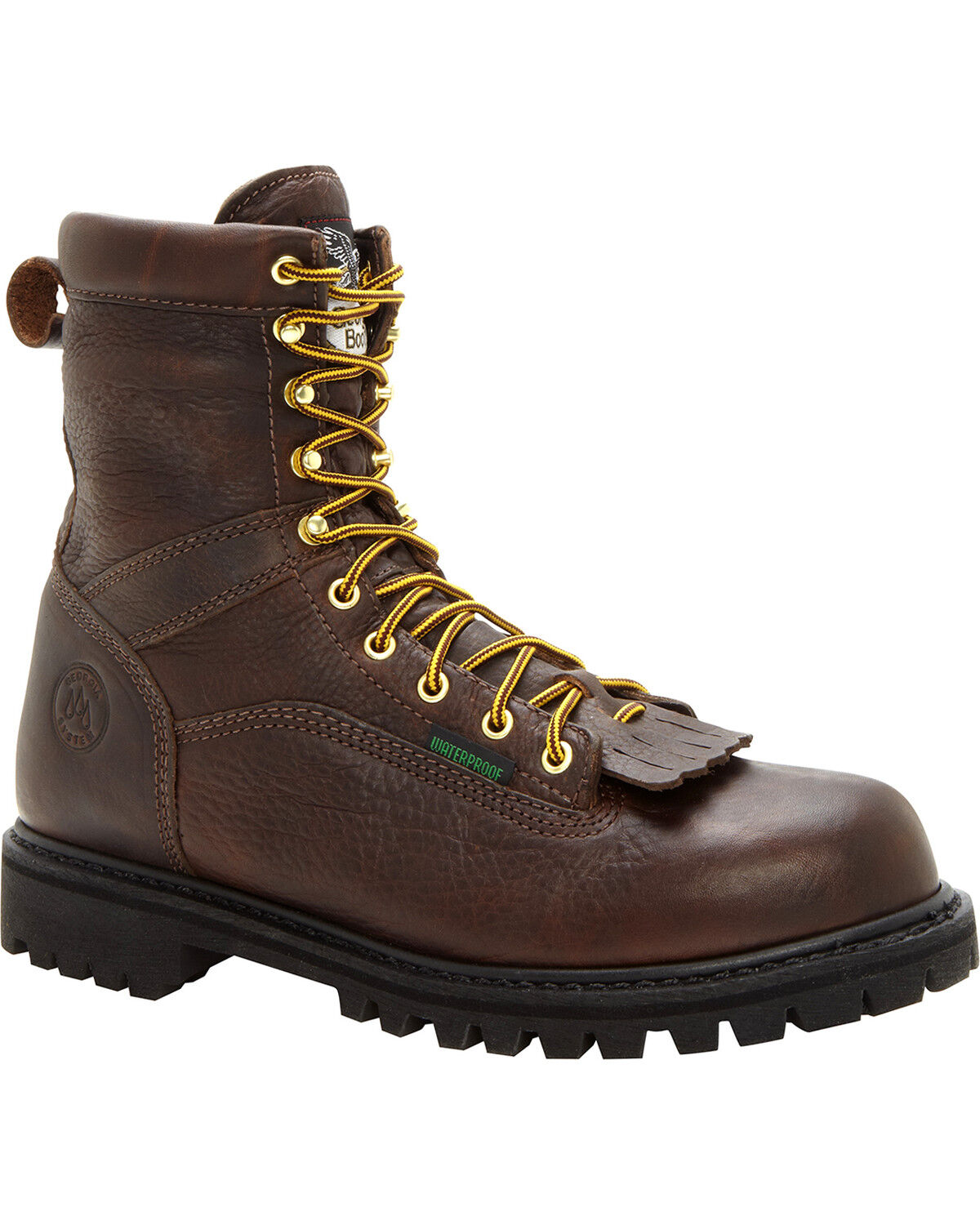
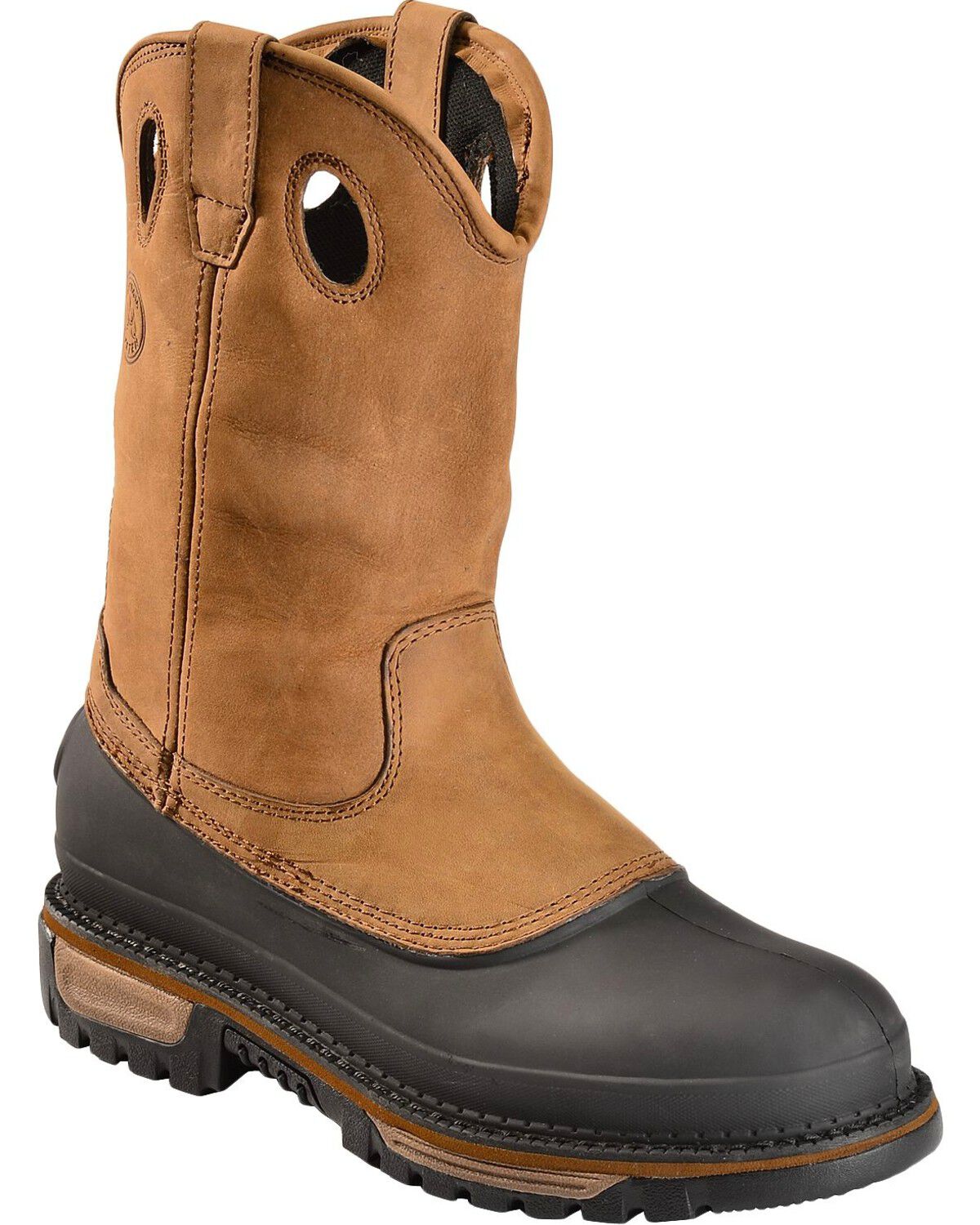
Men's Waterproof Steel Toe Boots

Find men's waterproof steel toe boots for wet work conditions and jobs that require toe protection. As you compare work boots, consider fit and comfort for your daily tasks, and check each pair's safety specifications against your workplace requirements.

Read More

Shop Your Store: Shop Your Store: Find a Store

(Turn off Shop Your Store to see all items)

(Turn off Shop Your Store to see all items)

close
  • Recommended
  • Lowest Price
  • Highest Price
Skip pass products

End of products

Men's Waterproof Steel Toe Boots

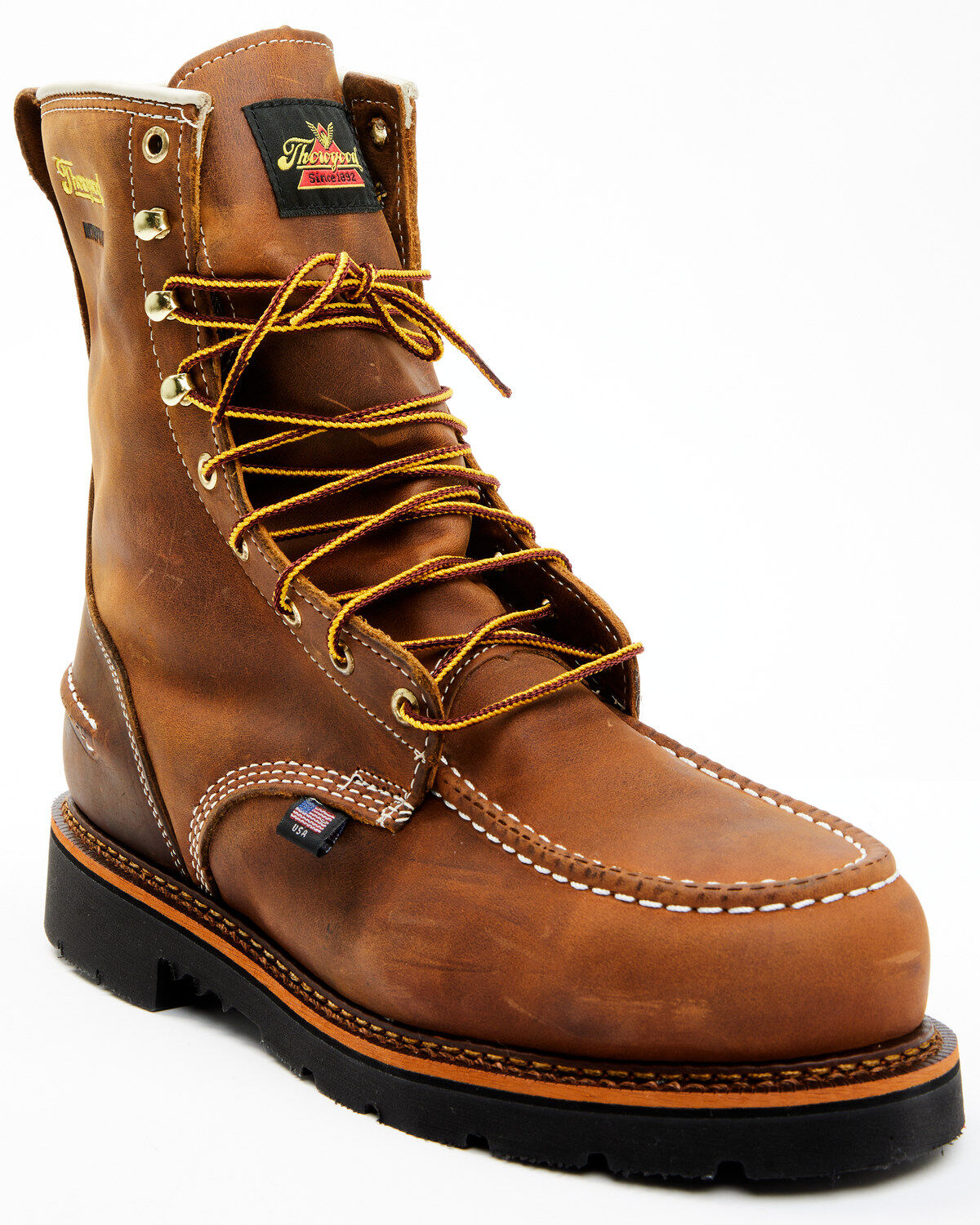
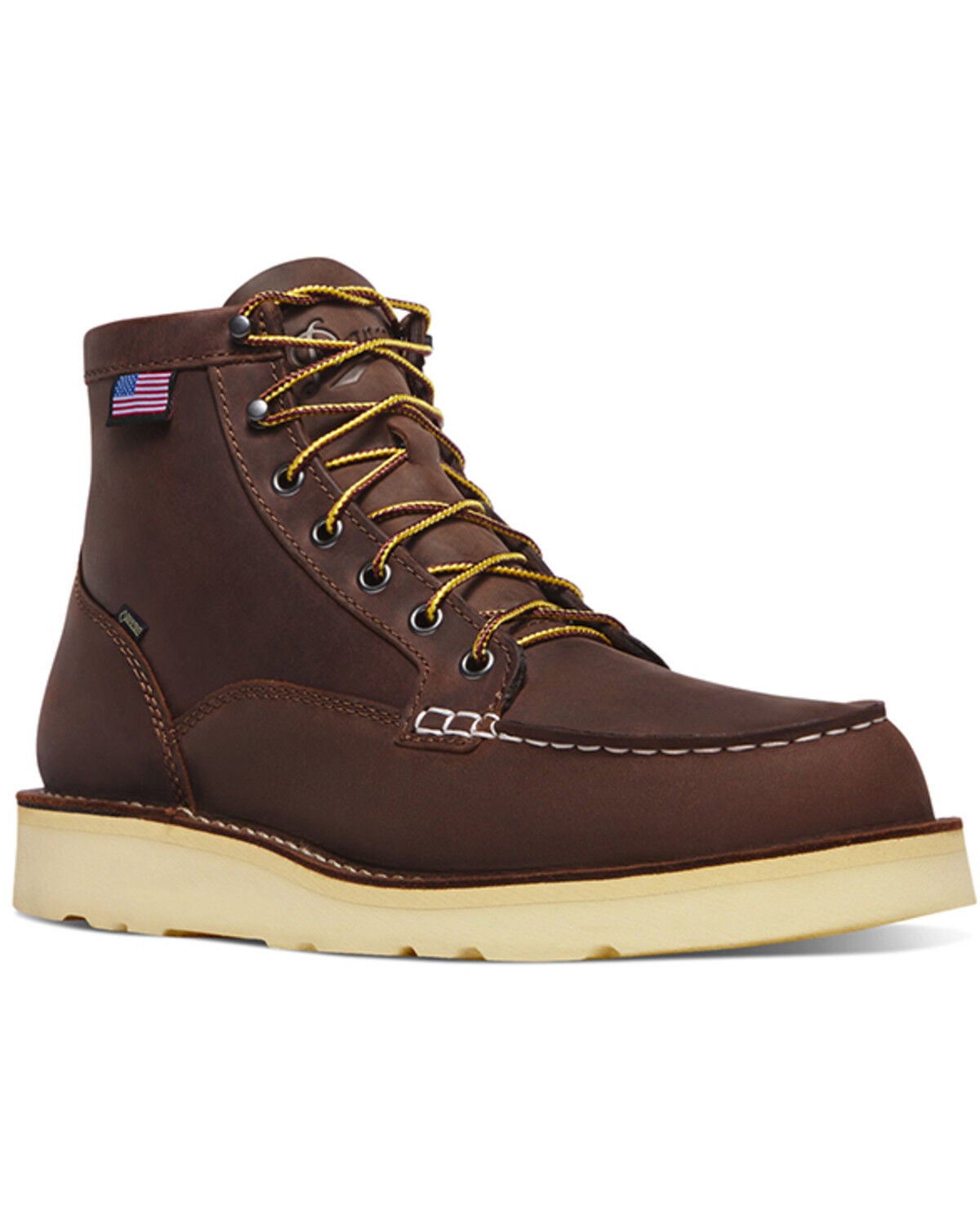
Men’s waterproof steel toe boots combine toe protection with construction designed to help keep feet dry around puddles, wet ground, and routine splashes. A steel safety toe helps protect against impact and compression when the footwear meets the required safety standard, while the waterproof system addresses water entering through the upper. Those features serve different purposes, and both matter on jobs where heavy materials and wet surfaces are part of the day. Construction crews, landscapers, utility workers, and workers moving loads through outdoor loading areas may need that combination. The right pair still depends on the hazards and footwear requirements of the workplace. A steel toe alone does not establish electrical hazard protection, puncture resistance, or suitability for chemical exposure. ASTM F2413 markings and the listed safety features help identify the protection a boot provides; waterproofing is a separate feature to verify. Leather uppers are common for their strength and ability to flex with wear, while textile panels can change the weight and feel of a boot. Waterproof construction may include an internal membrane, sealed seams, or other barriers that work with the upper to limit water entry. A gusseted tongue can help block water and debris around the laces, but its height determines how far that protection extends. Water can still enter over the top of the shaft, and ordinary waterproof work boots are not a substitute for footwear designed for prolonged submersion. Breathability matters as well. A waterproof barrier keeps outside moisture out, but perspiration still needs somewhere to go. Moisture-managing socks and a lining suited to the workload help manage dampness inside the boot. Waterproof does not mean insulated, either. Insulation is a separate construction feature, so warmth should never be assumed from the waterproof label. These distinctions make the category useful for demanding work without treating every pair as suitable for every task.

Fit shapes how men’s waterproof steel toe work boots feel from the first walk across a yard to the last trip down a loading ramp. The safety cap should leave enough room for toes to move without rubbing its front, top, or sides. Leather can soften with use, but the steel cap will not stretch to create missing toe room. A secure fit through the heel and instep helps limit sliding, while adequate forefoot width allows the foot to spread naturally under load. Trying boots with the socks worn on the job gives a more useful sense of fit, especially when those socks have substantial cushioning. Feet can swell through a long shift, making a tight fit less forgiving after hours of standing and walking. Any required orthotics also need room without crowding the toes or pushing the heel too high. Lace-up construction allows adjustment through the instep and ankle; pull-on designs depend more heavily on the match between the boot’s shape and the wearer’s foot. Neither style should rely on excessive tightness to stay secure. Underfoot construction matters just as much. Cushioning helps soften repeated contact with hard floors, while a supportive footbed and stable platform affect how the boot feels when carrying tools or moving materials. Weight also adds up over repeated steps, so the balance between sturdy construction and comfortable movement deserves attention. Outsole tread should match the work surface. Deeper lugs can provide useful bite on loose ground, while other tread patterns are designed around contact with firm surfaces. Slip resistance and oil resistance are separate characteristics, and neither means a sole will grip every surface equally well. Mud, standing water, fine dust, and worn tread can all change traction. A defined heel may be useful for certain tasks, but ladder work and specialized duties call for footwear that meets the requirements of that setting.

Durability comes from the whole boot, not just a heavy upper or a thick sole. Toe and heel reinforcement can help handle repeated scuffs, while stitching, sole attachment, and flex points all influence how the construction holds up to daily use. Some welted boots can be resoled, depending on their design and condition; other constructions prioritize flexibility, lower weight, or fewer exposed seams. Neither approach makes regular inspection unnecessary. Cuts in the upper, deep sole cracks, loose stitching, and separation around the sole can affect performance before the boot looks completely worn out. Repeated abrasion at the toe can also wear through leather without changing the shape of the steel cap beneath it. Cleaning off mud and grit keeps abrasive material from sitting in creases and around seams. A soft brush or damp cloth is often enough for surface dirt, followed by drying at room temperature in a ventilated space. Direct heat from a heater or dryer can damage leather, adhesives, and waterproof components. Removing footbeds, when the construction allows it, helps the inside dry more thoroughly. Leather care should match the material and the manufacturer’s directions; a conditioner suitable for smooth leather may change the finish of suede or nubuck. Waterproofing treatments also need to be compatible with the boot, and no surface treatment repairs a torn internal membrane. Keeping tread channels clear helps preserve their contact with the ground. For a dark finish suited to workwear and many uniform requirements, the Black Steel Toe Waterproof Boots collection offers a focused starting point, with safety ratings and fit still taking priority over color. As a gift for someone entering a trade or replacing worn work footwear, this category calls for knowing the recipient’s size, width, and job requirements. A dependable work boot earns its place through the right protection, a stable fit, and construction suited to the work ahead.
Read More

FAQs