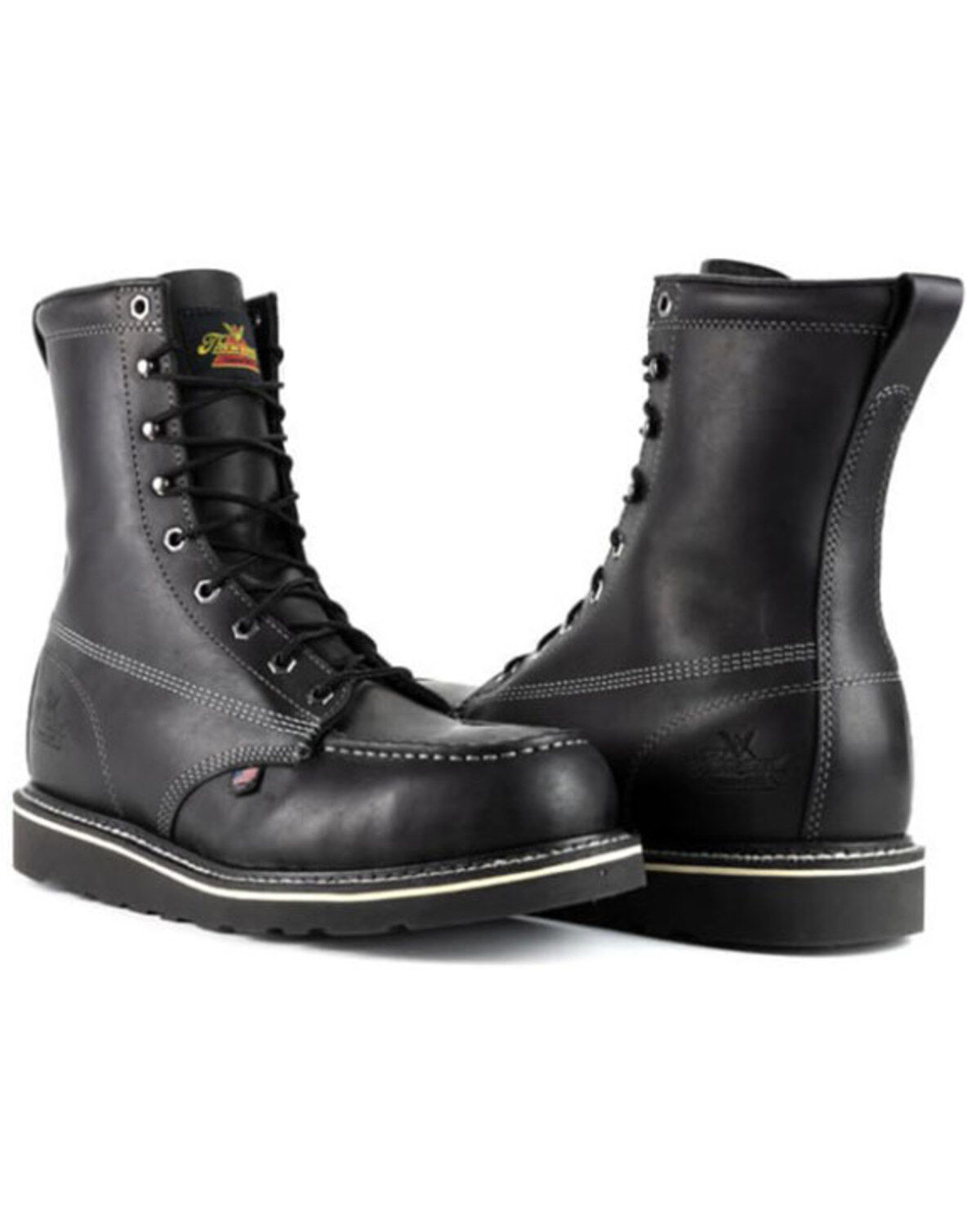
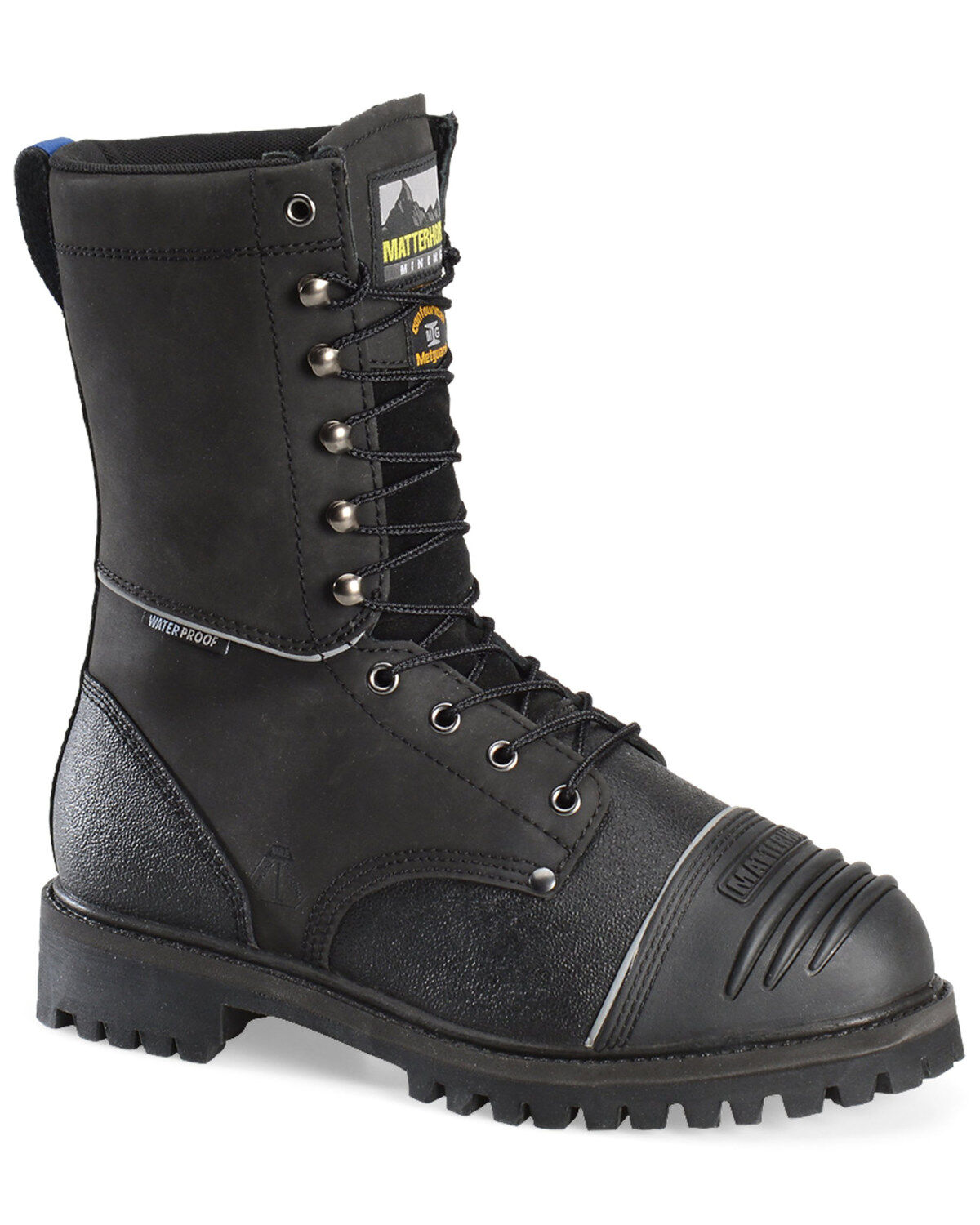
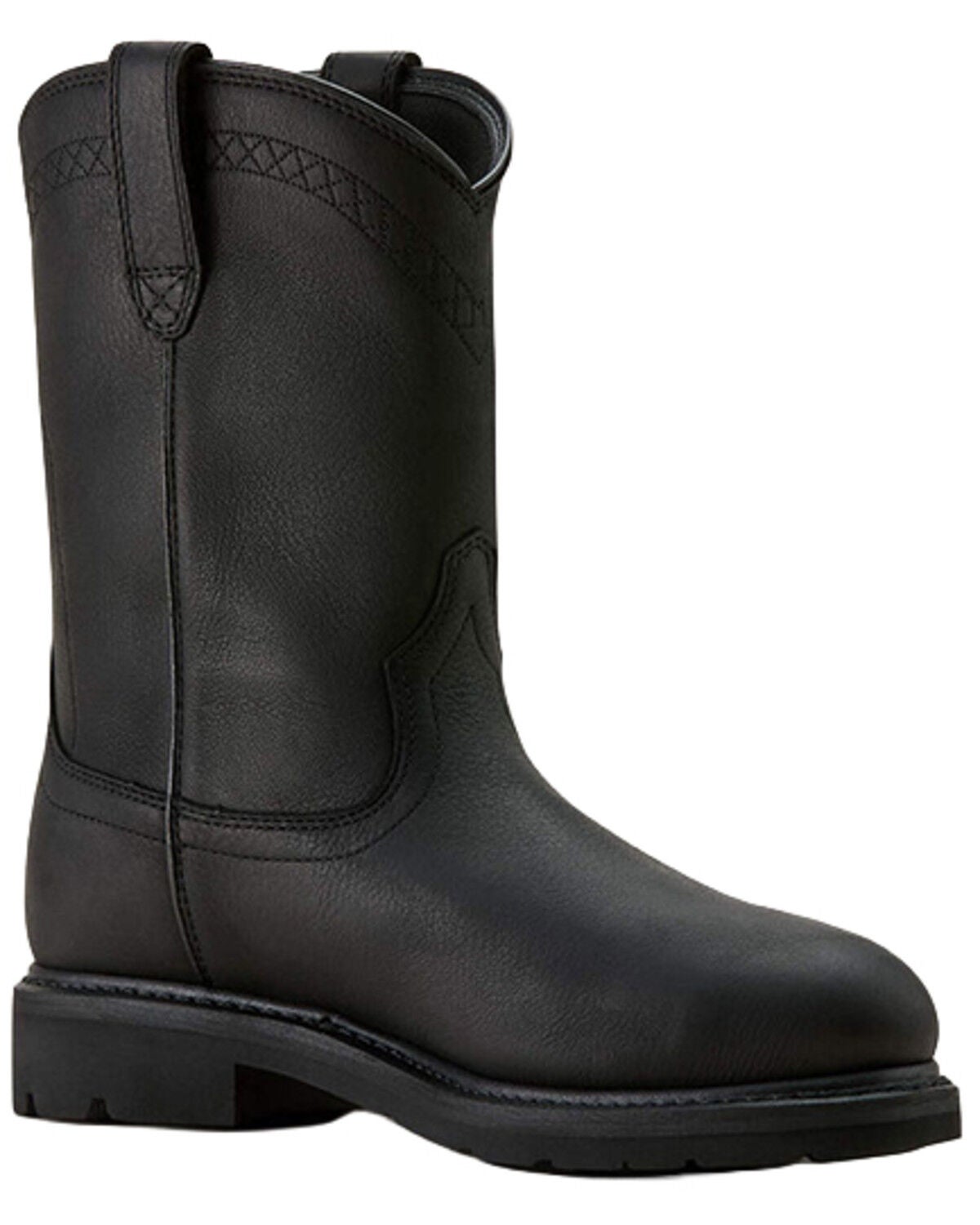
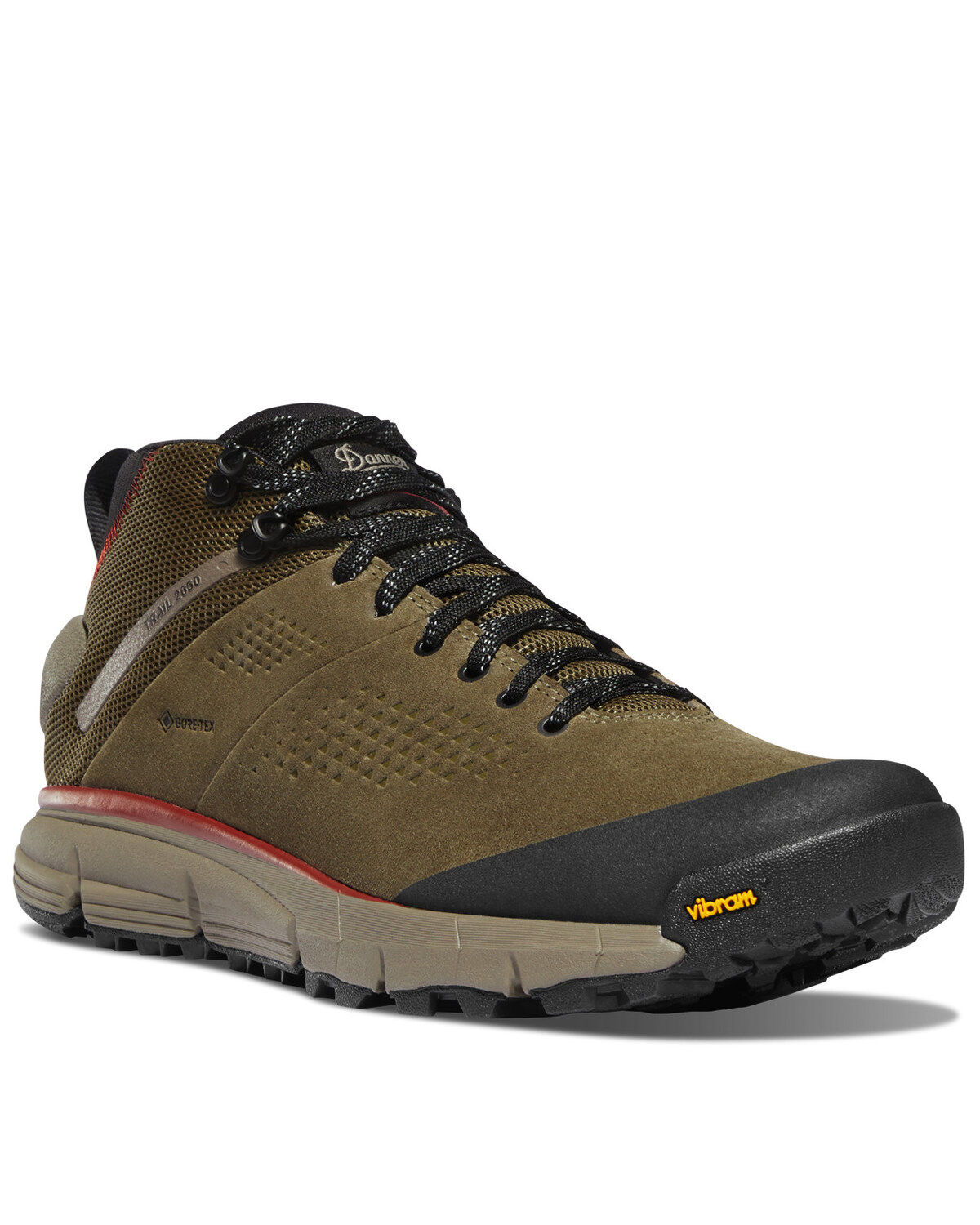
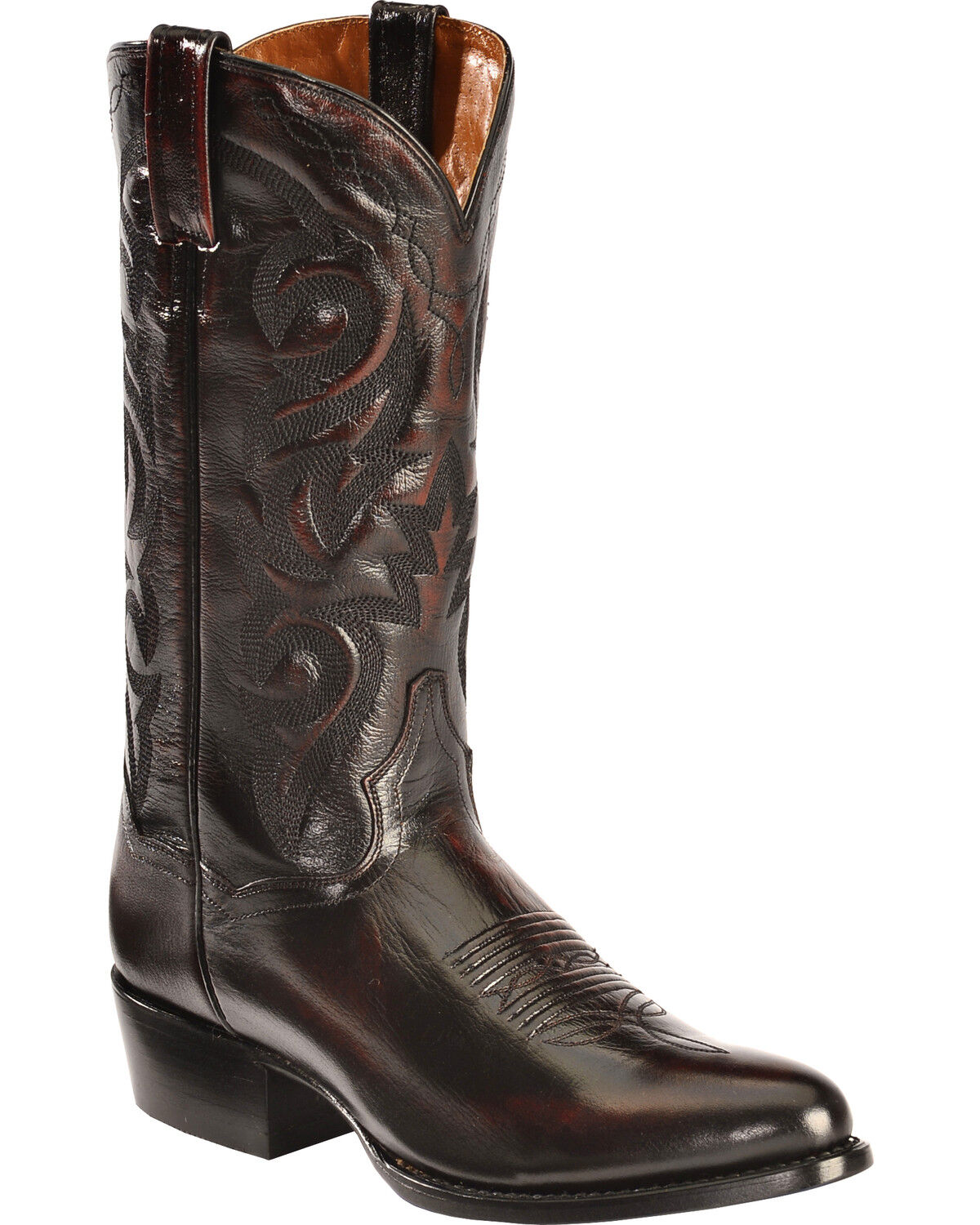
Black Men's Steel Toe Boots

Find men’s black steel toe boots for work that calls for toe protection. Browse available styles and sizes, and check each pair’s listed safety features against your workplace requirements before choosing your next work boots.

Read More

Shop Your Store: Shop Your Store: Find a Store

(Turn off Shop Your Store to see all items)

(Turn off Shop Your Store to see all items)

close
  • Recommended
  • Lowest Price
  • Highest Price
Skip pass products

End of products

Black Men's Steel Toe Boots

Men's black steel toe boots combine a straightforward look with protective construction for demanding work. The steel cap sits inside the toe area and helps protect against impact and compression when the footwear meets the applicable safety standard. That matters on construction sites, in warehouses, around repair shops, and anywhere falling tools or moving materials present a foot hazard. Black is a practical choice for work uniforms and dress requirements, but color does not determine protection. The safety label and manufacturer’s specifications establish what a boot is built to handle. ASTM F2413 markings identify protective footwear performance, and the required ratings should match the job and employer’s footwear rules. A steel toe alone does not establish electrical hazard protection, puncture resistance, or slip resistance. Those are separate features to verify. Electrical hazard footwear also has specific limitations and does not replace other required protective equipment. Across the broader category of black steel toe boots, differences in shaft height, closure, and sole construction help determine how a pair fits the job. A warehouse worker walking concrete aisles may put more emphasis on cushioning and manageable weight. Someone working around rough surfaces may need greater abrasion resistance and a sole suited to that ground. Maintenance work can involve a mix of standing, kneeling, climbing, and carrying, making flexibility and secure footing important considerations alongside toe protection. Outsole design deserves a close look: deeper lugs can grip loose ground, while other tread patterns are intended for flatter working surfaces. No tread provides dependable traction on every surface or contaminant. Oil resistance describes how an outsole material withstands exposure to oil; it is not the same as slip resistance. The strongest match is a boot whose protective ratings, tread, and construction suit the actual tasks, rather than a pair chosen on appearance alone.

Materials and fit shape how men's black steel toe boots feel through a full shift. Leather uppers offer a durable surface that can soften with wear, while reinforced toe overlays can help limit abrasion when work involves repeated kneeling or contact with rough materials. Textile panels may reduce weight or improve airflow, depending on the construction. Interior linings, seams, and padding matter just as much when a boot stays on for hours. A smooth heel lining can help limit rubbing, and a padded collar can cushion contact around the ankle without needing an overly tight fit. Lace-up boots allow adjustment across the instep and ankle, which can be useful for feet that need a more tailored hold. Pull-on styles avoid laces and offer a different fit through the instep and shaft. Neither construction should let the foot slide forward into the protective cap. Steel does not stretch during break-in, so pressure against the toes is not something to wait out. There should be room to move the toes without the foot shifting loosely inside the boot. Trying boots with the socks worn for work gives a more useful sense of fit than trying them with thin everyday socks. Feet can also swell over a long day, making a fitting after normal activity more representative. Walking, bending, and taking a few careful steps on an incline can reveal heel movement or pressure that standing still misses. For someone using orthotics, adequate interior depth and a removable footbed may be important, provided any changes follow the manufacturer’s guidance. Cushioning helps soften repeated steps, while a stable platform and appropriate underfoot support contribute to comfort during prolonged standing. More padding is not automatically better if it crowds the foot or changes heel placement. A well-fitting pair holds the foot securely without pinching, rubbing, or forcing the toes against the cap.

Durability comes from the whole boot, not just the steel toe. Upper material, stitching, sole attachment, and reinforcement at high-wear points all affect how work footwear holds up. Repeated bending puts stress across the forefoot, while dragging a toe across concrete can wear through an unprotected upper long before the outsole is finished. Welted construction may allow resoling on some boots, depending on their design and condition. Cemented construction bonds the sole to the upper and can offer flexibility with less bulk, though repair options vary. Neither method makes routine inspection unnecessary. Separated soles, exposed toe caps, damaged stitching, and worn tread are reasons to assess whether a pair remains fit for work. After a significant impact or compression event, the protective toe may be damaged even when the outside looks intact; follow the manufacturer’s replacement guidance rather than relying on appearance. Regular care helps preserve the upper and makes developing damage easier to spot. Loose dirt should be brushed away, and surface residue removed with a cleaner appropriate for the material. Smooth leather generally benefits from suitable conditioning, while suede, nubuck, and textile sections need their own care methods. A black finish does not make leather waterproof, and a protective treatment does not necessarily create a waterproof boot. Waterproof construction, where needed, should be confirmed in the specifications. Allow damp footwear to dry naturally away from direct heat, and remove footbeds for drying when the design permits. Keeping tread channels clear also helps the outsole work as intended. For workers who spend much of the day on their feet, rotating between suitable pairs can give interiors more time to dry between shifts. Men's black steel toe boots also make a practical gift for someone starting a job or replacing worn work footwear, but the recipient’s exact size and required safety ratings matter more than the surprise. Protective footwear earns its place through fit, dependable construction, and suitability for the work ahead.
Read More

FAQs