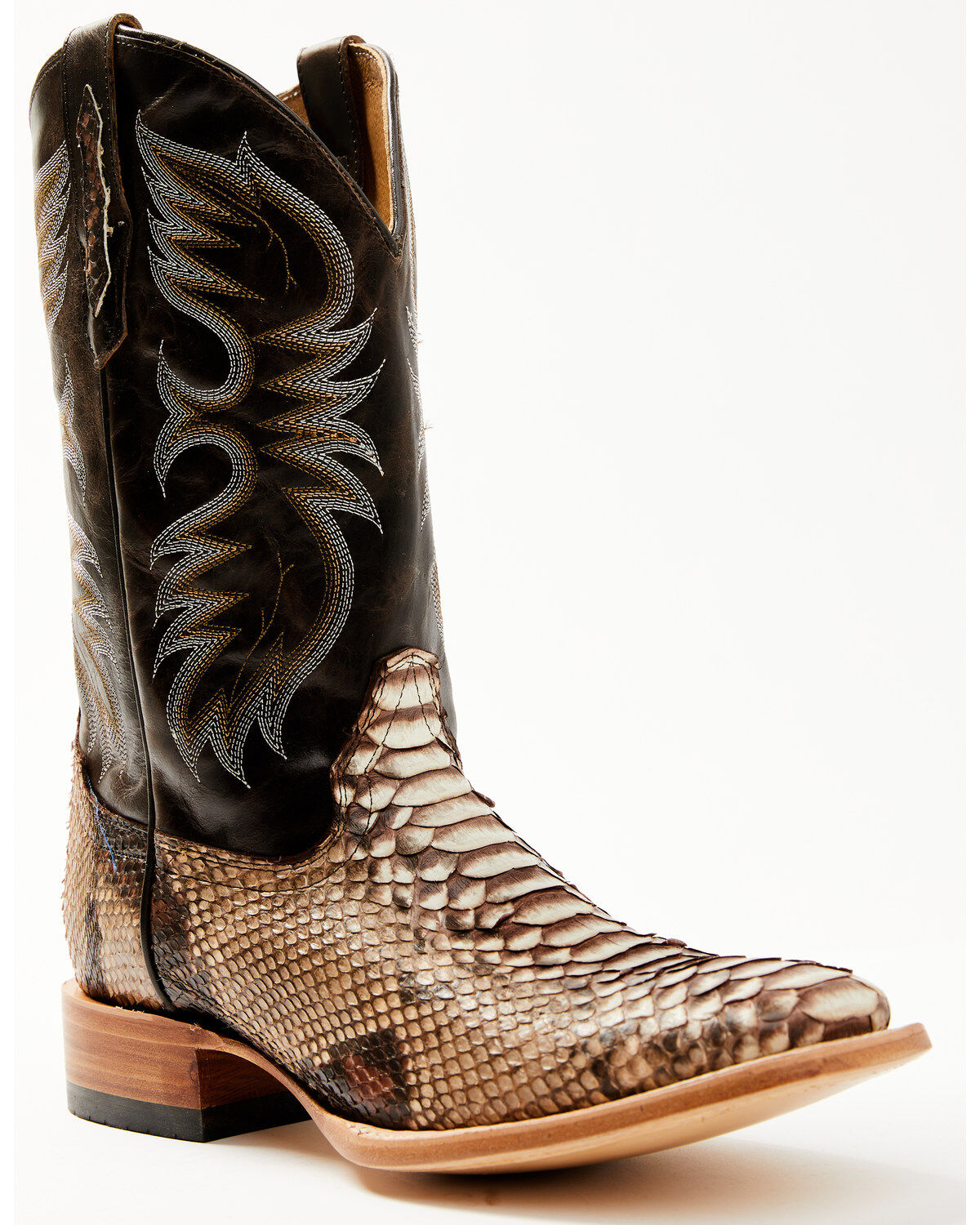
Snake embroidery boots pair detailed stitching with classic western construction. Choose a pair for a distinctive finish that works with denim, dresses,... and everyday western wear.
Read more
Snake Embroidery Boots
Snake embroidery boots pair detailed stitching with classic western construction. Choose a pair for a distinctive finish that works with denim, dresses,... and everyday western wear.
Snake embroidery boots bring western structure and detailed design together in one distinctive pair. Depending on the style, the snake pattern may be stitched into leather, printed onto the shaft, or created with genuine python or another exotic skin inlay. That difference matters. Embroidery gives the look of a serpent pattern while keeping the construction similar to a standard leather western boot. Genuine snake or python accents have natural scale variation and require more careful maintenance. Neither approach is automatically better. The right choice comes down to how often the boots will be worn, the look you prefer, and the level of care you are willing to provide. Decorative embroidery can suit regular wear, nights out, concerts, gatherings, and everyday western outfits. Genuine exotic accents tend to make a stronger statement and may be reserved for special occasions, although a well-made pair can still be worn often with proper care. Materials, shaft design, toe shape, stitching, hardware, and the way the boot is built all affect the final price. A pair with an 11- to 15-inch shaft creates a traditional western profile and gives the embroidery room to stand out. Shorter shafts are easier to pair with cuffed jeans, straight-leg denim, skirts, or dresses. Snip toes offer a sharper, more pointed appearance, while square toes provide a broader fit through the front of the foot. Round toes offer a familiar western shape with a little more visual simplicity. Check the listed measurements and fit details before ordering, especially when choosing a taller shaft or a pointed toe. Western boots should feel secure around the instep and heel without pinching the toes. Some heel movement is normal during the break-in period, but the foot should not slide forward inside the boot. Wear the kind of socks you expect to use with them, and allow enough room for your foot to settle without buying a size that feels loose from the start.
Snake embroidery boots work well when the rest of an outfit stays straightforward. Dark denim and a solid western shirt let the shaft carry the detail without competing with it. For a cleaner look, pair a neutral embroidered design with black or brown jeans, a plain button-down, and a leather belt in a related shade. During warmer weather, they can add weight and structure to a casual dress or skirt. As the weather cools, they fit naturally with denim, a jacket, and heavier layers. They are a practical choice for someone who wants a western boot with more character than a plain leather shaft, but does not need a boot built for demanding jobsite conditions. Most fashion-focused styles are intended for social wear, travel, dining, live music, celebrations, and other settings where appearance matters. If the boots will be used for ranch work, long hours on hard ground, or outdoor labor, look closely at the outsole, heel, welt, shank, and overall work rating instead of choosing based on embroidery alone. A comfortable footbed and a stable heel make a difference when standing for extended periods. Waterproofing also varies, and decorative stitching may allow moisture to reach the shaft if the boots are exposed to heavy rain or wet ground. Let damp boots dry naturally away from direct heat, then clean them according to the material. Snake embroidery boots can also make a thoughtful gift for someone who wears western clothing, collects unusual footwear, or appreciates detailed leatherwork. They are especially suitable for a birthday, a milestone, a performance, or a seasonal gathering when a more distinctive pair feels appropriate. For a gift, a versatile color, moderate heel, and familiar toe shape are safer choices than an extreme silhouette. If the recipient prefers a shorter shaft, related Snake Leather Booties can offer a lower-profile alternative with the same scaled inspiration.
Care depends on whether the snake detail is embroidered, printed, or made from genuine exotic leather. For standard leather boots with serpent stitching, brush away loose dirt with a soft brush or dry cloth. Use a leather cleaner sparingly, testing it first in an inconspicuous area, and follow with a conditioner made for the boot leather. Avoid soaking the shaft, saturating the embroidery, or applying heavy oils that can darken the leather and soften structured areas. A boot tree or clean paper inside the foot helps the boots hold their shape while they dry and rest between wears. Genuine snake skin needs a more specific routine because its scales can dry, lift, or crack when neglected. Remove surface dust gently, then use a conditioner labeled for exotic leather and apply it in the direction of the scales. Do not scrub against the scale pattern, use household cleaners, or rely on ordinary boot oil unless the care instructions specifically allow it. Keep exotic leather away from prolonged heat, deep moisture, and poorly ventilated storage. Store the boots upright in a cool, dry place, with enough room that the shafts are not bent or crushed. Rotate pairs when possible so each set can air out between wears. When comparing styles, consider material first, then construction, comfort, fit, care requirements, and the occasions where the boots will be worn. Embroidery can provide an eye-catching western finish without the maintenance associated with real snake skin, while genuine python or other snake leather offers natural texture and variation that no stitched pattern can fully reproduce. Look at the product description for clear material information, since a snake-inspired design does not always mean the boot contains real snake skin. With the right fit and routine care, snake embroidery boots can move easily from late-summer evenings into cooler-season gatherings, adding a defined western touch without requiring the entire outfit to follow the same pattern.