Fringe Cowboy Boots

Shop fringe cowboy boots for a western look with movement and texture. Fringe adds a distinct detail to the classic cowboy boot silhouette. As you browse, compare fringe placement and coverage to find a pair that fits your style.

Shop Your Store: Shop Your Store: Find a Store

(Turn off Shop Your Store to see all items)

(Turn off Shop Your Store to see all items)

close
  • Recommended
  • Lowest Price
  • Highest Price
Skip pass products
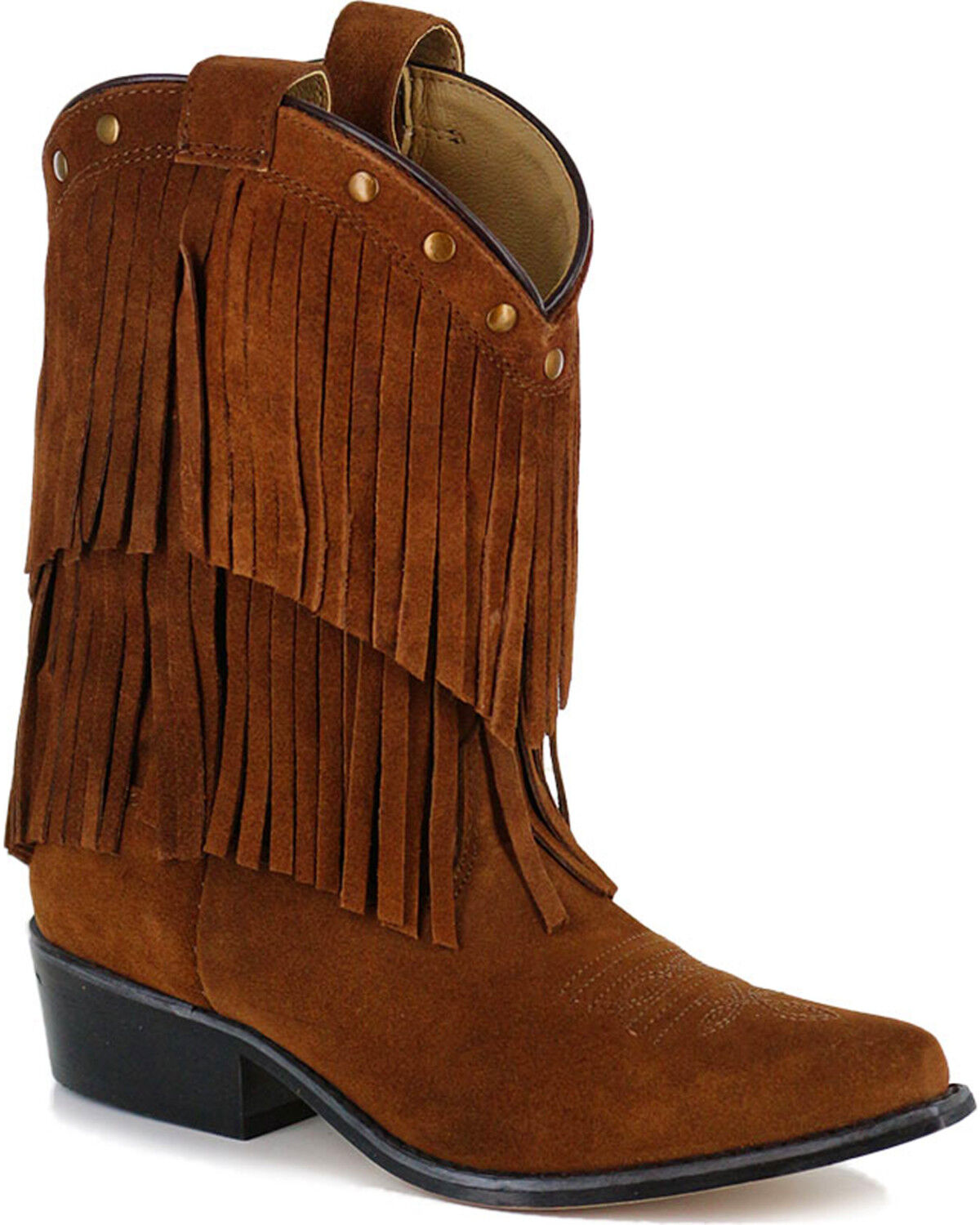
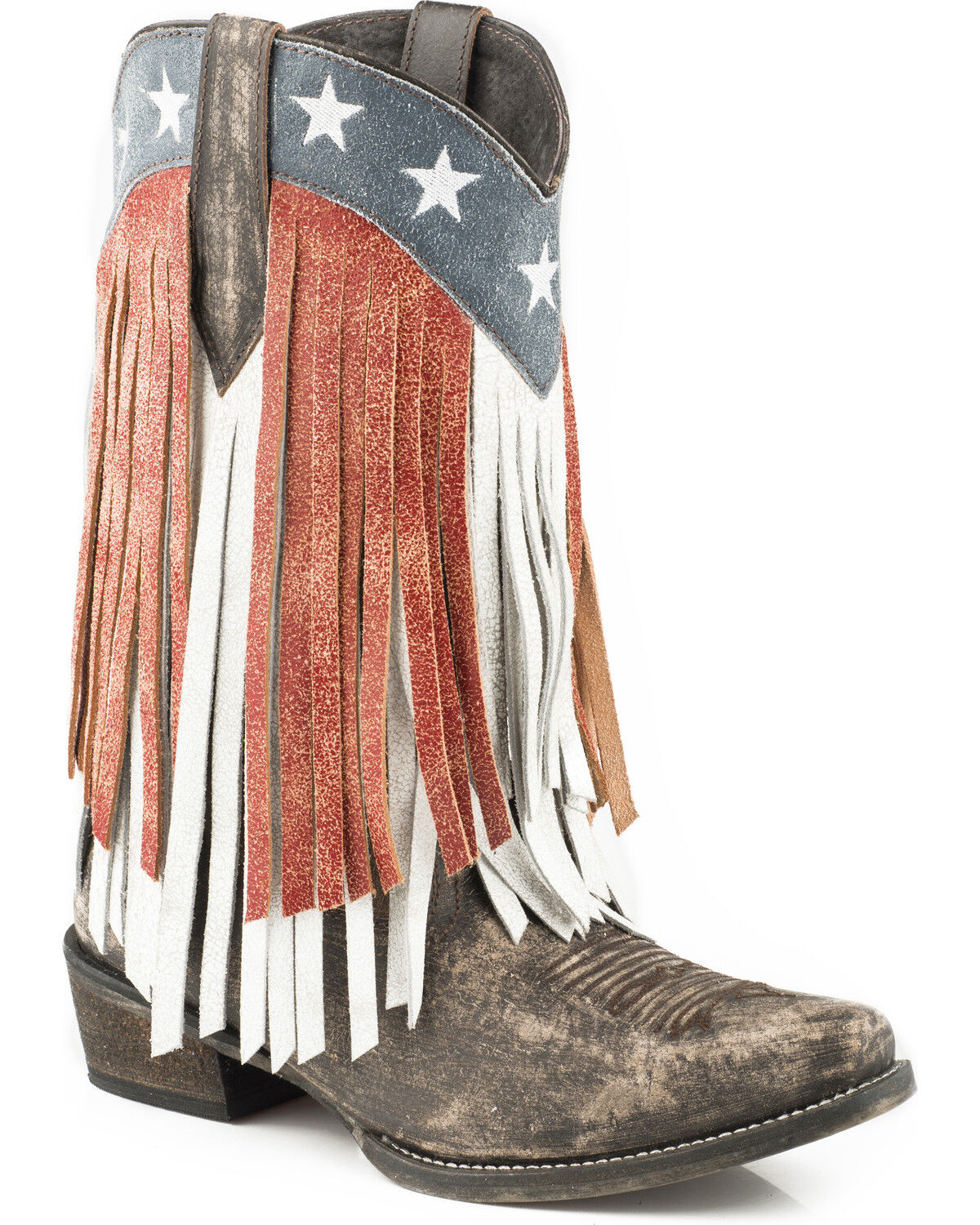
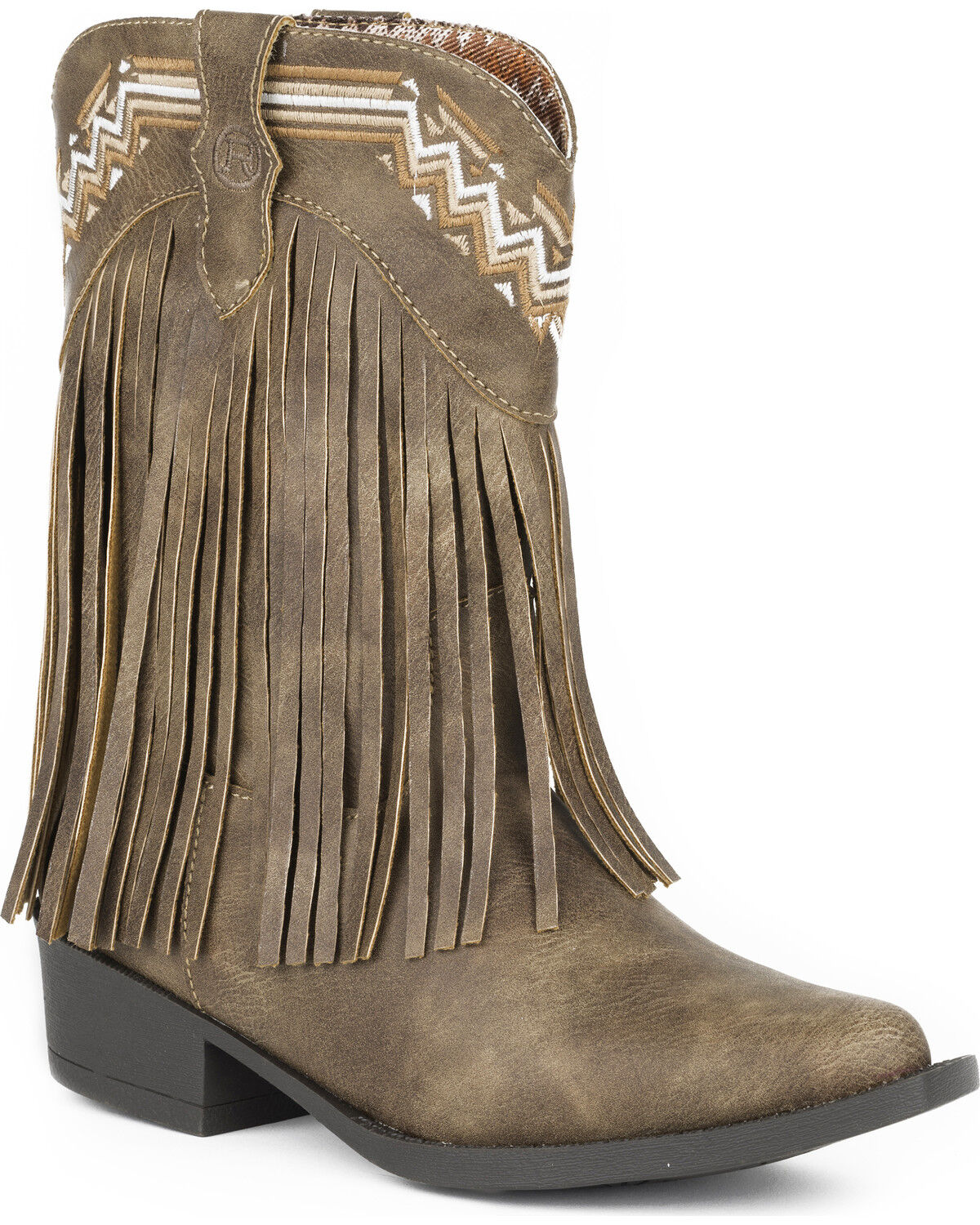
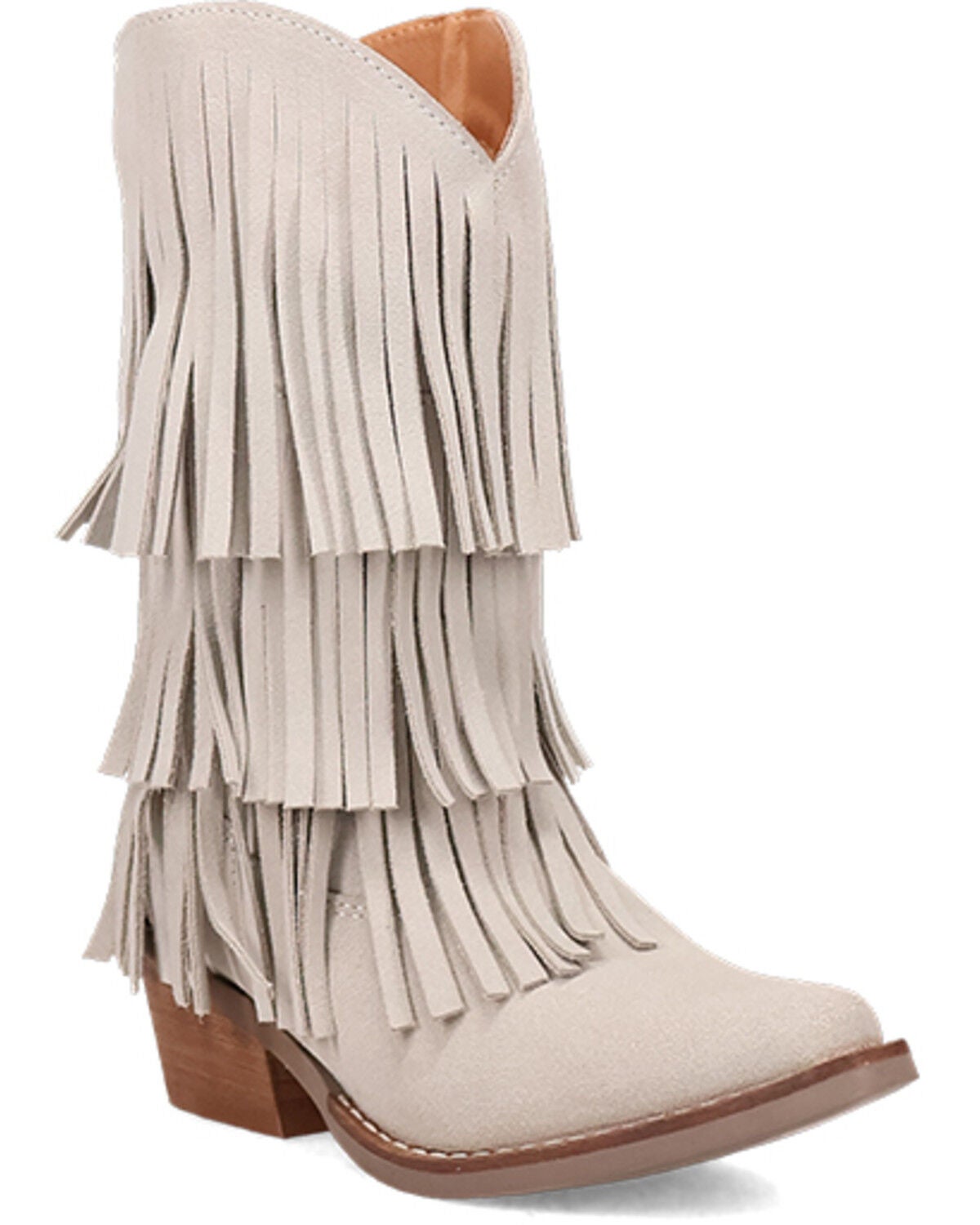
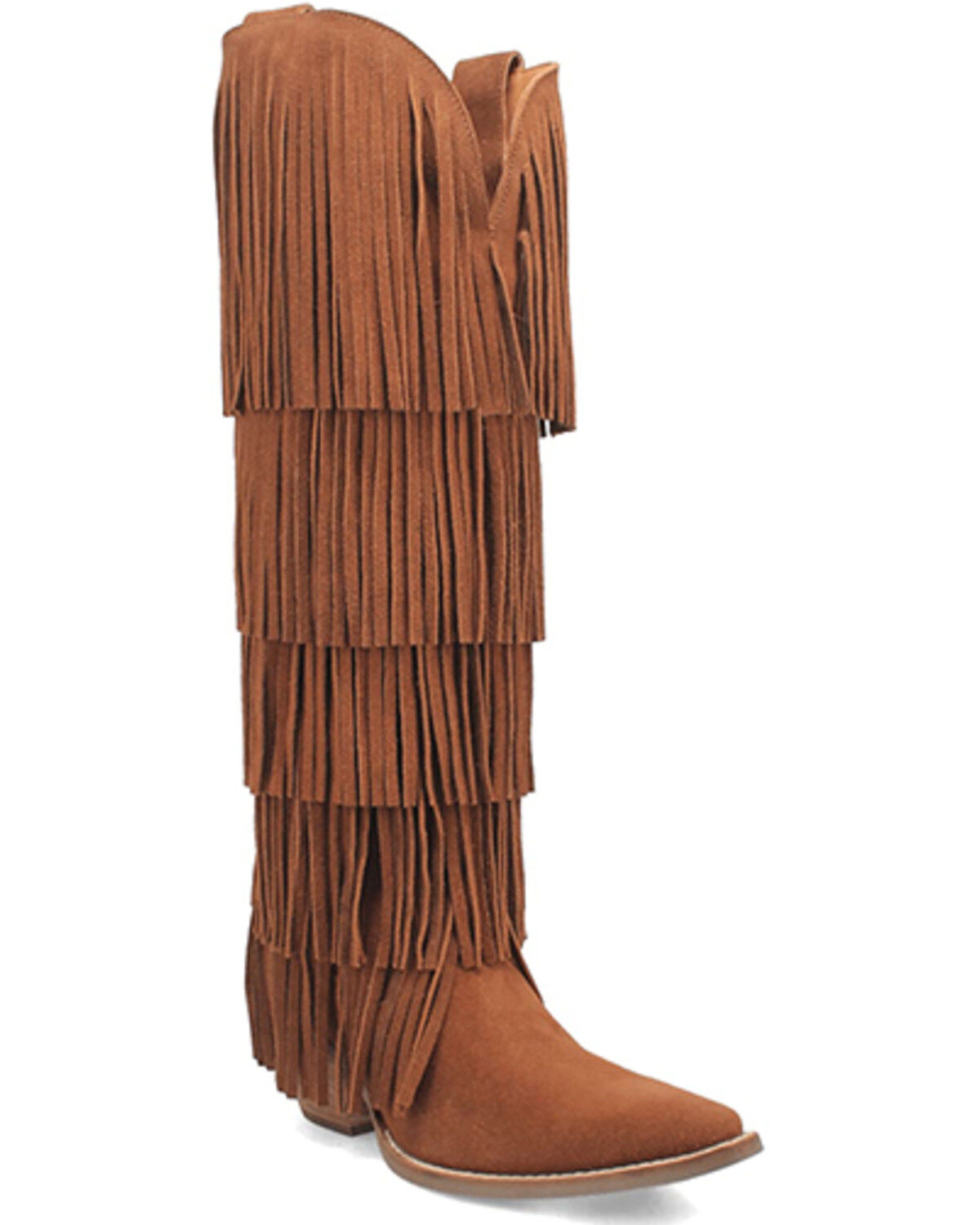
  • Girls' Shyanne Double-Fringe Western Boots - Snip Toe
    Original Price $79.99 $69.99
    13% Total Savings
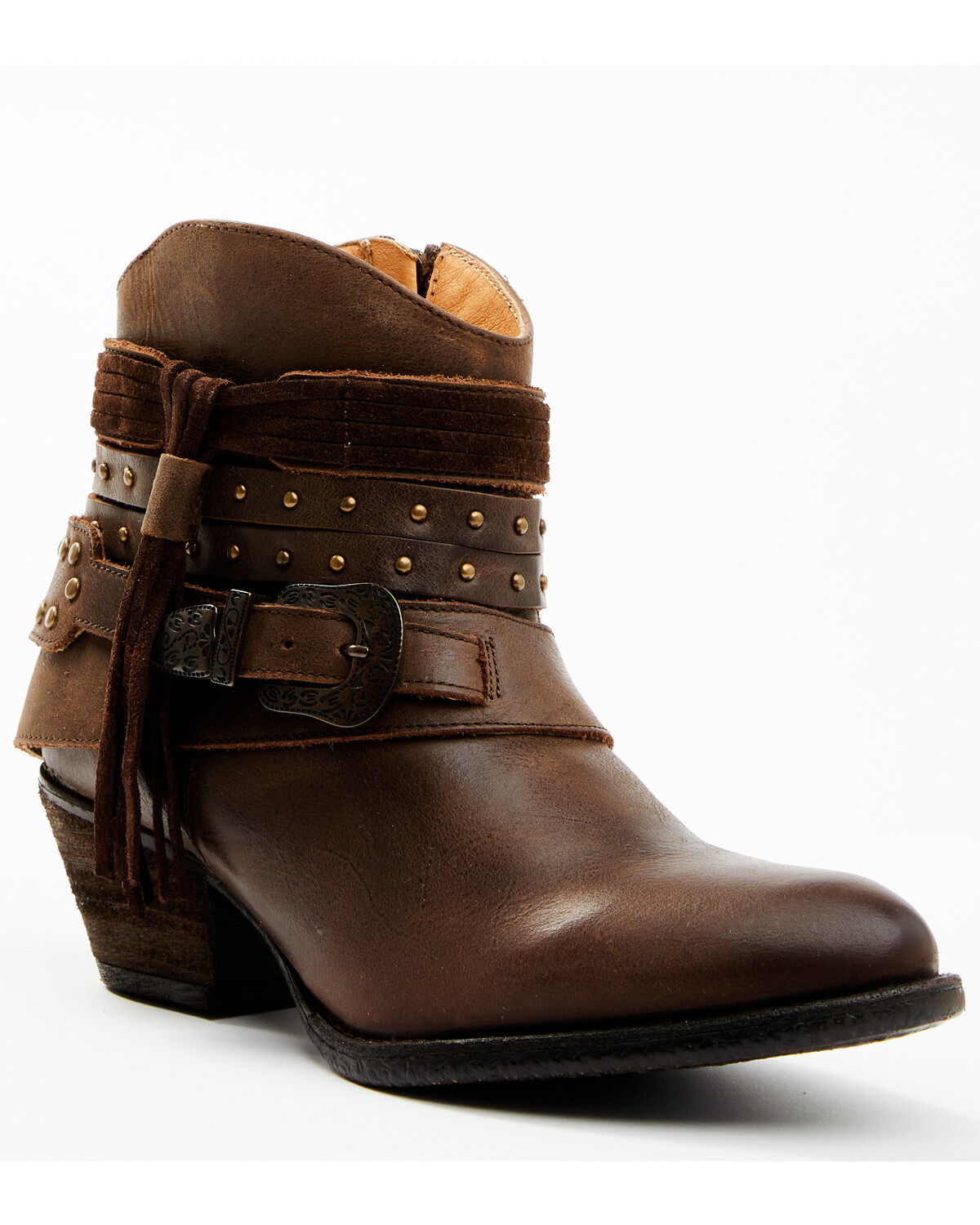
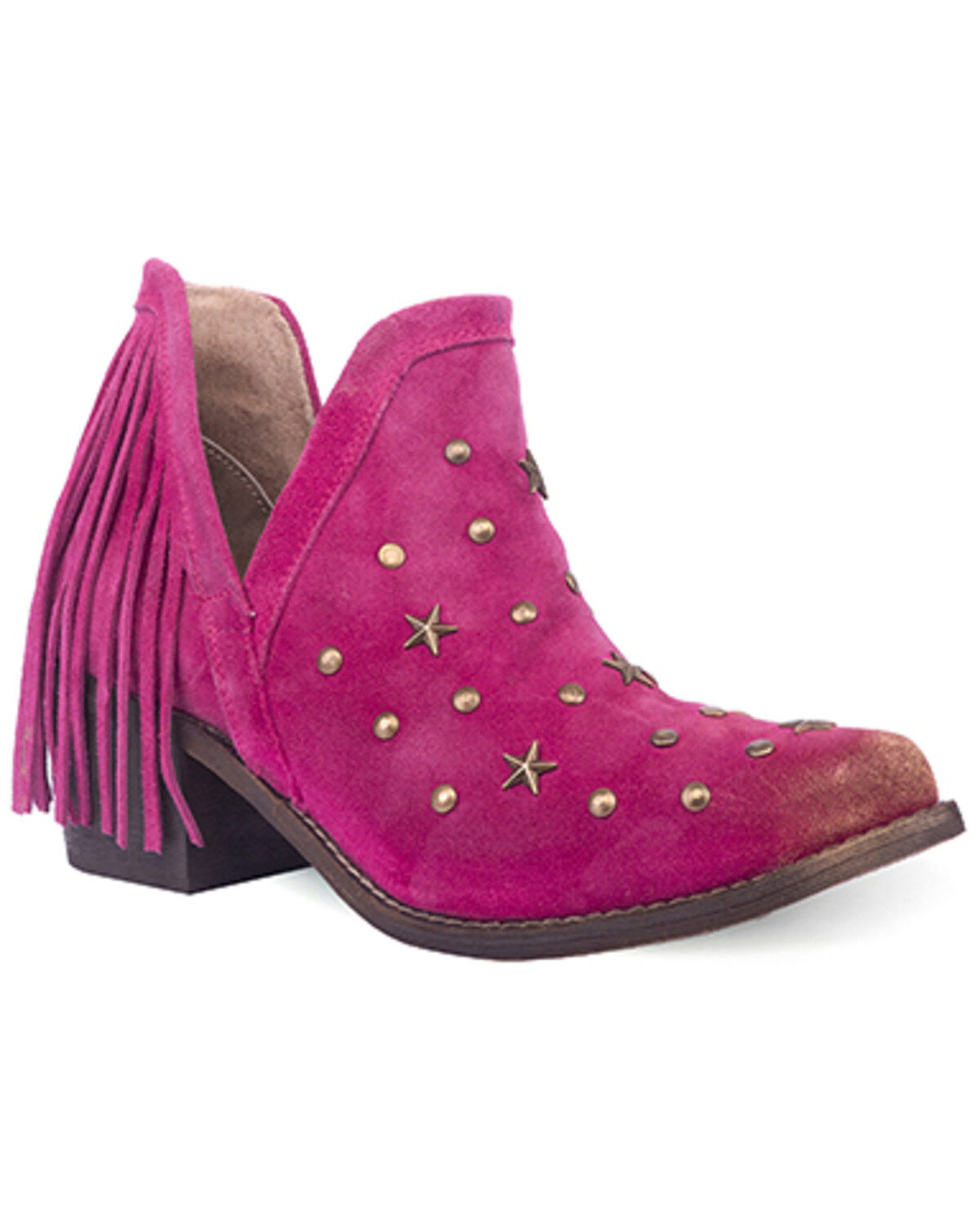
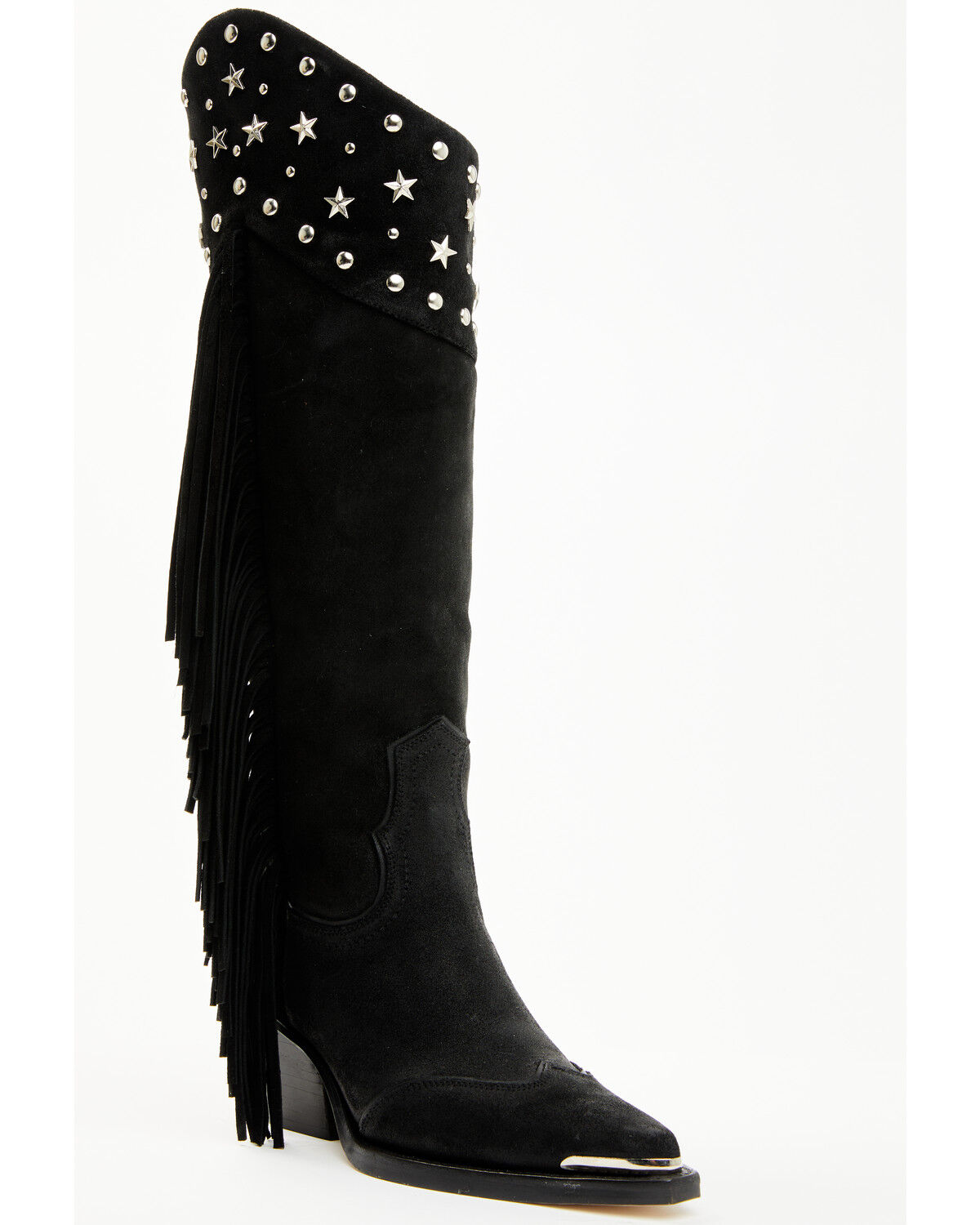
  • Women's Shyanne Sevilla Buckle Fringe Western Booties - Round Toe
    Original Price $154.99 $107.97
    30% Total Savings
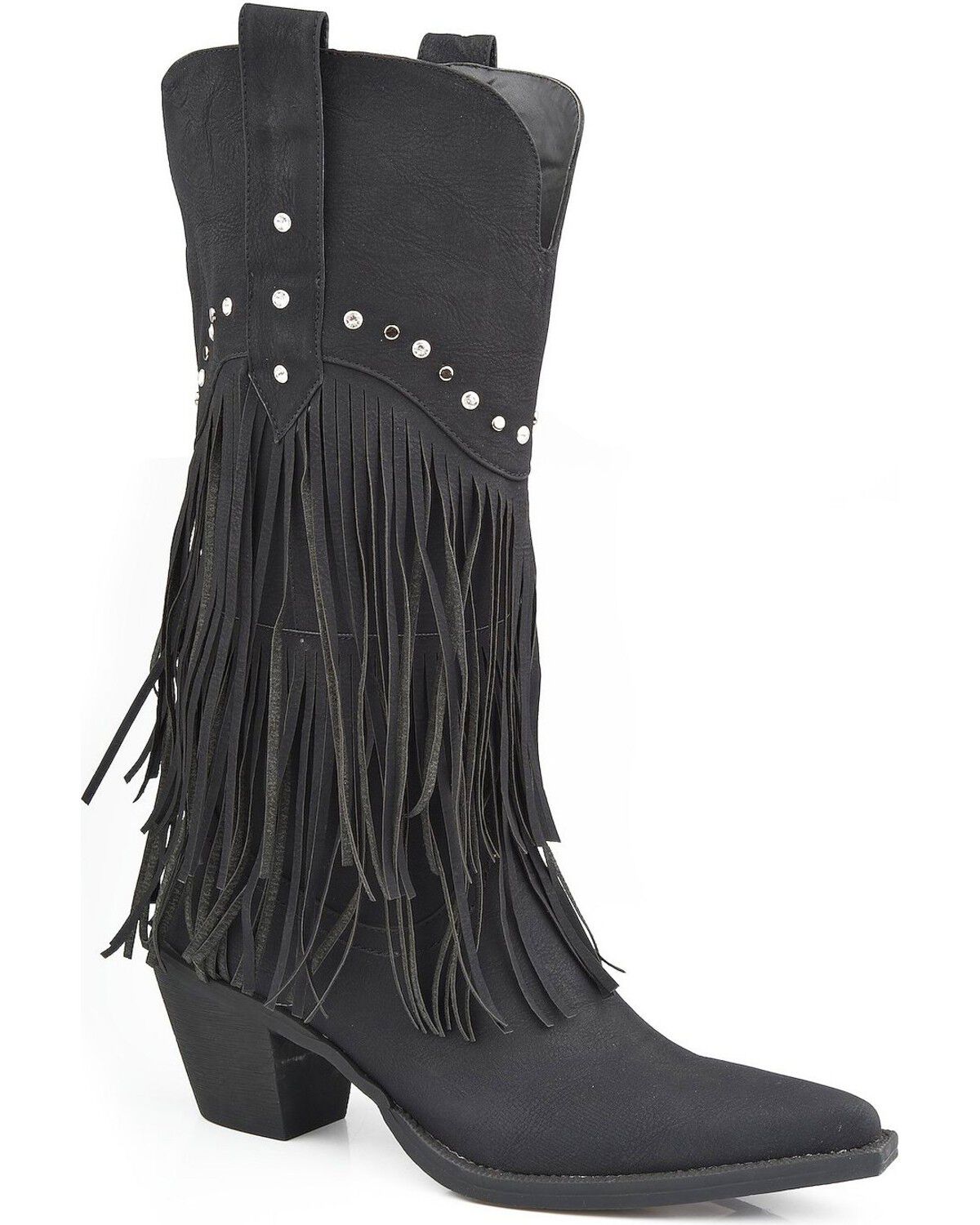
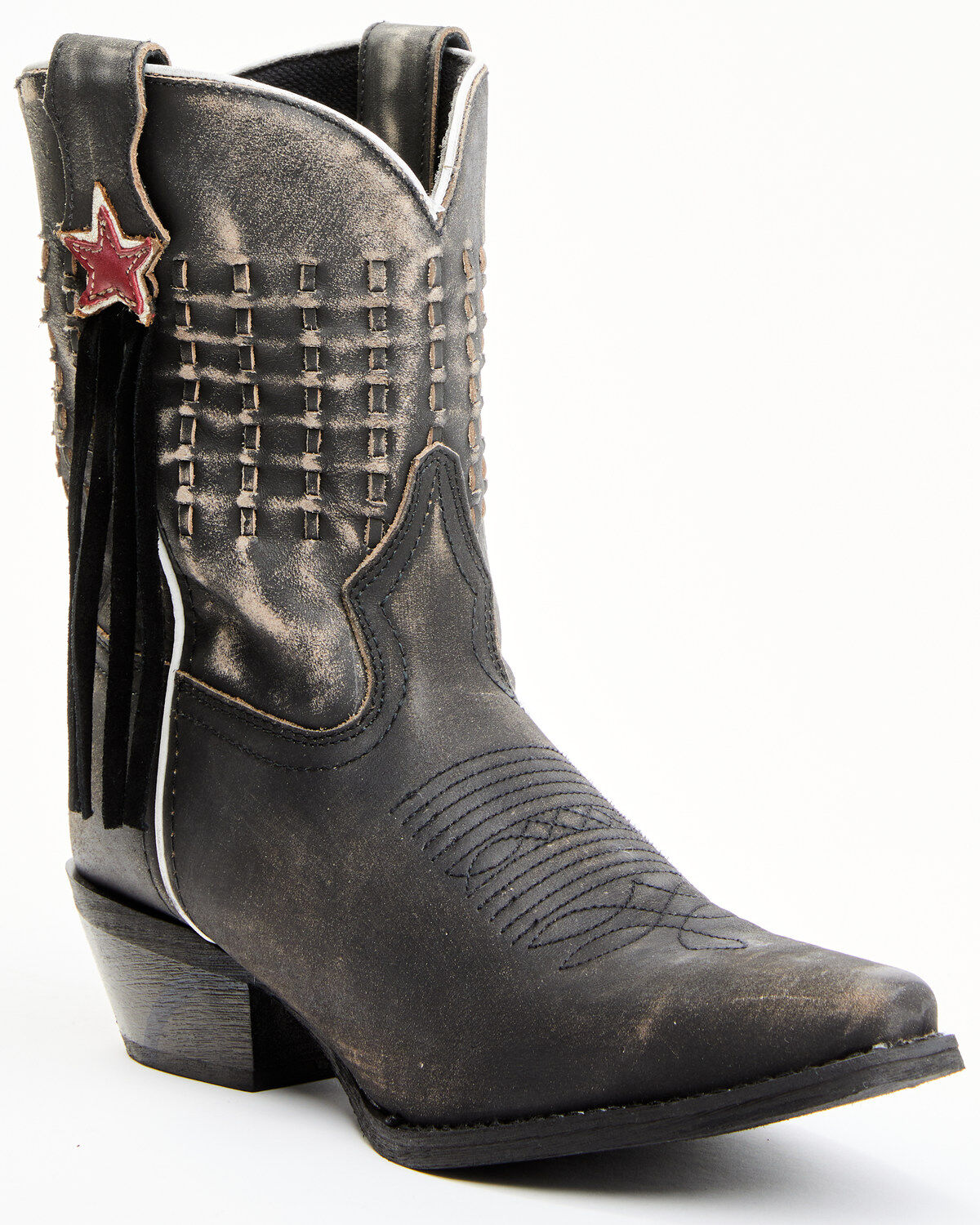
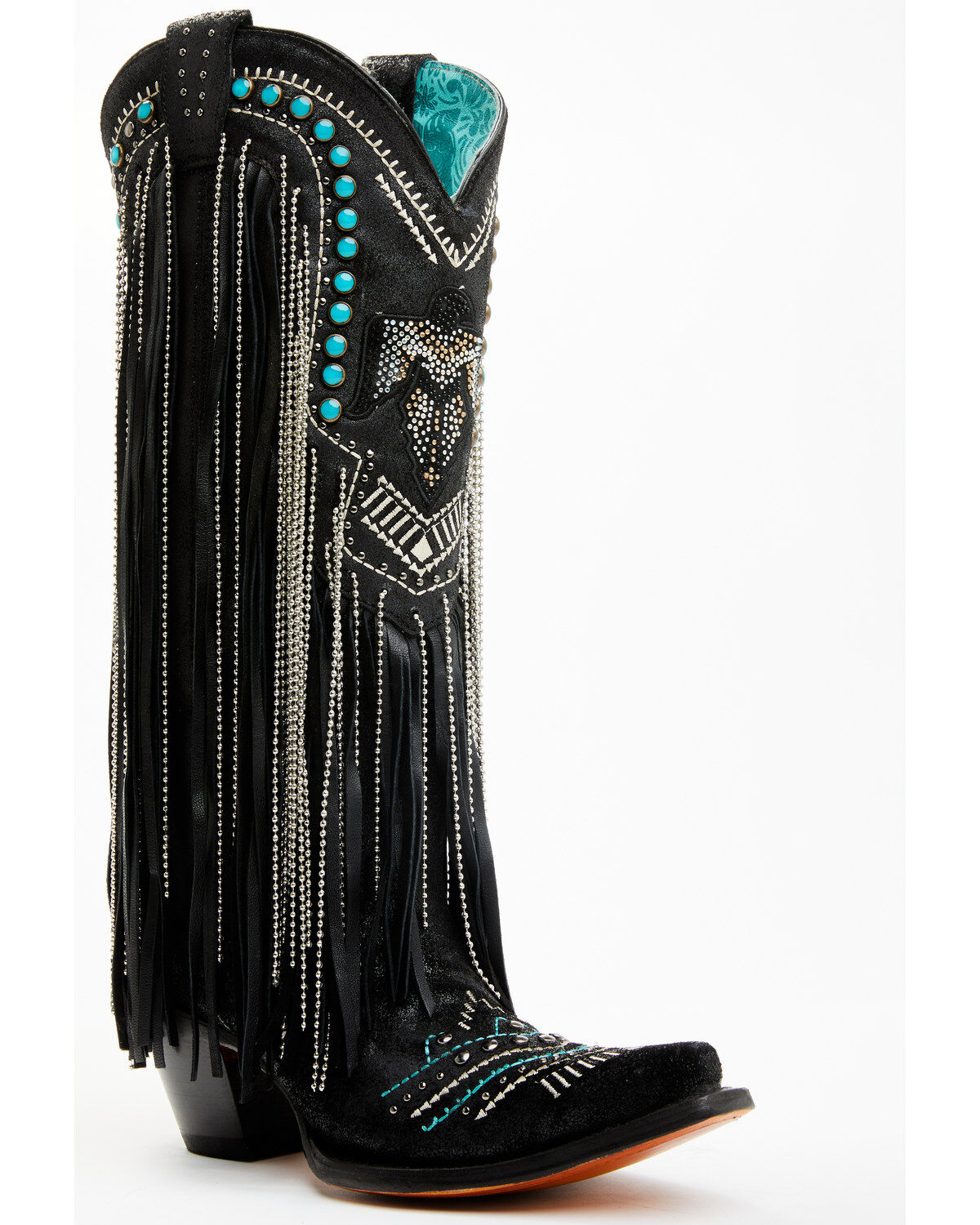
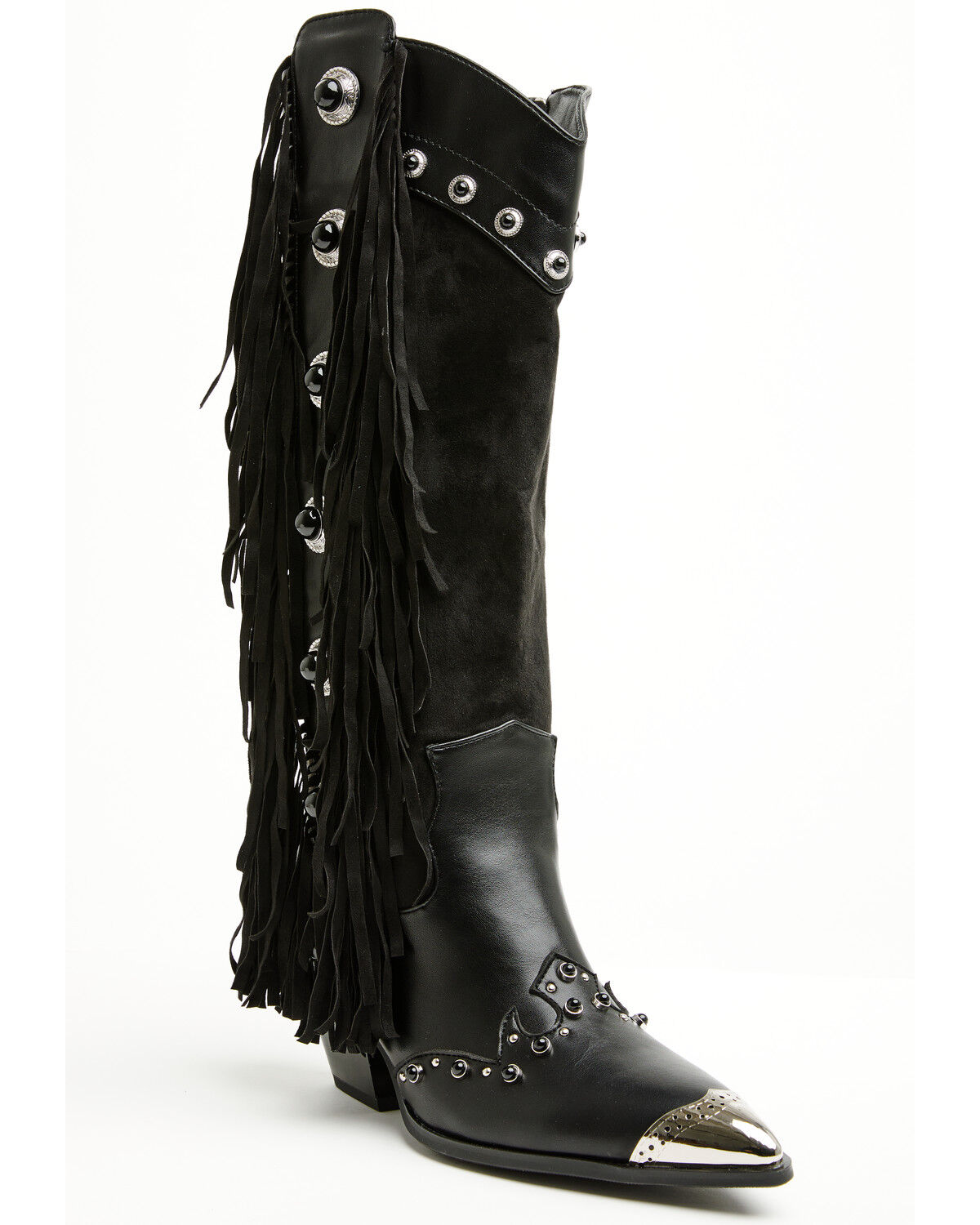
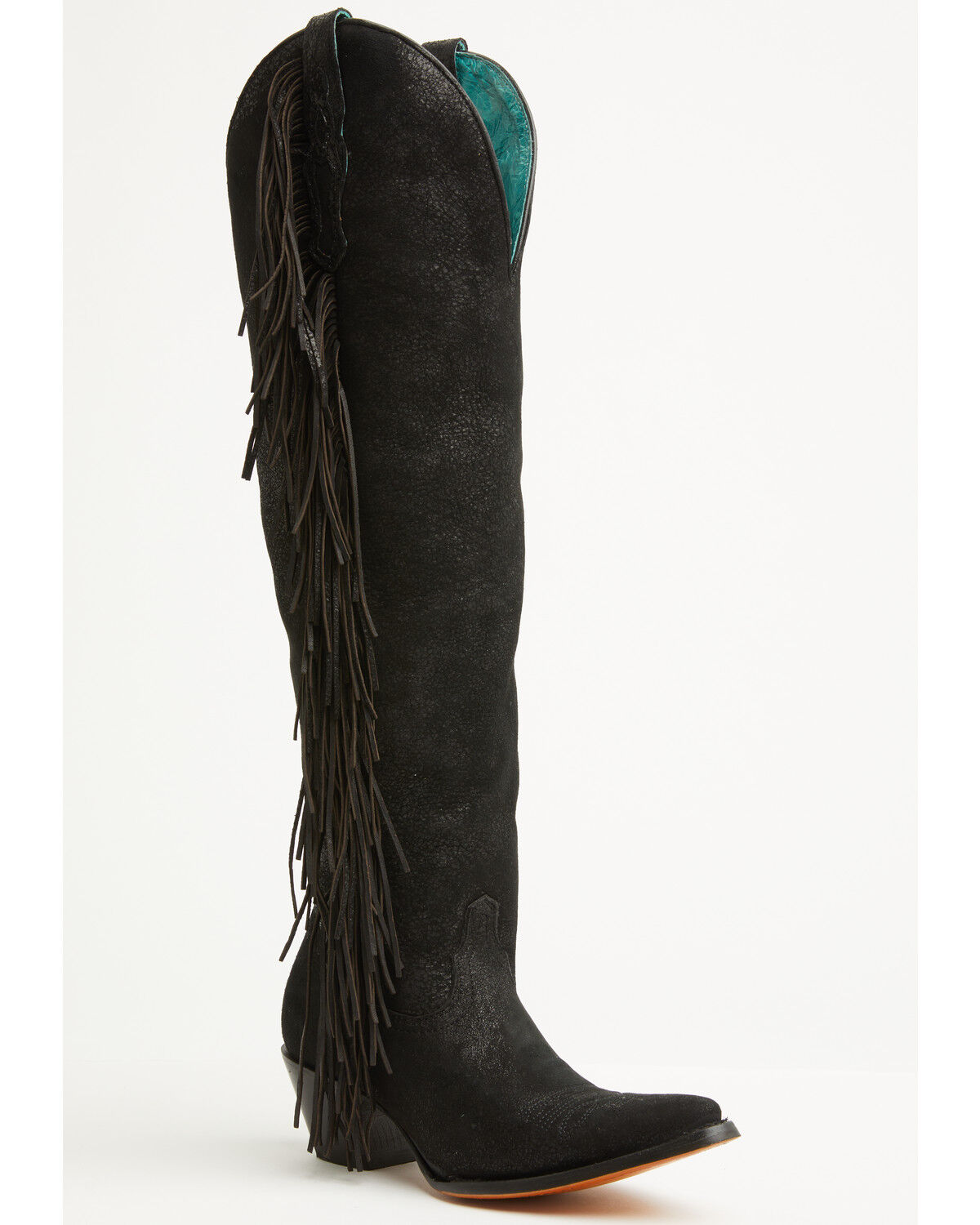
  • Women's Laredo Black Distressed Fringe Western Boots - Snip Toe
    Original Price $156.99 $108.97
    31% Total Savings
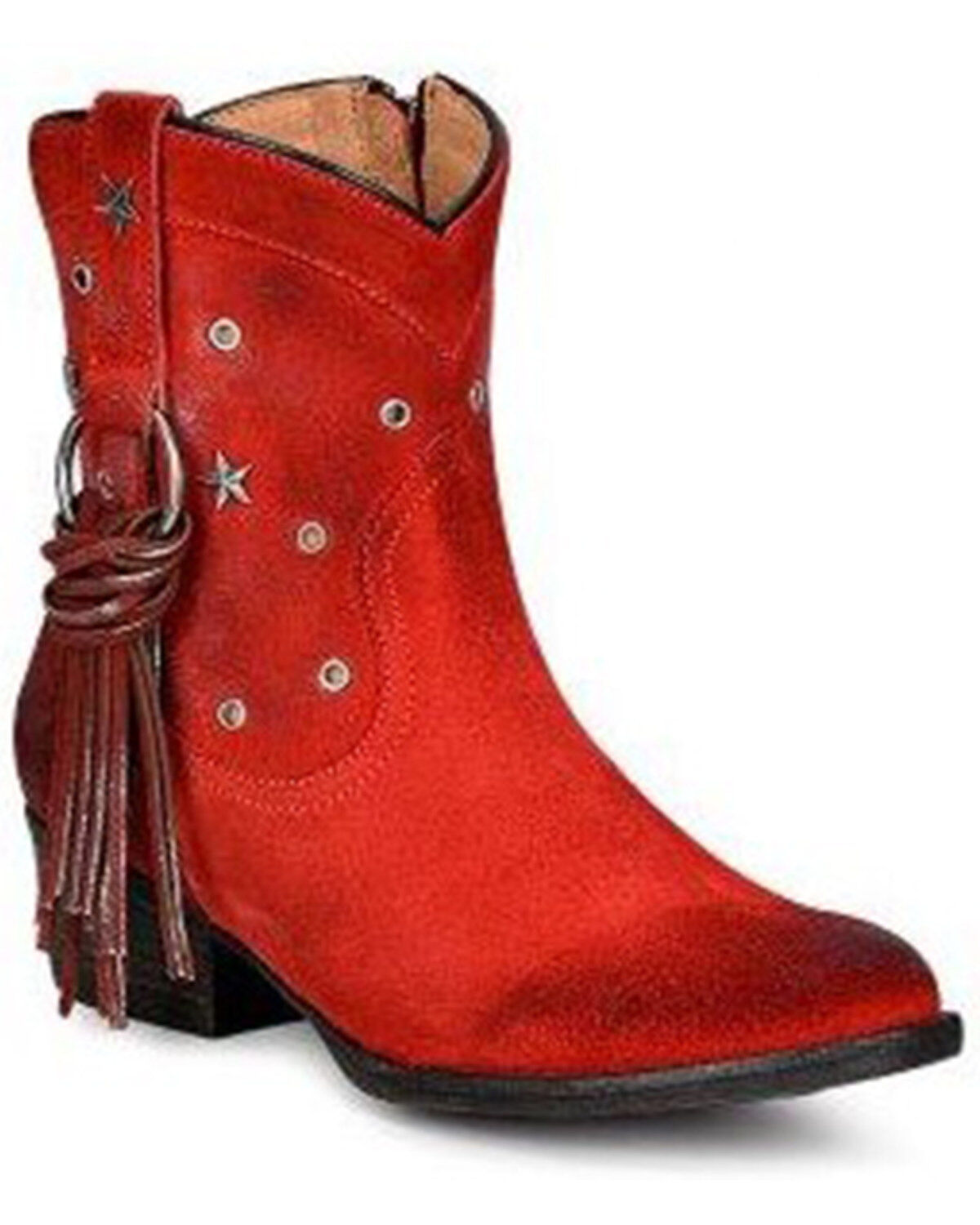
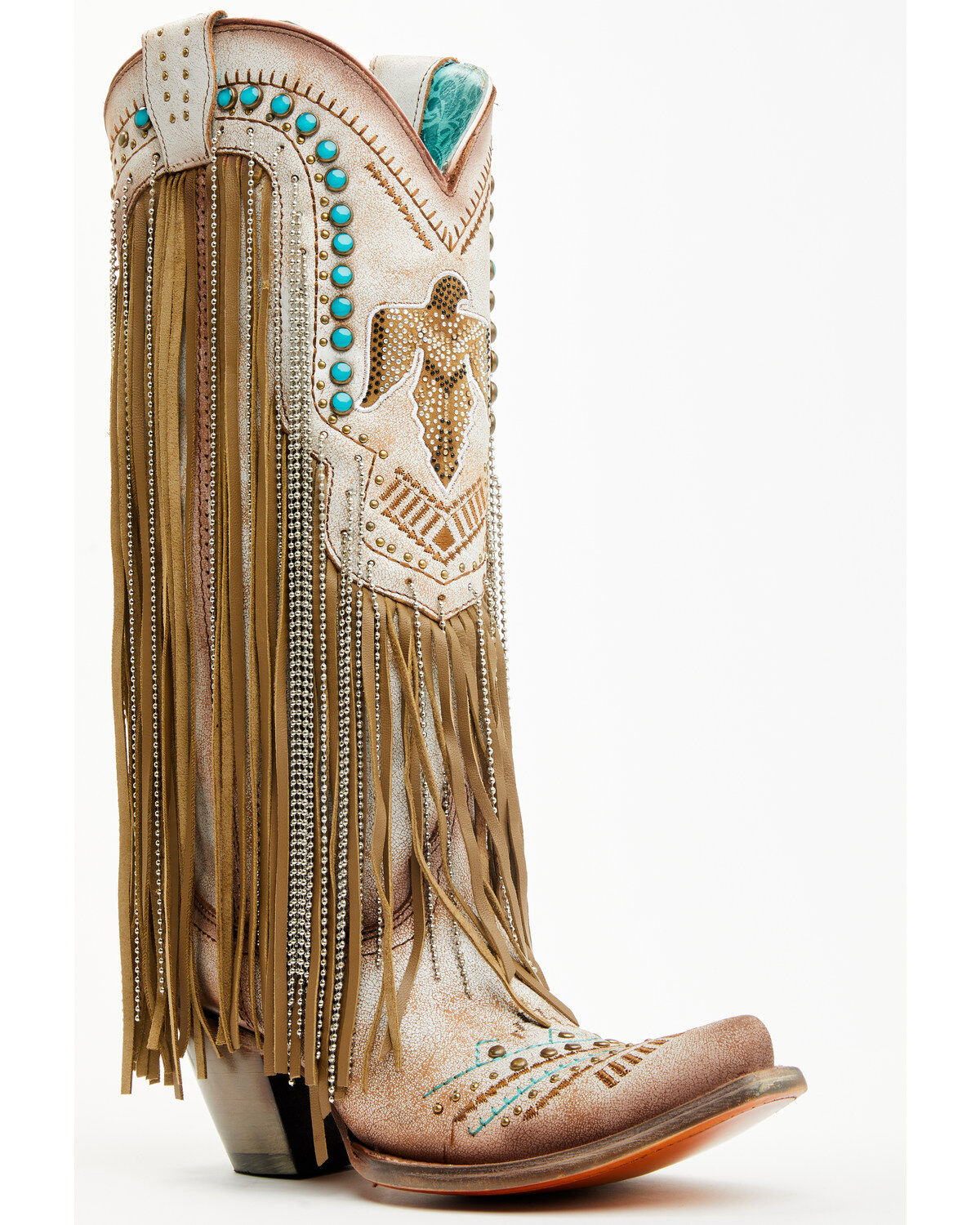
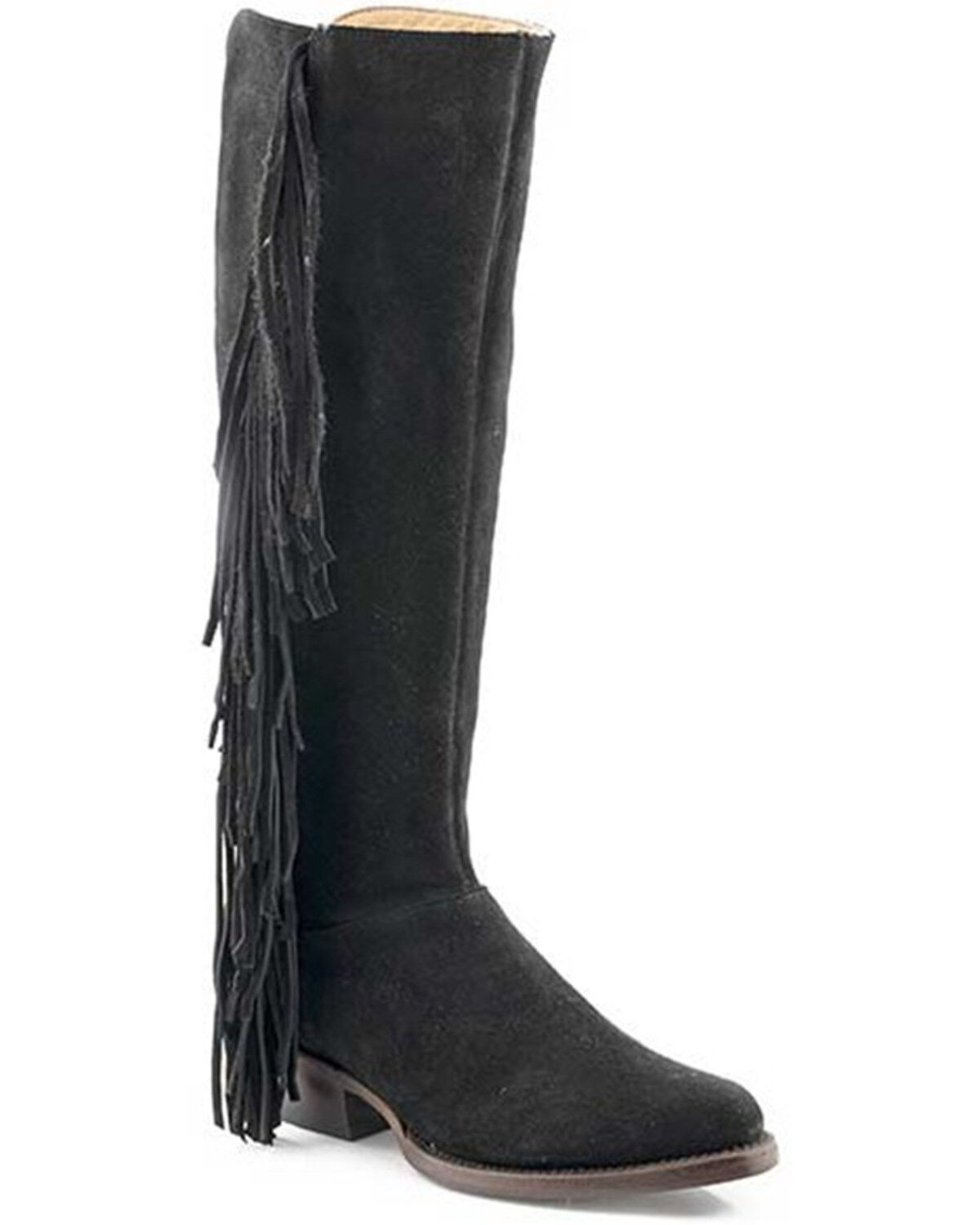
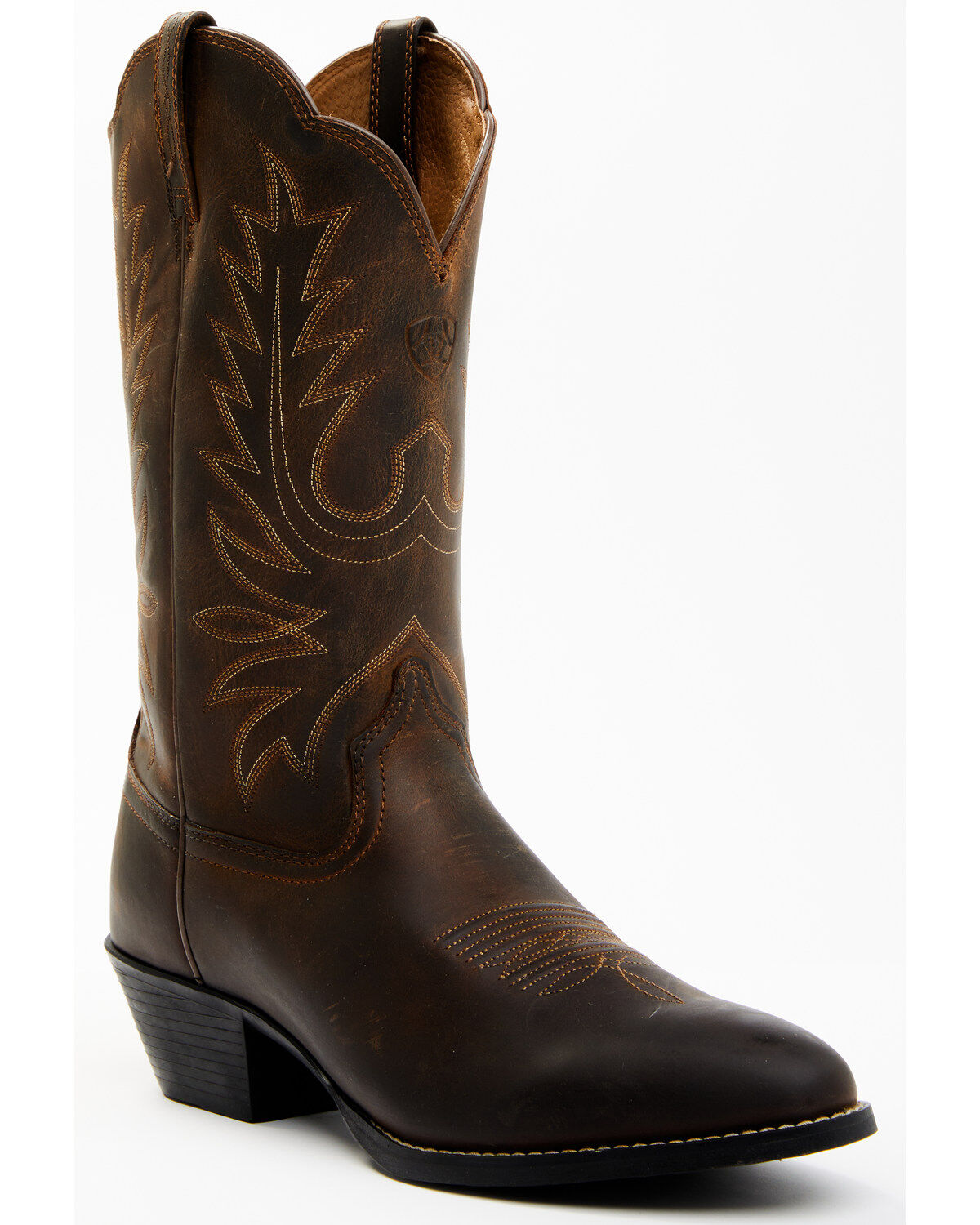
  • Women's Shyanne Sasha Western Boots - Snip Toe
    Original Price $189.99 $134.97
    29% Total Savings
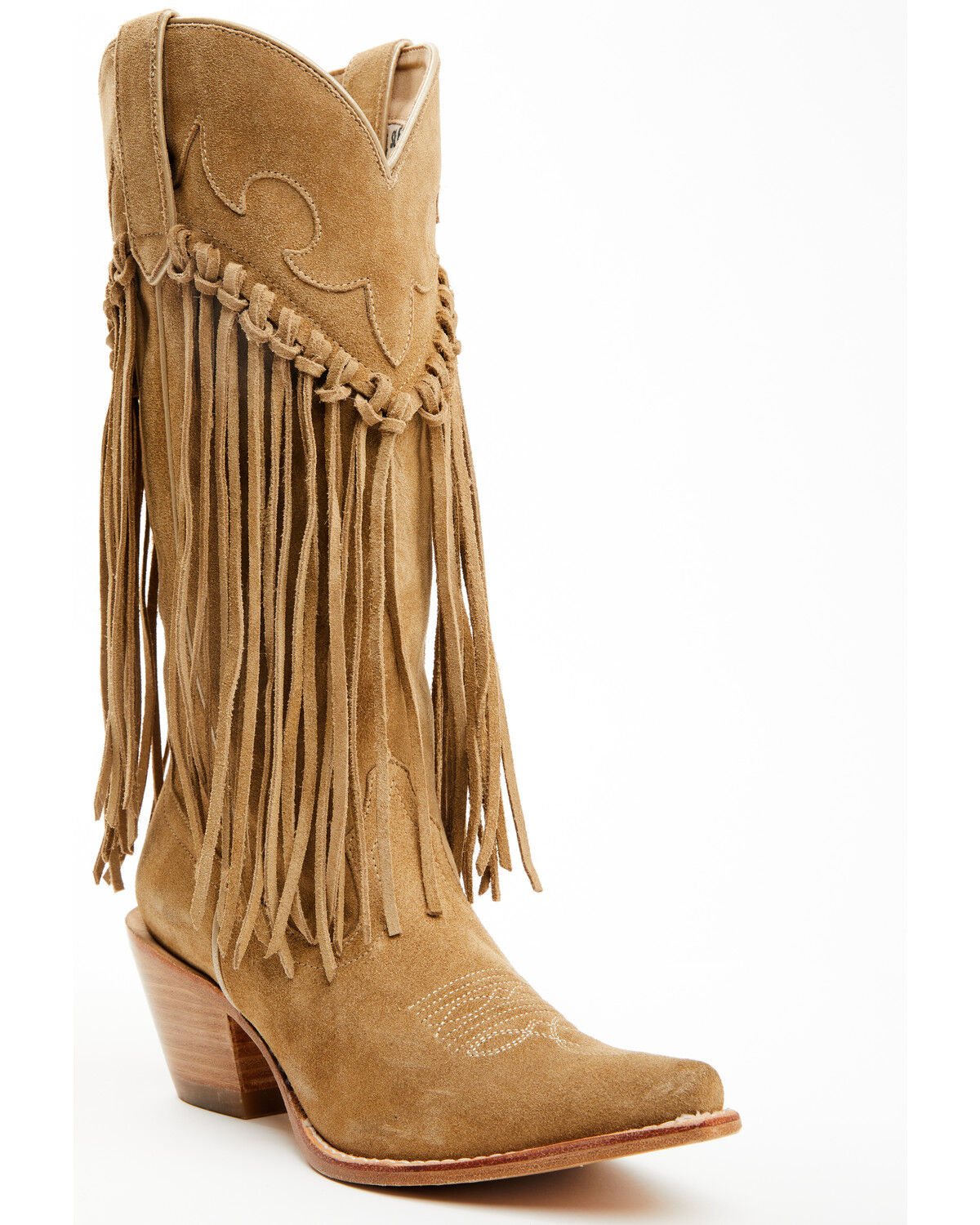
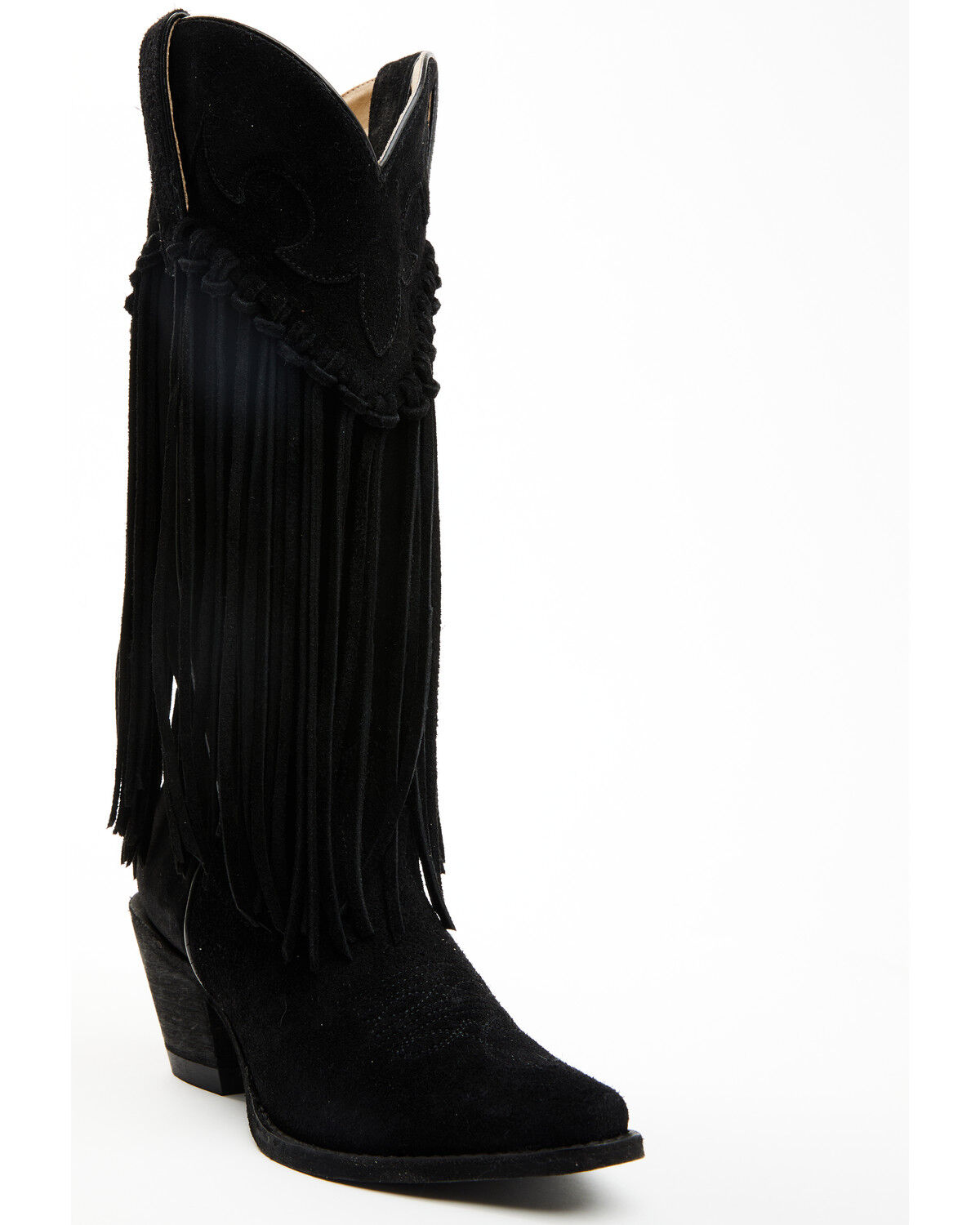
  • Girls' Dingo Wild Child Suede Fringe Western Boots - Snip Toe
    Original Price $119.99 $84.97
    29% Total Savings

End of products

Fringe Cowboy Boots

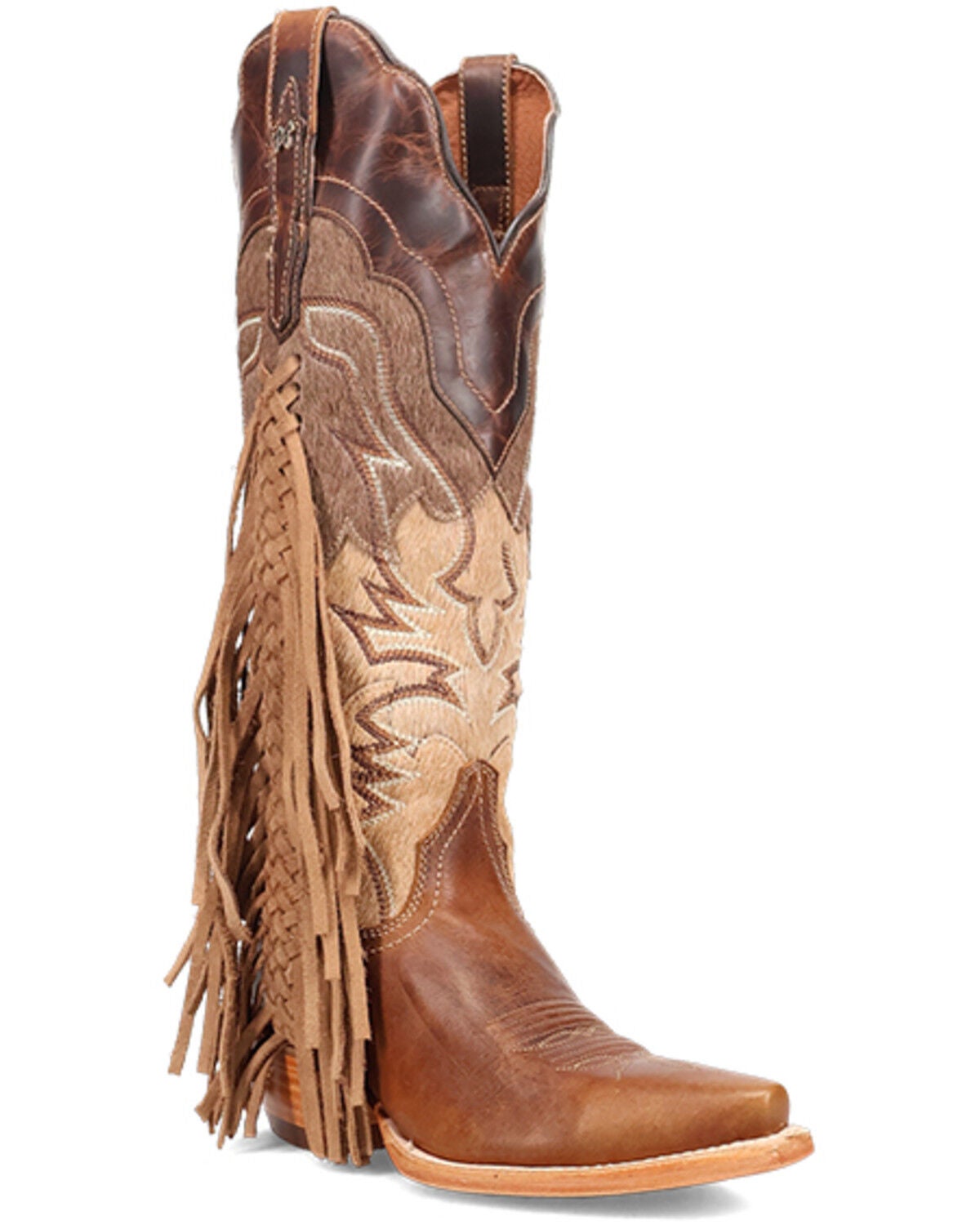
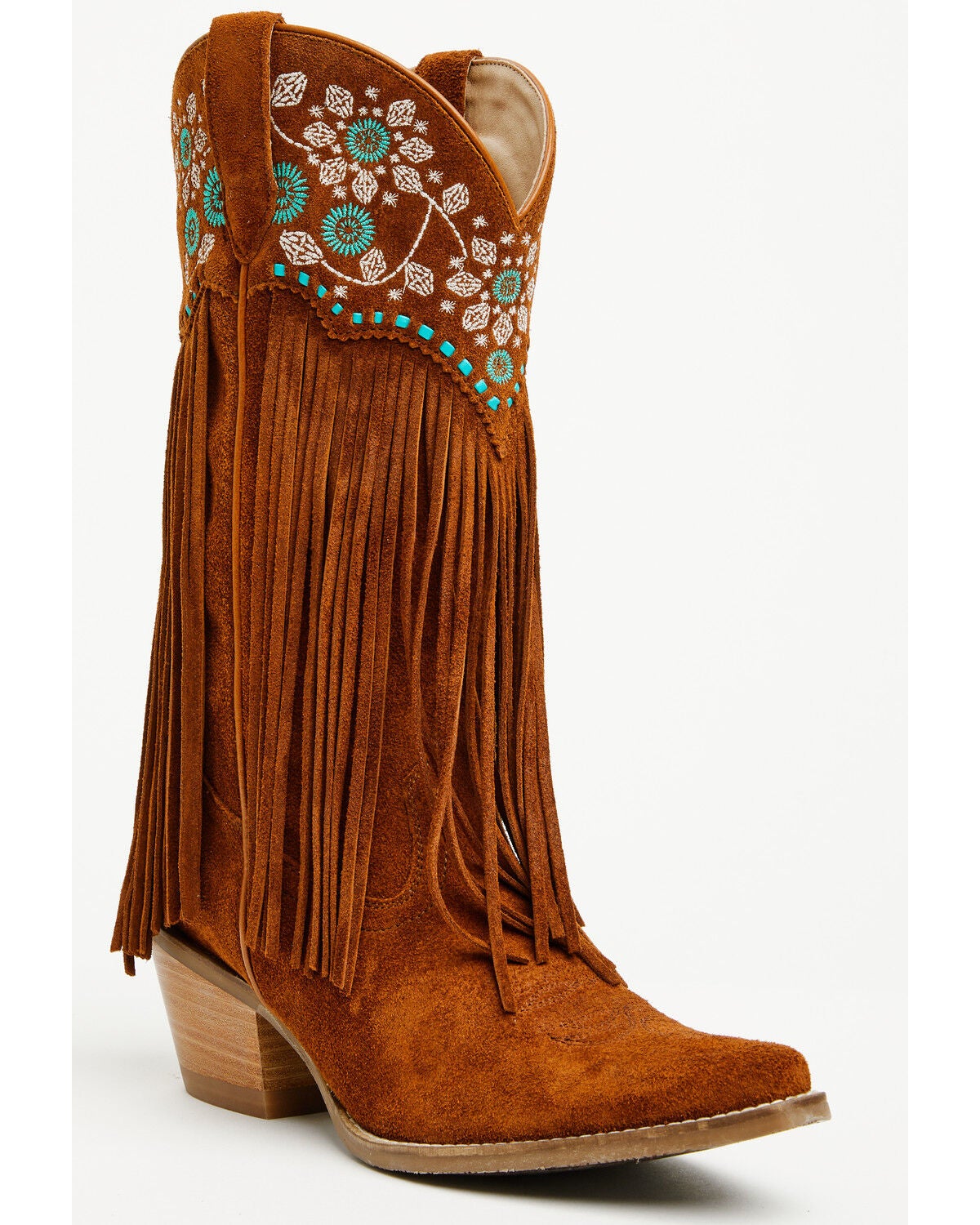
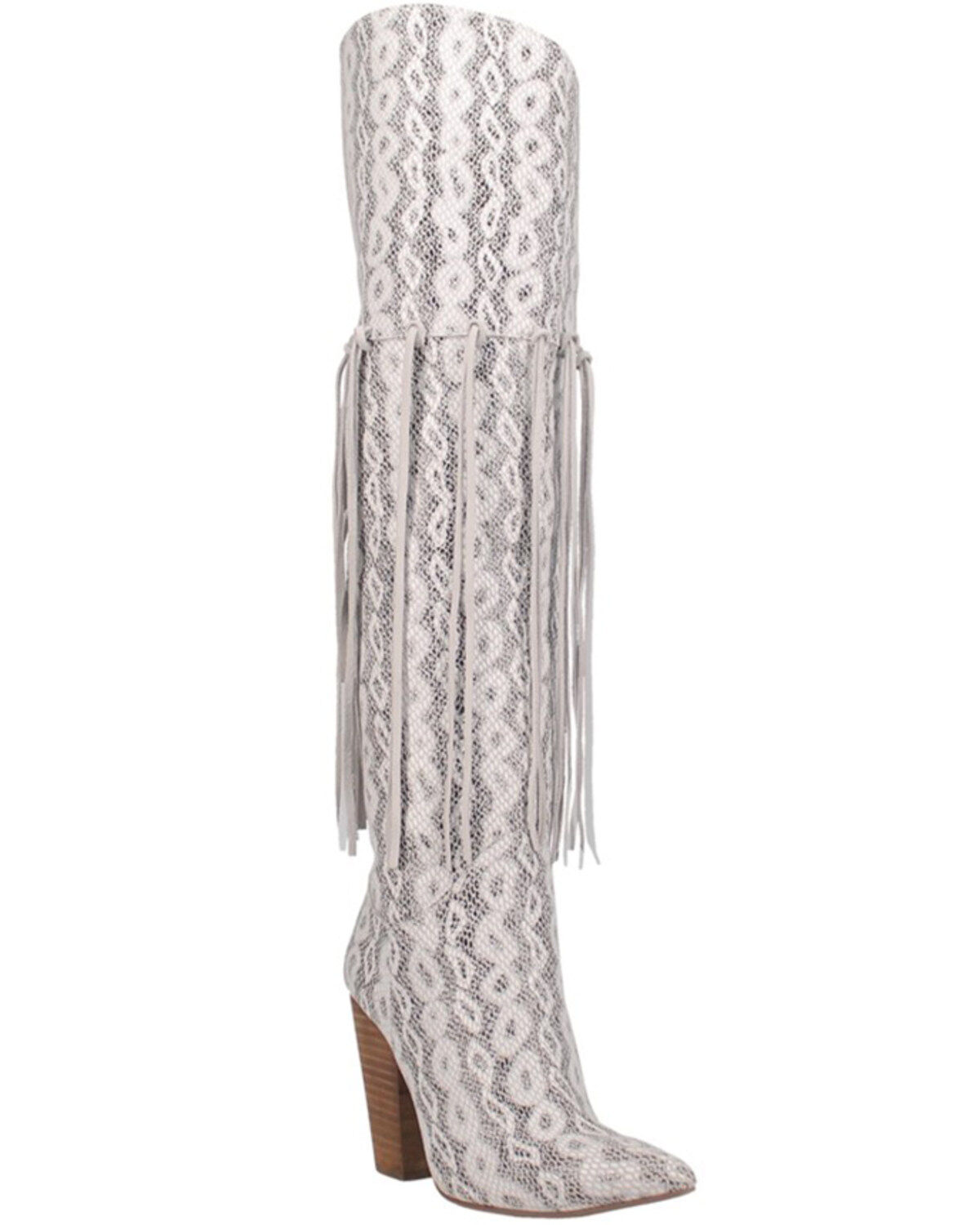
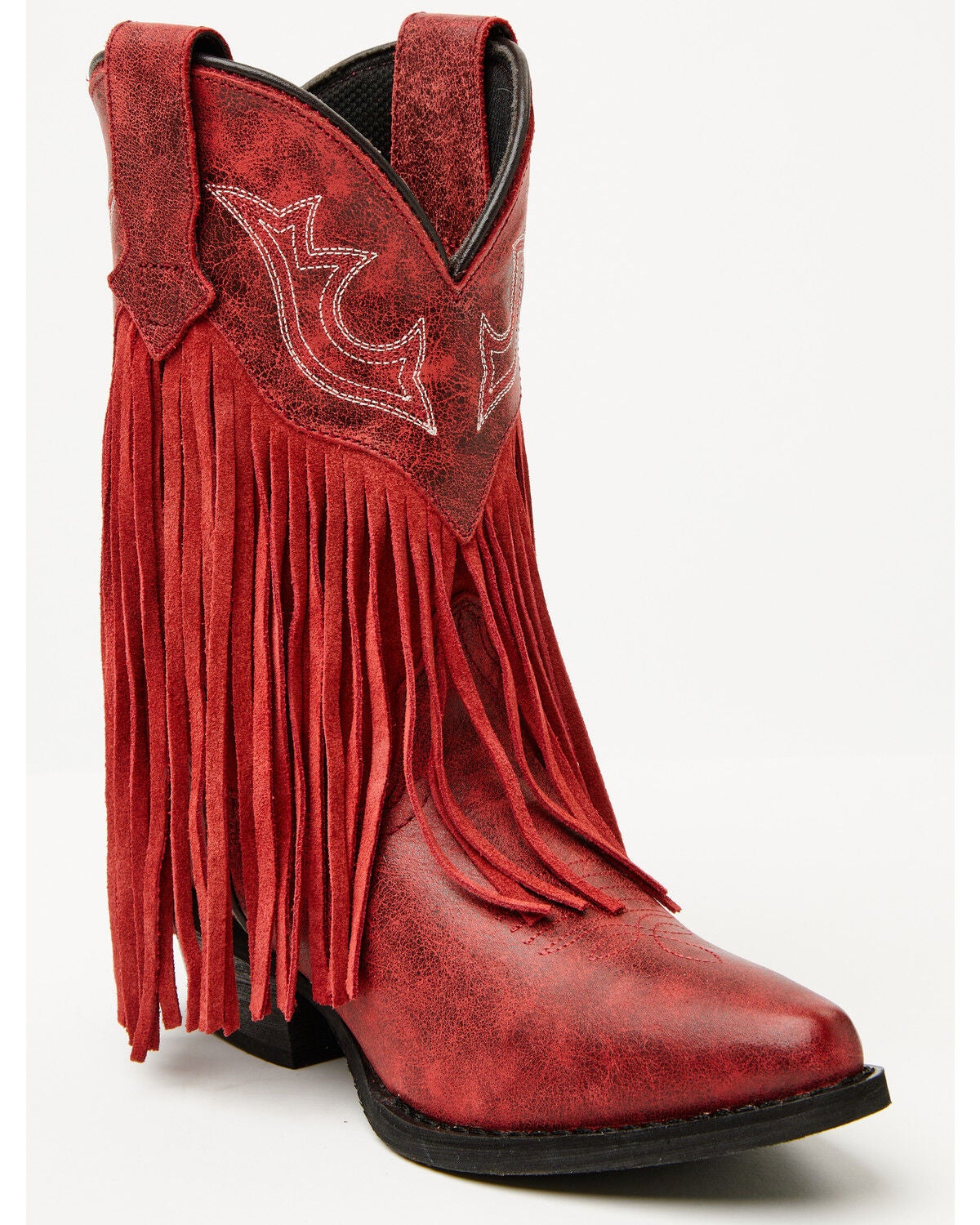
Fringe cowboy boots bring a distinct finishing detail to a familiar western shape. Strips of leather, suede, or other material hang from the shaft, cuff, or side seams, adding texture and movement without changing the boot’s basic purpose. The effect depends on the length and placement of the fringe. A short row along an ankle shaft keeps the detail close to the foot, while longer fringe on a tall shaft makes a stronger impression with every step. Western booties, mid-calf boots, and taller silhouettes offer different ways to wear that look. Toe shape matters just as much: pointed and snip toes create a narrower profile, round toes have a softer outline, and square toes give the front of the boot a broader appearance. Heel height also changes the overall shape, from lower walking heels to more pronounced fashion heels. Fringe can stand on its own or sit alongside stitching, embroidery, metal accents, and other western details. Smooth leather gives the trim a defined edge, while suede has a softer, textured finish. Black, brown, and tan work naturally with denim and neutral clothing. For contrast with dark jeans or a patterned dress, white fringe boots offer a lighter-colored option. Fringe shows most clearly when clothing leaves the shaft uncovered, whether that means a skirt, a dress, or cropped jeans that end above the boot. Straight-leg jeans can work with shorter styles, provided the hem does not bunch against the fringe. When the boots have long trim or several decorative details, a simple shirt and clean denim let those features remain visible. These are boots for everyday western outfits, country concerts, dancing, and gatherings where footwear is part of the look. The same detail can feel understated on a short shaft or prominent on a taller pair. Someone who already wears cowboy boots may want fringe as a change in texture, while someone new to western footwear may prefer a shorter silhouette that fits easily into an existing wardrobe.

Materials and construction influence how fringe cowboy boots feel and how well they hold up to repeated wear. Leather uppers can soften with use and develop individual creases, while suede offers a nap that needs different handling from smooth leather. Leather-look materials have their own cleaning requirements and may not respond to leather conditioners. The fringe itself deserves attention because narrow strips move, rub against one another, and can catch on nearby objects. Secure attachment, even stitching, and neatly finished seams matter at the places where the trim joins the shaft. More decoration does not necessarily mean greater durability; the strength of the underlying boot remains important. A comfortable fit starts with enough room across the forefoot and around the toes, without allowing the foot to slide excessively. The instep should feel secure rather than painfully tight. A small amount of heel movement can be normal in a new pull-on western boot, but pronounced lifting or forward slipping can signal a poor fit. Leather may relax across the foot, yet a boot that is too short should not be expected to become longer with wear. Trying boots with the socks intended for them gives a more useful sense of fit than relying on a size number alone. Shaft width matters with taller designs, especially when sitting, walking, or wearing jeans tucked inside. A side zipper can make entry easier, though fringe should stay clear of its teeth. Underfoot, cushioning, arch support, outsole material, and heel height all affect comfort. A lower, broader heel may feel steadier for extended walking, while a taller heel changes weight distribution and the angle of the foot. Leather and rubber outsoles also behave differently across surfaces, so traction and intended use deserve attention. A pair chosen mainly for seated dinners has different demands from one worn through a full evening of standing and dancing. Decorative western boots are not a substitute for footwear with required workplace safety features, and fringe is a style detail rather than a measure of protection or support.

Regular care helps preserve both the boot and the trim. Dust can settle between fringe strips and around decorative stitching, so gentle cleaning is more effective than letting buildup remain. Smooth leather generally benefits from a soft cloth and a cleaner suited to its finish. Conditioner should also match the material, with a small test on an inconspicuous area before broader application. Suede needs a suede brush and appropriate cleaning products rather than the same treatment used on smooth leather. Heavy creams or oils can darken suede, flatten its texture, or leave uneven marks. Fringe should be handled gently during cleaning, without pulling at its attachment points or scrubbing the narrow strips aggressively. If the boots get damp, let them dry naturally away from direct heat. A hair dryer or heater can dry leather too quickly and leave the trim stiff or misshapen. Storage matters as well: upright shafts and enough space around each boot help prevent fringe from being crushed beneath other footwear. Boot supports can maintain the shaft’s shape, but they should not stretch it beyond its natural width. Long fringe is best kept away from rough edges, chair hardware, and anything likely to snag it. Occasional checks of the seams, heel surfaces, and soles can reveal wear before it becomes a larger repair. Loose stitching or damaged attachments are better assessed by a footwear repair professional than trimmed or glued without knowing how the boot is assembled. For a gift, the recipient’s usual boot size is only part of the decision. Preferred toe shape, heel height, calf fit, and tolerance for bold details are equally useful. Someone who favors plain denim and simple shirts may appreciate fringe as the main accent, while someone who wears detailed western clothing may prefer trim that complements rather than competes with it. The strongest choice combines a look the wearer enjoys with a fit suited to the way the boots will be worn. Comfortable construction and thoughtful care give that distinctive fringe detail a lasting place in an everyday wardrobe.

FAQs