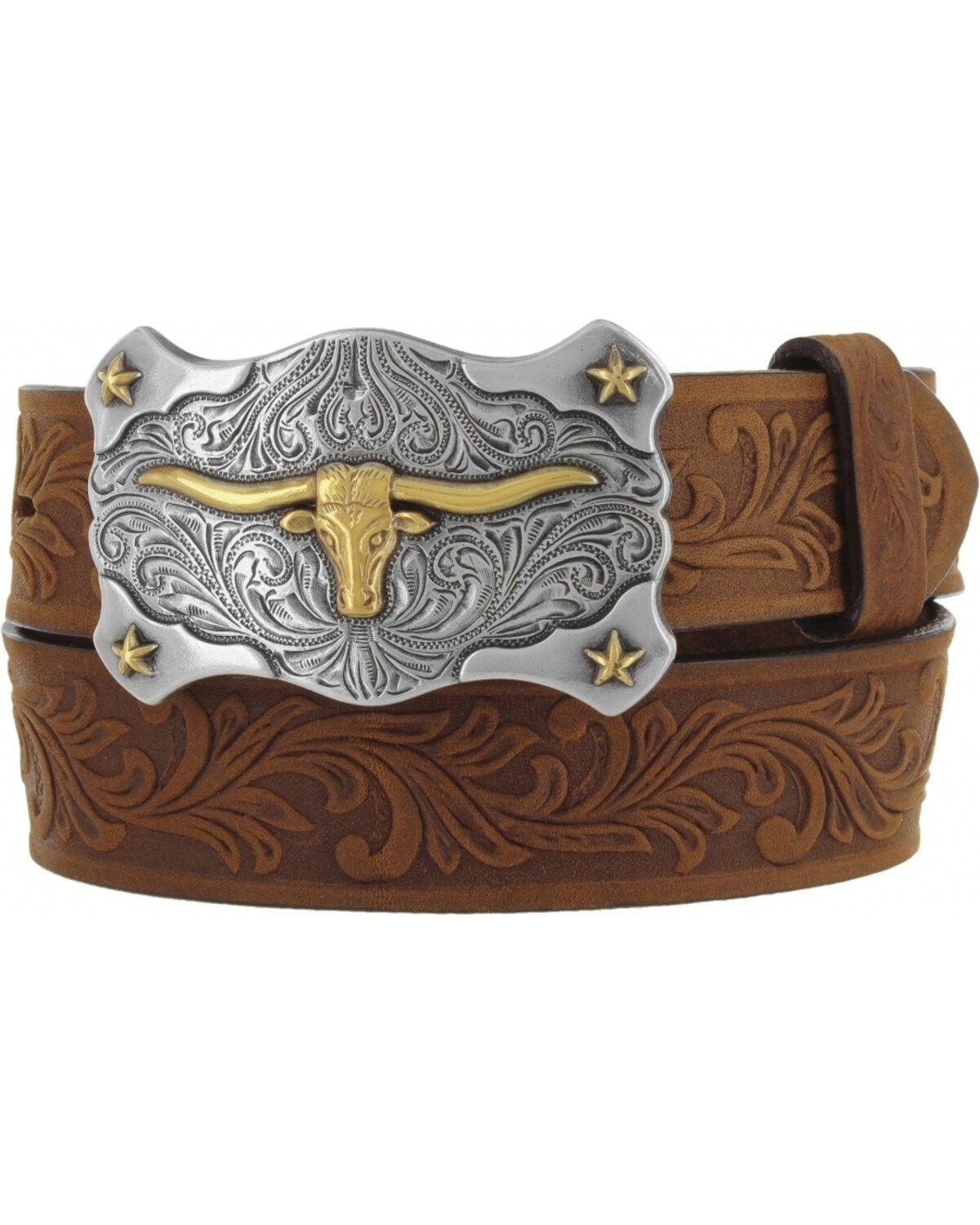
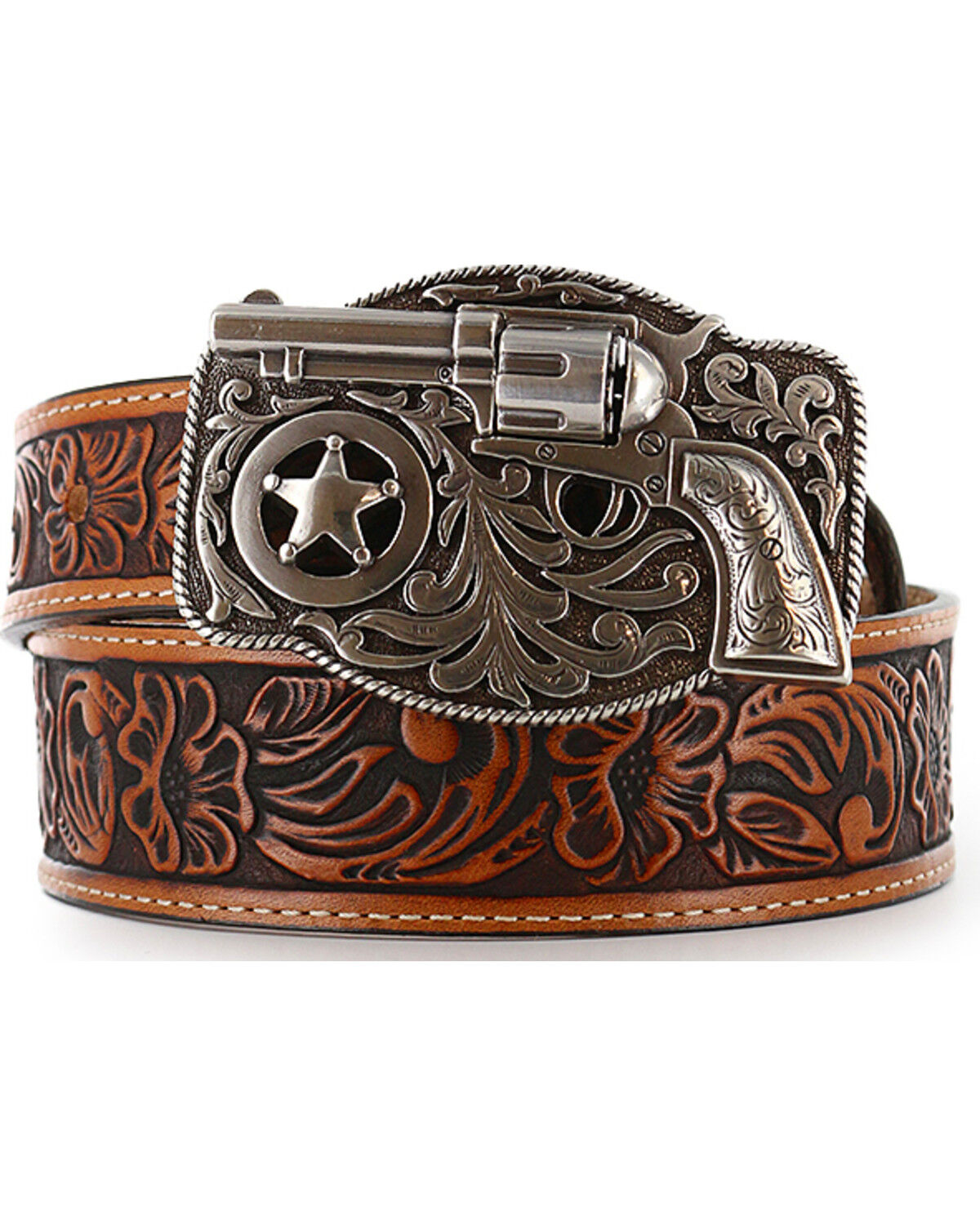
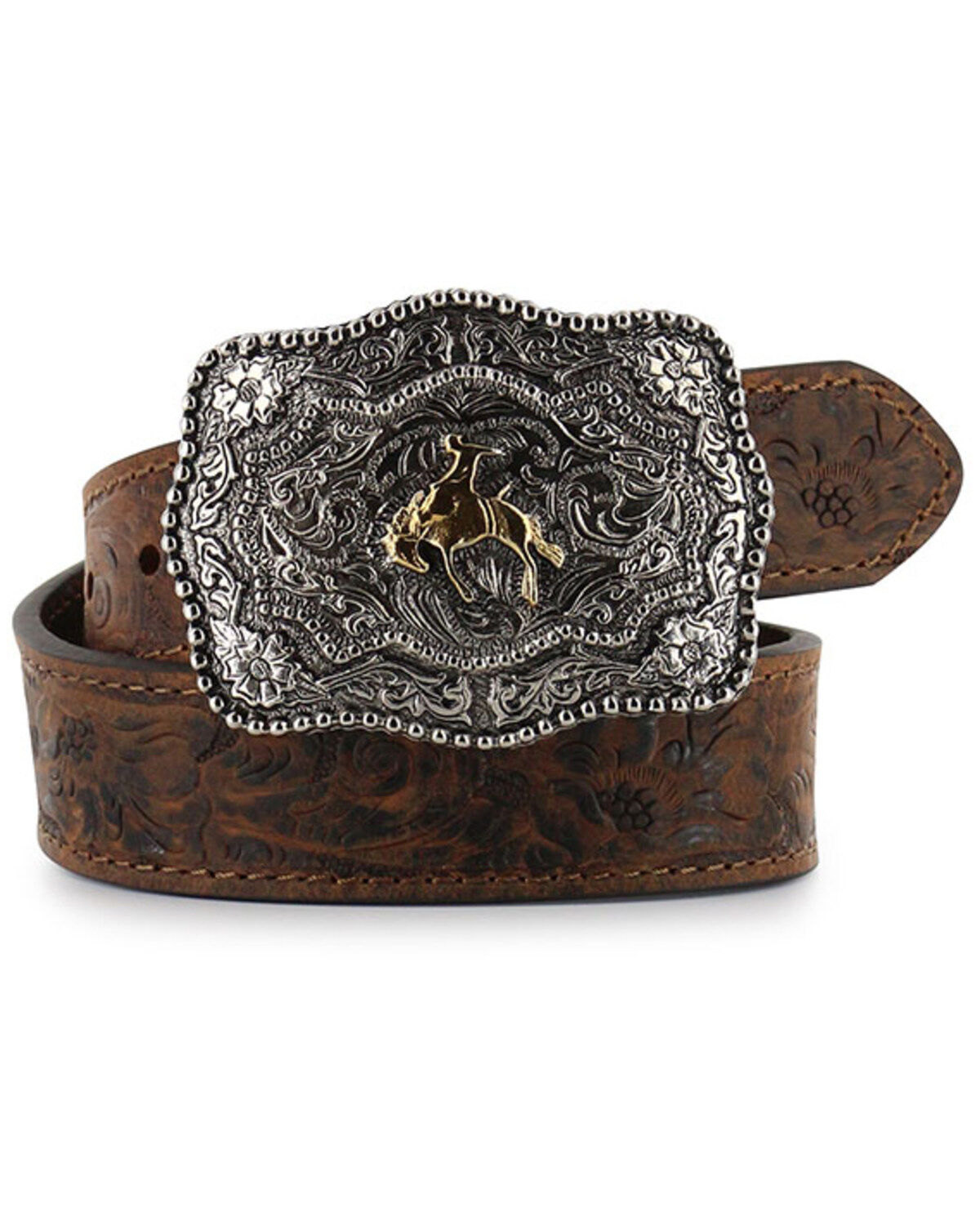
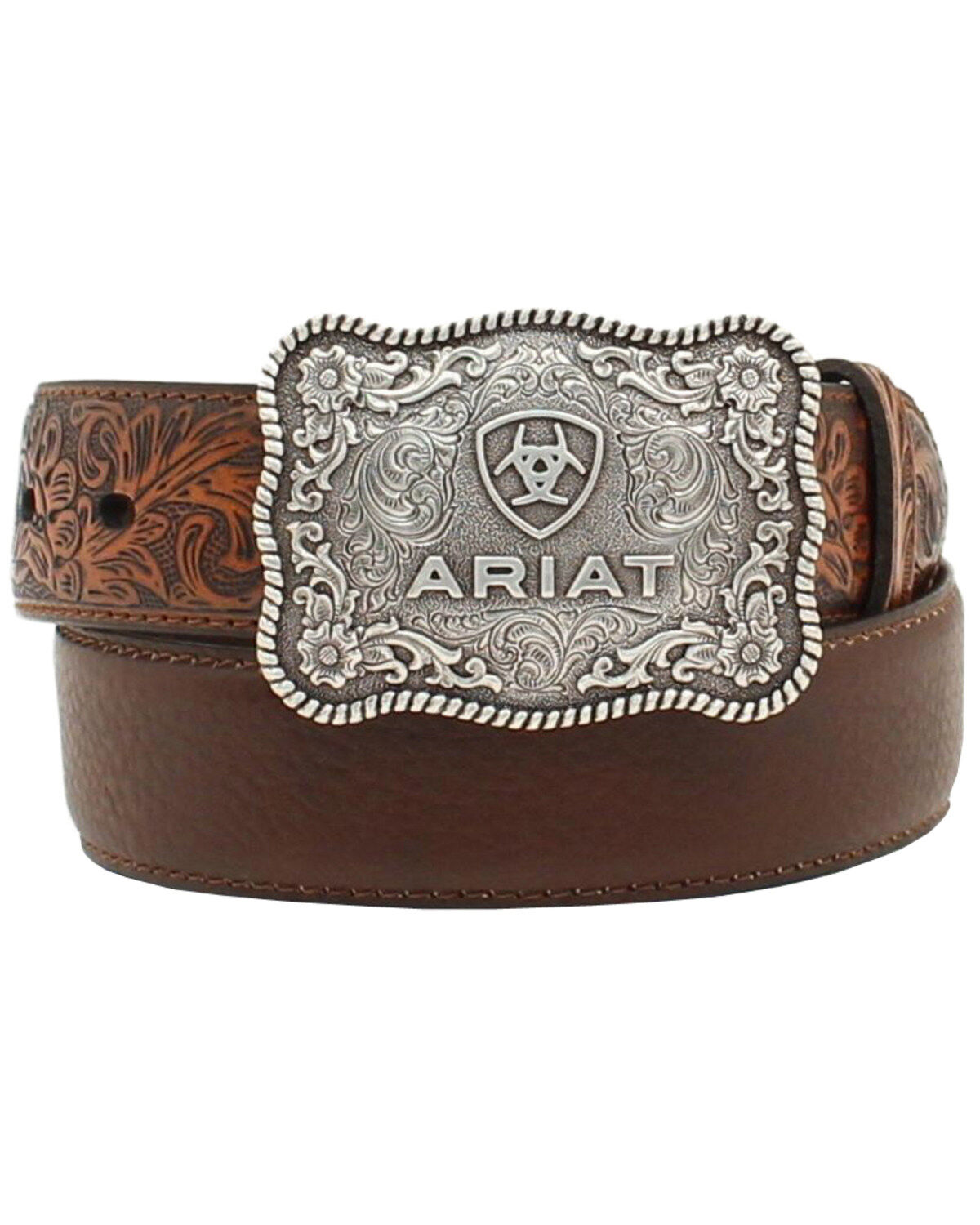
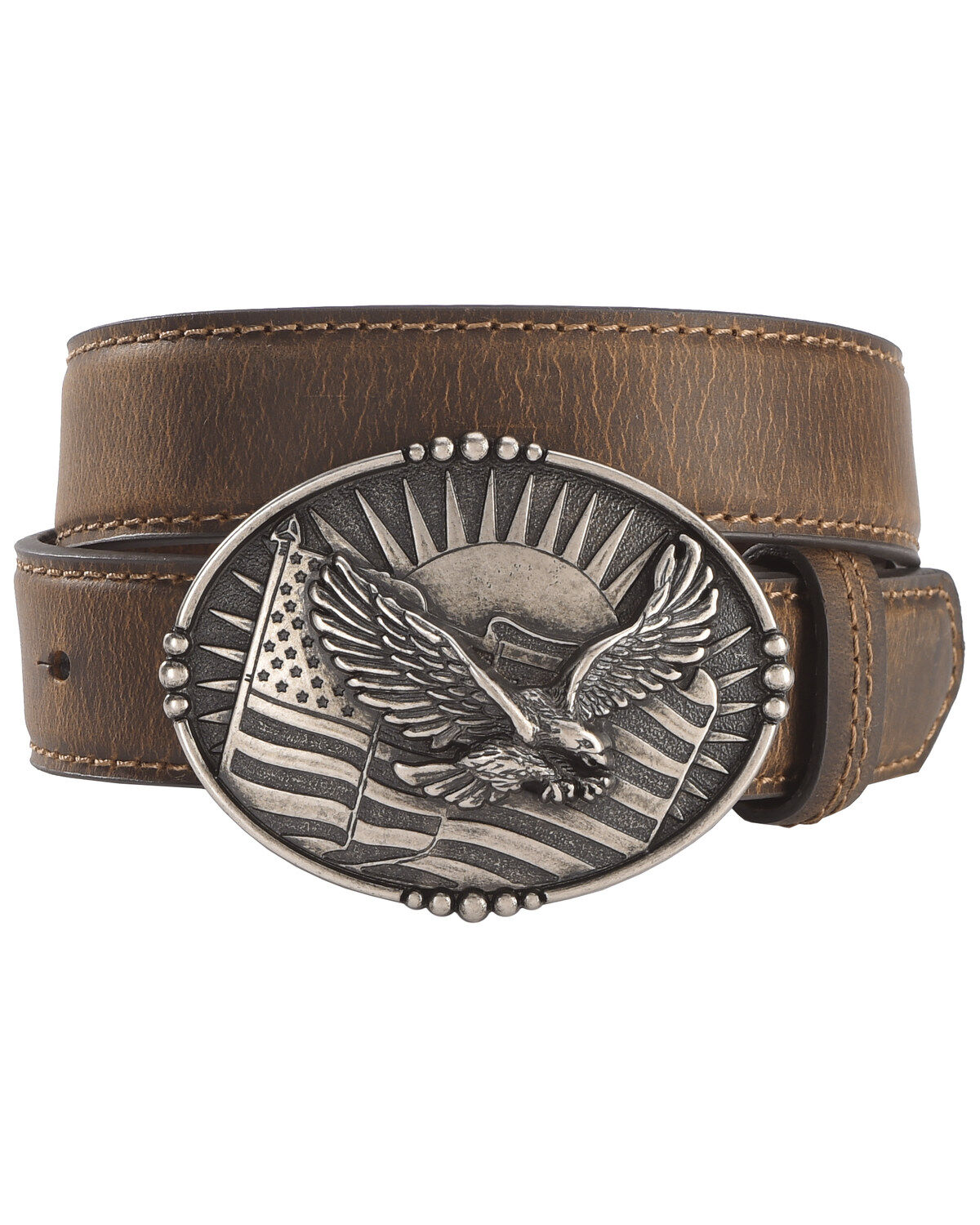
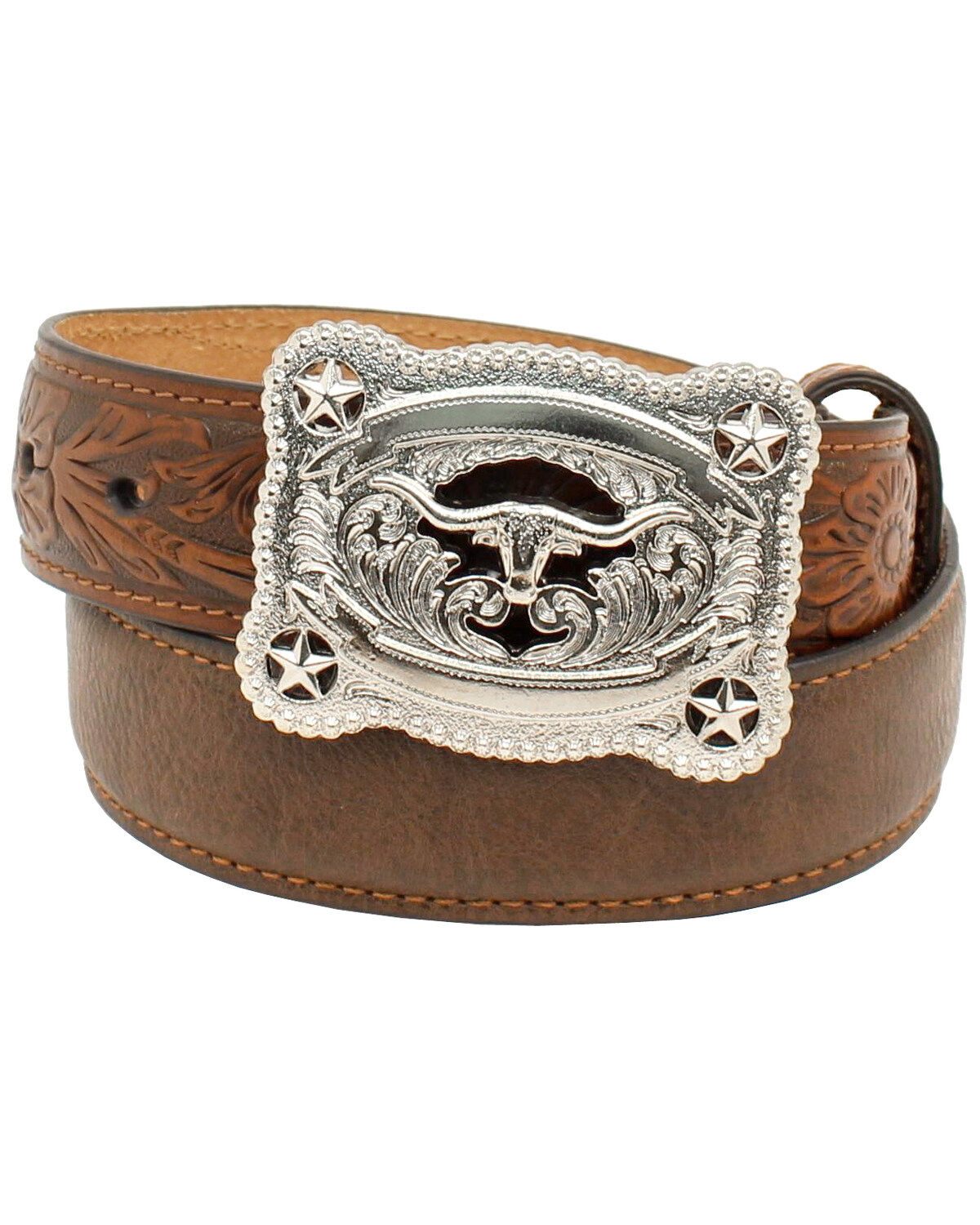
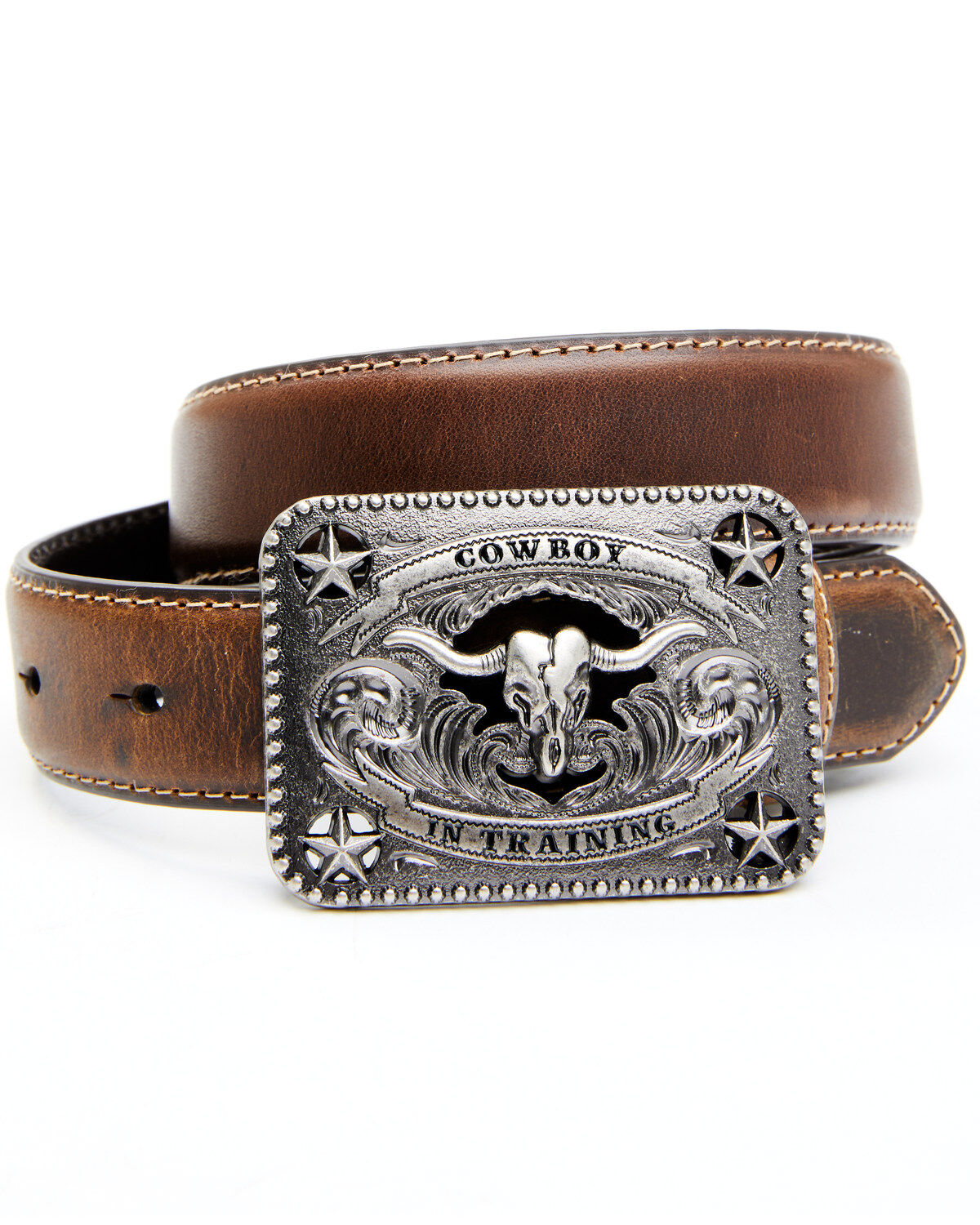
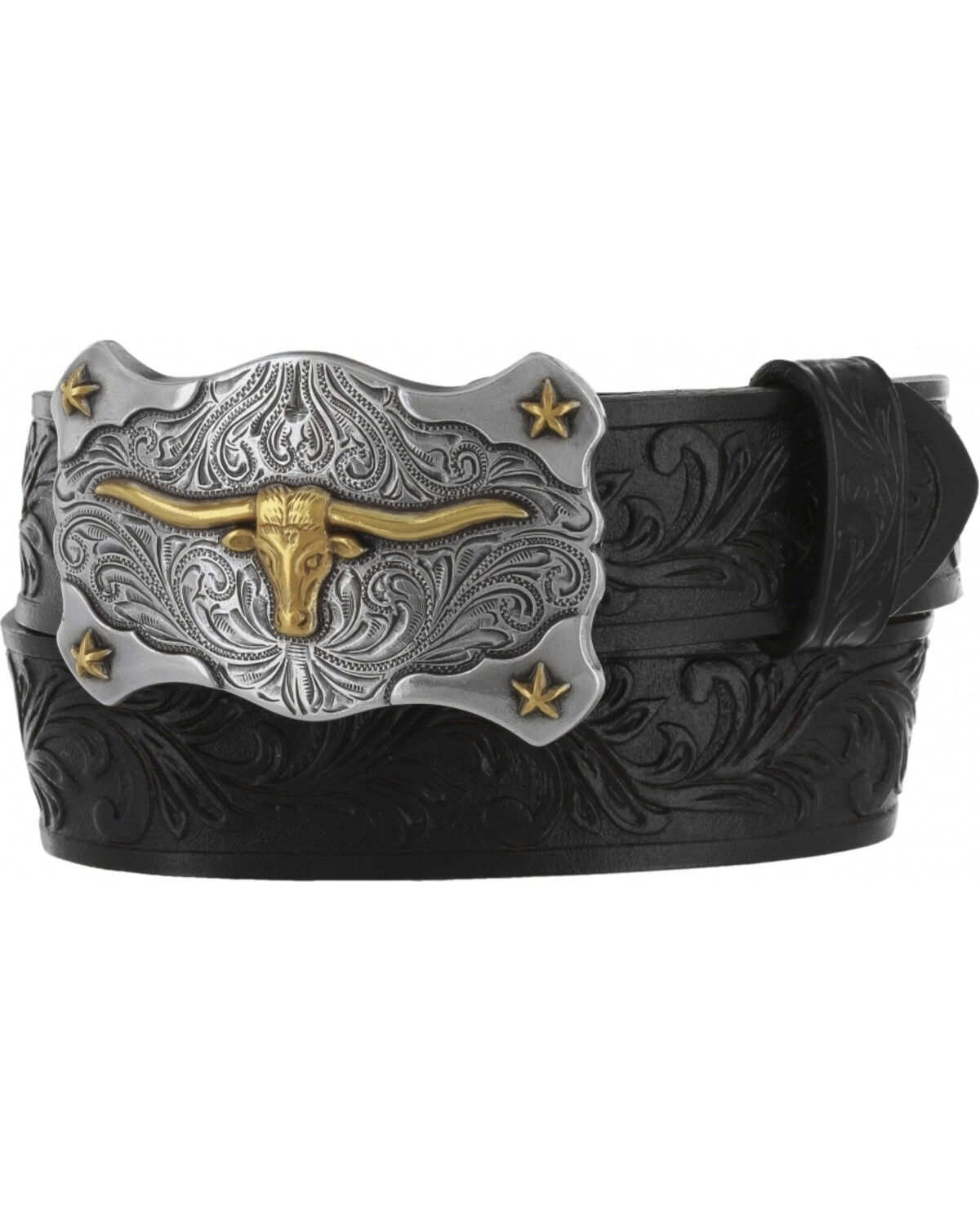
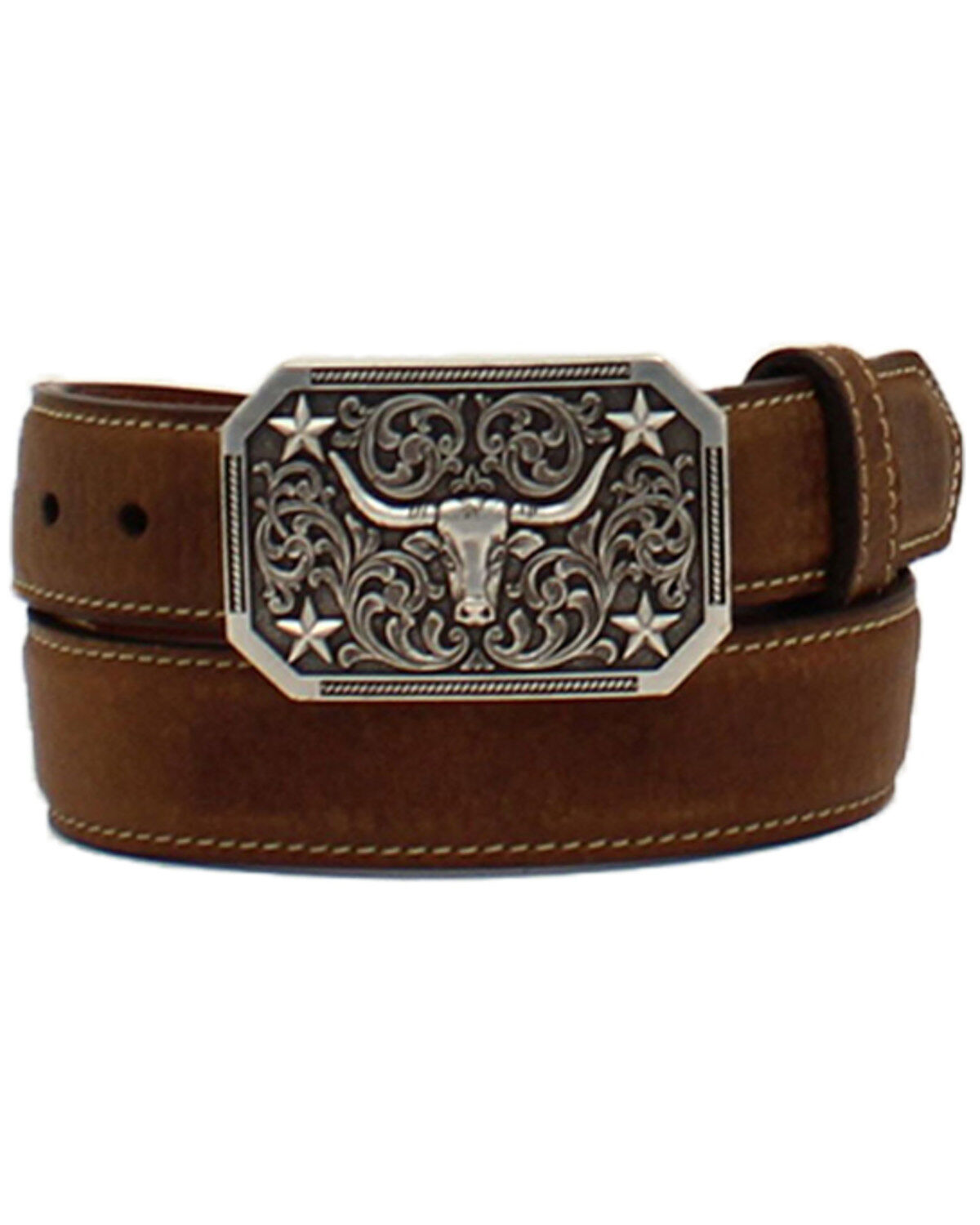
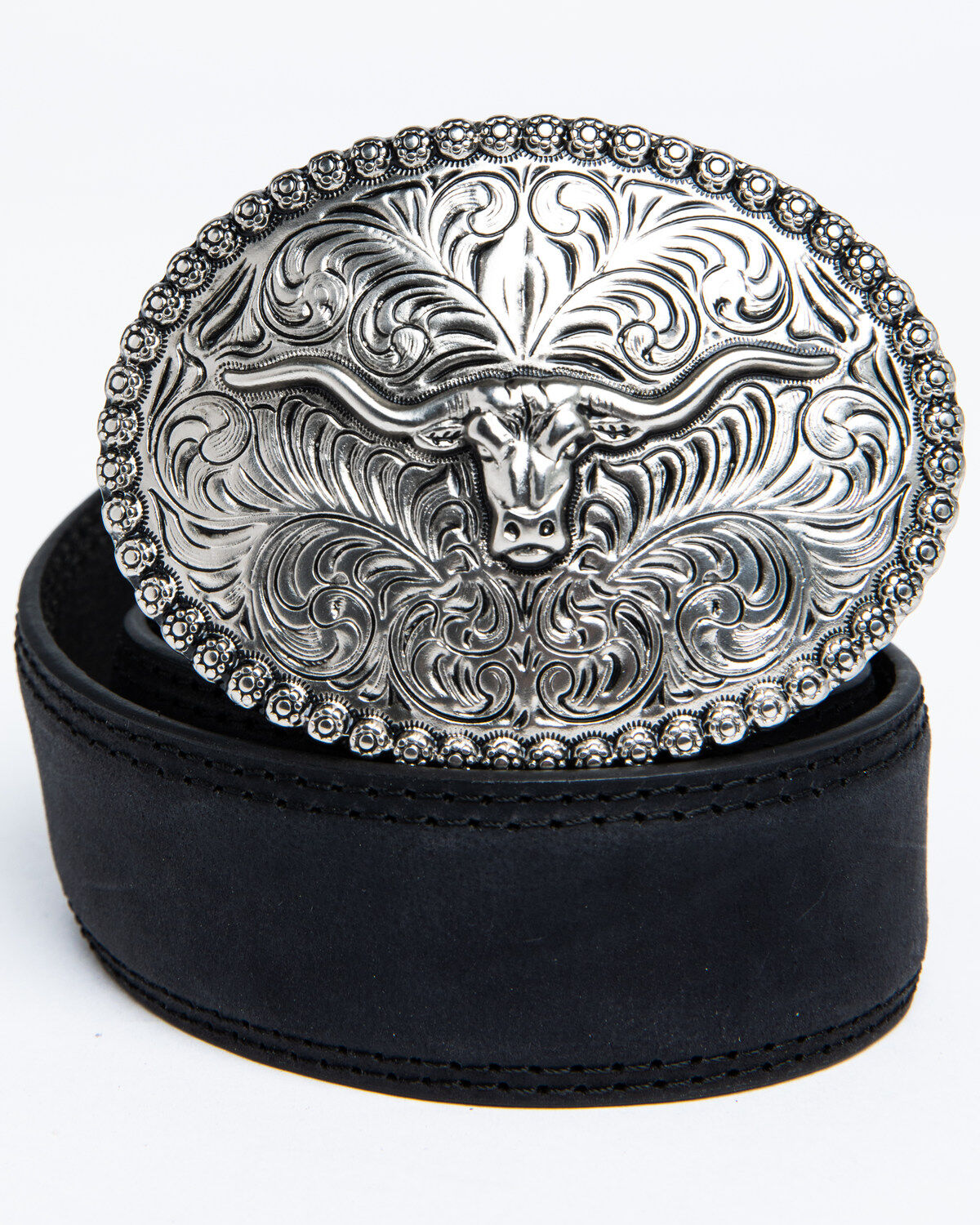
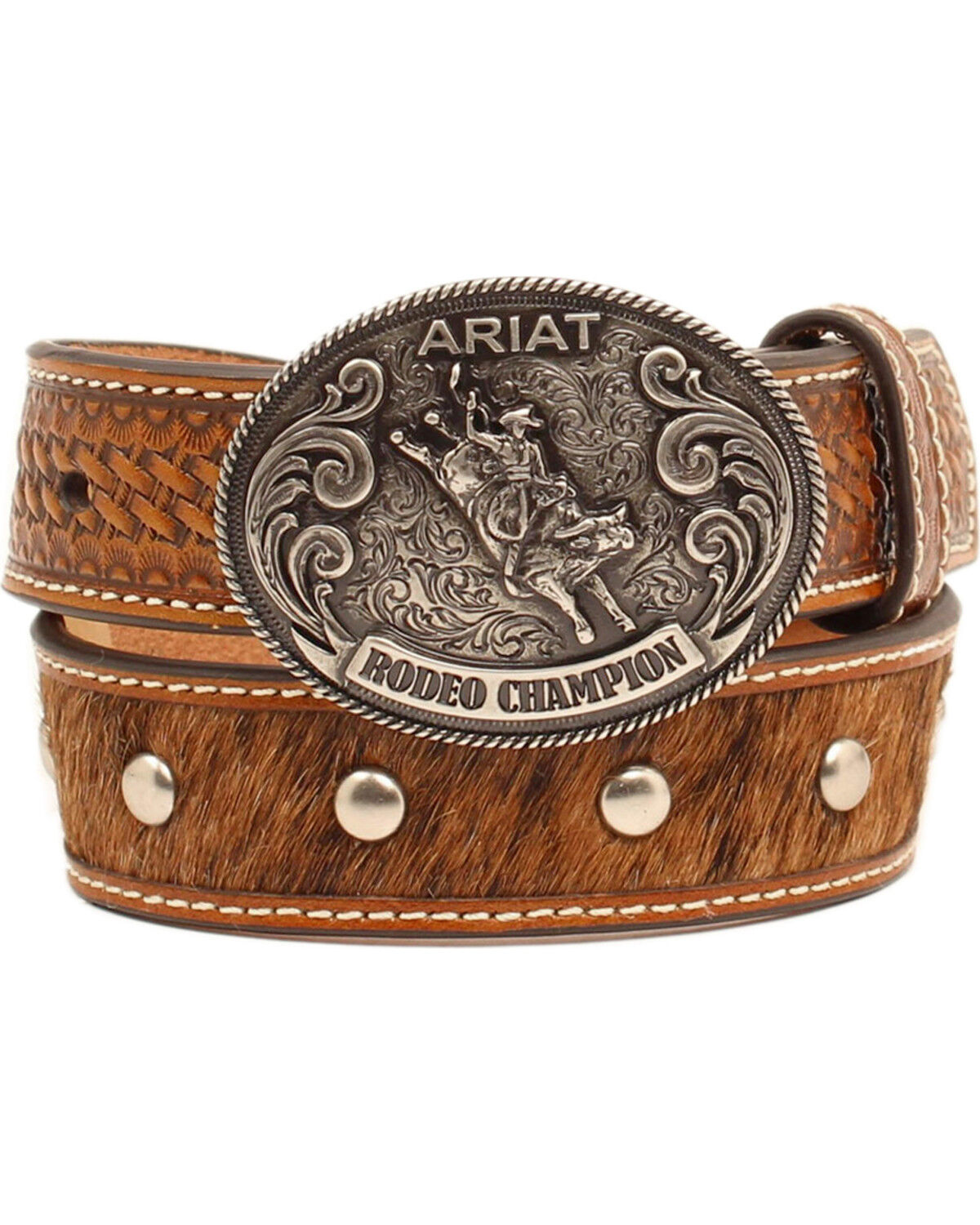
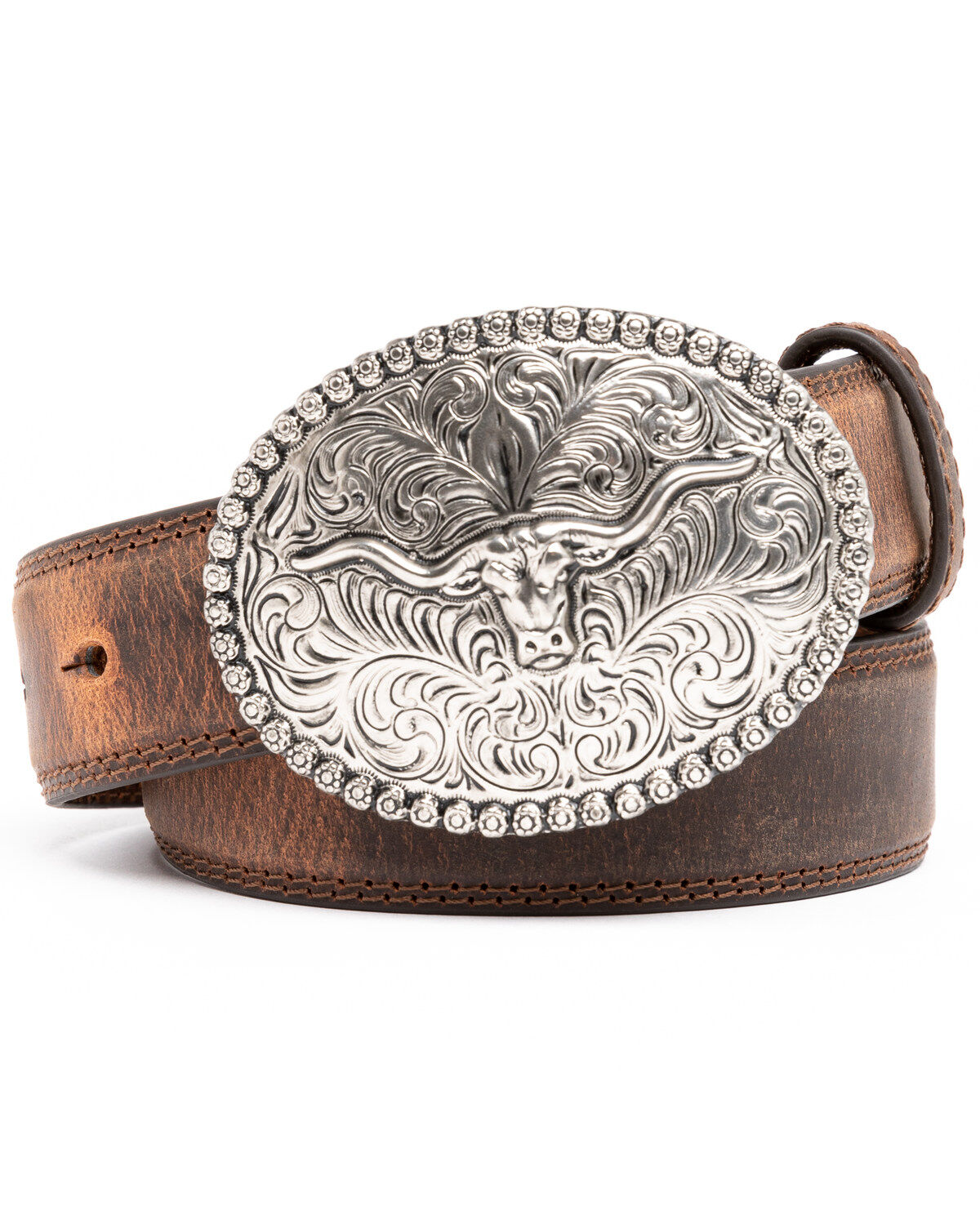
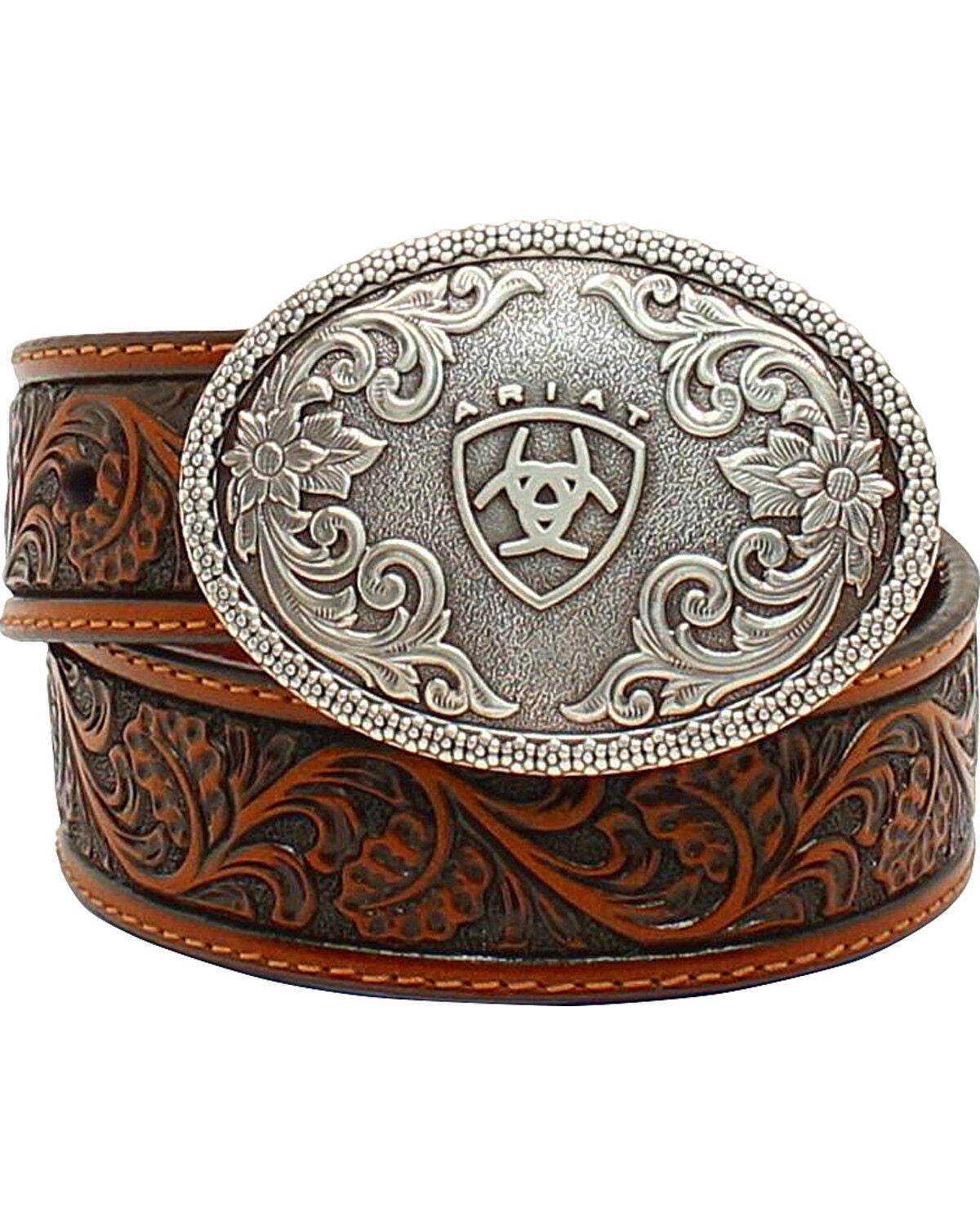
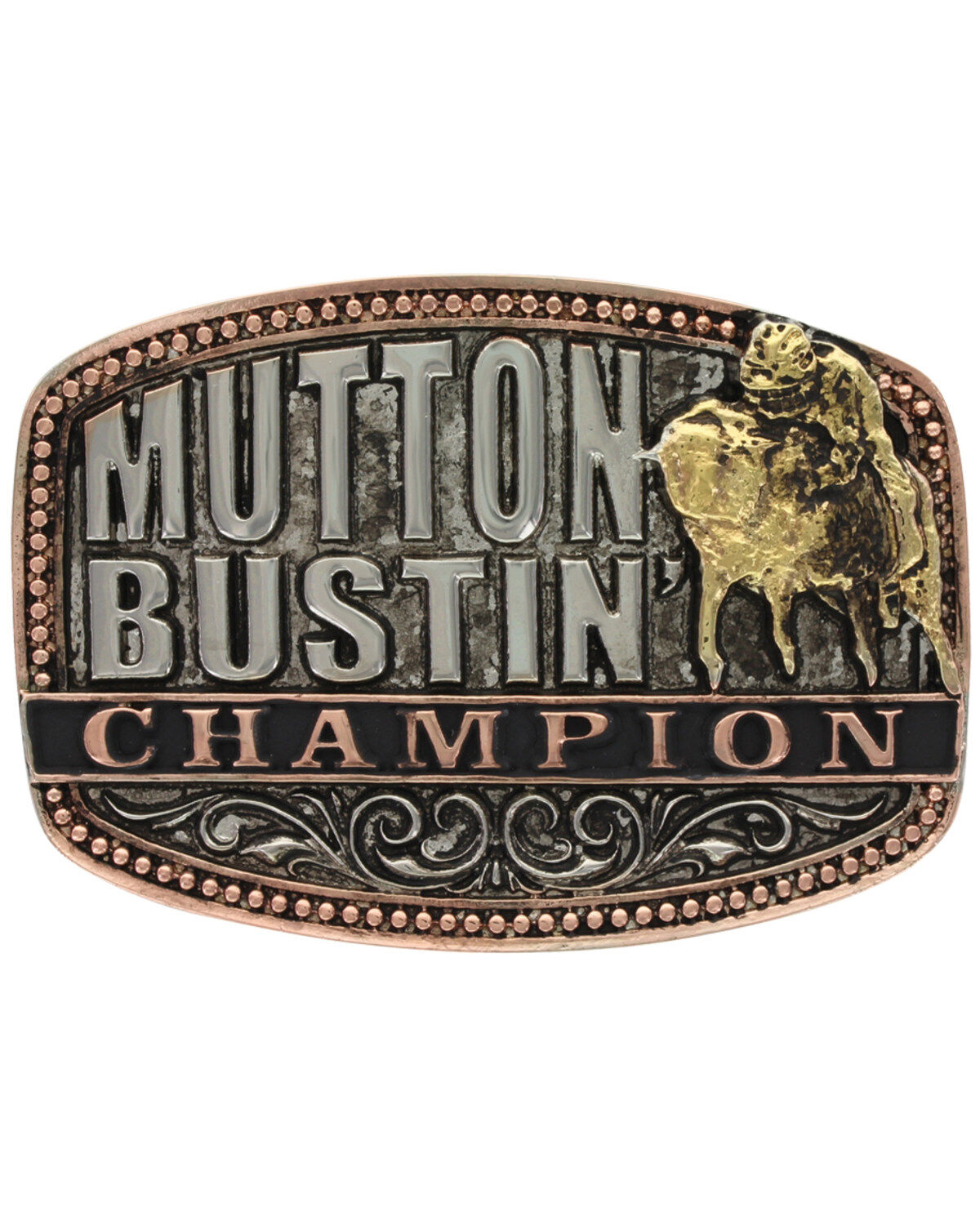
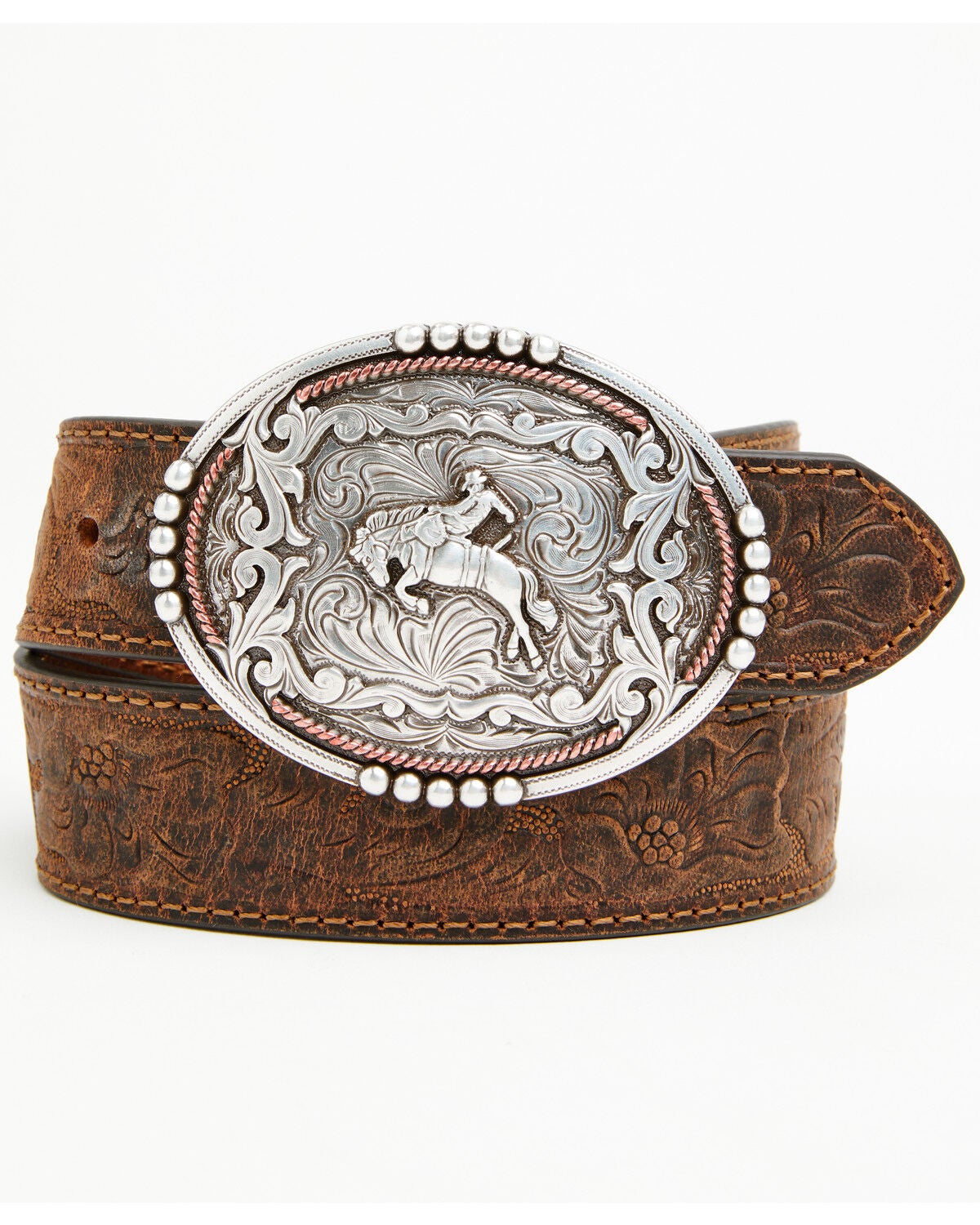
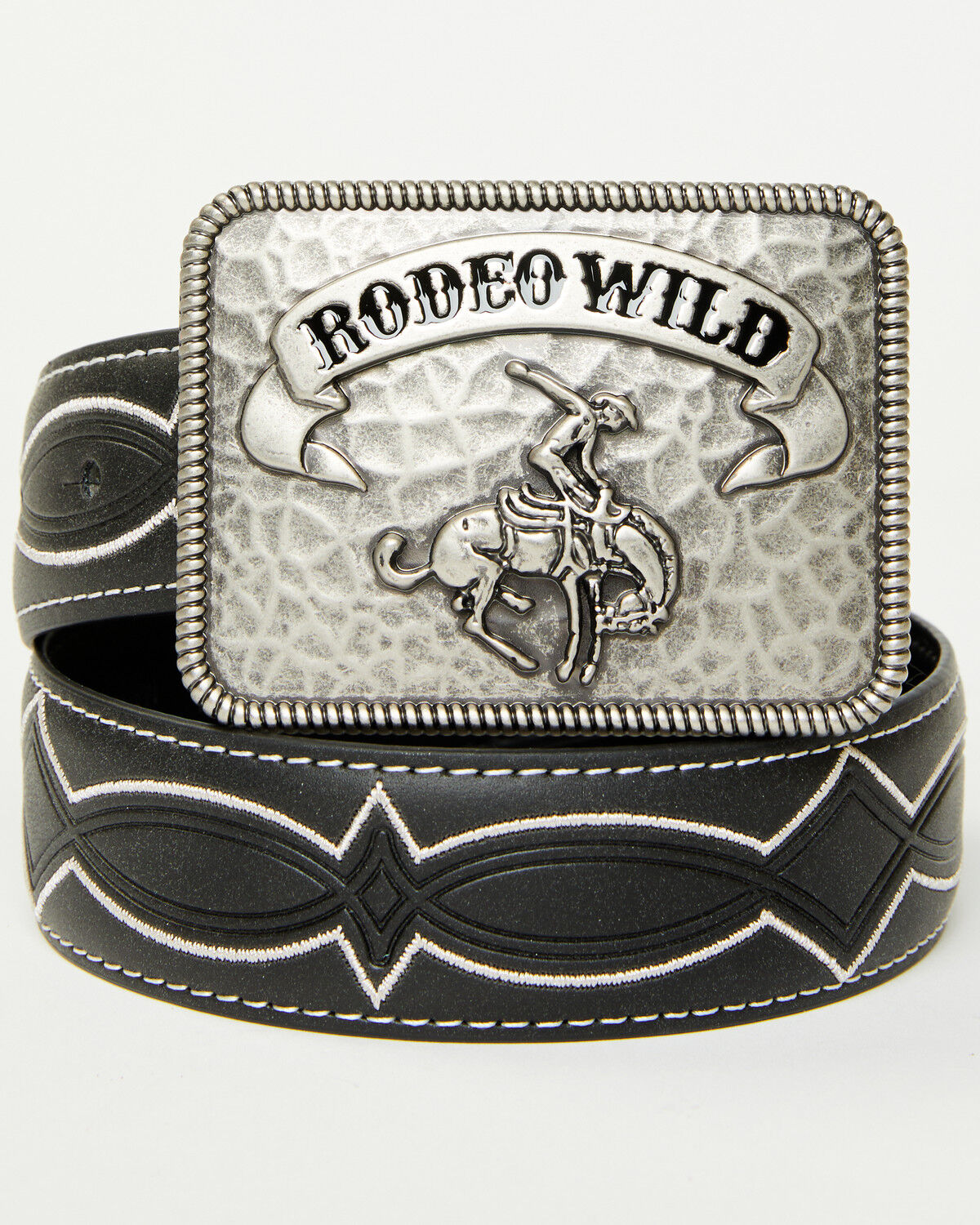
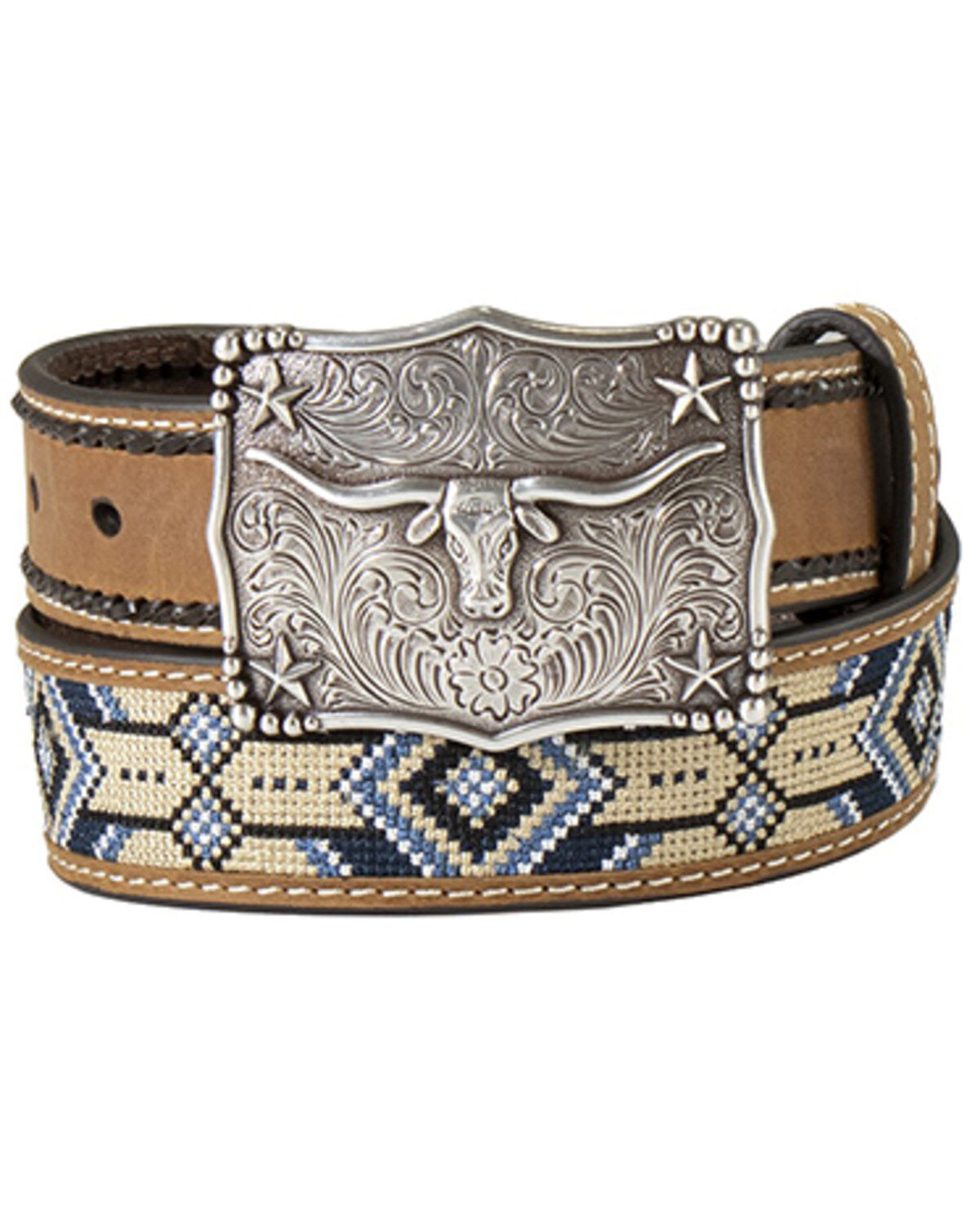
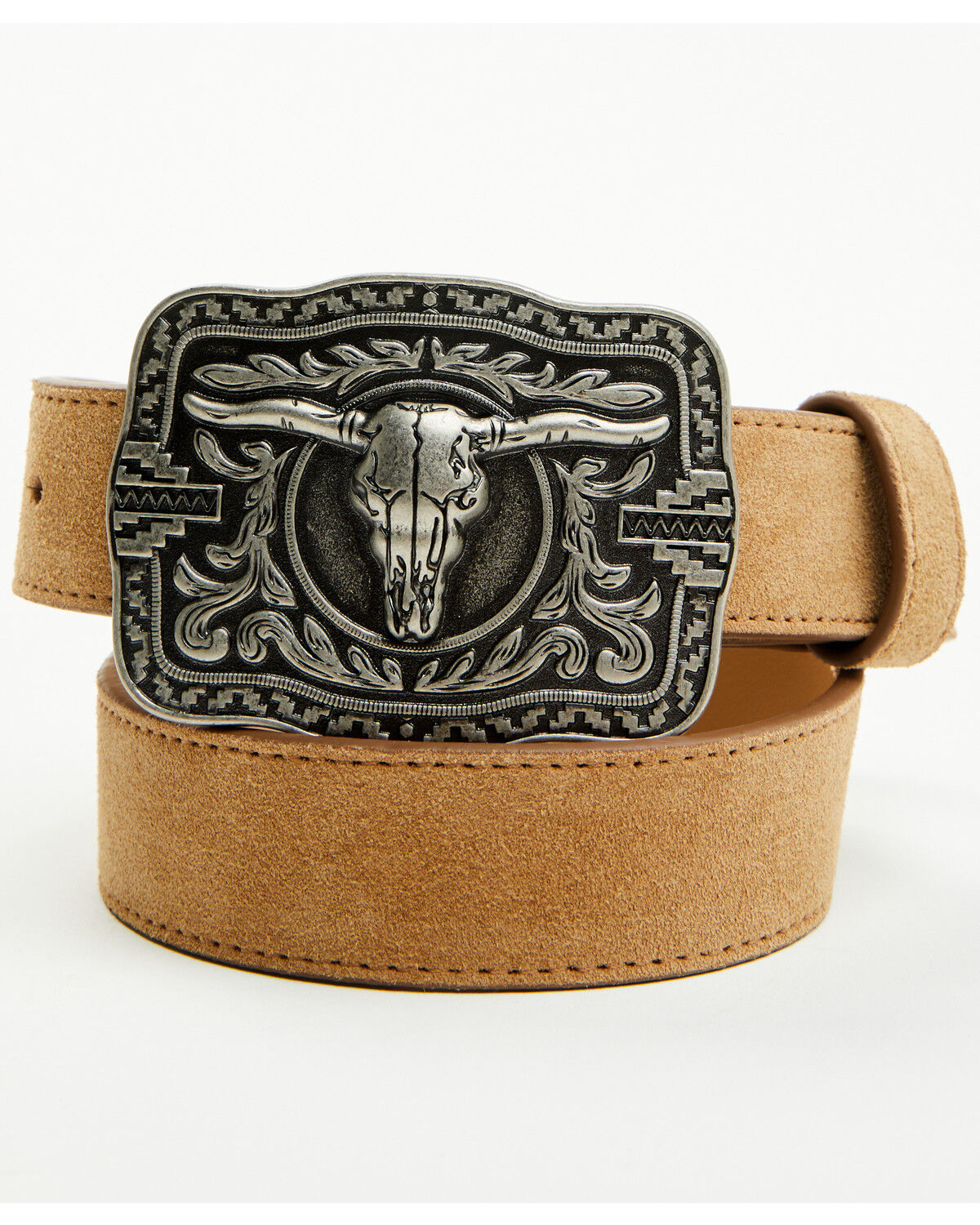
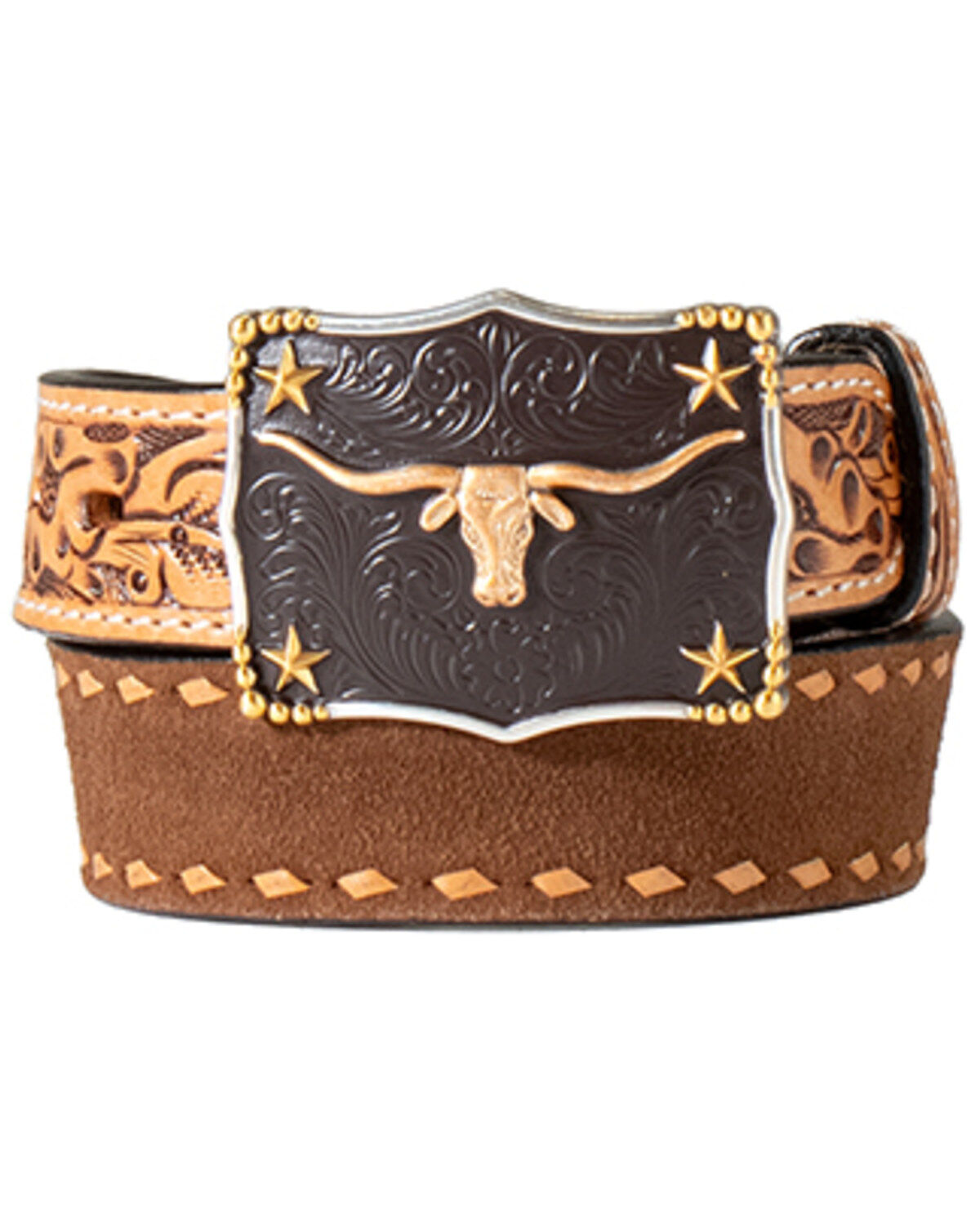
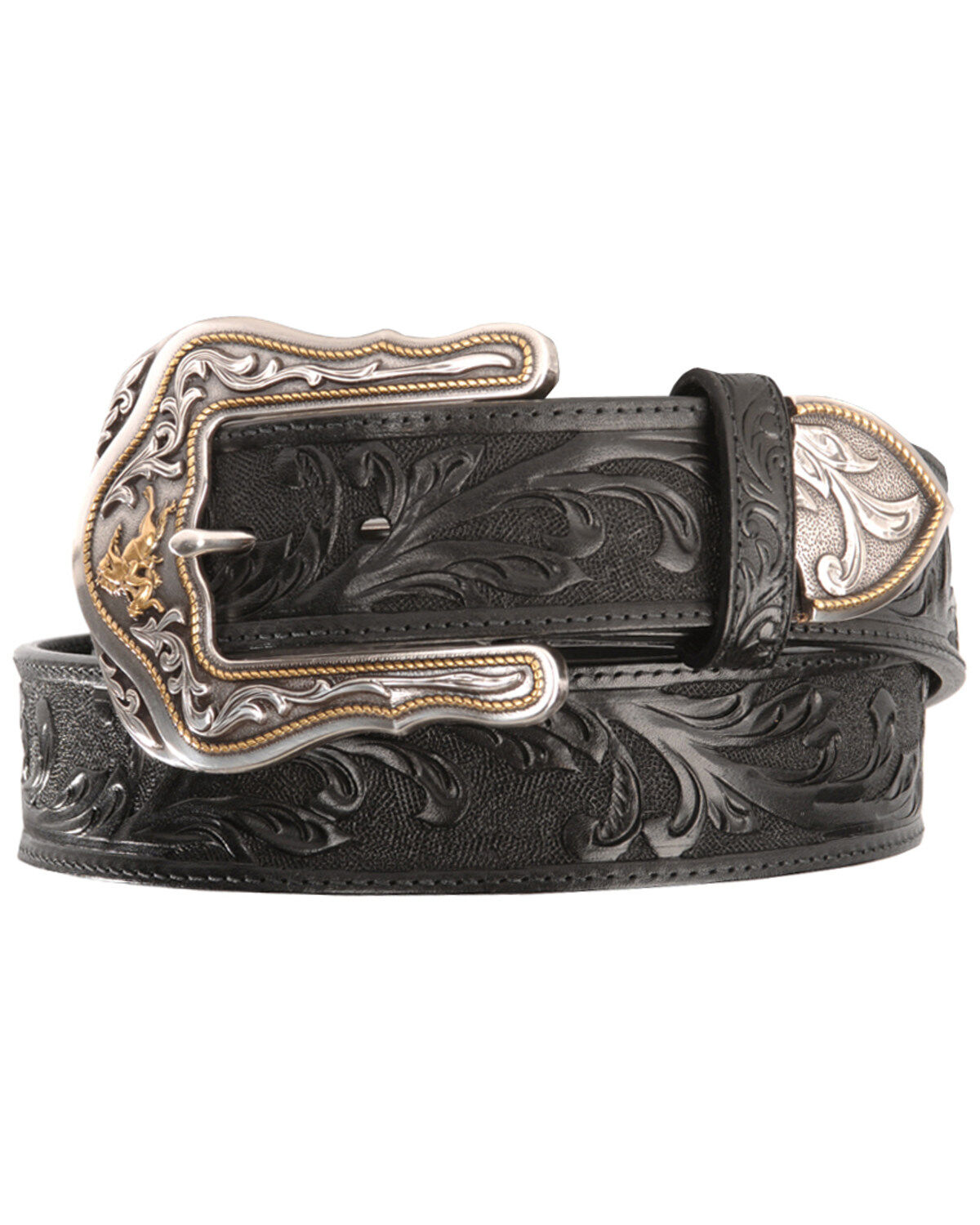
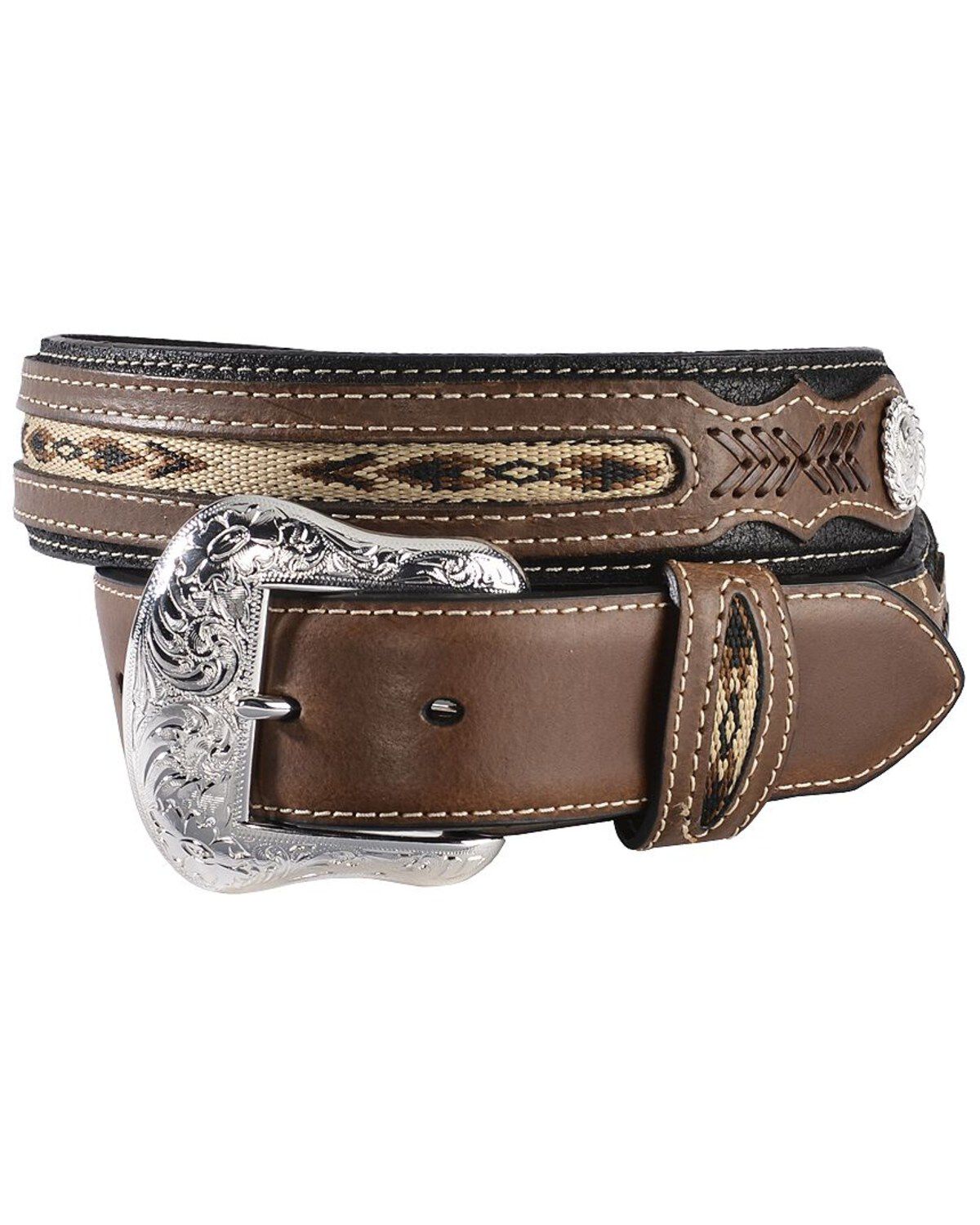
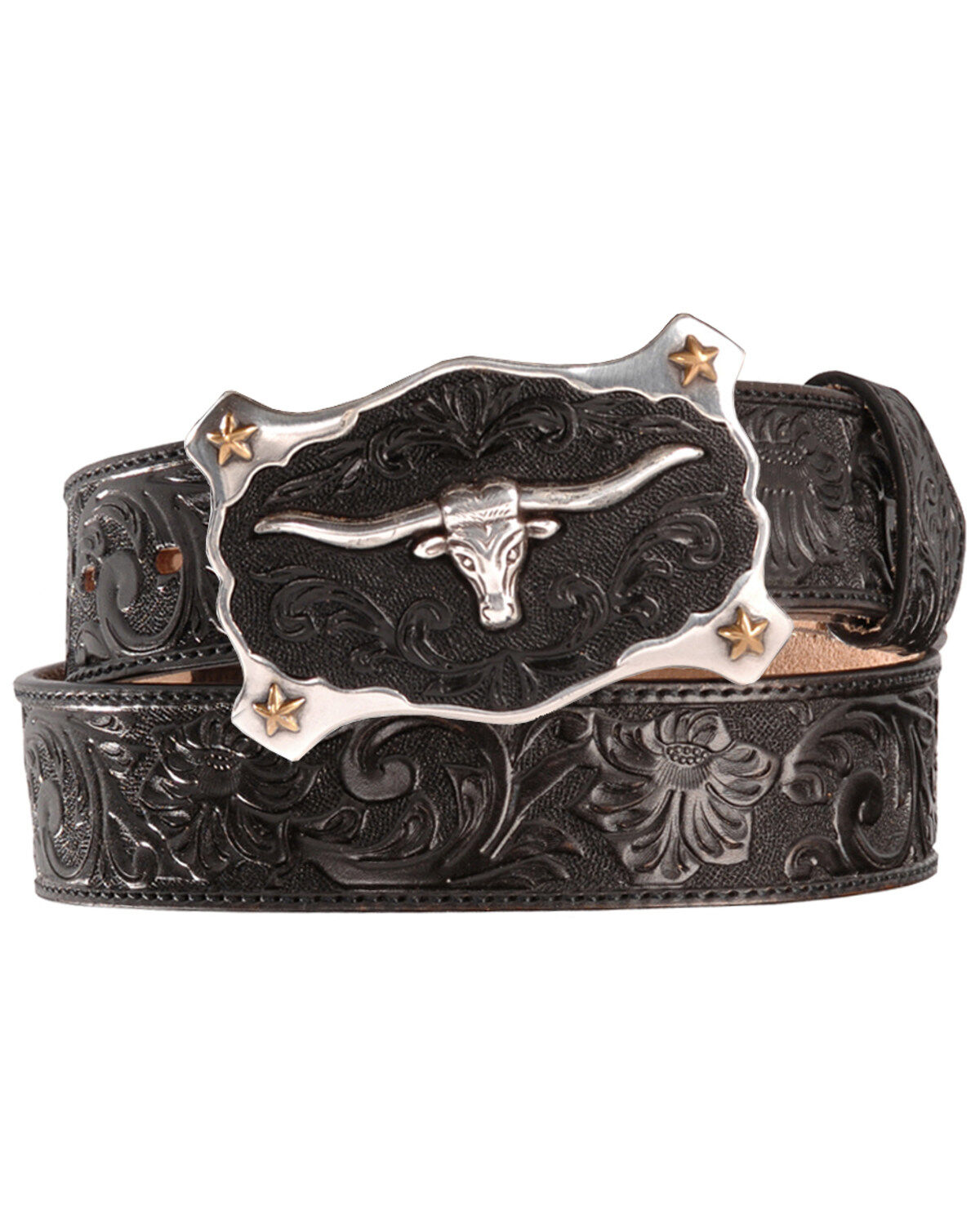
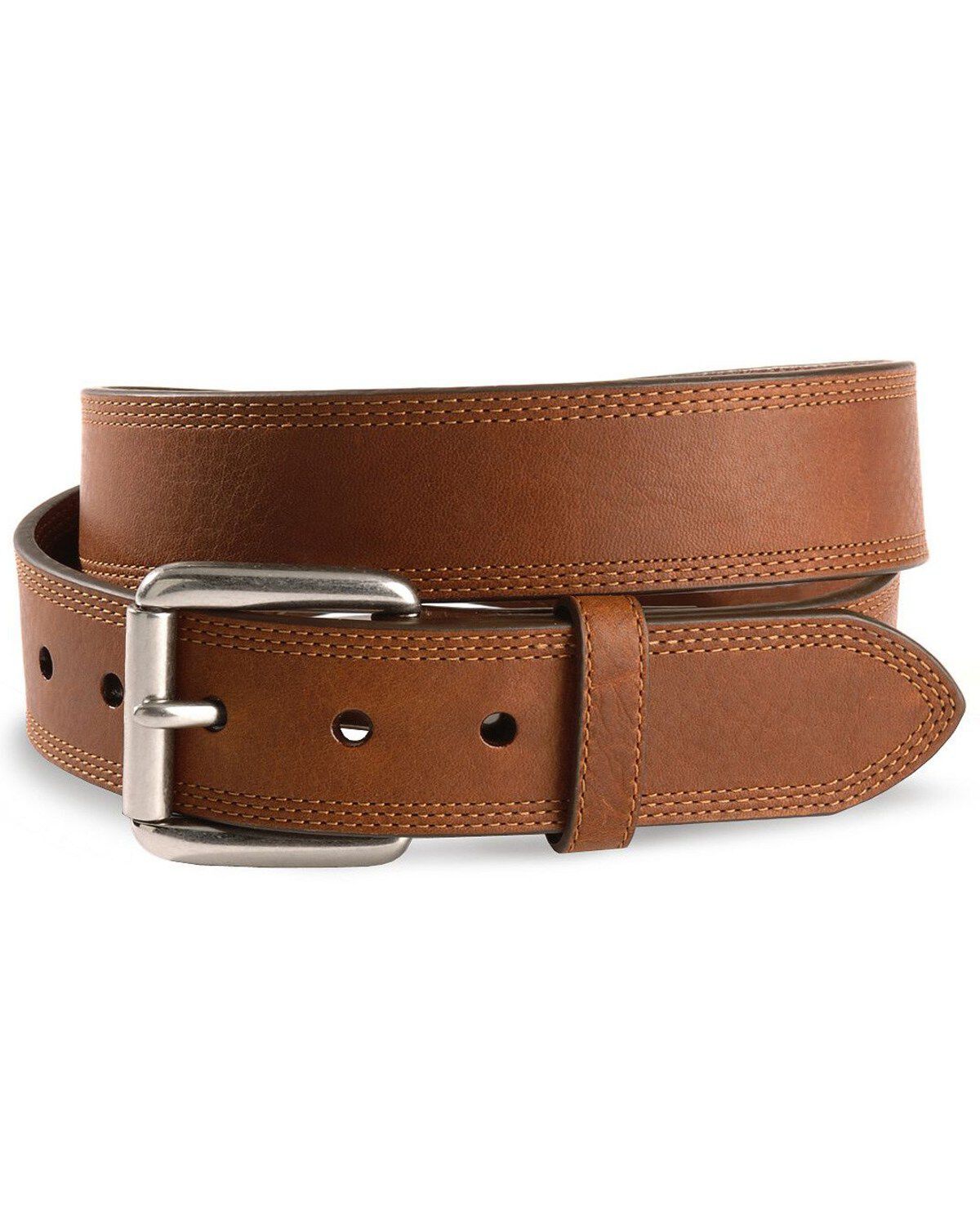
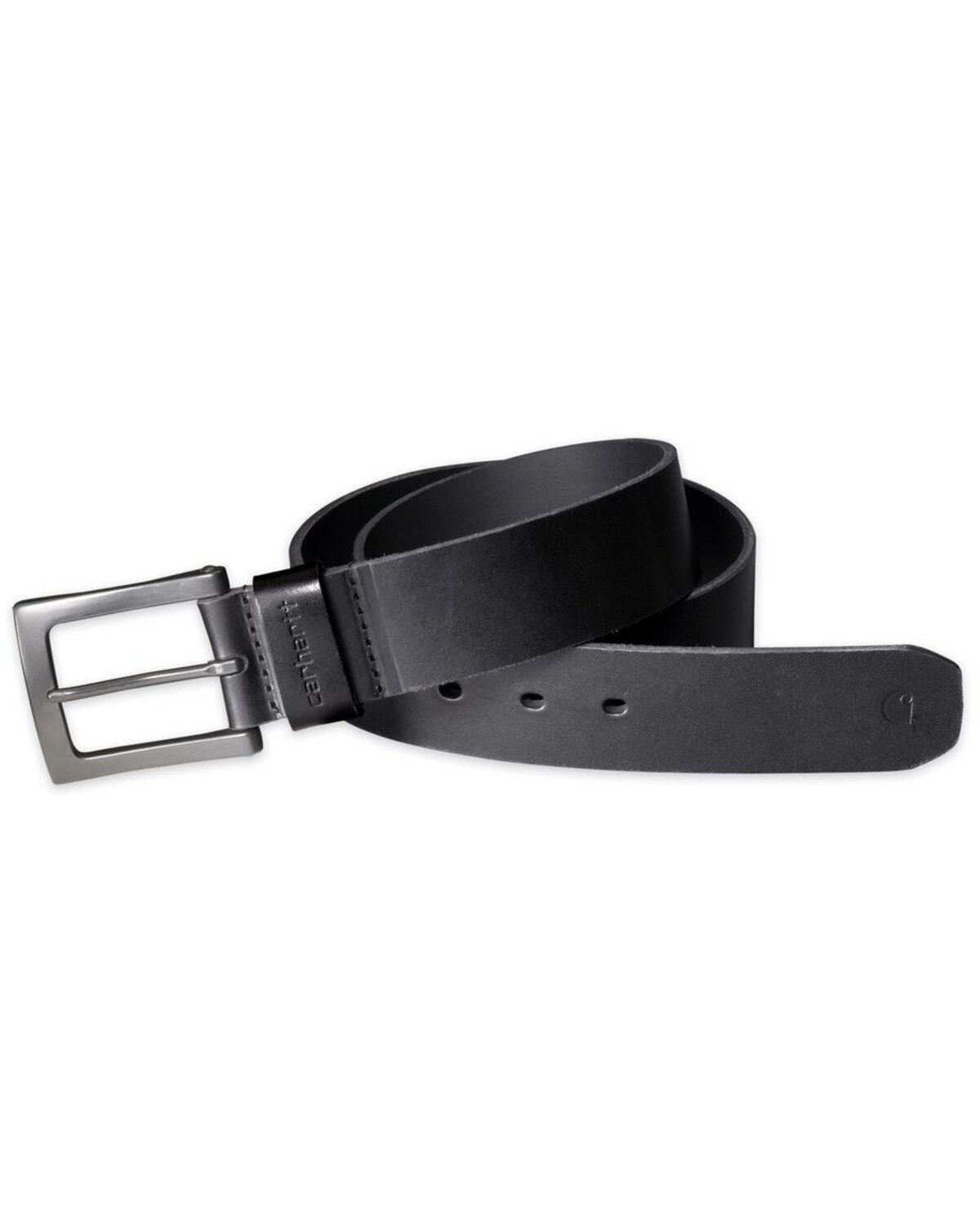
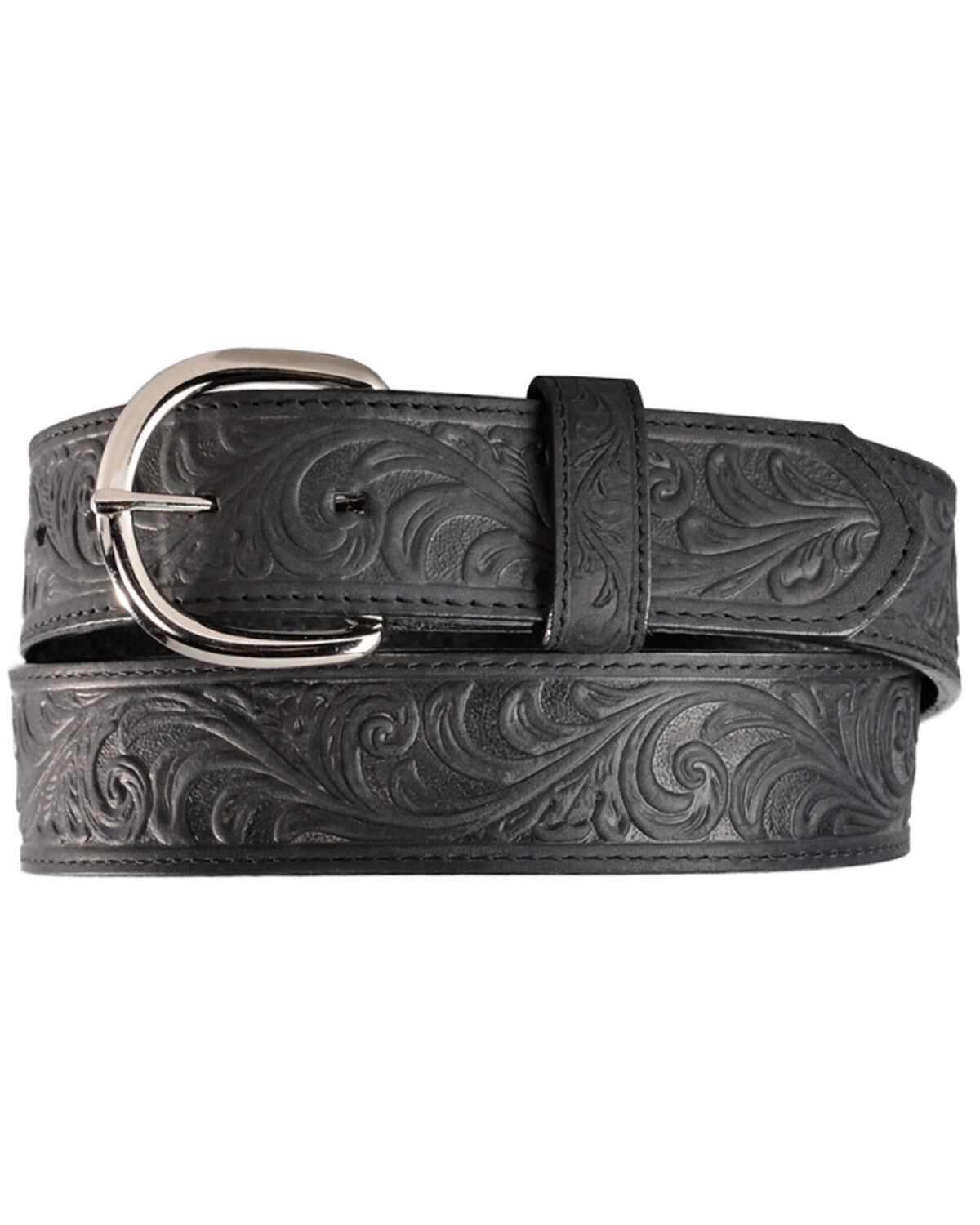
Children's belts with bullrider buckles add a touch of western flair to any young cowboy or cowgirl’s wardrobe. Perfect for rodeo events, family outings,... or everyday adventures, these belts offer a fun and stylish way for kids to showcase their love for the rodeo lifestyle. With eye-catching bullrider buckles, each belt brings a sense of adventure and tradition to any outfit, making them an ideal accessory for little ones who want to stand out in true western fashion.
Read more
Childrens Belts With Bullrider Buckles
Children's belts with bullrider buckles add a touch of western flair to any young cowboy or cowgirl’s wardrobe. Perfect for rodeo events, family outings,... or everyday adventures, these belts offer a fun and stylish way for kids to showcase their love for the rodeo lifestyle. With eye-catching bullrider buckles, each belt brings a sense of adventure and tradition to any outfit, making them an ideal accessory for little ones who want to stand out in true western fashion.
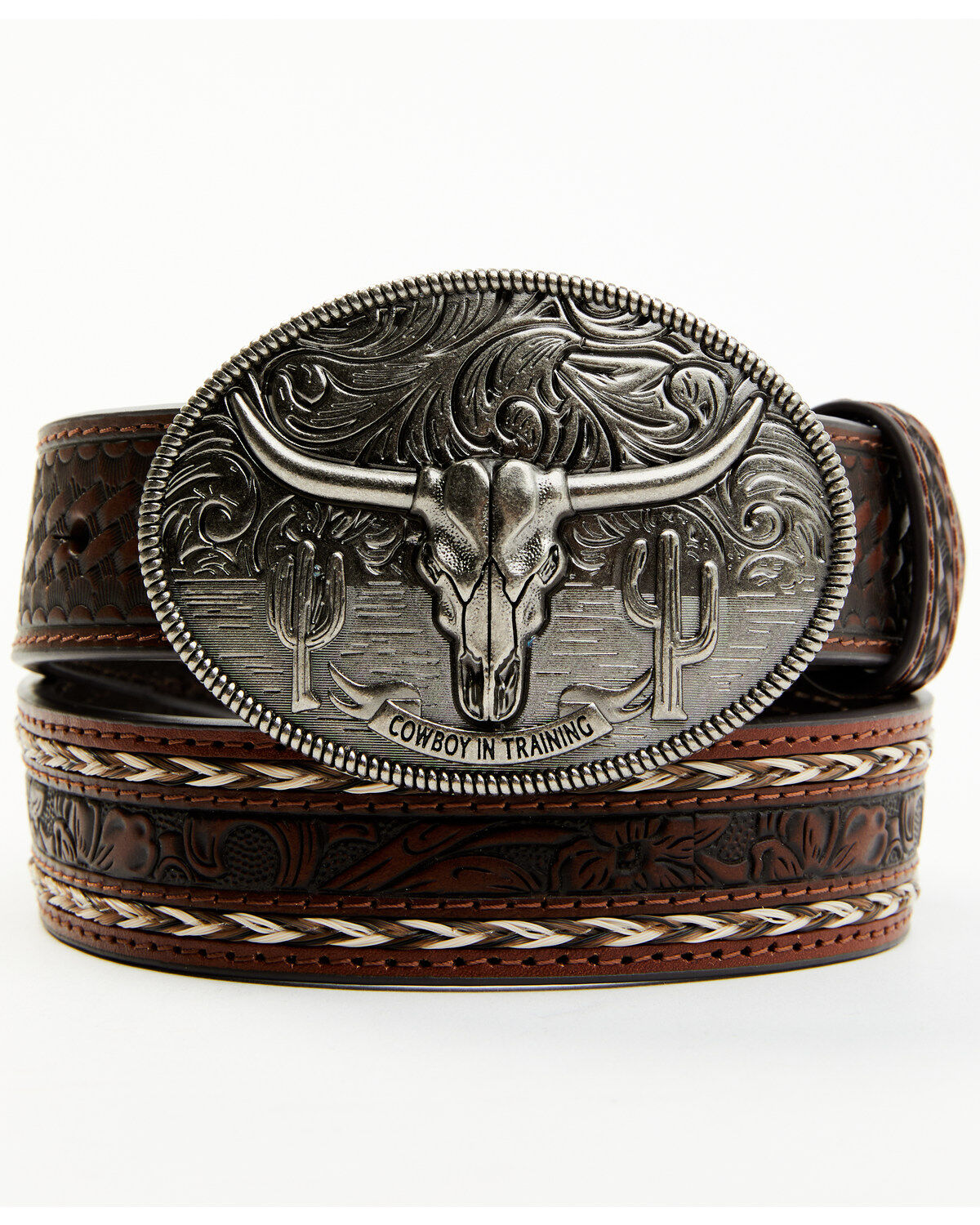
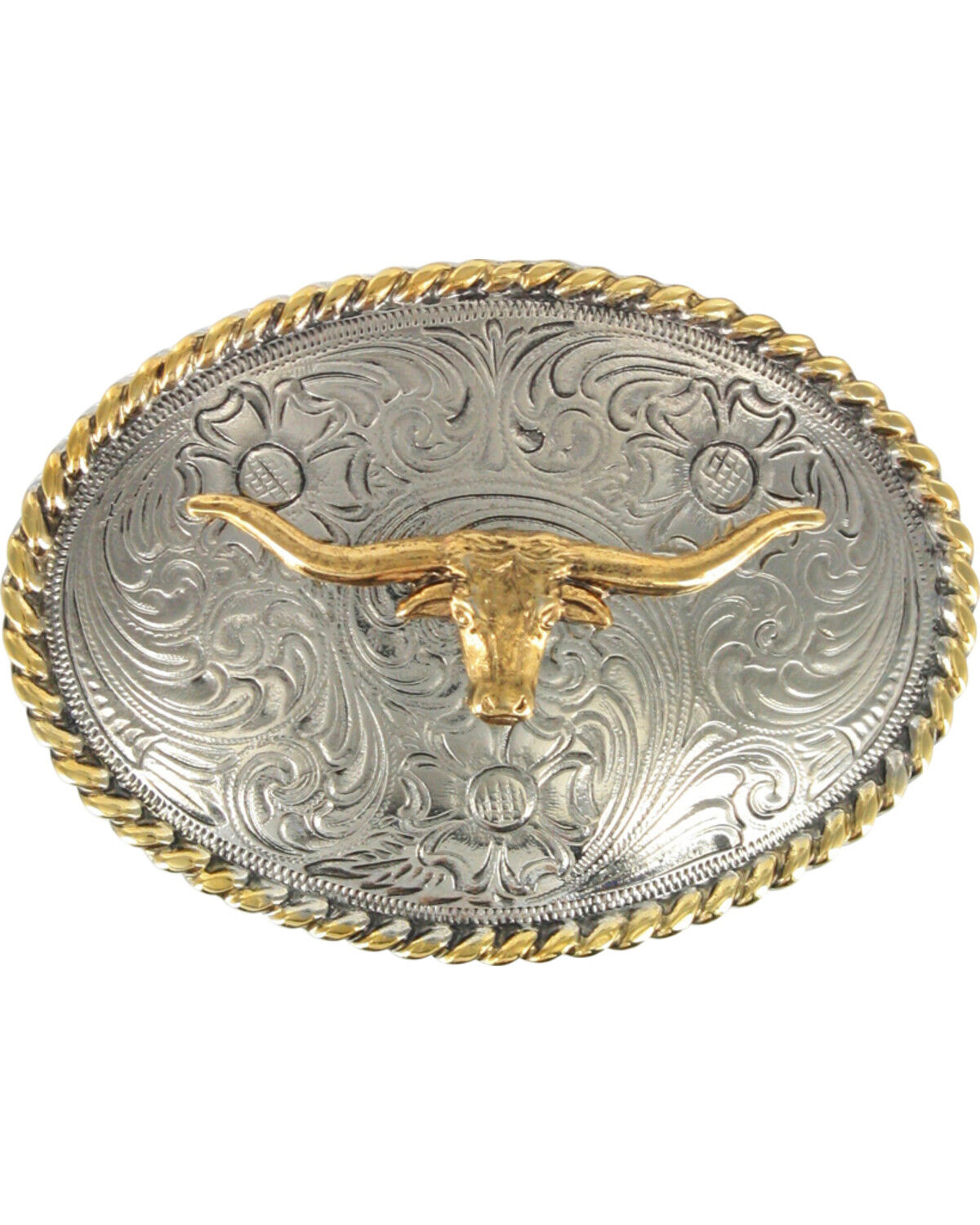
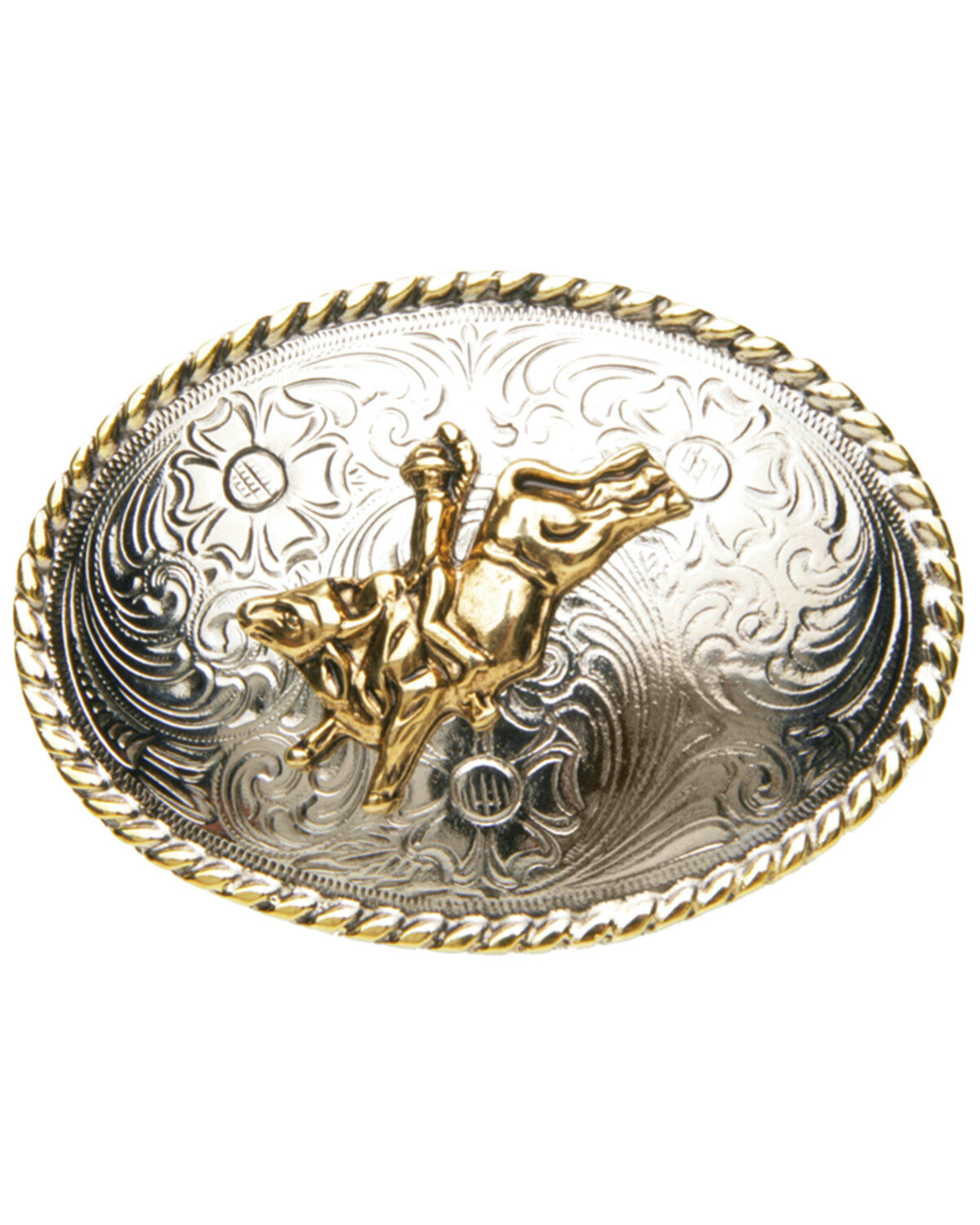
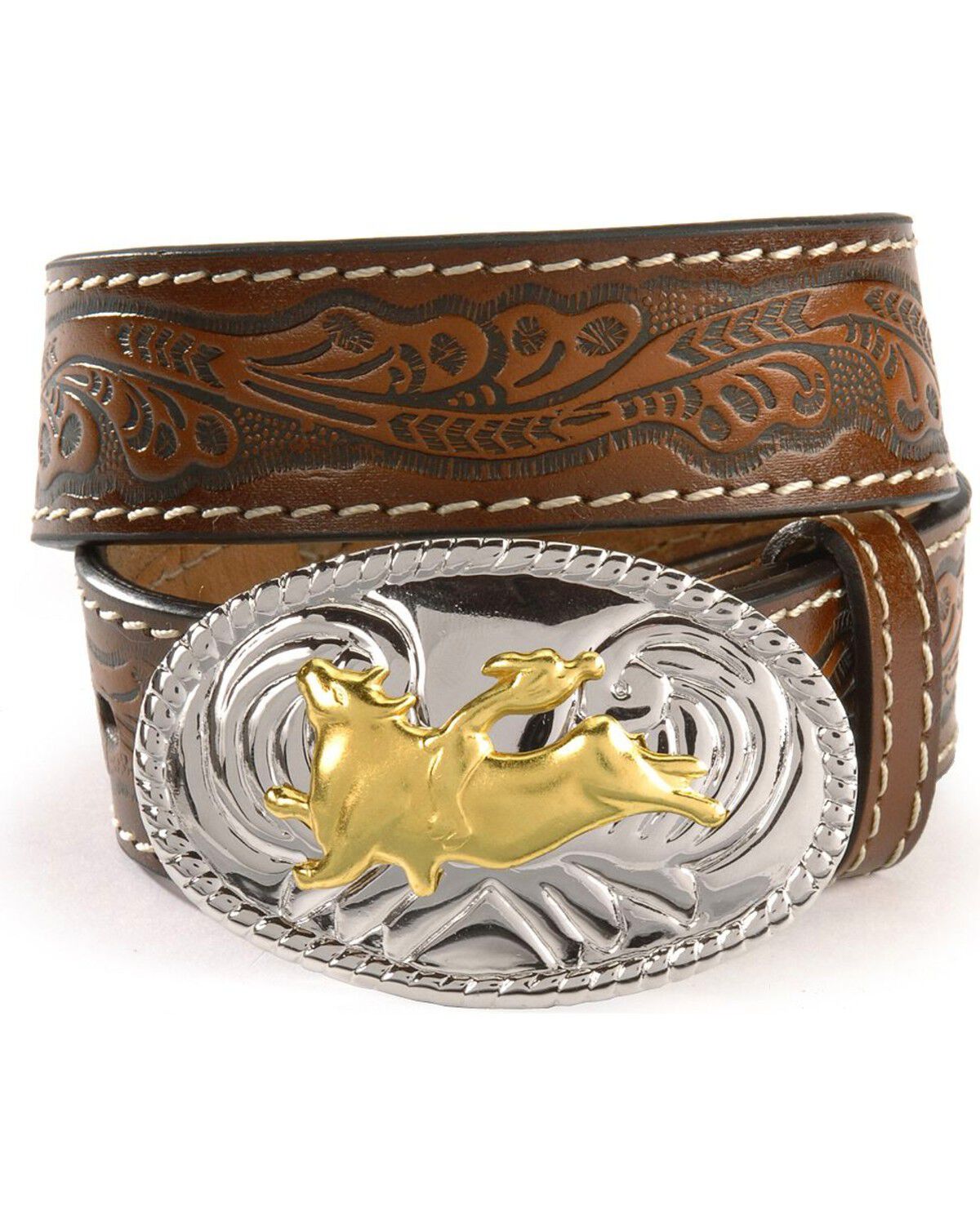
Children’s belts with bullrider buckles bring a clear western point of view to everyday outfits without making the belt difficult to wear. They are often chosen for children who enjoy rodeo, riding, ranch life, or western clothing, but the appeal is broader than that. A bullrider buckle can add character to jeans, western shirts, denim jackets, and simple everyday clothes, giving a child one memorable detail without requiring a full outfit built around it. The buckle may show a rider in motion, a bucking bull, or another rodeo-inspired design, while the strap usually keeps to practical colors such as brown, black, or tan. These belts work well for school days, family gatherings, county fairs, livestock events, photo sessions, and dressed-up occasions where a child wants to look polished but still feel like themselves. They can also make thoughtful gifts for birthdays, holidays, first rodeo experiences, or a child who has started participating in riding or youth rodeo activities. A well-made belt becomes part of a child’s regular wardrobe, not just an accessory reserved for special events. There is a certain satisfaction in seeing a young rider fasten a belt before heading out the door, with the buckle catching the light against a pair of worn-in jeans. It gives the outfit structure, keeps a shirt in place, and adds a personal detail that feels earned rather than excessive. Since children grow quickly, look for a design that balances a sturdy strap with enough adjustment room to remain useful through more than one season. The right belt should sit comfortably at the waist, hold its shape through regular wear, and fit securely without forcing the child to tighten it so much that the strap curls or the buckle presses into the body.
Sizing deserves careful attention because children’s belt sizes are not always the same as clothing sizes, and a belt labeled for a certain age may not fit every child in that age group. The most reliable approach is to measure the child’s waist where the belt will sit while they are wearing the type of clothing they normally pair with it. Another practical method is to measure a belt that already fits well. Lay the belt flat and measure from the fold where the buckle attaches to the hole used most often, rather than measuring the entire length from end to end. Many youth western belts list the size based on this fold-to-middle-hole measurement. If measuring the waist directly, keep the tape level and comfortably snug, then compare that measurement with the retailer’s size chart. A belt should generally fasten near the middle hole, leaving room to tighten or loosen it as needed. Choosing the largest available size without checking the hole placement can leave too much extra strap, while choosing a size based only on a child’s pant size may result in a poor fit. Belt width matters, too. Children’s belt loops and smaller western buckles are usually designed for a narrower strap, commonly around 1 to 1 1/4 inches wide. A strap that is too wide may not pass through the loops easily, while one that is too narrow can look out of proportion or shift during wear. Pay attention to the buckle attachment as well. Many western children’s belts use a snap or similar removable system, allowing the buckle to be changed when the child wants a different look or when a replacement buckle is needed. A removable buckle can extend the useful life of the strap and gives families more flexibility, especially when a child has several western outfits or enjoys collecting distinctive buckles. Check that the buckle closes firmly and that the attachment does not have sharp edges, loose hardware, or parts that could catch on clothing. For more everyday options, browse Kids Decorative Belts, including styles that can work with school clothes, denim, and casual outfits.
Material and construction will determine how well a children’s bullrider belt handles regular use. Genuine leather straps are valued for their durability, structure, and ability to develop a worn-in appearance over time, though leather may require a little more care than synthetic materials. Look for clean stitching, a secure buckle fold, smooth strap edges, and holes that are evenly spaced. Decorative tooling, embossing, contrast stitching, or a finished edge can give the belt a more detailed appearance, but the decoration should not interfere with comfort or flexibility. Synthetic straps may be lighter and easier to clean, which can be useful for younger children who wear their belts to outdoor activities, school, or family events. Whichever material you choose, inspect the inside of the belt as carefully as the front. A smooth backing is less likely to rub against skin or catch on a shirt. Keep leather away from prolonged moisture, wipe off dust and surface dirt with a soft cloth, and allow it to dry naturally if it becomes damp. Avoid placing it near direct heat, which can dry or warp the material. Children’s belts with bullrider buckles are made to be worn, so small marks from regular use are not necessarily a problem; what matters is that the buckle remains secure, the strap stays flexible, and the belt continues to fit comfortably. During the warmer season, the belt can finish a simple jeans-and-shirt outfit for outdoor gatherings, while during the cooler months it can sit over denim and layered western wear without adding unnecessary bulk. Choose a size and construction that match the child’s routine, whether that means occasional wear for special events or dependable use several days a week.