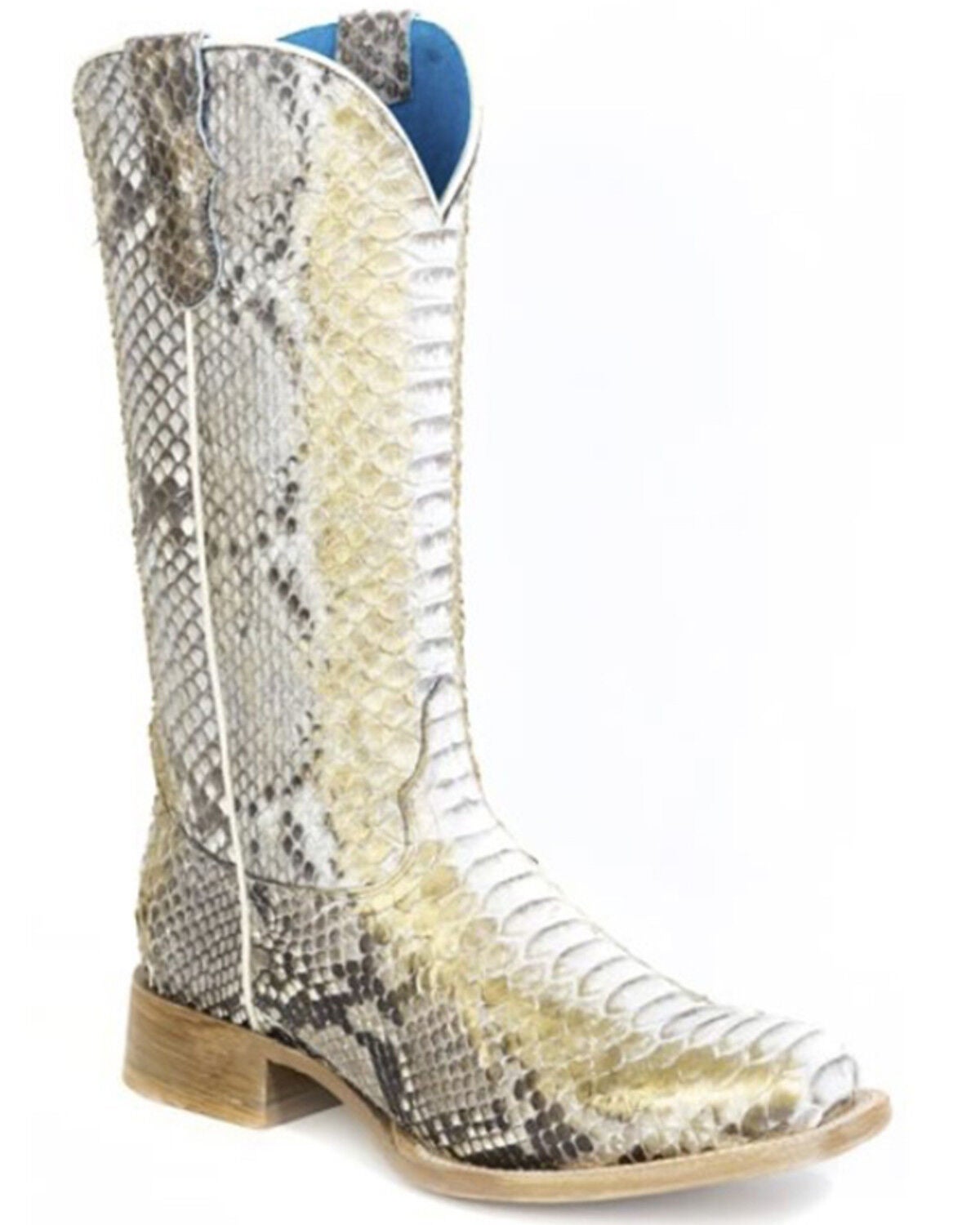
White Square Toe Boots

Shop white square toe boots for a clean, distinct western look. The squared-off profile pairs naturally with jeans or dresses, making these boots an option for everyday outfits and dressed-up occasions. Compare each pair’s sizing and fit details before choosing.

Read More

Shop Your Store: Shop Your Store: Find a Store

(Turn off Shop Your Store to see all items)

(Turn off Shop Your Store to see all items)

close
  • Recommended
  • Lowest Price
  • Highest Price
Skip pass products
  • Women's Shyanne Lasy Western Boots - Broad Square Toe
    Original Price $204.99 $122.97
    40% Total Savings

End of products

White Square Toe Boots

White square toe boots pair a squared-off toe profile with a bright neutral upper, giving traditional western footwear a distinct look. The shape creates a broad, defined front, while the white finish brings stitching, overlays, and other construction details into view. Some designs have a nearly straight toe edge with pronounced corners; others soften those corners for a narrower appearance. White also covers a range of tones, from crisp white to ivory and cream, and those differences can matter when matching boots with a dress, denim, or tailored clothing. Smooth uppers create a clean surface, while embroidered shafts and contrasting stitch patterns add texture without necessarily introducing another color. Leather has natural grain and can develop creases with wear, giving the boots a more individual appearance over time. Synthetic materials offer a different surface feel and may have different cleaning requirements, so the material description matters as much as the silhouette. Shaft height changes the overall proportion, whether the boot sits beneath straight-leg jeans or remains visible with a skirt. A taller shaft gives embroidery more room, while a shorter shaft leaves more of the leg visible. Heel height also affects the profile, ranging from low, broad heels to more elevated western shapes. Together, these details make white square toe boots a choice for everyday western outfits, concerts, dancing, and wedding celebrations where the footwear is meant to be seen. They can suit someone who wears cowboy boots regularly or someone adding a western element to an otherwise simple outfit. The color provides contrast against dark denim and black clothing, but it can also sit quietly beside pale fabrics and natural tones. For wedding wear, comparing the boot color directly with the outfit helps distinguish a clean white match from an intentional ivory contrast. The strongest pairing usually comes from getting the proportions and shade right rather than adding more decoration.

Fit depends on the entire boot, not just the shape of the toe. A square toe may provide more space across the front than a sharply pointed design, but its appearance alone does not establish width or guarantee extra room. The last, which is the form used to shape the boot, determines how the heel, instep, and forefoot fit together. A well-fitting pull-on boot generally feels secure across the instep without painful pressure, leaves the toes free from crowding, and allows some initial heel movement. Excessive sliding or toes pressing against the front can indicate a poor fit rather than something that wear will resolve. Leather may soften and give somewhat across pressure points, but a boot that is too short will not become the correct length through break-in. Trying boots with the socks intended for regular wear gives a more useful sense of fit, especially around the instep and calf. Shaft openings deserve attention as well: they need enough room for comfortable movement without rubbing, and their shape affects how smoothly jeans fall over them. Underfoot construction becomes important when boots will be worn through a long ceremony, an evening of dancing, or several hours on foot. Cushioning, arch support, heel height, and outsole flexibility all influence comfort, though individual preferences differ. Leather outsoles offer a traditional feel and can move smoothly across suitable dance floors, while rubber outsoles may provide more grip depending on their tread and compound. Neither material should be assumed to suit every surface. A broad heel can provide a steady base, but traction still depends on the outsole and the ground beneath it. White square toe boots intended for casual wear are also different from footwear designed for demanding jobsite use. The squared-off shape is not a safety feature, and any need for protective toes or other workplace protection should be matched to the boot’s stated specifications.

Keeping white square toe boots looking their best starts with care suited to the upper material and finish. Pale surfaces make dust, scuffs, and transferred dye easier to notice, especially where dark jeans rub against the shaft. Removing loose dirt with a soft brush or clean cloth helps prevent grit from being worked into the surface during cleaning. Smooth leather generally benefits from a leather-safe cleaner and an appropriate conditioner, used sparingly and according to the maker’s directions. A product intended for dark leather can stain a white finish, and even a clear treatment may alter the color, so testing a hidden area is worthwhile. Suede, textured leather, coated finishes, and synthetic uppers require their own care methods rather than the same cream or polish across every surface. Heavy scrubbing can damage stitching or decorative details, while prolonged soaking can affect both the upper and the boot’s construction. After cleaning, boots should dry naturally away from direct heat. Keeping shafts supported and storing boots where they will not be crushed helps preserve their shape. Durability also depends on how often the boots are worn, the surfaces they meet, and whether worn heels or soles receive attention before damage spreads. Construction determines whether resoling is possible, so repairability is worth considering for boots intended for frequent wear. For gifting, an established size and preferred fit are more useful than guessing from someone’s usual sneaker size. A familiar heel height and shaft shape can make the choice more personal, particularly for someone planning a wedding outfit or replacing a well-worn pair. For a different color direction, Blue Square Toe Boots bring the same defined toe shape into another palette. White keeps the emphasis on contrast, clean lines, and visible craftsmanship. With the right fit, suitable construction, and consistent care, white square toe boots can become a regular part of a western wardrobe rather than footwear reserved for a single occasion.
Read More

FAQs