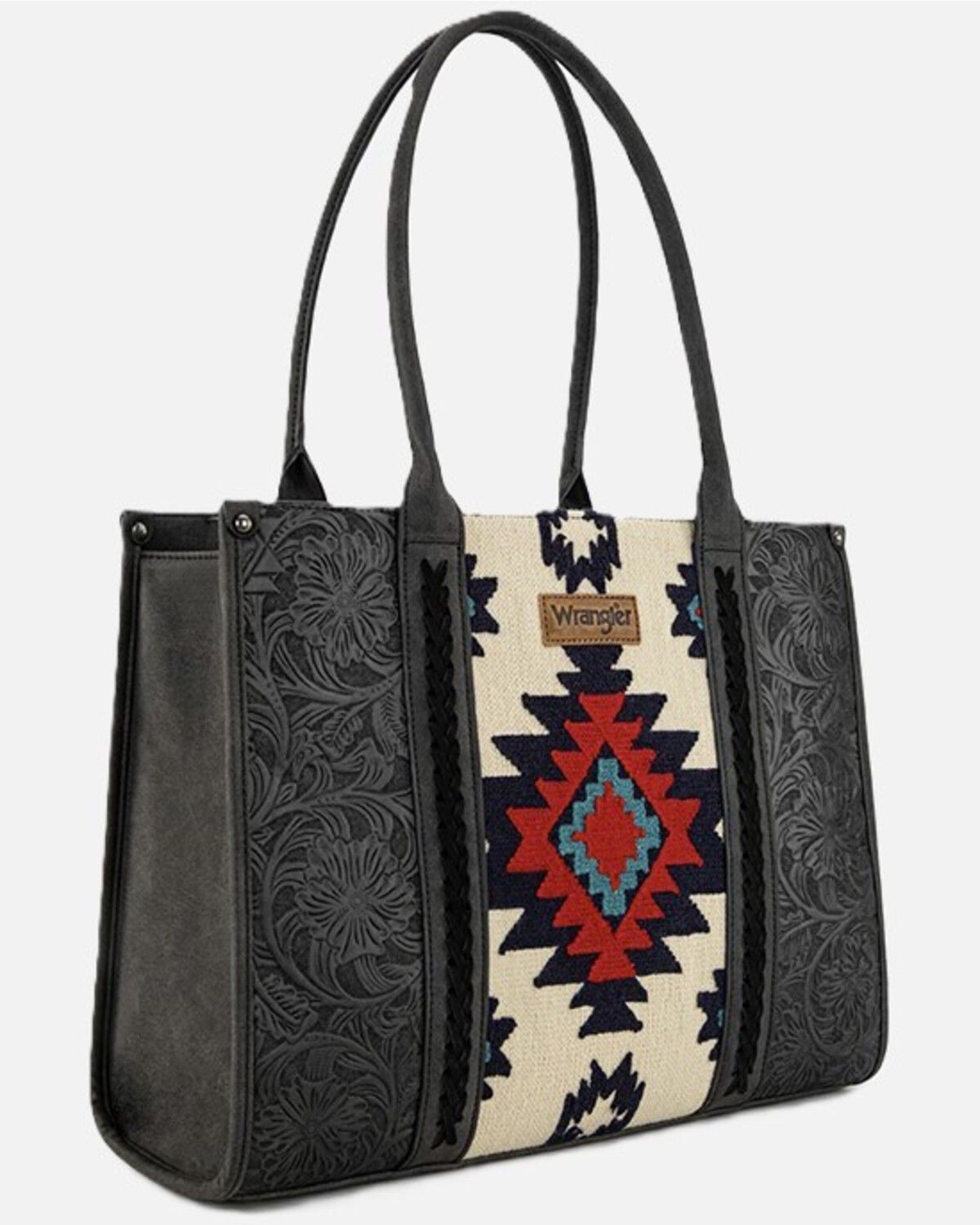
Western Tote Bags

Shop western tote bags for an everyday carryall that complements your western wardrobe. Compare each bag’s dimensions, storage, and carrying options to find the right fit for your daily essentials and routine.

Shop Your Store: Shop Your Store: Find a Store

(Turn off Shop Your Store to see all items)

(Turn off Shop Your Store to see all items)

close
  • Recommended
  • Lowest Price
  • Highest Price
Skip pass products
  • Women's Shyanne Boho Patched Tote
    Original Price $99.99 $68.97
    31% Total Savings
  • Women's Shyanne Velvet Embroidered Beaded & Fringe Tote
    Original Price $99.99 $68.97
    31% Total Savings
  • STS Ranchwear By Carroll Josie Cowhide Tote Bag
    Original Price $199.99 $138.97
    31% Total Savings
  • Women's Shyanne Gold Foil Hair-On Tote
    Original Price $149.99 $104.97
    30% Total Savings

End of products

Western Tote Bags

Western tote bags combine the open, easy-to-carry shape of a tote with details drawn from western leatherwork and Southwestern design. Tooled patterns, woven panels, contrast stitching, fringe, and metal accents give these bags their character, while roomy interiors make them useful beyond a particular outfit or occasion. Materials shape both the appearance and the feel. Leather can provide a structured body that softens with use, developing creases and changes in tone that become part of its character. Hair-on cowhide adds natural texture, with markings that vary from hide to hide. Canvas offers a woven surface suited to everyday carrying, often paired with leather trim or reinforced handles. Suede has a softer, napped finish that needs more protection from spills and abrasion. Synthetic materials can provide a consistent finish, though their cleaning needs and wear characteristics differ from those of natural leather. The material description matters more than appearance alone, especially when a printed surface resembles hide or an embossed pattern resembles hand tooling. Western style can be understated, with simple stitching and warm brown leather, or more pronounced, with bold geometric designs and contrasting textures. A clean-lined tote works easily with denim, boots, and a button-down shirt without making every part of the outfit compete for attention. A patterned bag can serve as the main detail against solid clothing. Fringe adds movement, but its length and placement affect how the bag sits against the body and fits beside a chair. Buckles, conchos, and other hardware contribute to the look while adding weight. For someone carrying a bag from the office to errands or taking it along to a rodeo, those details need to suit the routine as much as the outfit. The strongest choice balances recognizable western character with a shape and finish that feel comfortable in regular use.

Size and carrying comfort determine how useful a western tote becomes once it leaves the house. As with other tote bags, width, height, and depth tell more than a photograph alone. A broad opening makes it easier to reach a wallet or notebook, while a deeper body can hold larger belongings but leave smaller essentials out of sight. A flat, reinforced base helps distribute the load and gives the bag a more stable resting shape, though it does not guarantee that an empty tote will stand upright. An unstructured body settles closer to the wearer and folds into tighter spaces more easily. Strap drop is particularly important for shoulder carrying: there needs to be enough clearance to reach the opening without forcing the handles against the arm. Wider handles can spread pressure more comfortably when the bag holds heavier belongings. Short handles suit hand carrying, while a separate shoulder strap, when included, changes how the weight rests against the body. The empty weight deserves attention, since substantial leather, thick trim, and metal hardware all count before anything goes inside. Interior organization should match the load. A phone pocket, key attachment, or divided section can keep small necessities from collecting at the bottom. A padded compartment may be useful for electronics, but dimensions and protective construction matter more than the compartment name. A full zipper offers more coverage than a snap or open top, especially when the bag is set under a seat or carried through a crowded space. An open design allows quicker access but leaves contents more exposed. Reinforced handle attachments, even stitching, finished edges, and a firmly secured lining are useful construction details to examine. For a workday, a tote might need room for a planner, lunch container, and reading glasses. For travel, it may need to fit beneath a seat and hold essentials within reach. A larger bag is not automatically the better fit; useful capacity is the space that can be carried comfortably without constant rearranging.

Care helps preserve both the appearance and the working parts of a western tote bag. Different materials need different treatment, so the maker’s care directions should take priority over a general leather-care routine. Finished leather usually benefits from gentle removal of surface dust and, when appropriate, a compatible cleaner or conditioner tested first in a hidden area. Too much conditioner can darken leather or change its feel. Suede needs products and brushes intended for its nap rather than the treatments used on smooth leather. Hair-on hide calls for gentle handling that follows the direction of the hair; repeated rubbing against rough surfaces can wear down the hair in high-contact areas. Canvas and woven panels may allow spot cleaning, but attached leather, dyes, and interior finishes can limit how much moisture is safe. A mixed-material tote should not be treated as washable simply because part of it is fabric. Pens, cosmetics, and small liquid containers are easier to manage in separate pouches, which also help protect the lining from stains. Regularly removing loose grit keeps it from settling into seams and corners. Overloading puts extra strain on handles, attachment points, and closures, even when the body feels substantial. For storage, an empty bag kept away from direct sunlight and concentrated heat is less likely to fade or dry unevenly. Light stuffing can help a structured tote hold its shape without stretching it, and breathable storage helps prevent trapped moisture. These practical details also matter when choosing a western tote as a gift. Someone who carries only a few essentials may prefer a lighter, smaller shape, while a person who keeps paperwork and daily necessities together may appreciate a wider opening and divided storage. Familiar colors and restrained detailing are sensible choices when the recipient favors simple outfits. More distinctive tooling or hide patterns suit someone who already wears statement accessories. A useful gift reflects how that person spends the day, not just a style they might admire. With the right balance of material, capacity, construction, and western detail, a tote can become a dependable part of an everyday routine.

FAQs