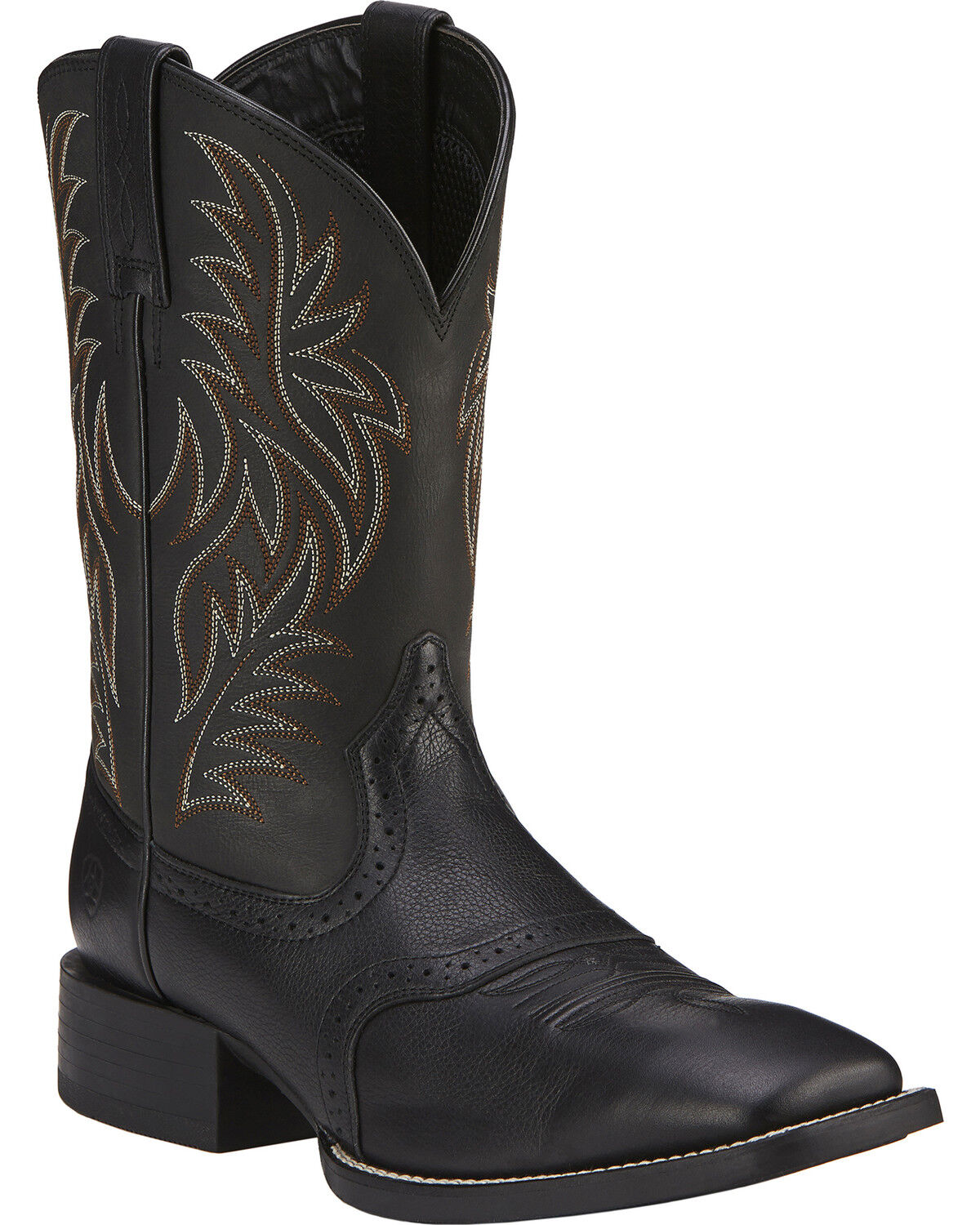
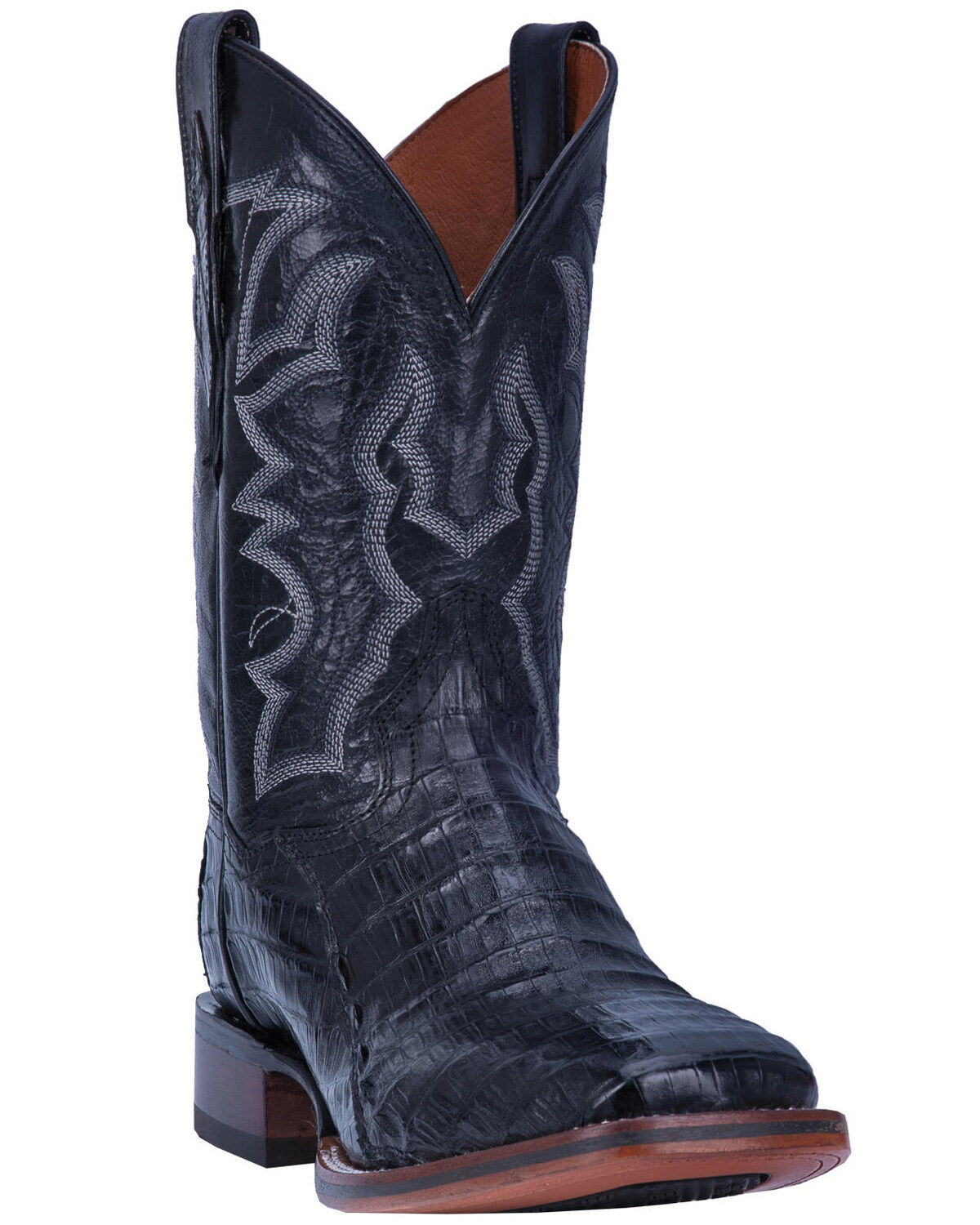
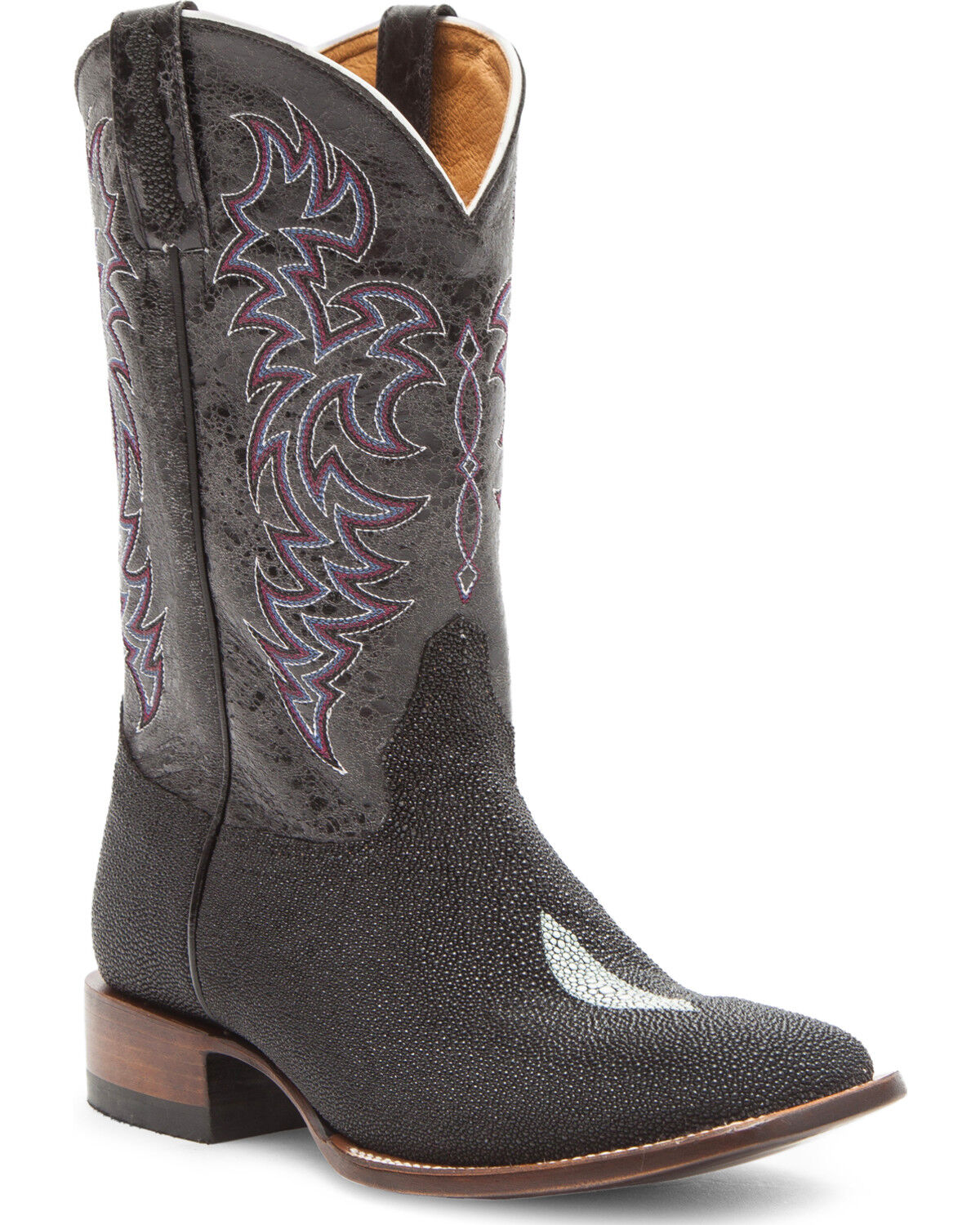
Square Toe Black Cowboy Boots

Shop square toe black cowboy boots for a western look with a broad toe shape. Browse the selection to find a pair that suits your style, and check each boot’s fit and sizing details before choosing.

Shop Your Store: Shop Your Store: Find a Store

(Turn off Shop Your Store to see all items)

(Turn off Shop Your Store to see all items)

close
  • Recommended
  • Lowest Price
  • Highest Price
Skip pass products

End of products

Square Toe Black Cowboy Boots

Black square toe cowboy boots combine a straight-edged western profile with a color that works with denim, work pants, and dressier trousers. The square toe describes the shape of the front of the boot, not a single fit: some designs have a broad, roomy forefoot, while others use a narrower square shape. Black leather can look understated with minimal stitching or more detailed with contrasting embroidery, textured panels, and a defined welt. A matte finish gives the boot a less formal appearance; a polished finish pairs naturally with dark jeans, a pressed shirt, or tailored pants for a wedding or an evening out. The shape of the heel and shaft matters just as much as the toe. A lower heel creates a grounded profile, while a taller, angled western heel gives the boot a more pronounced silhouette. Shaft stitching may stay mostly hidden beneath pants, but it still gives the boot character when the wearer sits or moves. Black is also one color within the broader category of Square Toe Men's Cowboy Boots, where different proportions create distinct looks. Materials affect both appearance and performance. Full-grain leather retains its natural grain and can develop creases and character through regular wear. Other leather finishes may have a smoother, more uniform surface. Suede has a softer, textured appearance and needs care suited to its nap, while exotic leathers have distinct patterns and their own maintenance requirements. No leather is free from wear, and black finishes can still show dust, scuffs, and scratches. Thickness alone does not determine quality or comfort. The upper, lining, footbed, outsole, and construction all contribute to how a boot feels and holds up. For frequent wear, the useful details are often quiet ones: an even finish, clean stitching, a comfortable lining, and a heel that sits firmly beneath the foot. Together, those features help distinguish a boot chosen mainly for its appearance from one suited to a regular place in the rotation.

Fit determines whether square toe black cowboy boots feel comfortable beyond the first few steps. A broader toe shape may allow more space across the front of the foot, but it does not automatically mean the boot is wide through the instep or heel. The toes should have room without being pressed against the front or squeezed along the sides. The widest part of the foot should align with the widest part of the boot, and the instep should feel secure rather than painfully tight. A small amount of heel movement can be normal in a new pull-on leather boot; excessive lifting or sliding suggests the fit needs another look. Leather may soften with use, but break-in should not be expected to correct the wrong size. Trying boots with the socks intended for regular wear gives a more useful sense of fit, especially when comparing widths or footbeds. Shaft height and opening also affect comfort around the calf and how easily pants fall over the boot. Intended use helps put these details in perspective. Someone standing through a long event may value cushioning and a stable heel, while someone walking frequently between buildings may prefer flexibility and an outsole suited to hard surfaces. Leather outsoles are common in dress-oriented western footwear, while rubber outsoles can offer grip and resistance to wear; actual traction depends on the tread, material, and surface. A western appearance alone does not establish slip resistance, waterproofing, or protective-toe performance. Jobs with footwear requirements call for the appropriate stated ratings. Riding also requires attention to how the boot and heel fit the stirrup, rather than relying on toe shape alone. Construction influences maintenance over time. Some welted boots can be resoled by a qualified repair shop, while other constructions have different repair limits. A sound upper and repairable sole can support years of use, but longevity still depends on wear, care, and the demands placed on the boot. The right pair should suit the day it is meant to handle, whether that means office hours, a family gathering, or everyday western wear.

Regular care helps black cowboy boots retain their finish and keeps leather from becoming overly dry. Loose dirt and grit are best removed with a soft brush or cloth before they collect around stitching, the welt, and the heel. Smooth leather generally benefits from a compatible cleaner and conditioner used according to the leather and care-product instructions. More conditioner is not necessarily better; heavy application can leave residue or change the finish. A small test on an inconspicuous area helps reveal changes in color or texture before treating the entire boot. Black polish can restore color to suitable smooth leather, but it is not appropriate for every finish, and it should not replace cleaning or conditioning. Suede and exotic leather need products and methods intended for those materials. If boots become damp, allowing them to dry naturally away from direct heat helps protect the leather and adhesives. Pulling boots off with a boot jack rather than stepping on the heel can reduce unnecessary stress, and boot trees can help maintain shape between wears. Rotating pairs also gives linings time to dry after a full day on the feet. Care extends to the underside: worn heel edges, loose stitching, or an outsole wearing thin deserve attention before the damage spreads. For gifting, black square toe cowboy boots can suit someone who already wears western footwear or wants a straightforward pair for regular use. The most useful starting points are the recipient’s usual boot size, width, preferred heel, and typical activities. A familiar boot size is helpful, though fit can vary between shapes and constructions. Someone who favors understated clothing may appreciate smooth black leather and quiet stitching, while a wearer who enjoys visible detail may prefer more texture. Whether chosen for a gift, a dressed-up occasion, or everyday use, a balanced shape, suitable materials, and a secure fit matter more than the toe profile alone.

FAQs