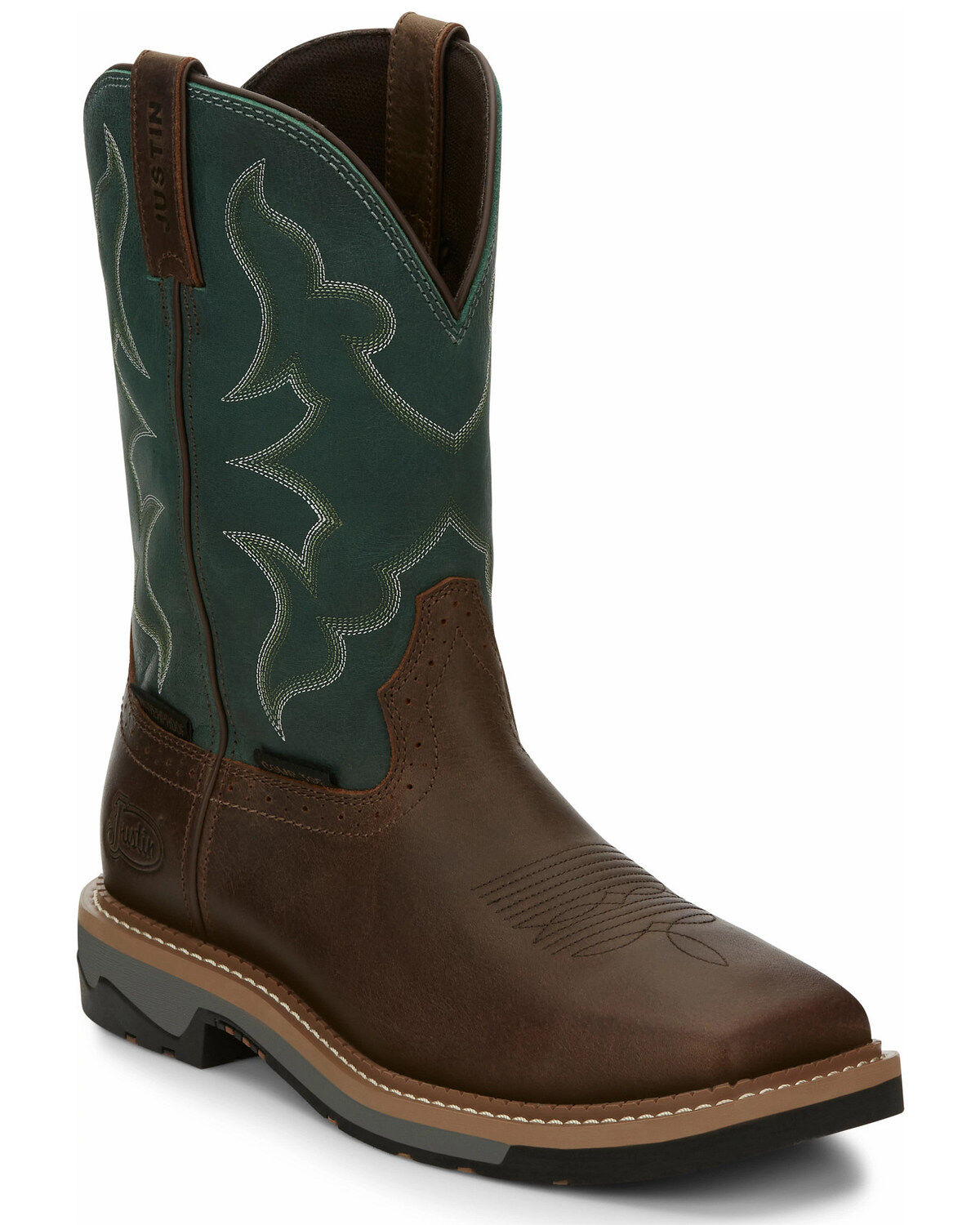
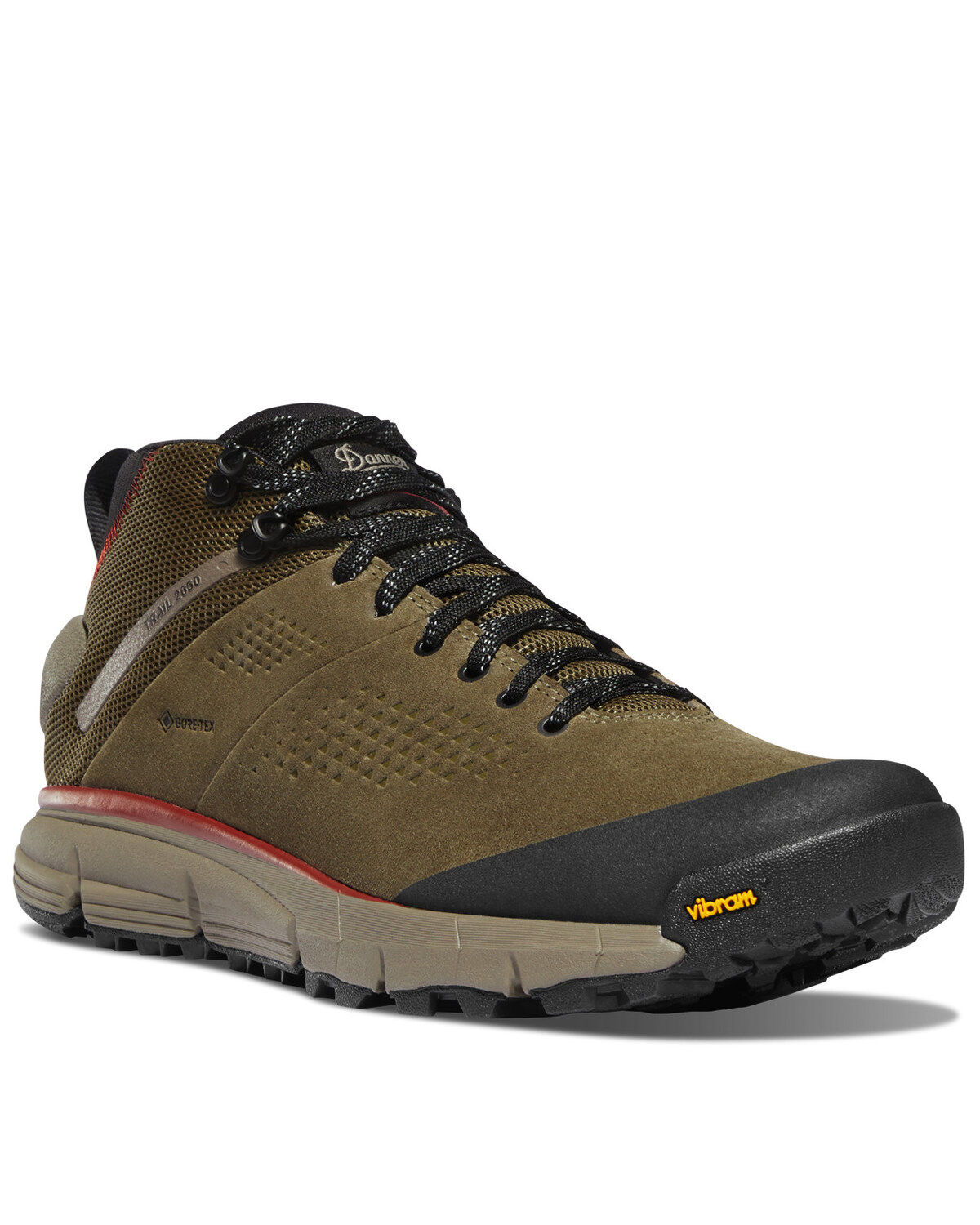
Pull On Work Boots For Men

Shop pull-on work boots for men in easy-on, no-lace styles built for the workday. Compare the fit and listed features of each pair, and check that any toe protection, traction, or safety ratings meet your job requirements before choosing.

Shop Your Store: Shop Your Store: Find a Store

(Turn off Shop Your Store to see all items)

(Turn off Shop Your Store to see all items)

close
  • Recommended
  • Lowest Price
  • Highest Price
Skip pass products

End of products

Pull On Work Boots For Men

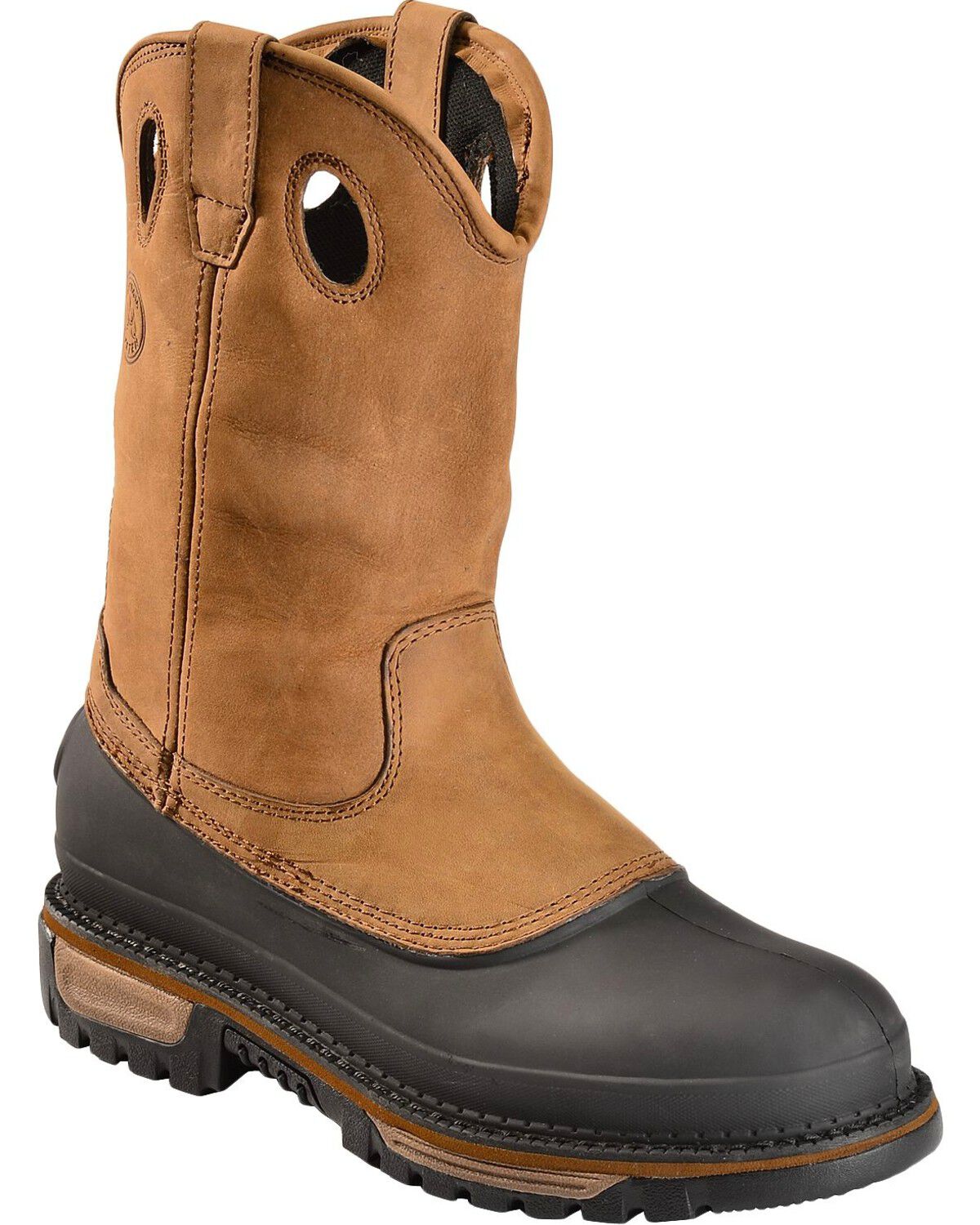
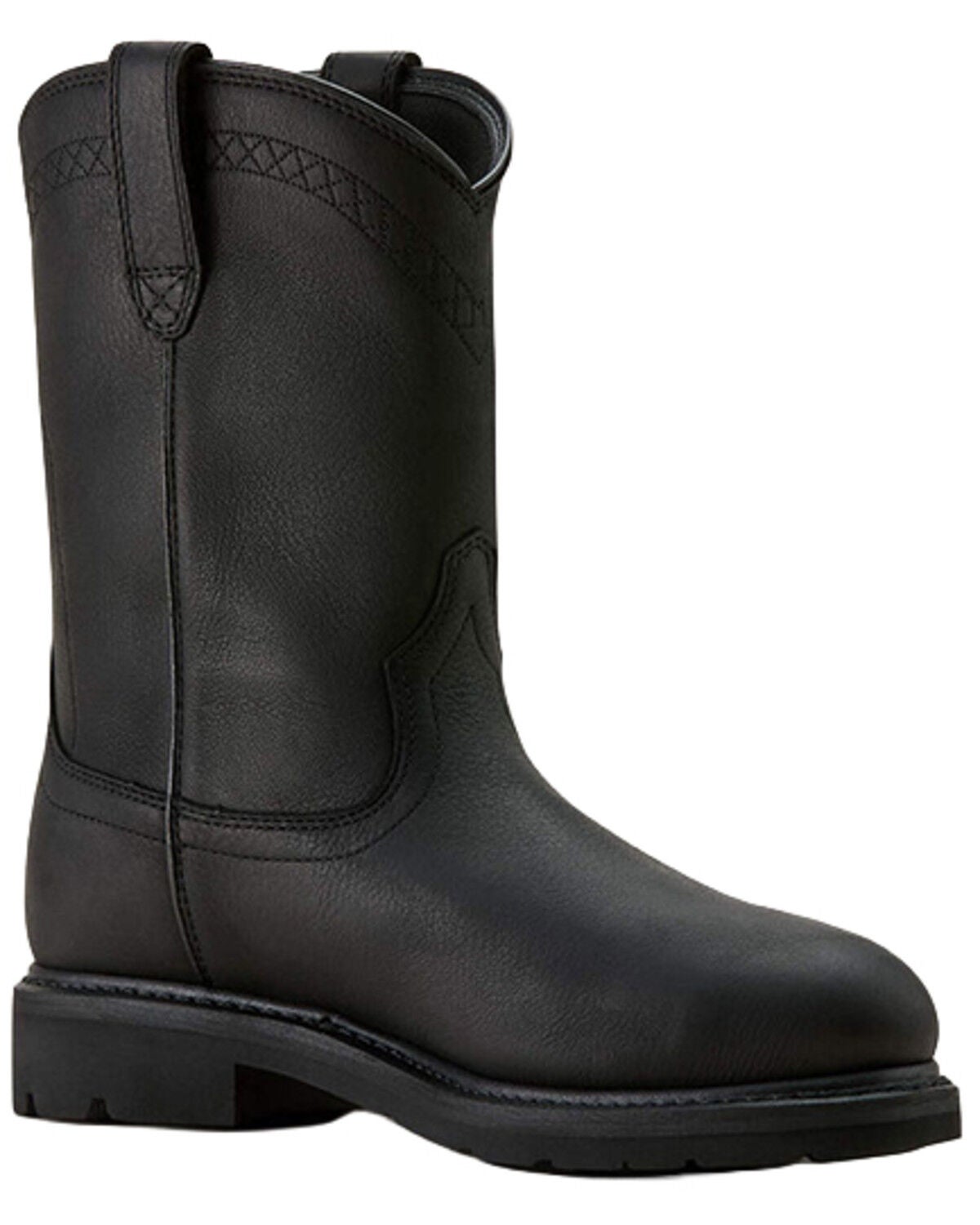
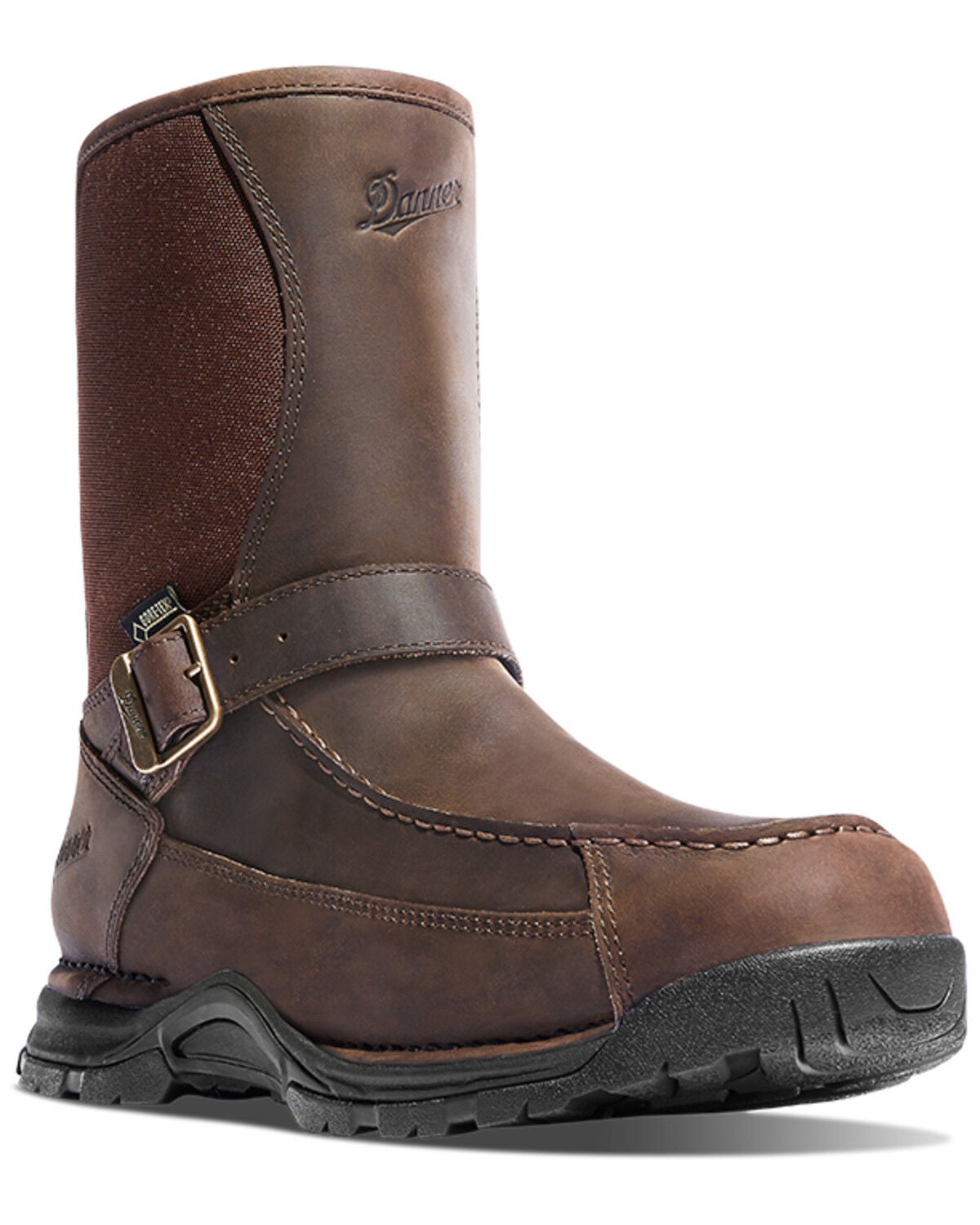
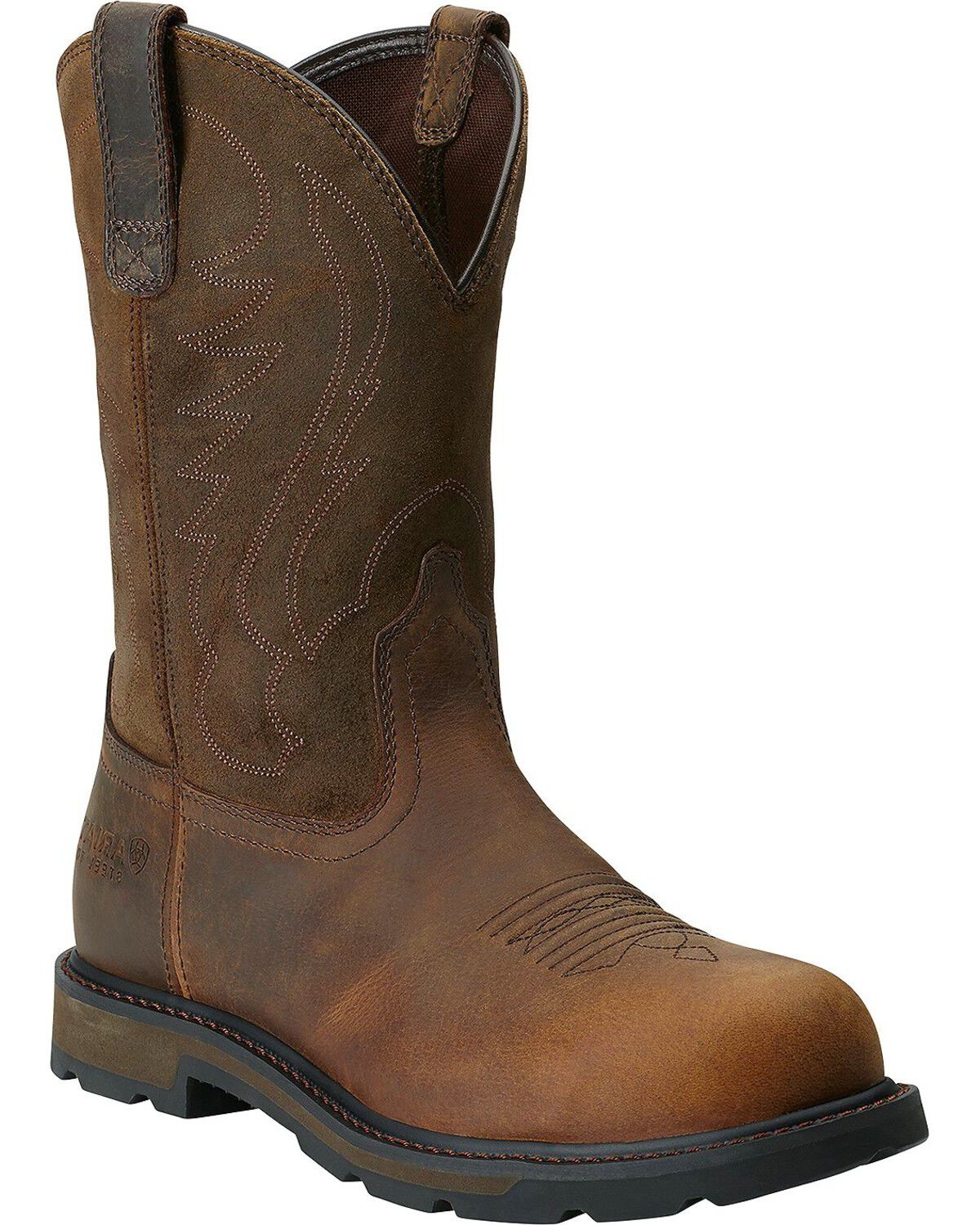
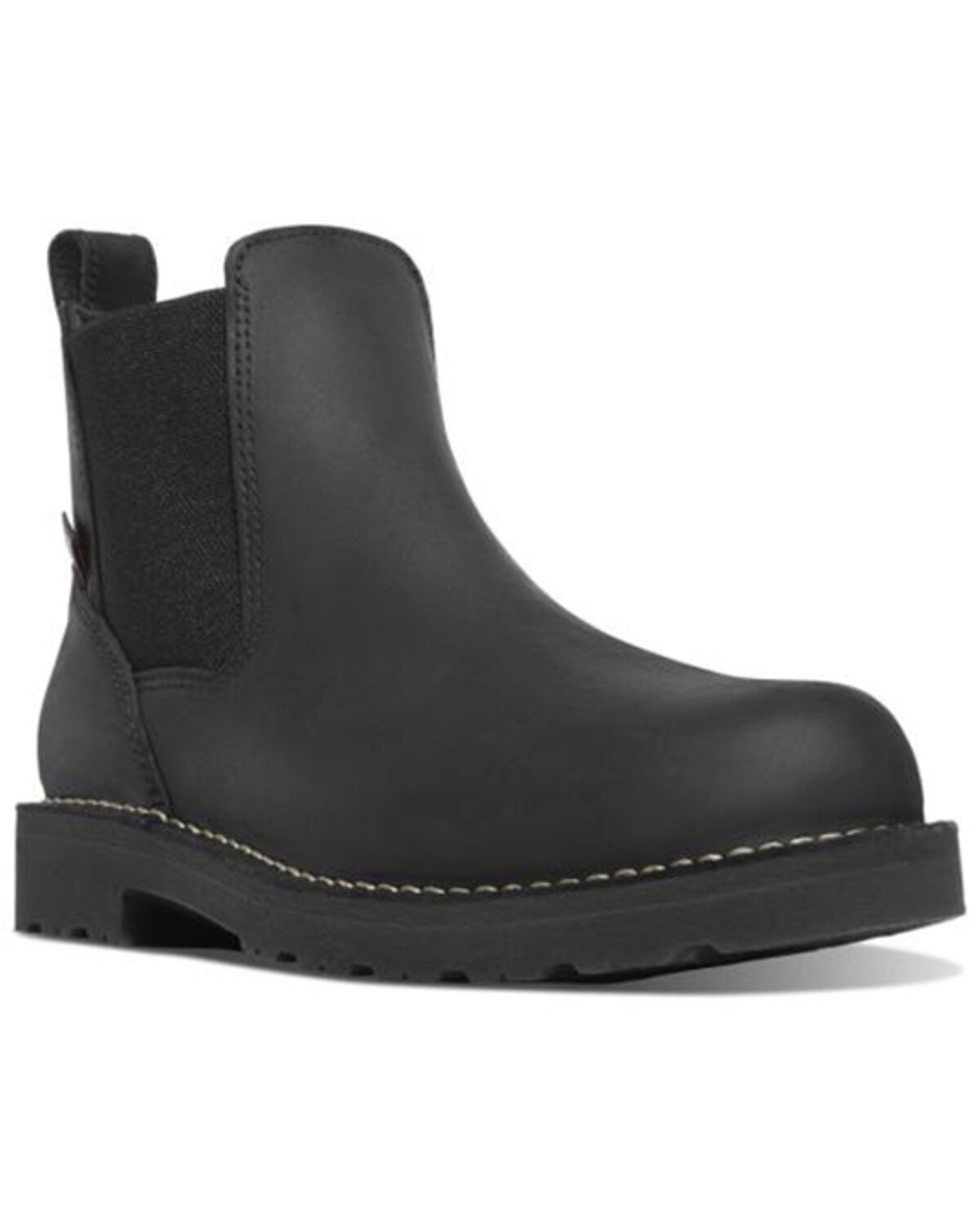
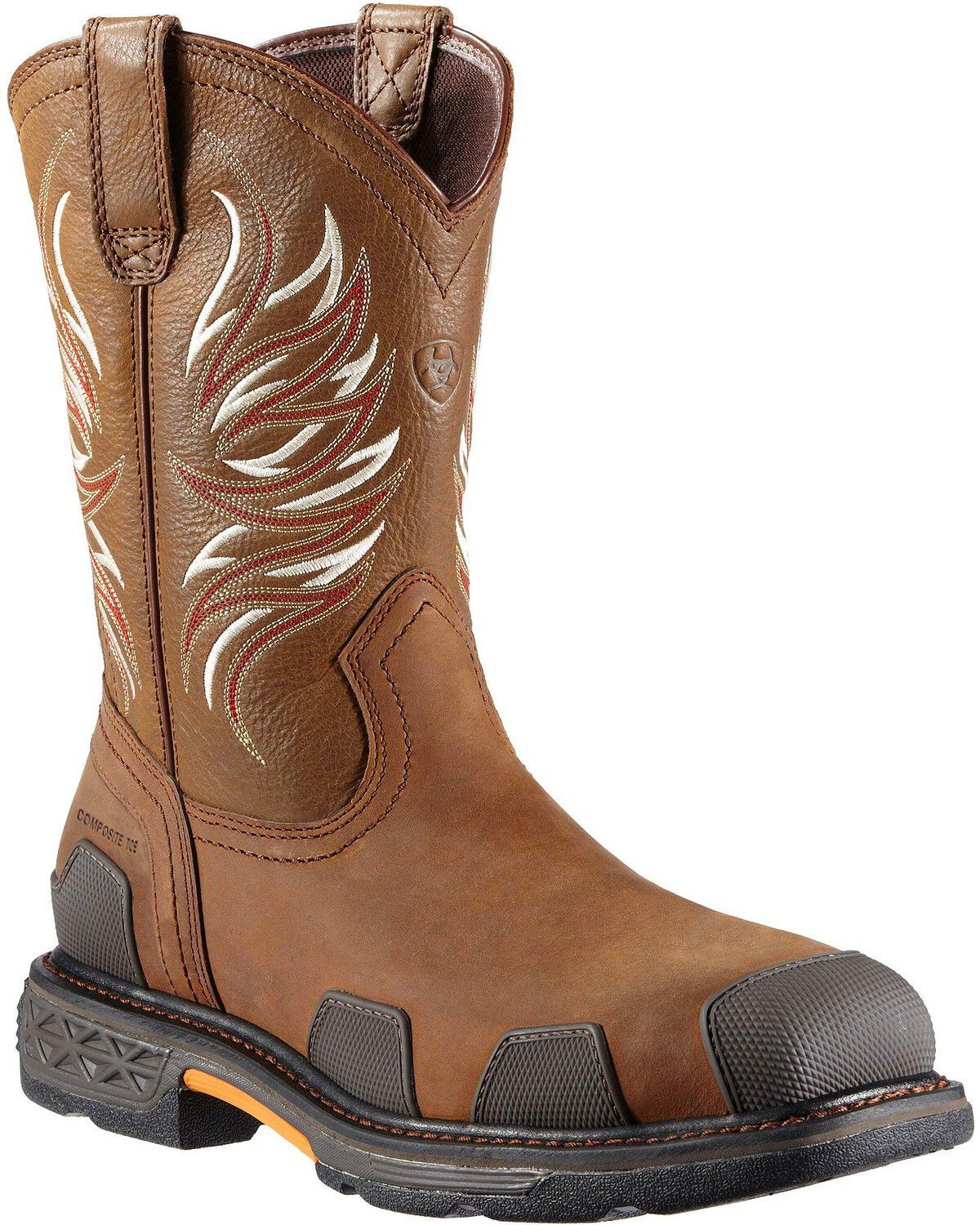
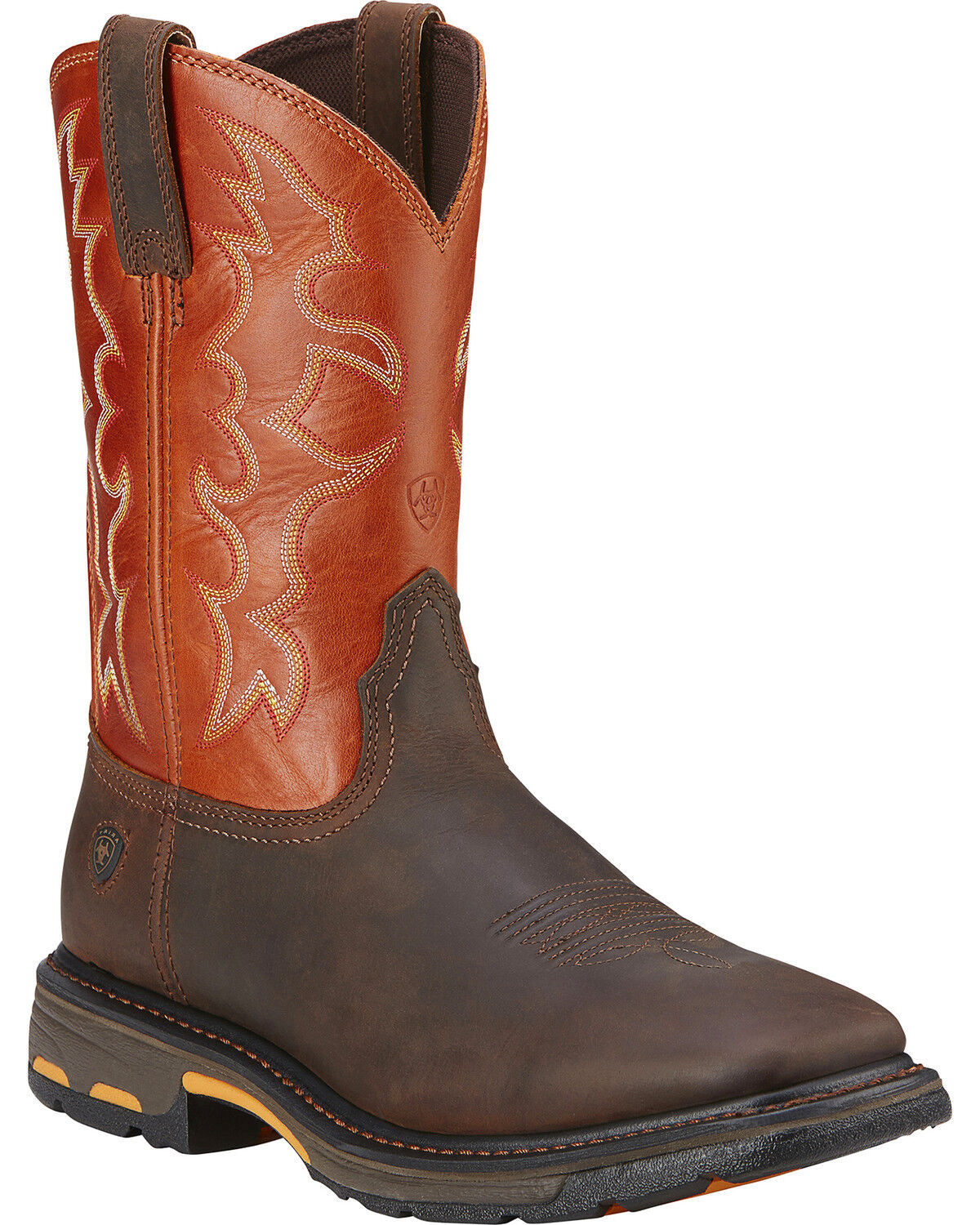
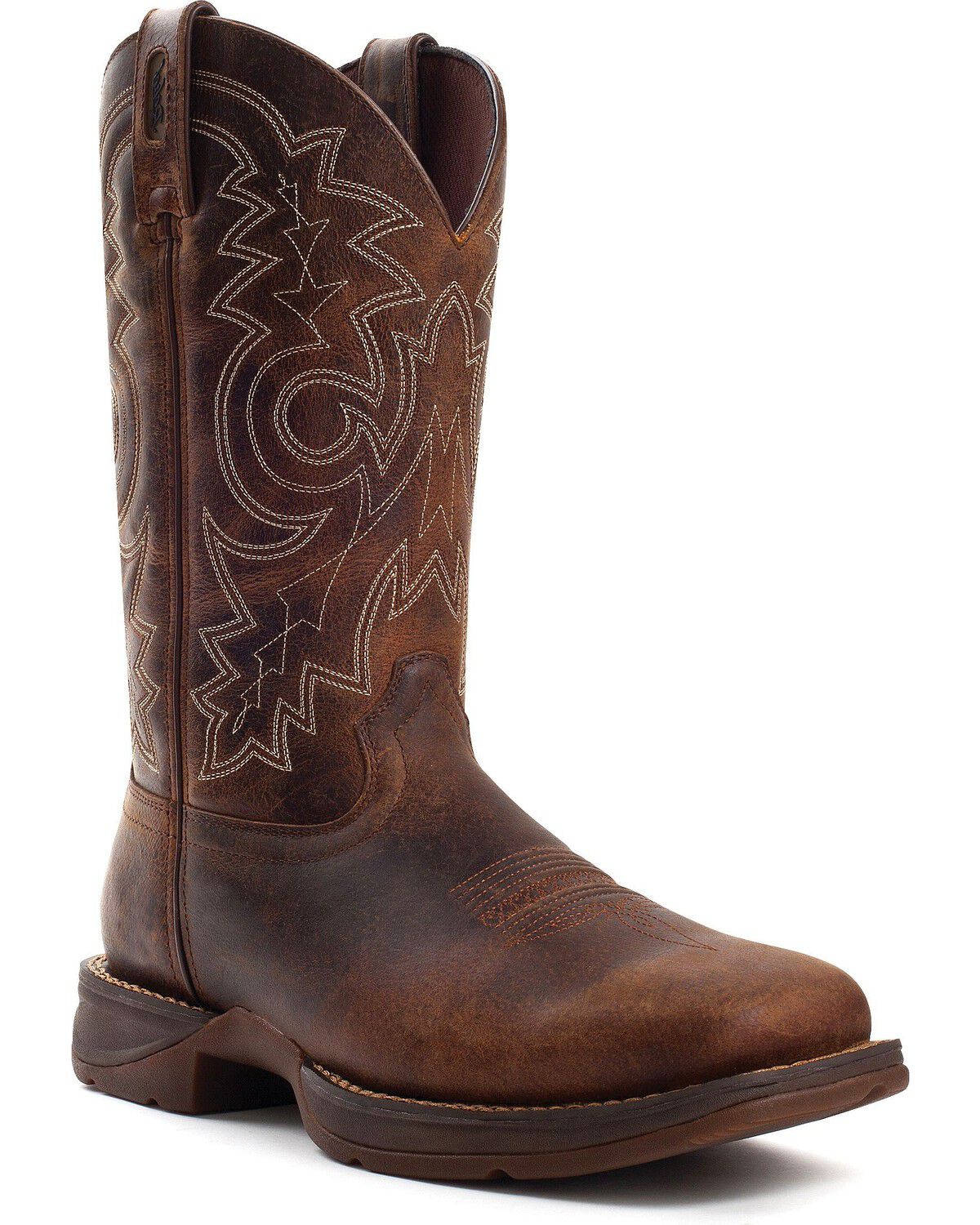
Pull-on work boots for men combine lace-free entry with the support and coverage needed for demanding jobs. Their taller shafts cover the ankle and part of the lower leg, while pull tabs or pull holes give hands a firm grip when putting them on. The result is a practical choice for men moving between the shop, barn, warehouse, and jobsite. Different builds suit different work. A broad, stable sole can feel steady underfoot on a concrete shop floor, while deeper, more open tread can provide purchase on loose dirt and shed packed debris more readily than closely spaced grooves. Neither tread pattern works equally well on every surface. Slip-resistant outsoles are designed for traction under specified conditions, but no boot eliminates the risk of slipping on oil, water, or loose material. Oil resistance is a separate feature: it describes a material’s resistance to deterioration from oil exposure, not a guarantee of grip on an oily floor. Uppers matter just as much. Full-grain leather offers a durable surface that develops flex with wear, and reinforced areas around the toe and heel can help withstand repeated contact with equipment, steps, and rough ground. Leather thickness, stitching, lining, and sole attachment all contribute to how a boot wears over time. Welt construction joins the upper and sole through a stitched strip and may allow resoling, depending on the design and condition. Cement construction bonds the sole to the upper and can provide flexibility without a stitched welt. Neither construction method alone determines comfort or service life. Rubber and polyurethane outsoles also vary in weight, flexibility, and resistance to abrasion. For men who spend hours walking aisles or standing at a bench, cushioning and underfoot support deserve attention alongside a tough exterior. A boot built for repeated kneeling, climbing, or contact with abrasive surfaces faces different demands than one worn mainly for walking across a level floor.

Safety features distinguish men’s pull-on work boots beyond their appearance. Steel, composite, and other safety-toe constructions are intended to protect against specified impact and compression hazards when the footwear meets the applicable standard. Toe material alone does not establish the protection level; the boot’s marked rating and the employer’s requirements are what matter. Soft-toe work boots serve jobs that do not require protective toe caps, but a sturdy leather toe is not a substitute for rated toe protection. Some work also calls for metatarsal protection over the top of the foot or other task-specific features. Electrical hazard-rated footwear provides supplemental protection under specified conditions and does not replace required electrical safety practices or protective equipment. Waterproof construction is another distinct consideration for work around washdown areas, standing water, and repeated splashes. A waterproof membrane or sealed construction can help limit water entry, but an open shaft still allows water in from above. Fit remains essential across all these designs. Pull-on boots rely on the shape of the heel and instep rather than adjustable laces to hold the foot in place. A close, comfortable fit across the instep helps keep the boot secure without pinching. The toes need room to move without pressing against the front or sides, especially inside a safety-toe cap that will not stretch with wear. Slight heel movement can occur in a new pull-on boot, but excessive lifting, rubbing, or a foot sliding forward suggests a poor fit. The ball of the foot should align with the boot’s flex point so each step bends naturally. Shaft width also affects comfort, particularly when walking, crouching, or climbing steps. Work socks and any intended orthotic change the space inside the boot, making them part of the fit rather than an afterthought. Cushioning can soften the feel of a hard floor, but it cannot correct a boot that is too narrow, too short, or loose through the heel.

Daily wear leaves clear marks on work footwear: dust along the stitching, grime around the welt, and abrasion where a toe meets a pallet or a heel catches a step. Routine care helps keep that wear from becoming avoidable damage. Loose dirt is best removed before it works deeper into seams, and cleaning products need to match the upper material and finish. Smooth leather, oiled leather, suede, and textile panels do not all respond to the same treatment. Appropriate leather conditioner helps maintain flexibility, while too much product can leave buildup or alter the finish. Waterproof treatments must also be compatible with the boot’s materials; a surface treatment does not turn every boot into waterproof footwear. Air-drying away from direct heat helps protect leather, adhesives, and linings after cleaning or moisture exposure. Clean tread channels maintain contact with the walking surface, and regular checks can reveal worn heels, separating soles, damaged stitching, or exposed protective components. Removable footbeds may be replaceable when the manufacturer permits it, although a new footbed does not restore a worn-out outsole or damaged safety structure. These practical details matter for anyone who depends on the same pair through repeated shifts. Taller pull-on boots make sense when lower-leg coverage is useful; for tasks that favor less coverage, pull-on work shoes for men offer a lower-cut alternative, with safety features still dependent on the individual design. Work boots can also make a useful gift for a tradesman, rancher, equipment operator, or someone starting a hands-on job. The strongest choice reflects his actual work requirements, usual width, and preferred fit rather than appearance alone. A familiar size is a starting point, not a guarantee across different boot shapes. Whether the work involves carrying materials, tending livestock, or standing at a workbench, the right pair balances secure fit, appropriate protection, dependable traction, and construction suited to the task.

FAQs