Men's Hiking Boots With Ankle Support

Find men’s hiking boots with ankle support for time on the trail. As you compare options, consider ankle coverage, fit, and the terrain you plan to hike. Look for a secure feel around the heel and ankle, with enough room for your toes and hiking socks.

Read More

Shop Your Store: Shop Your Store: Find a Store

(Turn off Shop Your Store to see all items)

(Turn off Shop Your Store to see all items)

close
  • Recommended
  • Lowest Price
  • Highest Price
Skip pass products
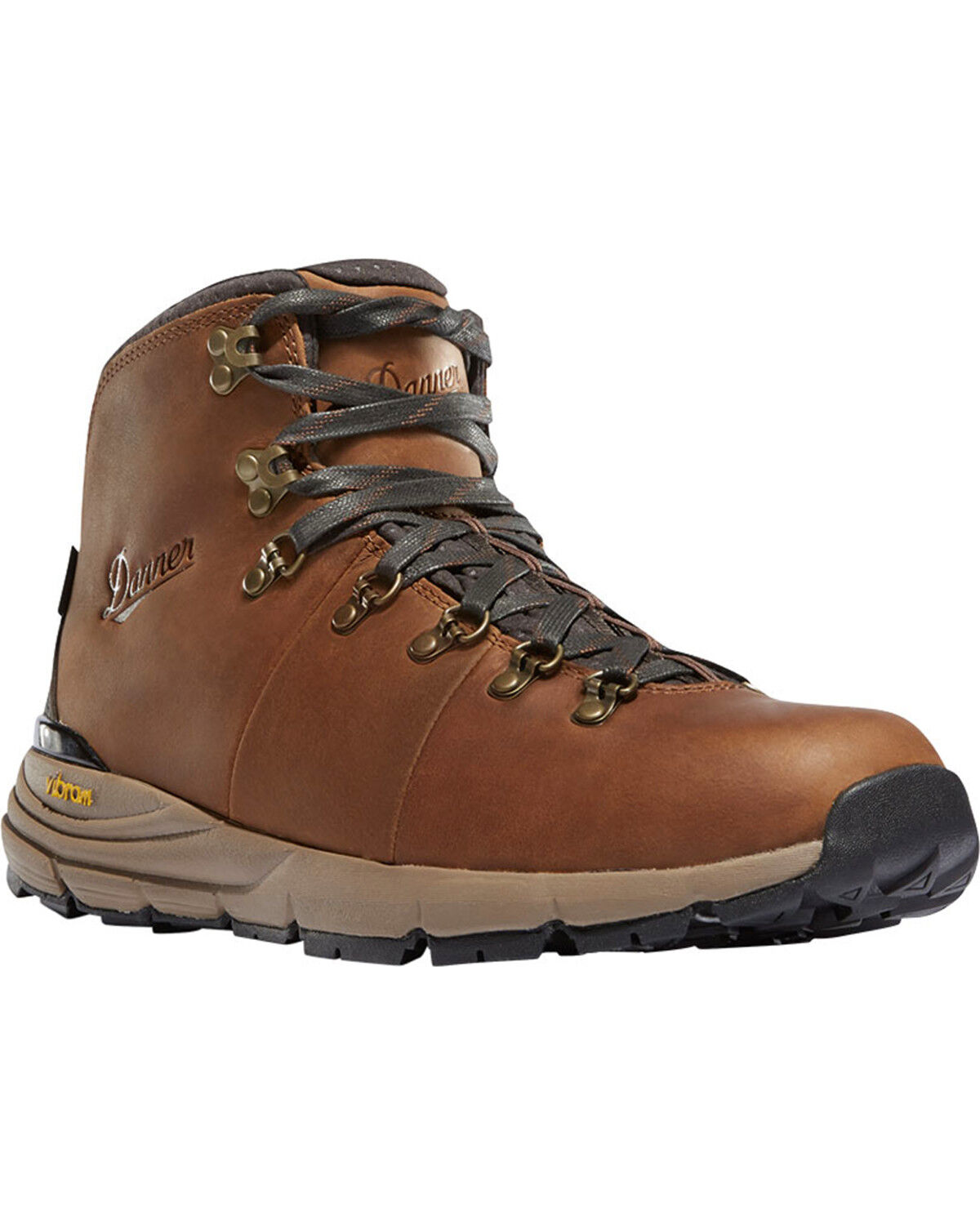
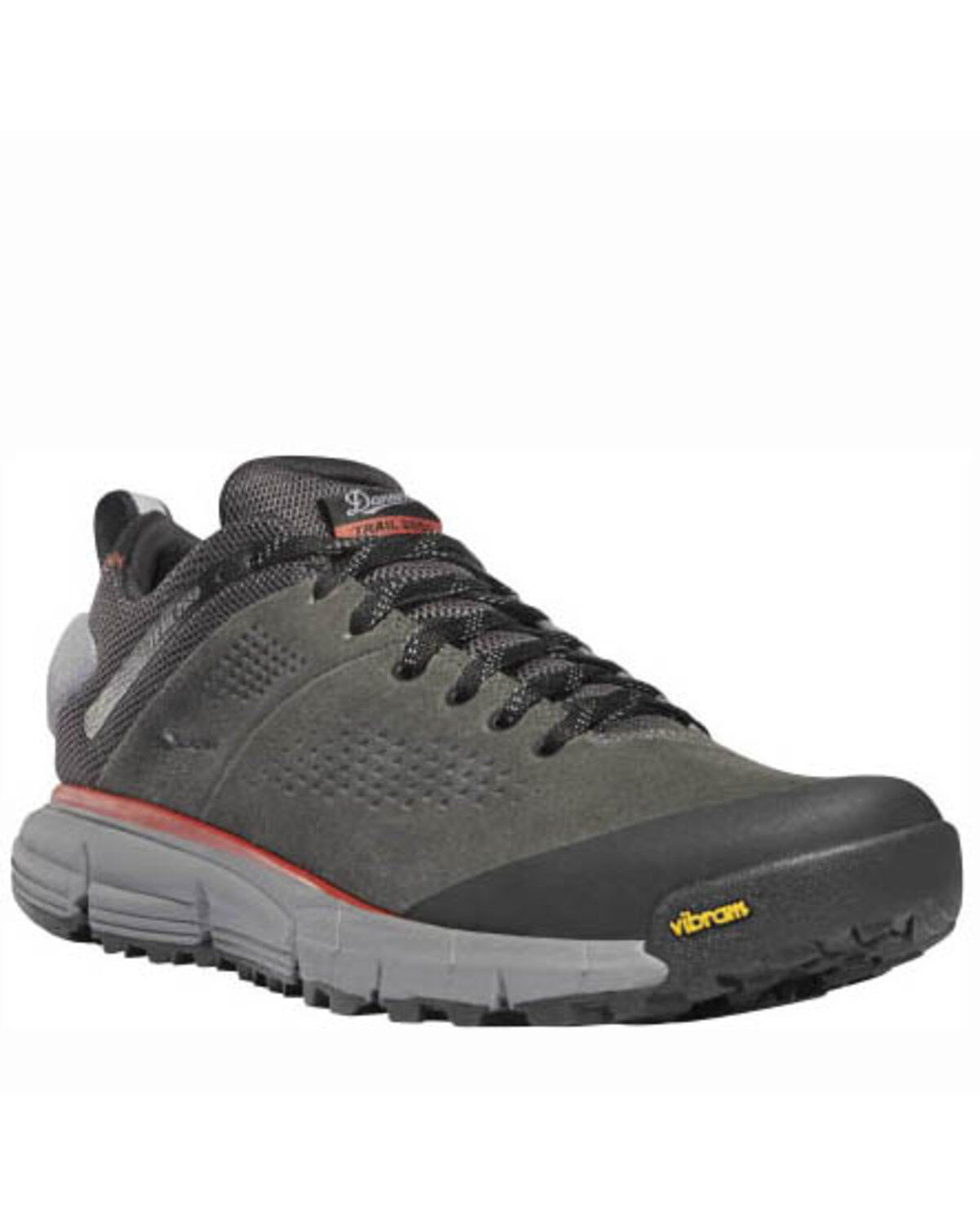
  • Men's Danner Trail 2650 Denim GTX Hiking Boots - Soft Toe

    Original Price $189.99 $99.00
    48% Total Savings
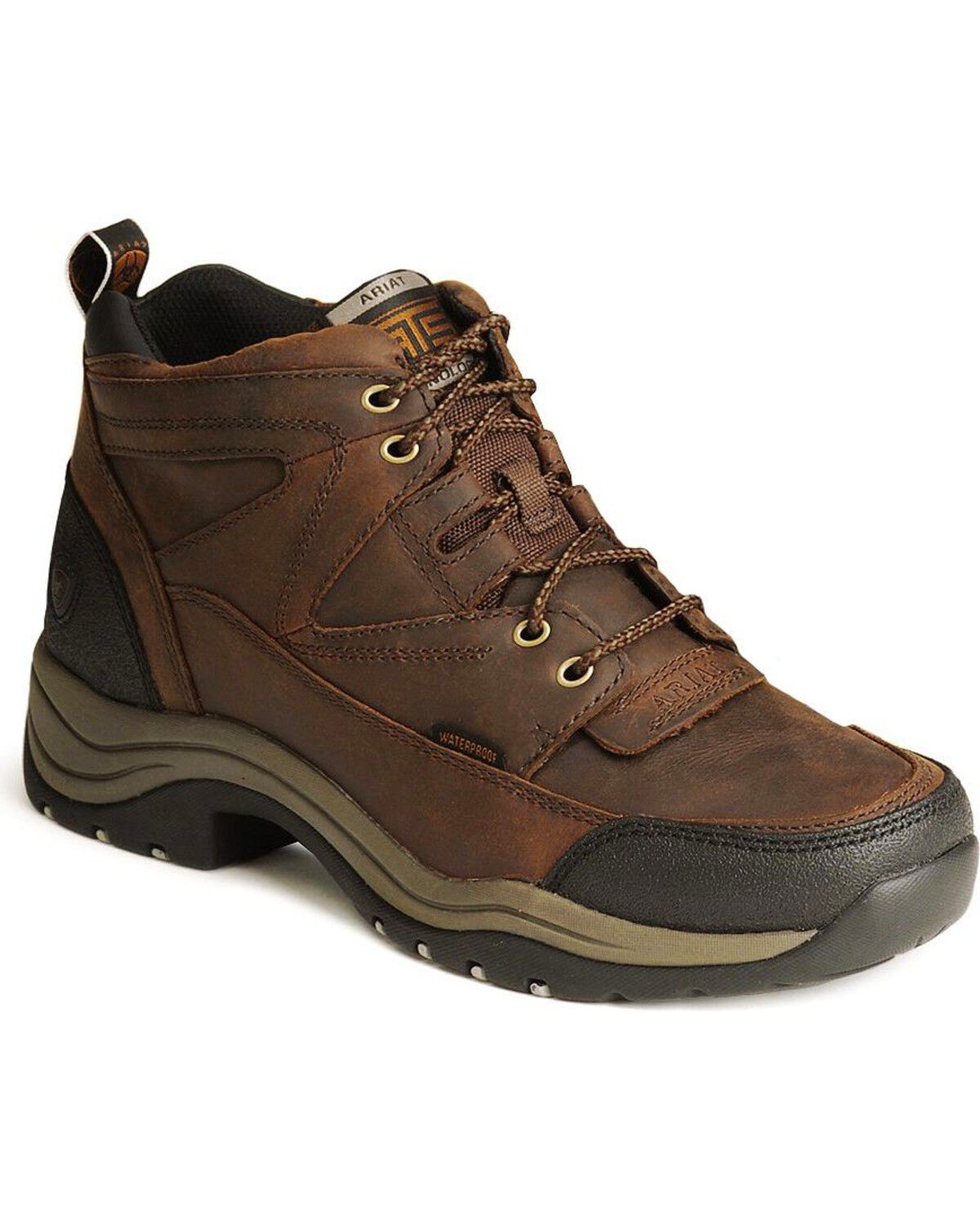
  • Men's Ariat Terrain Hiker Work Boots - Steel Toe

    Original Price $139.99 $79.97
    43% Total Savings

End of products

Men's Hiking Boots With Ankle Support

Men’s hiking boots with ankle support combine above-ankle coverage with a secure fit and a stable foundation for uneven ground. A taller collar is only part of that construction. The heel shape, lacing system, midsole firmness, and outsole all affect how a boot feels when crossing loose gravel, stepping over roots, or descending a rocky trail. Mid-cut boots generally extend around or just above the ankle, while higher designs provide more coverage. Padded collars can soften contact around the ankle bone, but extra padding alone does not make a boot more supportive. A firm heel counter, the reinforced section surrounding the back of the foot, helps hold the heel in place. A supportive midsole and an internal shank, when included, help limit excessive flex through the middle of the boot. That structure can be useful when carrying a pack or placing a foot on an angled rock. Ankle coverage does not guarantee protection from a rolled ankle, and boot height should be considered alongside fit, footing, and trail demands. Outsole construction matters just as much. Rubber compounds differ in grip and wear resistance, while lug depth and spacing affect traction on dirt, rock, and loose surfaces. Deep, widely spaced lugs can release accumulated soil more readily; a defined heel edge can help provide purchase on descents. Upper materials bring their own trade-offs. Full-grain leather typically offers strong abrasion resistance and develops flexibility with use. Nubuck has a brushed surface and needs care suited to that finish. Synthetic fabrics and leather-and-fabric combinations can reduce weight and allow more flexibility, depending on construction. Reinforced toe caps and heel overlays help protect areas that repeatedly contact rocks and trail debris. Waterproof membranes can limit water entry through the upper, but they do not make the entire boot impervious to water entering over the collar. Breathability also varies, so the right construction depends on the route, pace, and amount of coverage needed.

A supportive hiking boot should hold the heel securely without squeezing the forefoot or pressing hard against the ankle. Foot width, instep height, and toe shape matter as much as the size printed inside the boot. A wide fit can provide needed room across the ball of the foot, but simply sizing up may leave too much length and allow the heel to move. Try boots with the hiking socks intended for the trail, and include any regularly worn insoles or prescribed orthotics when checking the fit. Feet can expand during extended walking, so a fit check later in the day may better reflect the space needed over several miles. Toes should have room to move without sliding into the front of the boot on a descent. A sloped fitting surface is useful for checking that clearance. Walking up an incline can reveal heel movement that is less obvious on level ground. Persistent heel lift, toe pressure, or rubbing around the ankle should not be dismissed as something that will necessarily disappear with wear. Leather may soften, but a boot that is too short or the wrong shape will not become a good fit through break-in alone. Lacing adds another layer of adjustment. Secure eyelets and hooks can help maintain tension, and some systems allow separate adjustment over the foot and around the ankle. The goal is a firm hold, not pressure that causes numbness or restricts comfortable movement. Cushioning should match the intended use, too. Lightweight foam midsoles can soften repeated steps, while denser constructions may provide a firmer platform under a loaded pack. Soft cushioning and structural support are different qualities; a boot can feel plush without resisting twisting very well. A flexible design may suit maintained paths and shorter walks, while a firmer boot may feel more settled on broken ground. Neither choice is automatically better. The useful balance is enough flexibility for a natural stride, enough structure for the terrain, and a fit that stays comfortable as the distance adds up.

Men’s hiking boots with ankle support suit a range of outdoor uses, from day hikes and campground walks to longer routes with a backpack. Intended use should guide the construction. For a maintained trail with modest elevation changes, a lighter boot may provide adequate coverage without adding unnecessary weight. Repeated climbs, uneven ledges, and a heavier pack can make firmer underfoot support and a secure heel fit more important. A rugged appearance alone does not establish suitability for demanding terrain. Examine the sole, upper reinforcements, stitching, and lacing hardware, then consider how those details work together. Hiking boots also differ from work boots: trail-focused construction should not be treated as a substitute for required workplace protection. For everyday western footwear with ankle coverage, Mens Western Boots With Ankle Support offers a related category with a different purpose and fit. Whatever the use, regular care helps preserve the boot’s condition. Brush away loose dirt, remove lodged stones from the tread, and clean the upper according to its material and the manufacturer’s directions. Remove insoles when practical so the interior can dry thoroughly. Let boots dry naturally away from direct heat, which can damage leather, adhesives, and other components. Use conditioners or protective treatments only when they are approved for the upper material; smooth leather and nubuck do not always need the same treatment. Check laces, hooks, seams, and outsole wear regularly. Rounded tread, separating soles, and damaged hardware can change how securely a boot performs. New boots are best introduced on shorter walks before a demanding route, allowing time to confirm the fit and identify pressure points. As a gift for a hiker or someone who spends time on trails, supportive hiking boots are a practical choice when the recipient’s size, width, and preferred use are known. Personal fit matters more than appearance. The right pair feels secure at the heel, leaves usable toe room, and provides support suited to the ground ahead.
Read More

FAQs