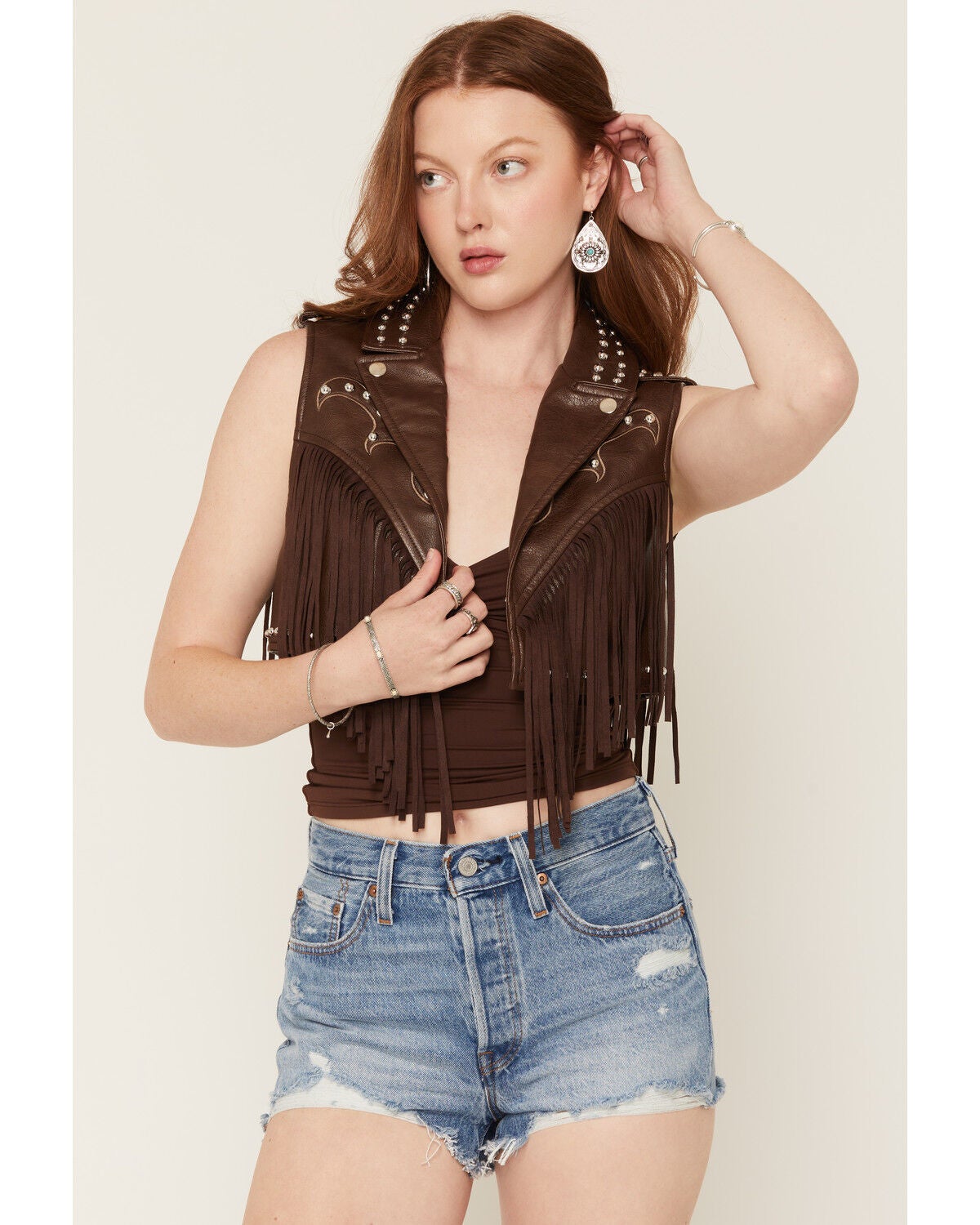
Cowboy Vest With Fringe

Find a cowboy vest with fringe to add texture and movement to your western outfit. Compare the available styles by fit, length, and fringe placement, and consider how each vest will layer over the shirts you already wear.

Read More

Shop Your Store: Shop Your Store: Find a Store

(Turn off Shop Your Store to see all items)

(Turn off Shop Your Store to see all items)

close
  • Recommended
  • Lowest Price
  • Highest Price
Skip pass products
  • Women's Shyanne Simpson Embellished Fringe Faux Suede Vest
    Original Price $89.99 $61.97
    31% Total Savings
  • Women's Rock & Roll Denim Faux Suede Studded Fringe Vest
    Original Price $59.99 $40.97
    32% Total Savings
  • Women's Shyanne Short Fringe and Eyelet Suede Vest
    Original Price $249.99 $173.97
    30% Total Savings
  • Women's Scully Star Leather Vest
    Original Price $179.99 $124.97
    31% Total Savings
  • Women's Saints & Hearts Faux Suede Star Tiered Fringe Vest
    Original Price $69.99 $47.97
    31% Total Savings
  • Women's Shyanne Faux Suede Whipstitch Fringe Vest
    Original Price $59.99 $40.97
    32% Total Savings
  • Women's Idyllwind Studded Fringe Vest
    Original Price $96.99 $66.97
    31% Total Savings
  • Women's Idyllwind Mavert Suede Fringe Vest
    Original Price $179.99 $124.97
    31% Total Savings
  • Women's Vocal Rhinestone Cropped Faux Suede Vest
    Original Price $49.99 $33.97
    32% Total Savings

End of products

Cowboy Vest With Fringe

A cowboy vest with fringe is a sleeveless western layer with strips of leather, suede, or fabric that add texture and movement along the chest, back, shoulders, or hem. The cut keeps the shirt beneath it visible, while the fringe gives the vest a distinct profile from the front and back. Materials make a substantial difference in how that profile looks and feels. Smooth leather has a firmer surface and can develop visible character through regular wear. Suede, with its soft, brushed finish, gives fringe a more relaxed drape and a less reflective appearance. Denim offers a familiar fabric feel, while faux leather provides a different construction that should be evaluated by its backing, surface finish, and care requirements. Thickness matters as much as the material name. A heavier vest can hold its shape, but a softer, more flexible material may move more easily when sitting or dancing. Fringe length changes the effect, too. Short fringe adds detail close to the body; longer strands make movement more noticeable and require more clearance around belts, pockets, and seating. Placement is equally important. A fringed back yoke creates a strong rear view without adding much detail across the front, while fringe across the chest puts the texture where it is immediately visible. Straight hems generally create a simpler outline, and pointed fronts give the vest a more traditional western shape. Black, brown, and tan are familiar choices because they pair readily with denim, leather belts, and cowboy boots. Contrast stitching, metal snaps, conchos, or lacing can add definition, but the fringe does not need much help to stand out. For a quieter comparison in leather construction and shape, Modern Cowboy Leather Vests offers a related direction. The strongest choice is a vest whose material, trim, and proportions work together, rather than several competing details on the same garment. That balance makes the piece easier to wear repeatedly with shirts and jeans already in the closet.

Fit determines whether a cowboy vest with fringe feels like part of an outfit or something that needs constant adjustment. The shoulder seams should sit close to the natural shoulder line, and the armholes should allow forward reach without pulling the shirt underneath. A vest worn over a woven western shirt needs enough room through the chest and back for both layers to move. If the front is designed to fasten, the snaps or buttons should close without spreading, puckering, or drawing the lower edges upward. An open-front design still needs the right proportions; excess fabric at the sides can make the vest look oversized even when the shoulders fit. Length deserves a close look against the intended jeans or trousers. A cropped body leaves more of the belt visible, while a longer cut extends farther over the waistband. Fringe can reach below the actual hem, so the full finished length matters when checking how the vest sits over a buckle or against the hips. A useful fitting check includes sitting in a chair, reaching forward, and placing hands in pockets. Those ordinary movements reveal tight armholes, a stiff lower edge, or trim that catches where it should fall freely. Men and women may prefer different shaping through the torso, but measurements and intended fit are more dependable than choosing by a style label alone. For a concert or a night of dancing, a plain shirt and straight-leg jeans give the fringe room to move without competing patterns. At a rodeo or western gathering, a belt and boots can connect the outfit without matching every leather surface exactly. A western wedding calls for closer attention to the invitation and dress expectations, especially when fringe is long or paired with prominent hardware. For riding or hands-on tasks, loose trim needs consideration around equipment; a casual fringe vest should not be treated as protective workwear. Intended use should guide the choice as much as appearance.

Construction and care help determine how well a fringe vest holds up after repeated wear. Look closely at the seams around the shoulders, armholes, and fringe attachments, where movement puts regular strain on the garment. Stitching should be even, and attached trim should lie securely without loose threads or obvious gaps. When fringe is cut directly from a panel, the area above the cuts should remain intact, with no tearing at the ends of the slits. A lining can make the vest slide more easily over a shirt and cover interior seams, though its own stitching and fit deserve attention. Closures should work smoothly without requiring a hard pull on the surrounding material. Leather and suede both need care suited to their finish, and the garment label should take priority over a general cleaning routine. Smooth leather may call for an appropriate cleaner or conditioner, while suede often needs a suede brush and a different approach to marks. Test any approved treatment in an inconspicuous spot before applying it broadly. Faux leather and fabric vests have their own care limits, so neither machine washing nor leather conditioner should be assumed safe. Fringe takes patience: separate strands gently by hand, avoid tugging at knots, and do not cut an uneven strand without checking whether it has simply folded or twisted. A broad, supportive hanger helps preserve the shoulders, with enough space around the garment to keep the trim from being crushed. Avoid trapping fringe beneath heavy clothing or leaving it pressed against sharp hardware. Dark or richly dyed materials may transfer color, making care-label warnings especially relevant when pairing a vest with a light shirt. As a gift, a cowboy vest with fringe suits someone who already enjoys western clothing and has a clear preference for statement pieces. Shoulder fit, chest measurements, preferred vest length, and usual shirt layers are useful details to know beforehand. A familiar color and manageable fringe length can make the gift easier to wear beyond a single occasion. Good fit, sound stitching, and appropriate care give the vest lasting usefulness without taking away the movement that defines it.
Read More

FAQs