Camouflage Western Boots

Find camouflage western boots that combine camo patterns with a cowboy boot look. Compare available styles for a design that suits your wardrobe, and check each pair’s sizing and fit details before choosing.

Shop Your Store: Shop Your Store: Find a Store

(Turn off Shop Your Store to see all items)

(Turn off Shop Your Store to see all items)

close
  • Recommended
  • Lowest Price
  • Highest Price
Skip pass products
  • Boys' Ariat Patriot Boots - Broad Square Toe
    Original Price $99.95 $69.96
    30% Total Savings

End of products

Camouflage Western Boots

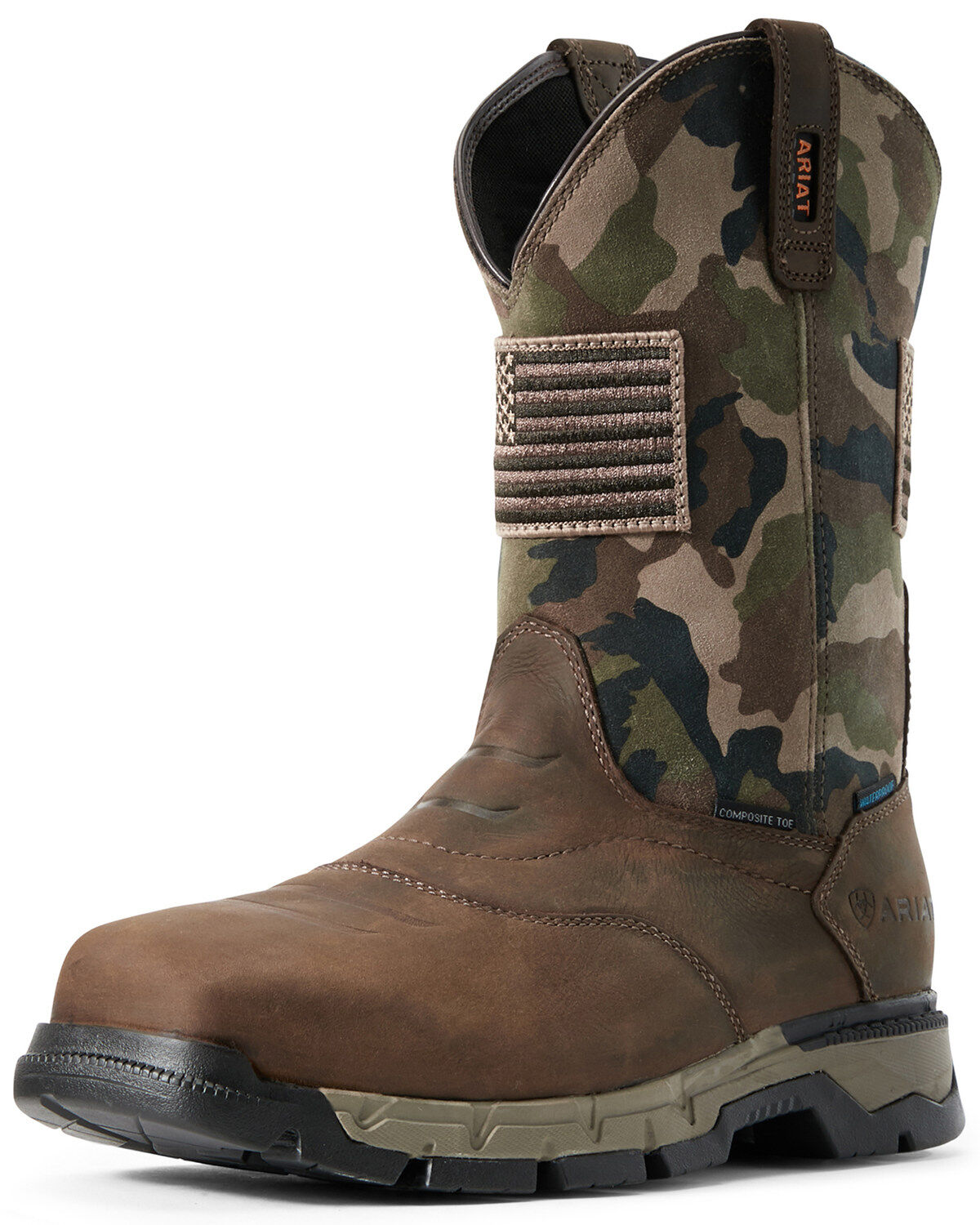
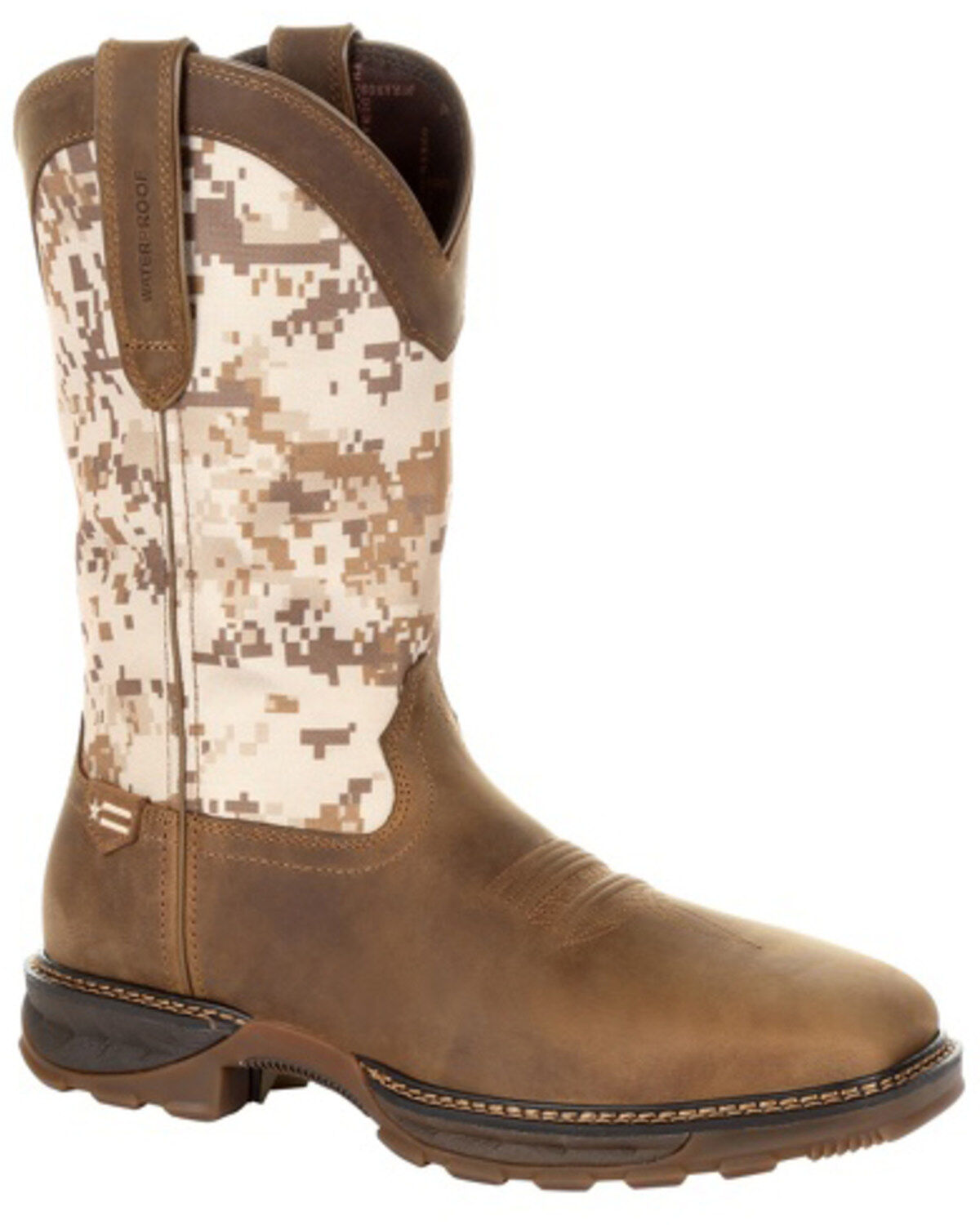
Camouflage western boots combine a cowboy boot silhouette with camo patterns on the shaft, foot, or both. The result keeps the familiar pull-on construction, shaped toe, and western heel while adding a pattern associated with hunting clothes and outdoor gear. Some designs pair a brown or black leather foot with a patterned fabric shaft. Others carry camouflage across more of the boot for a stronger contrast with plain denim. Woodland patterns use overlapping branches, leaves, and earth tones, while digital camouflage relies on smaller, block-shaped markings. The pattern changes the appearance, but the construction determines how the boots fit, feel, and hold up. A camo shaft tucked beneath jeans gives the boot a mostly traditional appearance, with the patterned upper visible when sitting down or pulling the boots on. Worn with the shaft showing, the same design makes camouflage a central part of the outfit. Straight-leg and bootcut jeans generally provide more room over the shaft than narrow pant openings. For everyday outfits, Western Camo Boots pair naturally with denim, a plain T-shirt, or a western shirt without needing camouflage elsewhere. Brown leather works well with faded blue jeans and tan canvas, while black leather creates a sharper contrast with lighter fabrics. These boots appeal to people who wear western footwear regularly, enjoy outdoor pursuits, or want a patterned alternative to a solid leather shaft. They can fit into days that include checking fences, driving into town, or spending time at a county fair, provided the construction suits the activity. Camouflage is an appearance feature, not proof that a boot is intended for hunting, heavy work, or riding. A western shape alone does not establish those capabilities either. That distinction matters when the same boot needs to serve beyond casual wear. The most useful pairing is a pattern that suits the wearer and a build that suits the day.

Materials account for much of the difference between camouflage cowboy boots. Full-grain leather retains the hide’s natural grain and can develop character with wear, though its flexibility and feel depend on thickness, tanning, and finish. A leather foot paired with a woven nylon shaft combines two materials with different care needs. Fabric can give the upper a more flexible feel, while leather around the foot provides structure where repeated bending and contact occur. A denier rating describes the fibers used in a fabric; it does not establish the durability of the entire boot. Stitching, lining, outsole attachment, and reinforcement at stress points matter as well. Pull tabs should feel secure, shaft seams should lie comfortably, and the lining should not create pressure against the leg. Underfoot, leather outsoles offer a traditional feel, while rubber outsoles can provide a different balance of flexibility, cushioning, and grip. Traction depends on the tread, rubber compound, surface, and condition of the sole. Neither a camo print nor a rubber bottom guarantees slip resistance. Workplaces that require protective toes, electrical hazard protection, or other safety features call for boots with the appropriate stated ratings. Riding use likewise depends on heel and sole design, rather than appearance alone. Fit deserves the same attention as construction. A pull-on western boot should hold the instep securely without squeezing it. Some heel movement can occur in a new pair, but excessive lifting or sliding can signal a poor fit. Toes need room to rest naturally without pressing against the front or sides. Square, round, and pointed toe shapes create different profiles, but the shape alone does not determine usable toe space. Width, internal shape, and sizing all play a part. Trying boots with the socks intended for regular wear gives a more useful sense of fit. Leather may soften as it breaks in, but that process does not reliably correct a boot that is too short or too narrow.

Long-term wear depends on matching the boot to its purpose and caring for each material properly. Repeated kneeling, contact with rough surfaces, and miles of walking put different demands on footwear than occasional wear around town. Reinforced construction and a sturdy outsole may matter more for frequent use than elaborate stitching or a bold print. Cushioning can help with underfoot comfort, but it cannot make up for a poor fit or a worn-out sole. A boot intended for long stretches on foot should feel stable through the heel and supportive beneath the foot without forcing the toes into a cramped position. Care starts with removing loose dirt before it settles into seams or grinds against the finish. A soft brush or cloth generally suits routine surface cleaning, followed by a cleaner appropriate for the material when needed. Leather conditioner belongs on compatible leather, not automatically on printed fabric, suede, or every camouflage finish. Testing a care product on a small, hidden area helps avoid an unwanted change in color or texture. Boots that become wet should dry naturally away from direct heat, which can damage leather and affect adhesives. Removable insoles can be taken out for drying when the construction and care directions allow it. Shaft support helps preserve the shape during storage, and checking heels and soles for uneven wear can reveal when attention is needed. These practical details also matter when choosing camouflage western boots as a gift. Someone who already wears cowboy boots may have firm preferences about toe shape, heel height, shaft feel, and fit. A familiar boot size is a useful starting point, not a guarantee across different constructions. The recipient’s usual activities offer another clue: regular ranch tasks, casual outings, and occasional riding place different demands on a pair. A pattern that reflects an interest in hunting or outdoor gear can make the gift personal, while comfortable fit and suitable construction give it lasting use.

FAQs