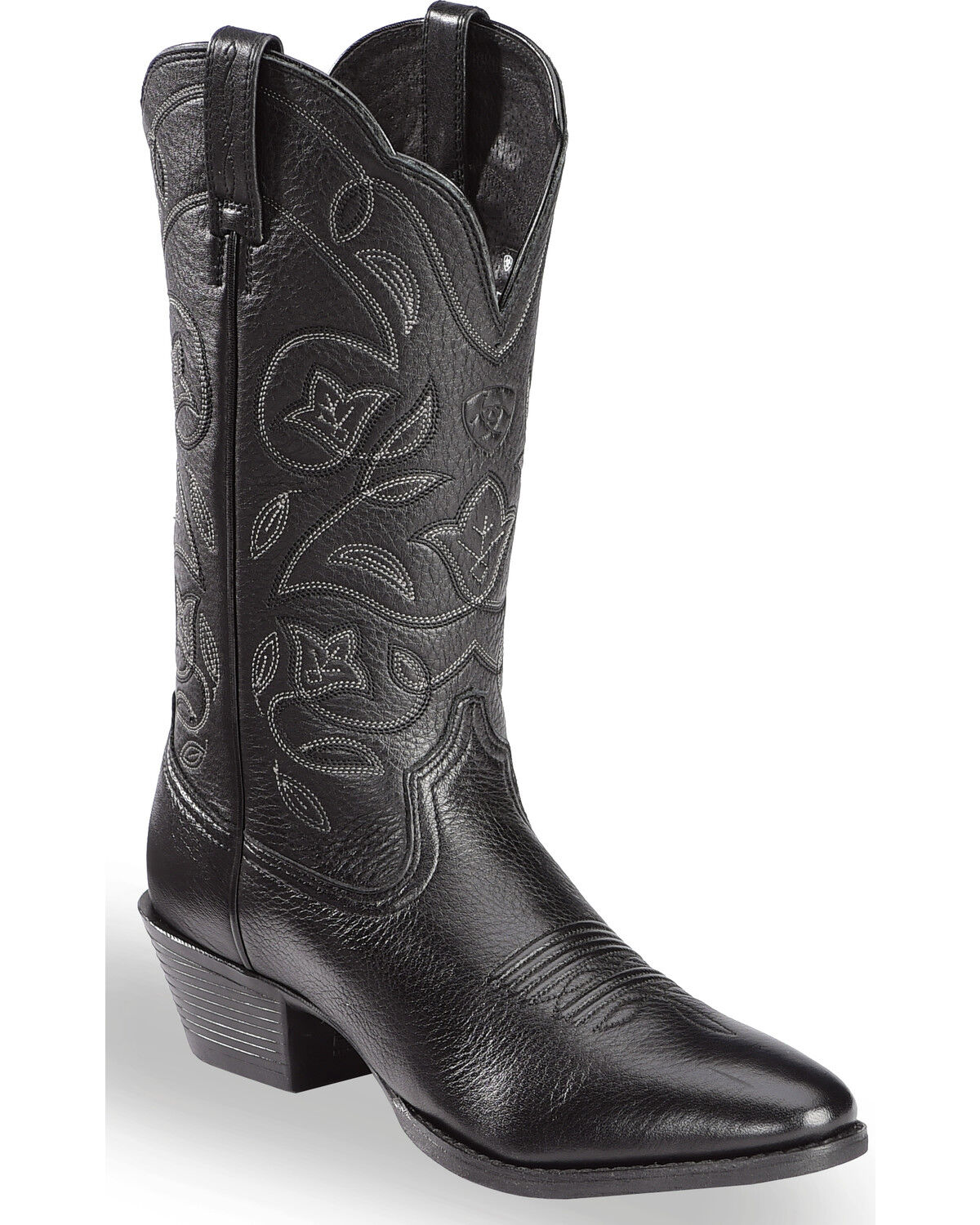
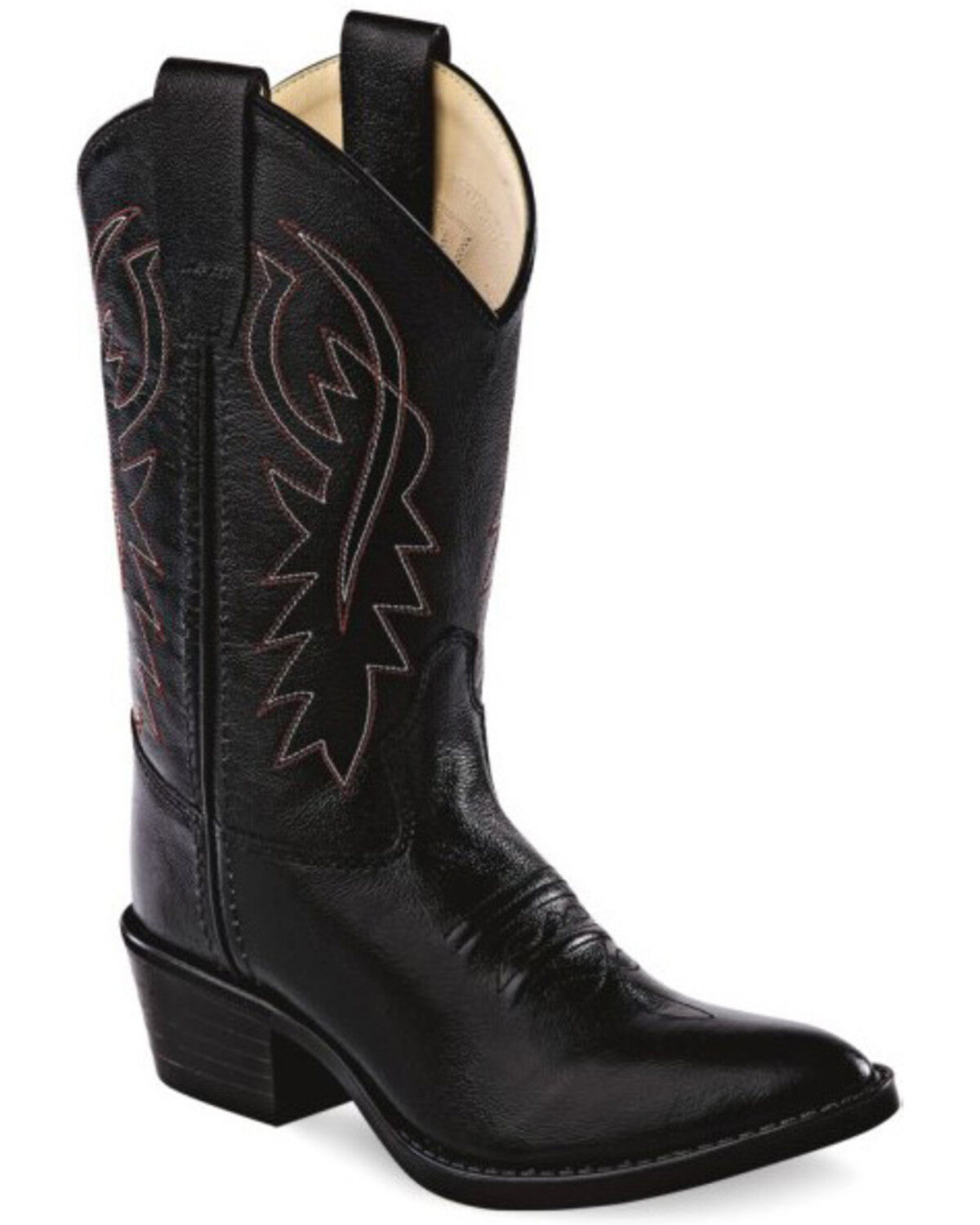
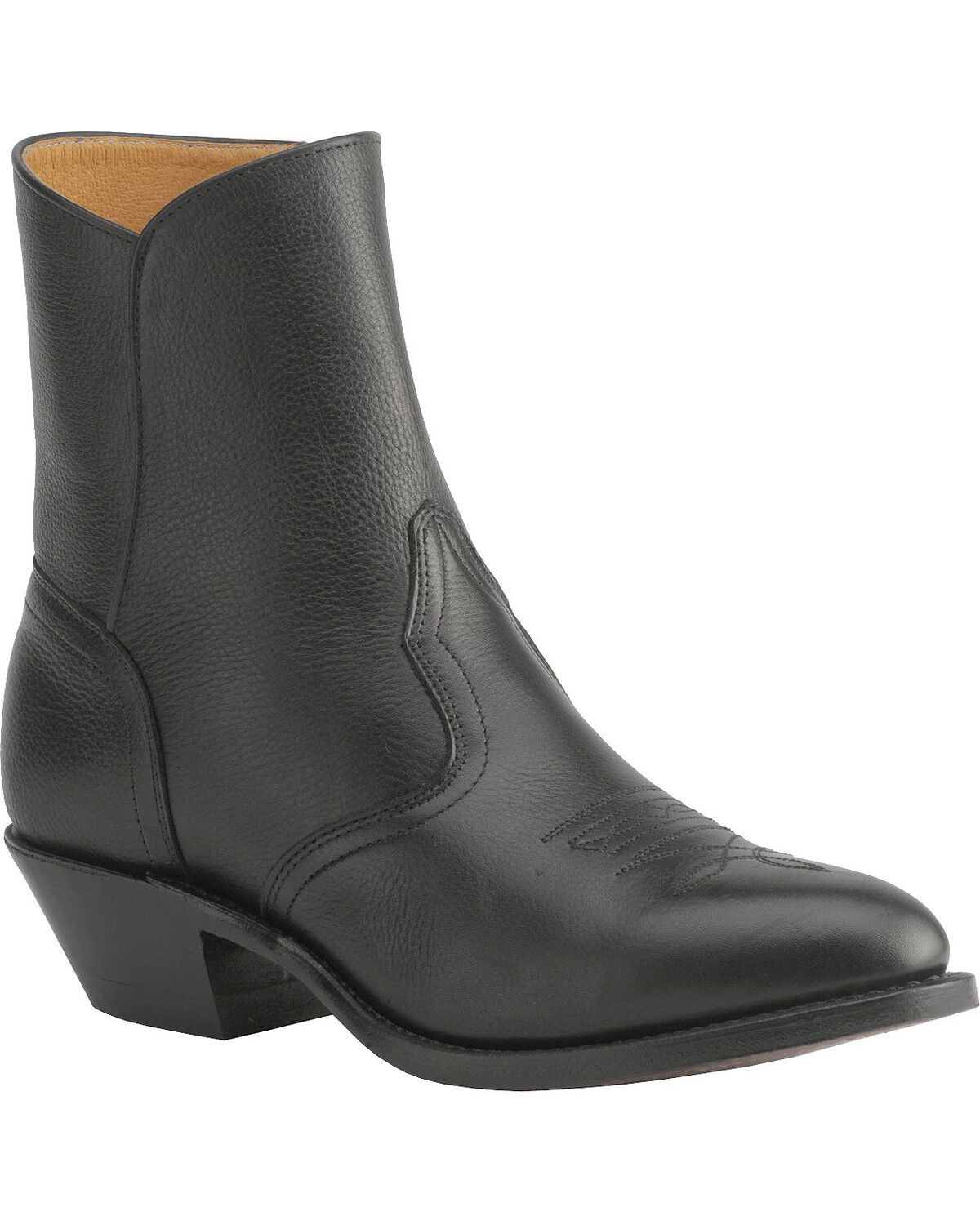
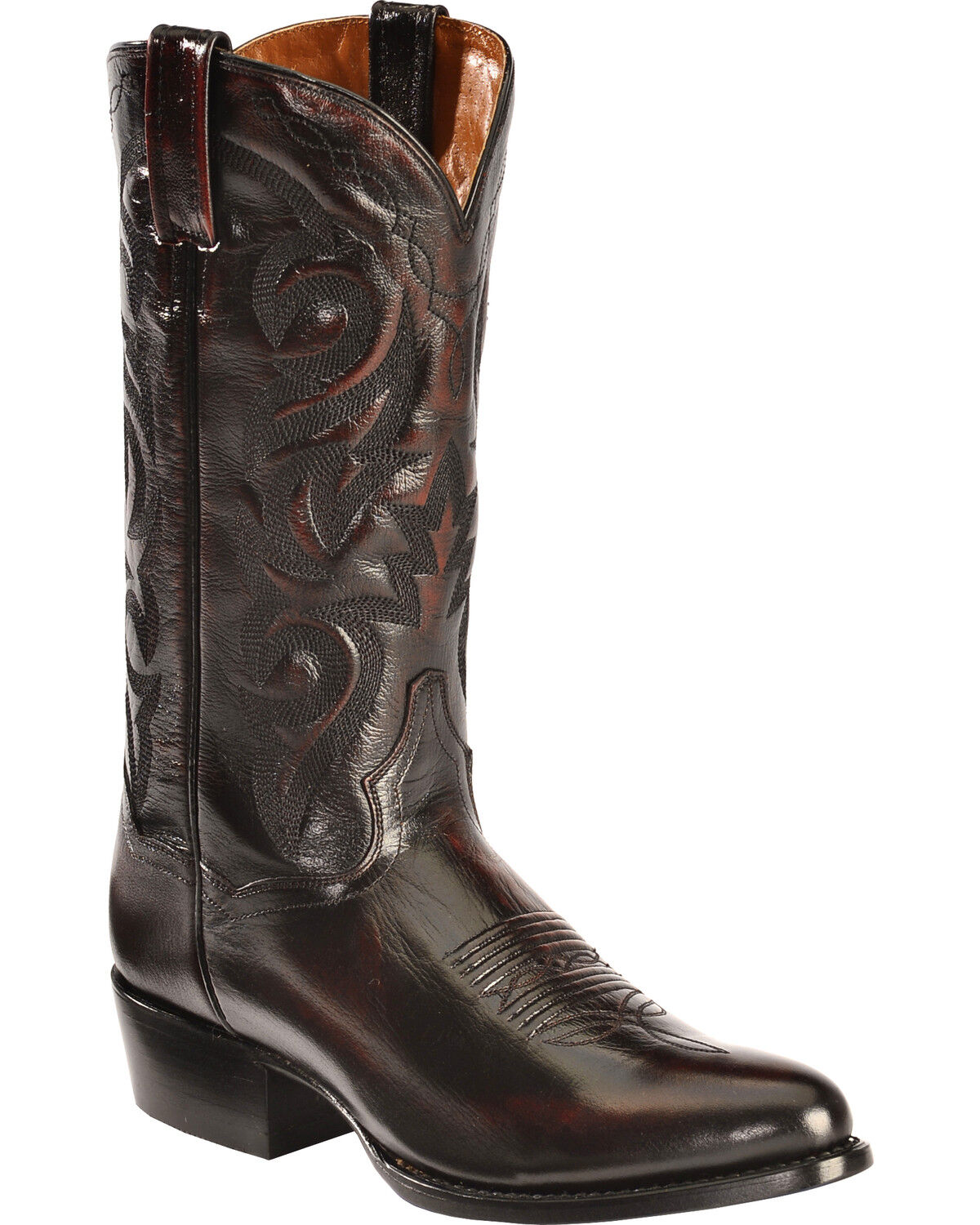
Black Round Toe Boots

Find black round toe boots for a classic look that pairs easily with jeans and western wear. As you browse, compare each style’s shaft height, heel shape, and fit details to choose a pair that suits your wardrobe and where you plan to wear them.

Read More

Shop Your Store: Shop Your Store: Find a Store

(Turn off Shop Your Store to see all items)

(Turn off Shop Your Store to see all items)

close
  • Recommended
  • Lowest Price
  • Highest Price
Skip pass products
  • Men's Cody James Western Boots - Round Toe
    Original Price $229.99 $179.99
    22% Total Savings

End of products

Black Round Toe Boots

Black round toe boots combine a black upper with a curved toe profile, creating a straightforward shape that works across western, work, and everyday styles. The rounded front has a softer outline than a pointed toe, while the black finish pairs easily with denim, work pants, and dressier clothing. Construction determines how a pair performs. A tall shaft, stitched upper, and defined heel give western boots their familiar shape. Lace-up designs allow more adjustment through the instep and ankle. Lower shafts offer a different proportion under straight-leg pants or alongside a skirt or dress. Smooth leather has a clean appearance and can develop character with wear, while suede brings a textured, matte finish. Full-grain leather generally retains more of the hide’s natural surface, though lasting wear depends on the leather quality, construction, and care. Synthetic uppers have their own maintenance requirements, so the material description matters more than appearance alone. Black round toe cowboy boots can move from a day around the property to dinner without looking out of place, provided their soles and construction suit the task. For work, traction, support, and any required protective features take priority over decorative stitching. For everyday wear, shaft height, boot weight, and flexibility often make the biggest difference. A low heel offers a different feel from a taller riding-style heel, and a heavy outsole feels different underfoot than a slimmer sole. Black also gives stitching, leather grain, and hardware room to stand out without making the whole boot look busy. Tonal stitching keeps the finish understated; contrasting thread adds definition. With jeans, the leg opening should fall over the shaft without pulling tight or bunching heavily at the ankle. A clean black leather finish can sit comfortably alongside dark denim and a button-front shirt, while a more textured finish fits naturally with worn jeans and a plain work shirt. The right pair should match the way it will be worn, not just the clothes beside it.

Fit is especially important with round toe boots because the shape alone does not tell the whole story. A rounded toe is not necessarily a wide toe box, and two boots marked with the same size can feel different through the ball, instep, and heel. Toes need room to rest naturally without pressing against the front or being squeezed from the sides. The widest part of the foot should sit near the widest part of the boot, with the instep held securely rather than pinched. In a properly fitted pull-on leather boot, a small amount of heel movement can be normal at first as the sole begins to flex. Excessive lifting, sliding forward, or rubbing is a different matter. Break-in can soften leather and improve flexibility, but it will not make a boot longer or correct a poor fit. Trying boots with the socks intended for regular wear gives a more useful sense of comfort than trying them with a much thinner pair. Anyone who uses an orthotic should account for the space it needs, particularly when the original footbed is not removable. Lace-up construction can help adjust pressure across the foot, while pull-on designs depend more heavily on the match between the foot and the boot’s shape. Cushioning, lining, and arch support also affect how boots feel after several hours. Standing at a counter, walking a large property, and spending time in a workshop place different demands on footwear. Outsole material and tread deserve close attention for that reason. Leather soles and rubber outsoles provide different levels of flexibility, grip, and ground feel, with performance varying by construction and surface. Work requirements may call for a safety toe, electrical hazard protection, or other rated features. A round toe describes the silhouette, not a safety rating. Those features need to be confirmed in the individual boot’s specifications and matched to workplace rules. Weight matters, too: a substantial boot may feel reassuring underfoot, but unnecessary bulk can become noticeable over a long day.

Durability comes from the whole boot, including the upper, seams, lining, outsole, and the way those parts are joined. Reinforced stitching and well-finished seams are worth attention, but appearance alone does not establish how a boot will hold up. Some welted constructions can allow sole replacement, while other constructions are not designed for that repair. Repair options depend on the particular boot and its condition. Routine care helps preserve both the black finish and the underlying material. Loose dirt is best removed before it works into seams or scratches the surface. Smooth leather generally benefits from a suitable cleaner and occasional conditioning, used according to the care instructions rather than applied heavily. Too much conditioner can leave residue or change the appearance. Black boot cream or polish may help maintain an even finish on compatible smooth leather, but it is not the right treatment for every upper. Suede and nubuck need products and brushes made for their textured surfaces; smooth-leather polish can flatten or darken that texture. Testing a care product on a concealed area helps avoid an unwanted change across the toe or shaft. Boots that become damp should dry naturally away from direct heat, and a boot tree or light paper stuffing can help support their shape. Giving the lining time to dry between wears also supports everyday comfort. Scuffed toes, worn heel edges, and loose stitching deserve attention before a small repair becomes a larger one. These practical details matter when choosing black round toe boots as a gift, too. A recipient’s usual size, preferred width, favorite shaft height, and daily routine are better starting points than decoration alone. Someone who wears boots to work may value support and job-appropriate construction; someone choosing them for dinners or gatherings may care more about the finish and profile. For an outfit built around a lighter contrast, White Round Toe Boots offer another color direction with the same general toe shape. Black remains a straightforward choice for a pair intended to work with much of an existing wardrobe.
Read More

FAQs