Black Crocodile Boots

Shop black crocodile boots for a dark look with distinctive scaled texture. Check each pair’s material description to understand whether “crocodile” refers to the leather or the pattern, then compare toe shape, heel height, and sizing to choose a pair that suits your style and fit needs.

Shop Your Store: Shop Your Store: Find a Store

(Turn off Shop Your Store to see all items)

(Turn off Shop Your Store to see all items)

close
  • Recommended
  • Lowest Price
  • Highest Price
Skip pass products
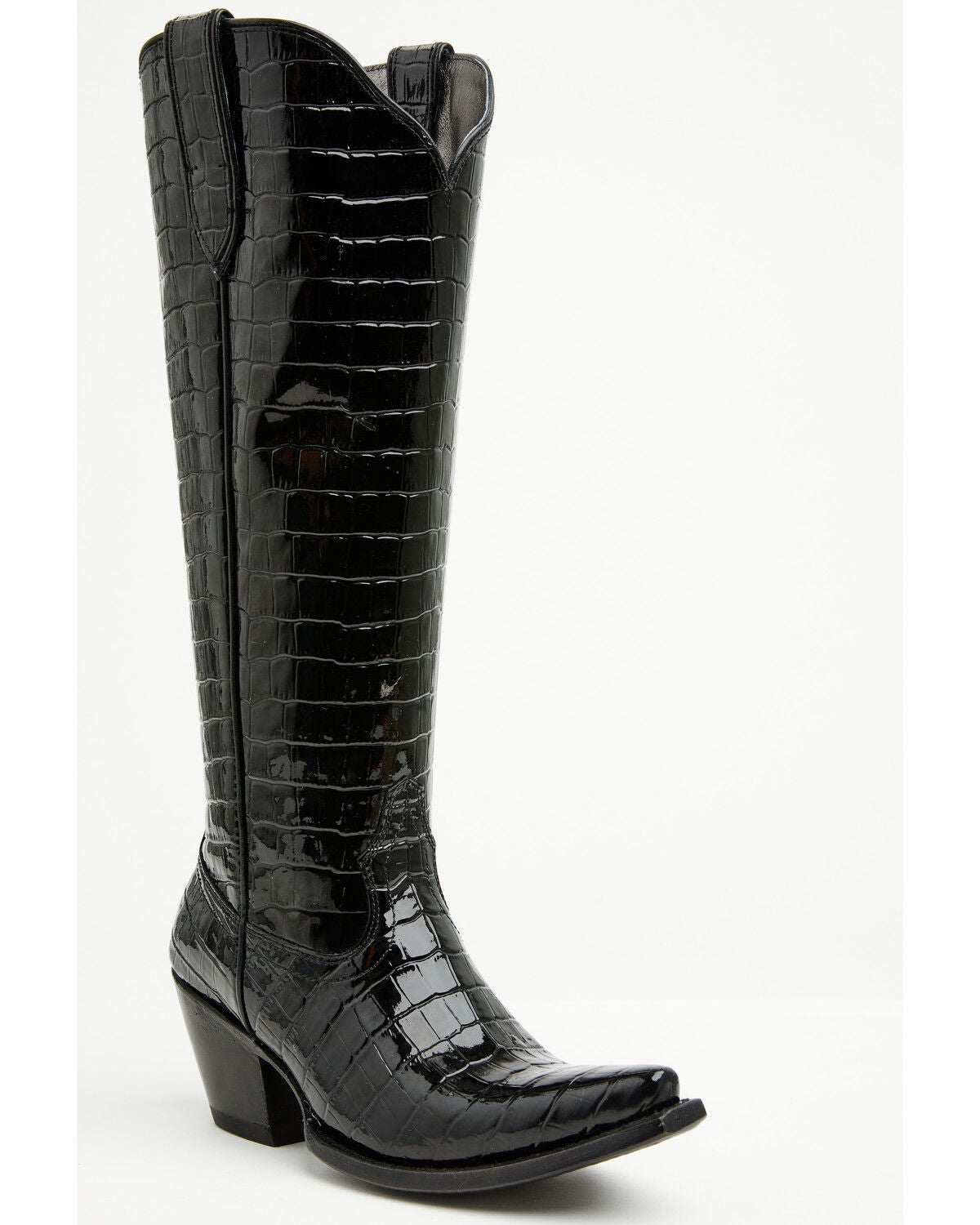
  • Women's Ariat Jade Crocodile Print Western Booties - Snip Toe
    Original Price $249.99 $149.97
    40% Total Savings
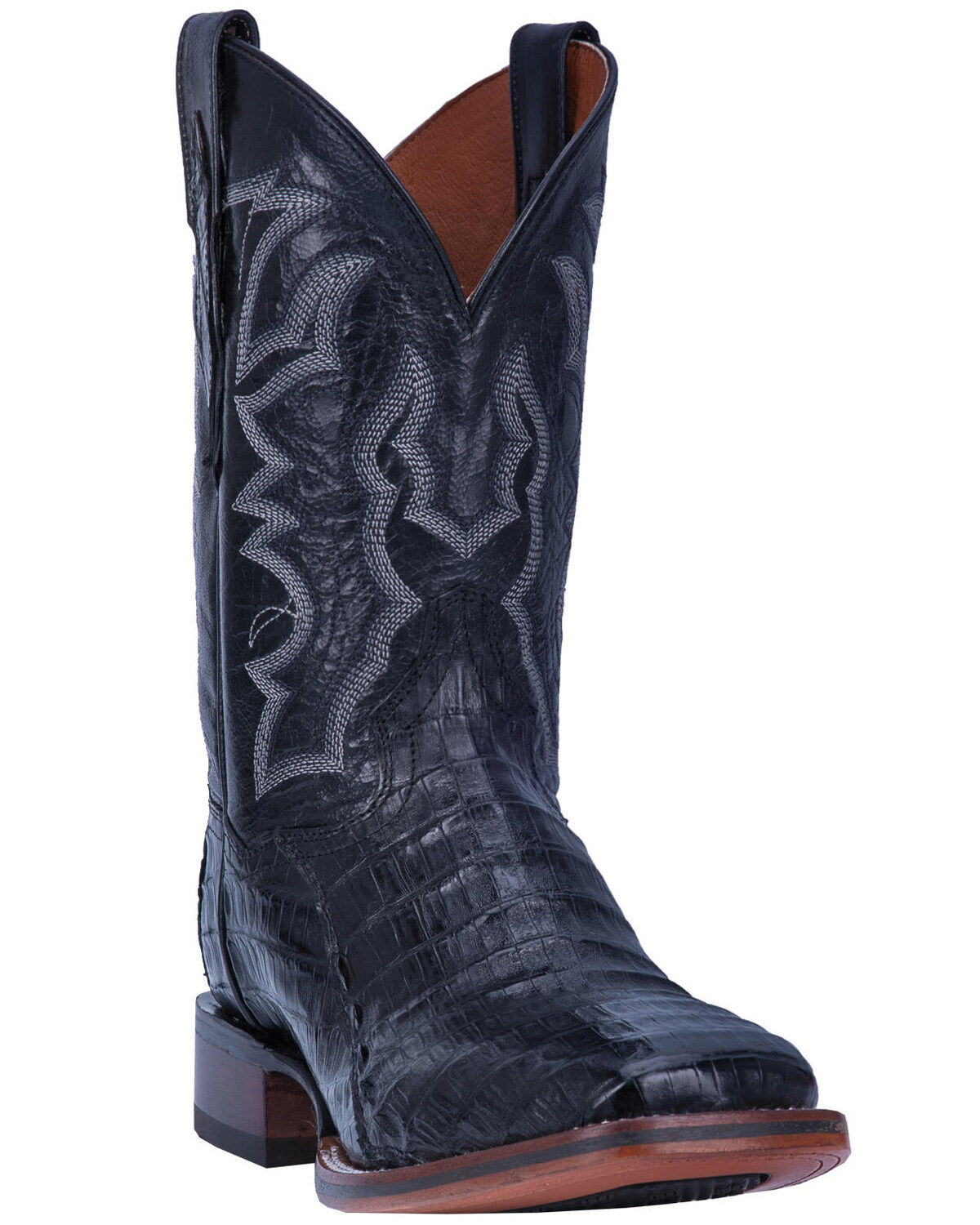
  • Men's El Dorado Exotic Caiman Western Boots - Round Toe
    Original Price $749.99 $524.97
    30% Total Savings
  • Men's Ferrini Alligator Belly Exotic Western Boots - Round Toe
    Original Price $1459.99 $999.97
    32% Total Savings

End of products

Black Crocodile Boots

Black crocodile boots bring a dark finish and distinctive scale texture to western footwear. The material matters: genuine crocodile boots use crocodile hide, often across the foot, while croc-embossed boots use leather or another material stamped with a crocodile-style pattern. Crocodile-print materials reproduce the appearance on the surface without necessarily adding a raised texture. These terms describe different materials and should not be treated as interchangeable. A bold scale pattern alone does not prove that a boot is made from genuine crocodile leather. With genuine hides, scale size, shape, and placement vary according to the section used, giving each pair its own character. Embossed leather can offer a more consistent pattern, though the finish and underlying material still affect its feel and wear. Across the broader Crocodile Boots category, black puts the emphasis on texture rather than color. A polished finish catches light along the scales, while a more subdued finish keeps the pattern less pronounced. Black also works with a straightforward wardrobe: dark denim, a plain belt, and a western shirt let the leather carry the detail. With charcoal trousers and a jacket, the same texture can suit a wedding, an evening out, or an occasion that calls for more than everyday boots. Toe shape changes the overall impression. A broad square toe has a substantial western profile, a round toe keeps the shape traditional, and a narrower toe gives the foot a more tapered appearance. Shaft height, heel shape, and stitching add further differences without changing the central appeal of black crocodile-style leather. Some designs keep the shaft restrained so the foot remains the focal point; others carry decorative stitching higher up the leg. When jeans fall over the shaft, the visible toe and vamp do most of the work. That makes the placement of the scales and the shape of the foot especially noticeable. The result can be understated or more pronounced, depending on the finish and construction.

Fit deserves as much attention as the hide. A well-fitted pull-on western boot holds the instep securely, supports the foot at its widest point, and leaves enough room for the toes to rest without pressure. The narrow end of a pointed boot is not intended to be filled by the toes, so outside length alone does not tell the whole story. Width, instep height, and the position of the ball of the foot are better indicators. A small amount of heel movement can be normal in a new pull-on boot, but the foot should not slide forward or shift from side to side. Leather may soften with wear, yet a painfully tight fit is not a sound starting point, especially with exotic leather that may give differently from ordinary cowhide. Socks also affect the fit. The thickness normally worn with western boots provides a more useful reference than unusually thin or heavy socks. Shaft circumference matters for anyone with fuller calves or a preference for tucking pants into boots. For wear beneath jeans, the pant opening needs enough room to fall cleanly over the shaft without catching. Construction shapes comfort and long-term use as well. Leather linings, cushioned footbeds, heel support, and the flexibility of the sole all influence how a boot feels through hours of standing or walking. A leather outsole gives a traditional finish but may feel slick on smooth surfaces. Rubber outsoles can provide a different balance of grip and flexibility, depending on the tread and compound. Neither appearance nor outsole material alone establishes that a boot meets workplace safety requirements. Black crocodile boots intended for dress or everyday western wear should not be assumed to offer protective toes, electrical hazard protection, or job-specific traction. Where the construction allows, replacement heels or resoling can extend useful wear, though repair options depend on the individual boot. A firm heel counter, secure stitching, and a sound connection between the upper and sole matter more to durability than decorative detail.

Care helps preserve both the black finish and the edges of the scale pattern. Dust left in the grooves can dull the surface, while repeated abrasion can wear raised areas faster than the spaces around them. A soft cloth or a soft brush suited to the material removes loose dirt without aggressive scrubbing. Genuine crocodile leather calls for care products approved for that hide and finish; an ordinary boot treatment is not automatically suitable. Embossed leather also needs care matched to its base material and surface coating. Printed or coated synthetic materials may need a different approach altogether. Manufacturer care directions are the best starting point, and any new cleaner or conditioner belongs on a small, inconspicuous area first. Heavy oils, harsh solvents, and excessive polish can change the appearance or collect around the scales. More product does not necessarily mean better protection. If boots become damp, room-temperature drying away from direct heat helps protect the leather and construction. A black finish does not make a boot waterproof, and prolonged soaking can damage materials that handle ordinary dry wear well. Boot trees or suitable supports help maintain the foot shape during storage, while upright shafts and space between pairs reduce creasing and scuffing. Pulling boots off with a properly used boot jack rather than stepping on the heels can also reduce unnecessary wear. Rotating footwear gives the lining time to dry between wears, particularly after a long day. For someone who already wears western boots, a black crocodile pair can make a thoughtful birthday, anniversary, or milestone gift. The strongest choice starts with familiar sizing, preferred toe shape, and the way the recipient actually dresses. Someone who wears boots with tailored trousers may value a restrained shaft and clean profile, while a regular denim wearer may prefer a broader toe and a more substantial heel. Material preference matters just as much: genuine hide, embossed leather, and printed finishes offer different characteristics. A gift chosen around those details is more likely to become a well-worn part of the wardrobe.

FAQs