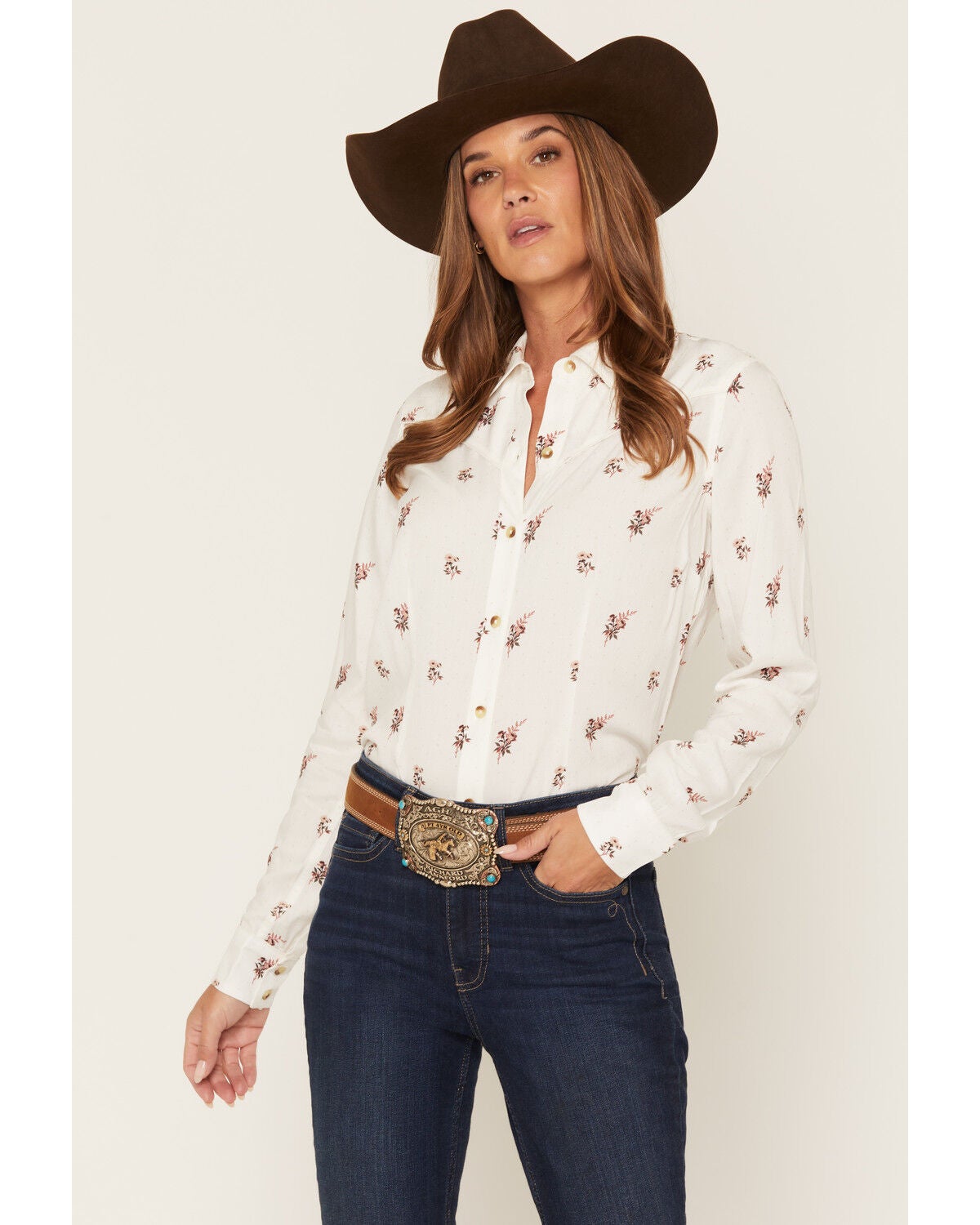
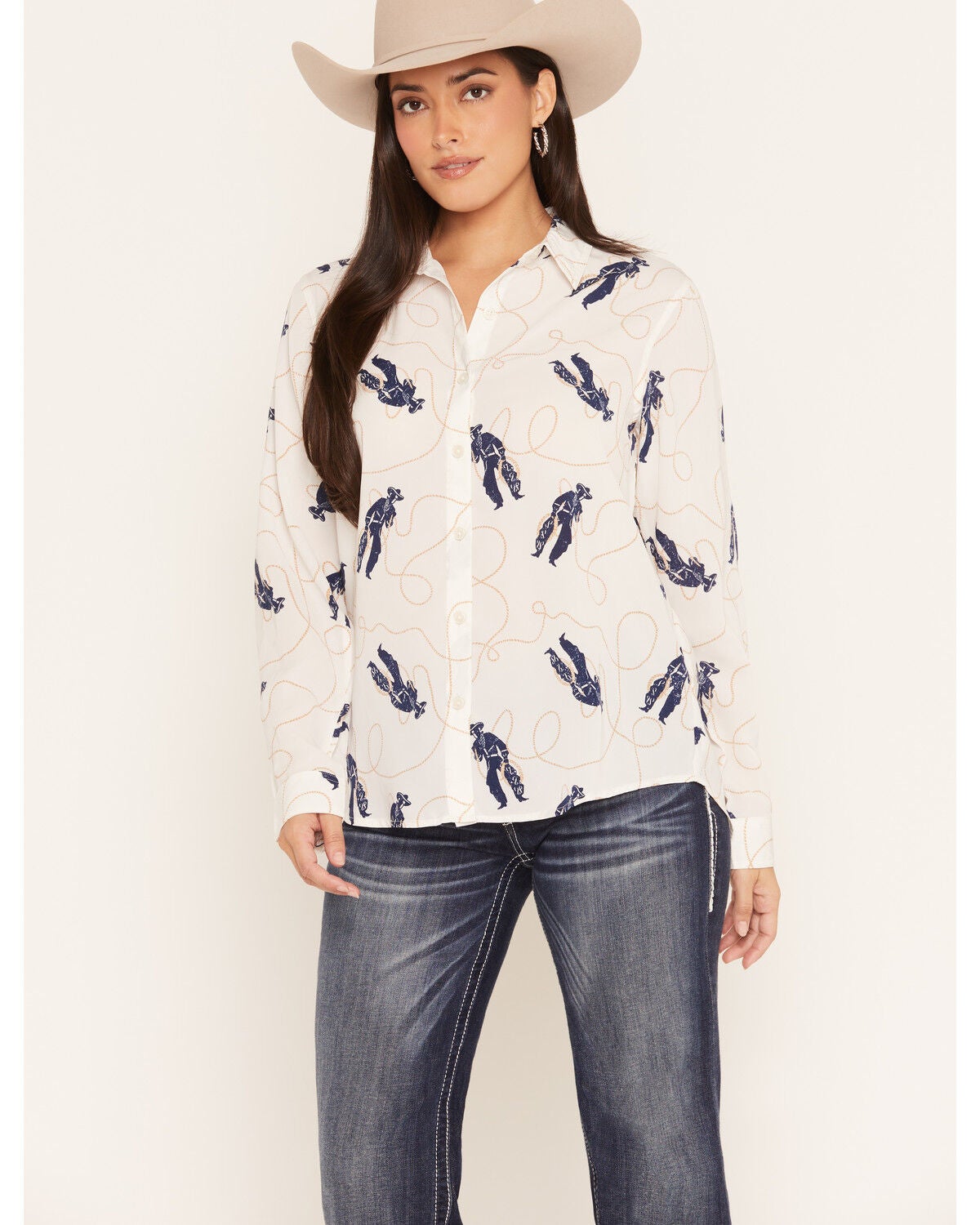
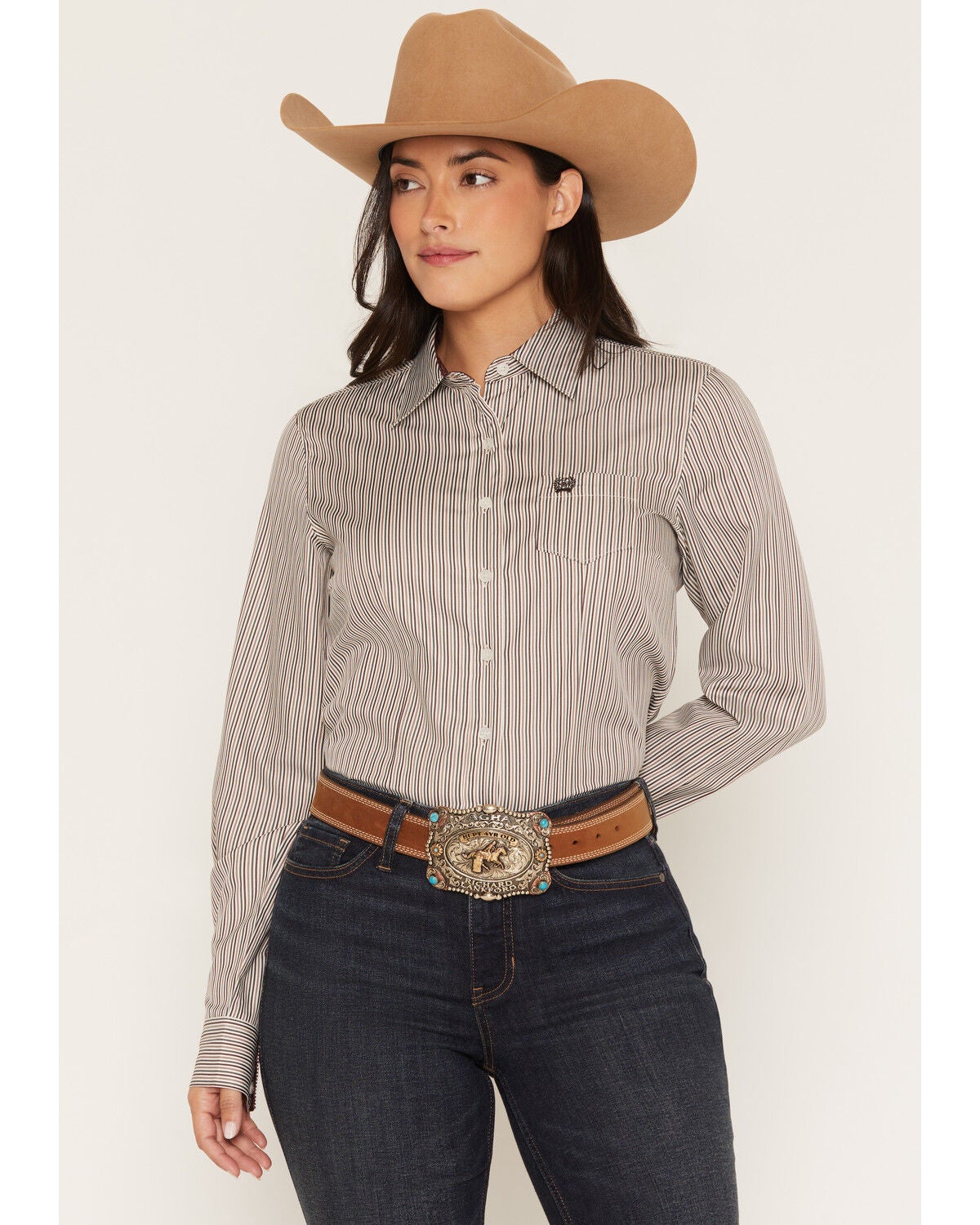
Women's White Western Shirts

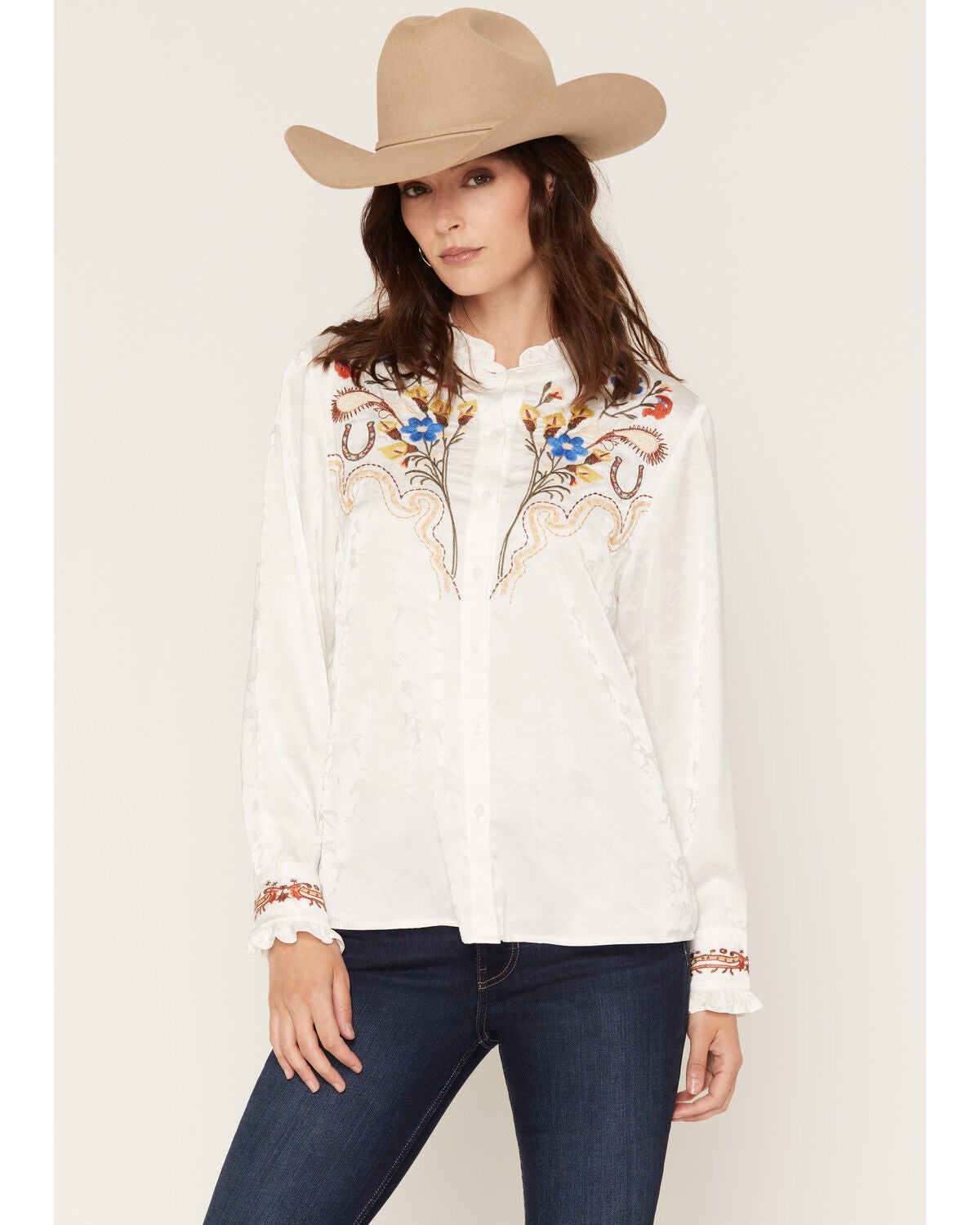
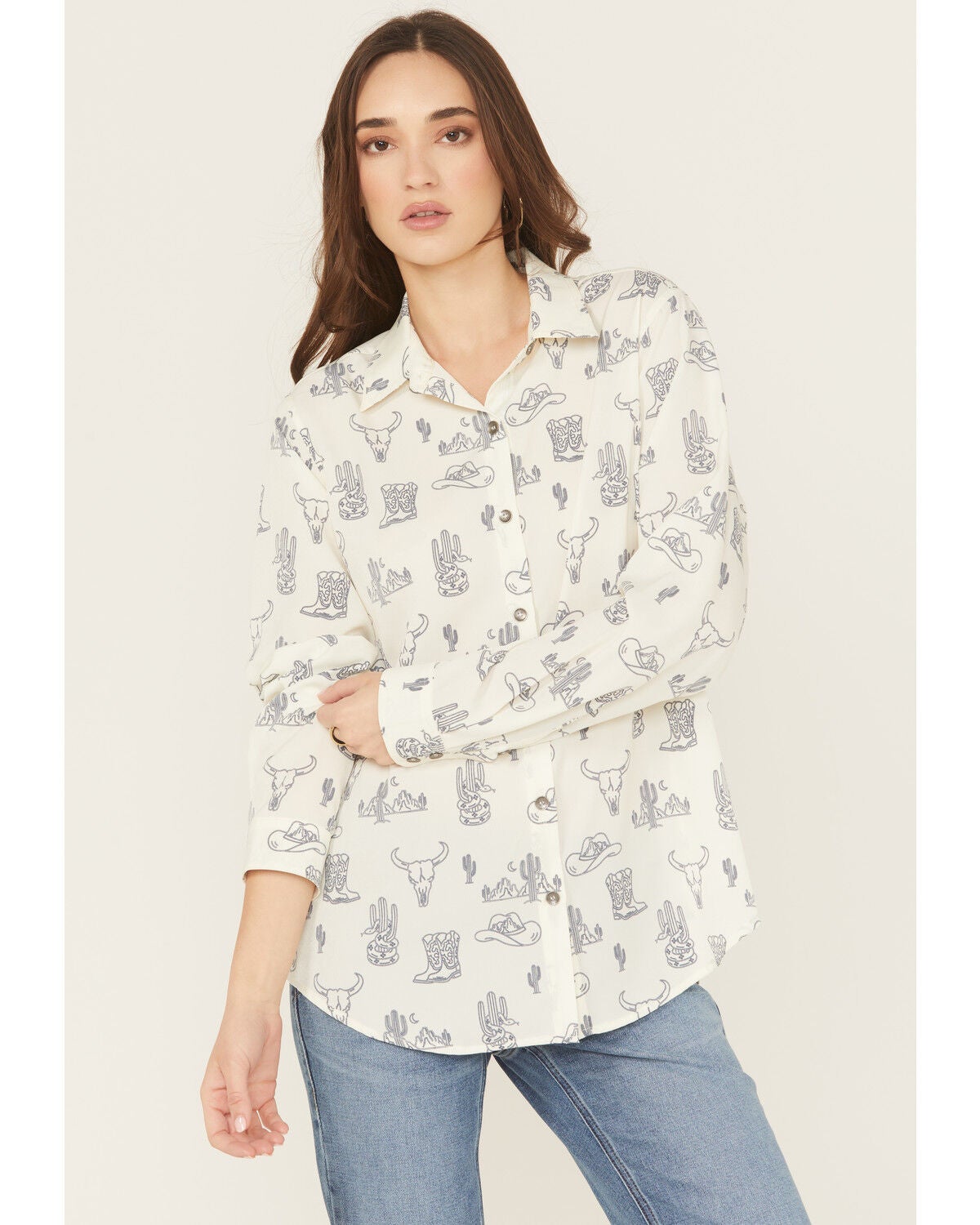
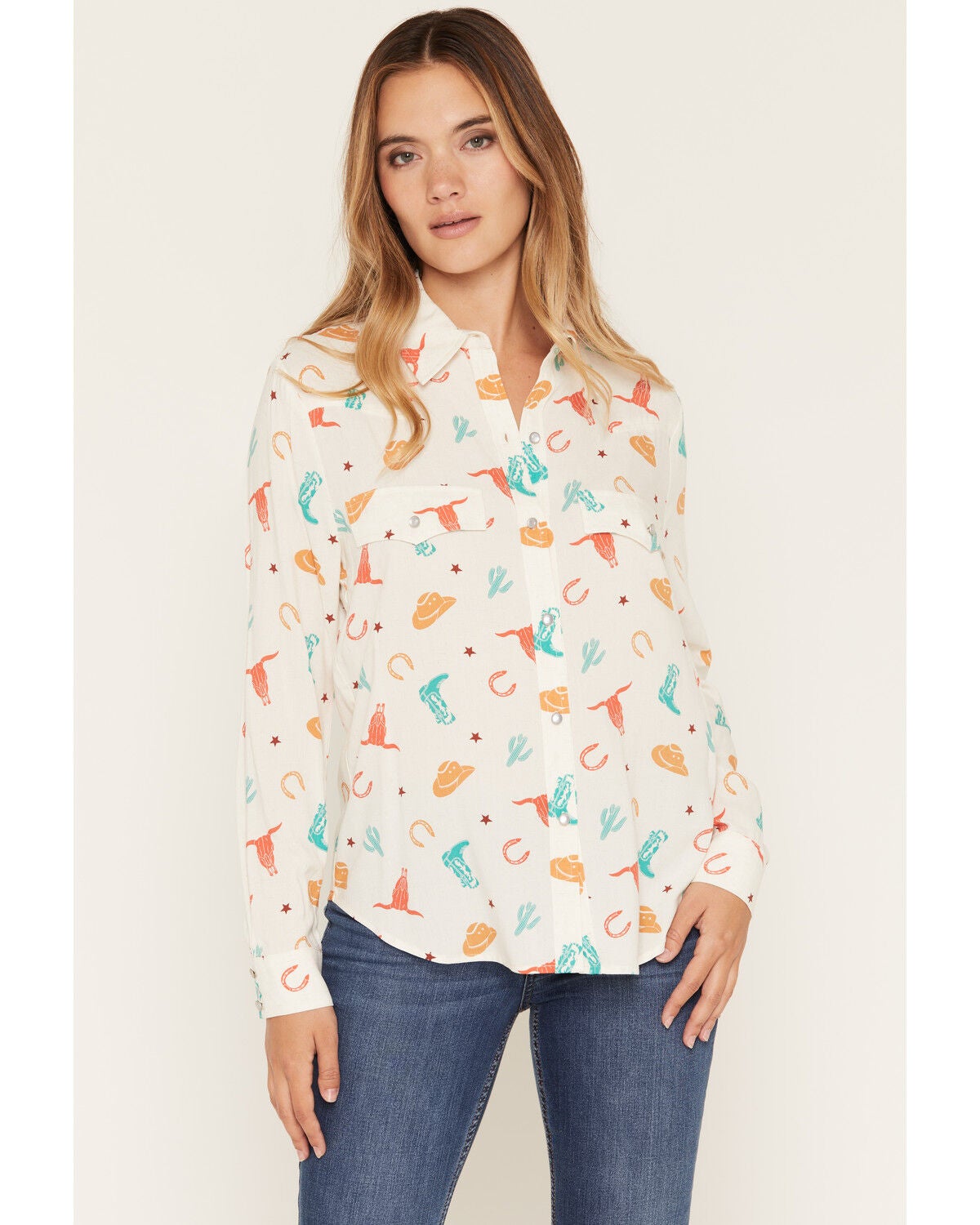
Find women’s white western shirts for everyday wear or a dressed-up western look. Pair a white shirt with blue jeans and cowboy boots for a classic outfit, or add dark denim and a jacket for a sharper finish.

Read More

Shop Your Store: Shop Your Store: Find a Store

(Turn off Shop Your Store to see all items)

(Turn off Shop Your Store to see all items)

close
  • Recommended
  • Lowest Price
  • Highest Price
Skip pass products

End of products

Women's White Western Shirts

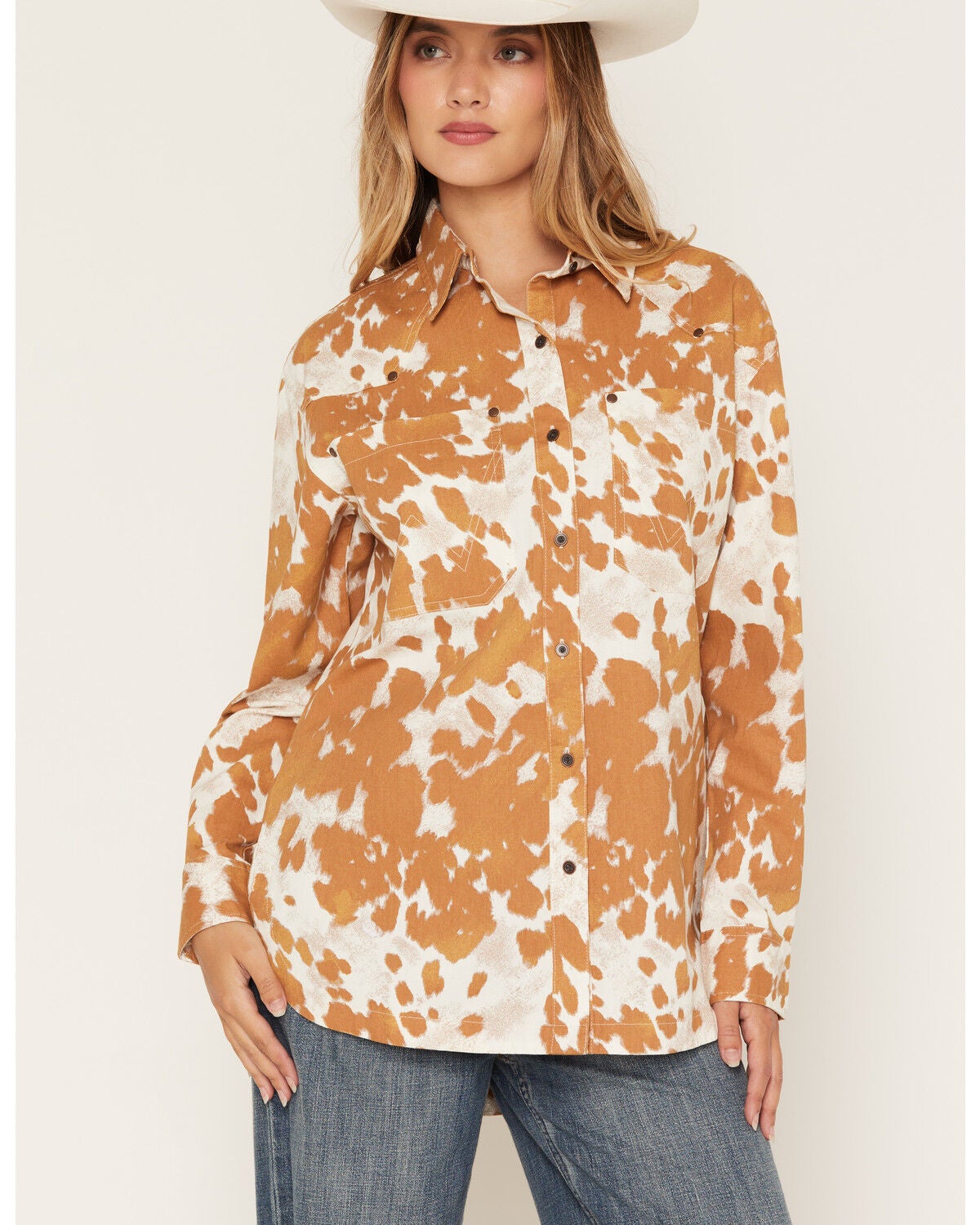
Women's white western shirts pair a clean, versatile color with details rooted in riding and ranch wear. Pointed yokes, snap fronts, shaped seams, and flap chest pockets give the style its familiar character, though not every shirt includes all of these features. A simple button-front design offers a quieter look, while contrast stitching, pearl-style snaps, embroidery, or a shaped pocket flap makes the western influence more pronounced. White keeps those construction details visible without competing with patterned skirts, textured belts, or detailed boots. It also works with dark denim for a straightforward outfit that suits a rodeo, a country concert, or dinner after a day around horses. For riders, a white collared shirt can be part of a polished arena outfit, subject to the requirements of the event. Fabric makes a substantial difference in how the shirt looks and feels. Cotton poplin typically has a smooth surface and a crisp appearance, while cotton twill has a diagonal weave and often a more substantial feel. White denim can bring structure to a casual shirt, and lightweight woven fabrics tend to drape more softly. Cotton blends may help reduce wrinkling, while a small amount of stretch can allow more give through the shoulders and elbows. Fabric composition alone does not determine opacity. Weave, weight, construction, and fit all affect how much shows through a white shirt. A closely woven fabric generally offers more coverage than a sheer or loosely woven one, and a smooth bra close to the wearer's skin tone is often less visible than a bright white layer underneath. Lace panels, eyelet details, and embroidered sections create different coverage needs. These differences make material and construction worth considering alongside the color, especially when a shirt needs to look neat for photographs, an event, or a full day of wear.

Fit determines whether a women's white western shirt feels comfortable in motion and stays neat when tucked. A close-fitting cut follows the waist and gives a defined outline beneath a vest or jacket, while a straight or relaxed cut leaves more room through the body. Neither fit should pull sharply across the chest or restrict the upper arms. Gaping between buttons or snaps can indicate that the chest needs more room, even when the waist fits well. Shoulder seams should sit comfortably near the shoulder rather than dragging down the arm or pulling toward the neck. For riding, reaching forward and bending the elbows are useful checks because a shirt that looks right while standing can feel restrictive in the saddle. Sleeve length matters, too. A cuff should allow wrist movement without slipping far over the hand, and adjustable cuff closures can help fine-tune the fit. Long sleeves create a traditional western profile, while short sleeves and sleeveless cuts offer a less covered option for casual outfits. A longer shirttail gives more fabric to hold inside jeans, which can help when bending, sitting, or reaching. Shorter hems and straighter bottoms often sit more naturally untucked. The rise of the jeans also changes how much shirt length is needed for a secure tuck. Front pockets add visual structure, but their size and placement affect the overall look, particularly on fitted styles. Decorative stitching and embroidery can draw attention to the shoulders or chest, while an unadorned front keeps the outfit simpler. A white western snap shirt with dark straight-leg jeans and leather boots needs little else for a complete look. With a denim skirt, the same general style feels more casual. Under a tailored vest, a smooth white shirt provides a clear foundation for a more dressed-up western outfit. Collar shape and fabric thickness influence how neatly those layers sit together.

Care is especially important with white western shirts because collar marks, dust, and small stains are easier to see against a light background. The care label should set the washing method, water temperature, and drying instructions. Cotton, stretch blends, lace, embroidery, and decorative snaps may require different handling, even when two shirts look similar. Separating whites from darker clothing helps reduce the risk of color transfer. Prompt attention to stains can also make a difference, but a treatment should be suitable for the fabric and any trim. More detergent is not necessarily better; using the recommended amount helps avoid residue that can leave fabric looking dull. Chlorine bleach is not appropriate for every white garment and can damage some fibers, finishes, or decorations. Any whitening treatment should be permitted by the care instructions rather than chosen solely because the shirt is white. Heat deserves the same attention. Excessive dryer heat can contribute to shrinkage or affect stretch fibers, while removing a washable shirt promptly can help limit wrinkles. When ironing is allowed, the correct setting helps smooth the collar, cuffs, and front without damaging the material. Embellished areas may need to be pressed from the reverse side or protected with a pressing cloth, depending on the label. Durability also comes from construction: even stitching, firmly attached closures, finished seams, and reinforcement at stress points can help a shirt hold up to repeated wear. A more substantial shirt may suit regular use around a barn, while delicate lace or detailed embroidery generally calls for more careful handling. For a gift, the recipient's usual fit, preferred closure, and willingness to iron are more useful considerations than decoration alone. Someone who rides may value movement and a secure tuck; someone who wears western clothing mainly for evenings out may prefer distinctive cuffs or a shaped silhouette. White is a versatile starting point, and the broader range of women's western style shirts provides other colors and patterns for building outfits around the same familiar details.
Read More

FAQs