Women's paisley and bandana-print cardigans bring a familiar western pattern to everyday layers. Start with colors that work with your wardrobe, then compare... lengths and front details to find a style that pairs well with your denim and boots.
Read more
Women's Paisley And Bandana-Print Cardigans
Women's paisley and bandana-print cardigans bring a familiar western pattern to everyday layers. Start with colors that work with your wardrobe, then compare... lengths and front details to find a style that pairs well with your denim and boots.
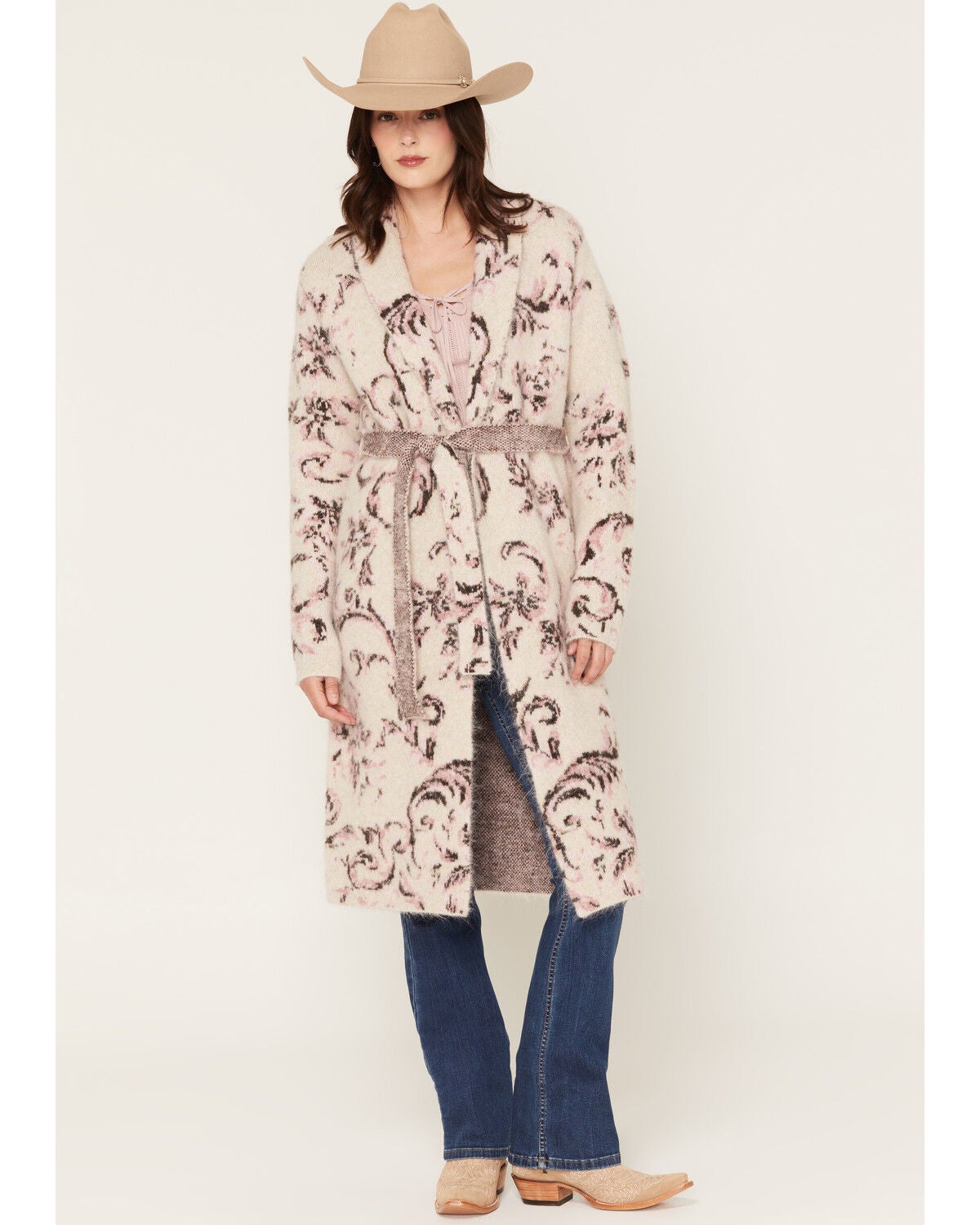
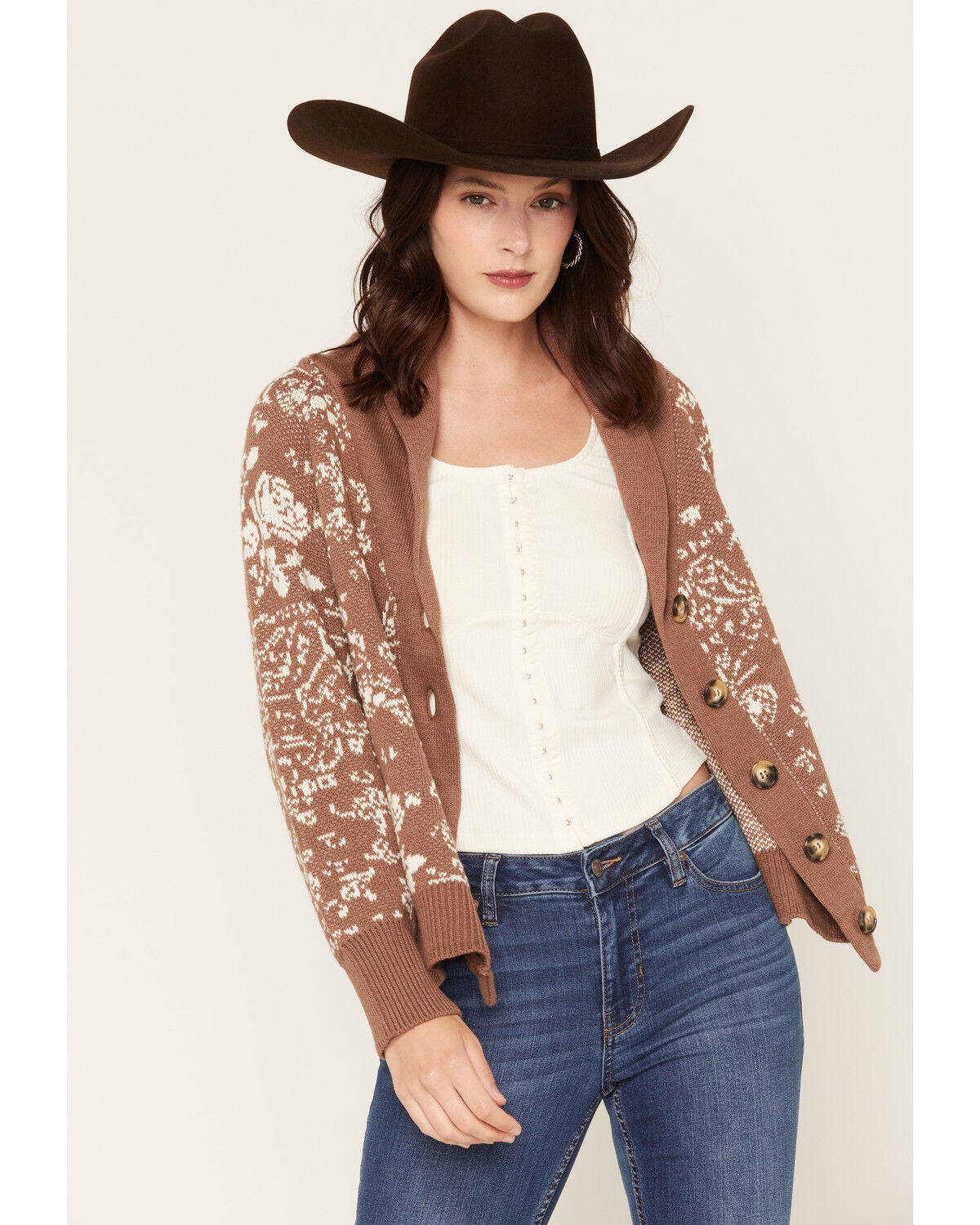
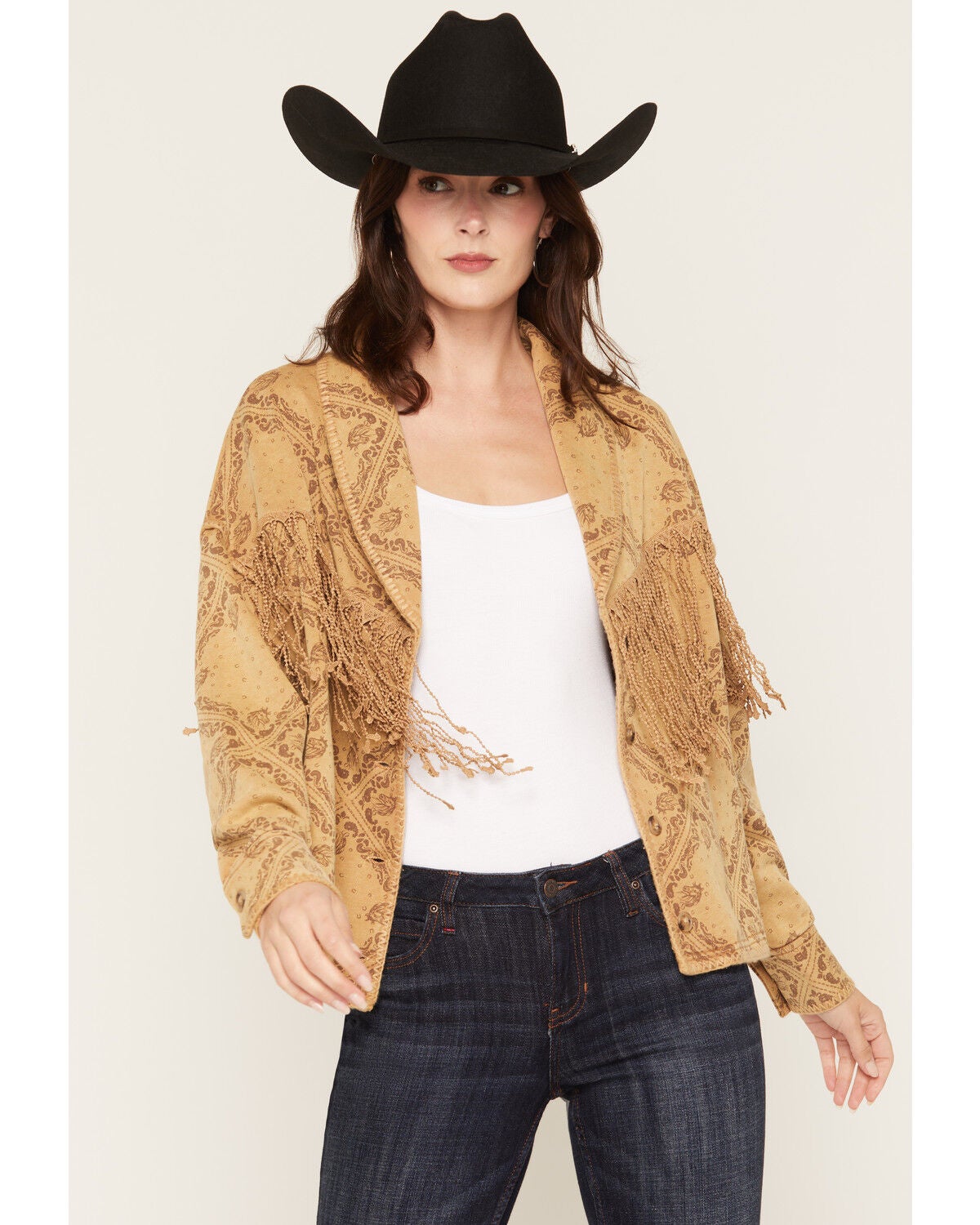
Women's paisley and bandana-print cardigans bring a familiar Western pattern to an easy, everyday layer. Paisley is known for its curved, teardrop-shaped motifs, often surrounded by small flowers, leaves, or fine lines. Bandana-inspired patterns frequently combine those shapes with border stripes, corner details, and repeating arrangements that recall a traditional printed square. The two styles overlap, but the scale and placement of the pattern can give each cardigan a different character. A small, closely spaced print reads more quietly, while larger motifs and strong borders make the cardigan the main feature of an outfit. Dark grounds with light markings create clear contrast; softer tonal combinations let the pattern blend more closely with the fabric. Red, navy, black, cream, and earth tones have an easy connection to denim, leather boots, and other Western staples. These designs work well for women who want a patterned layer without building an entire outfit around matching pieces. A plain T-shirt, straight-leg jeans, and cowboy boots leave room for the print to stand on its own. A solid blouse and dark trousers give the same kind of cardigan a more polished setting for a casual workplace or dinner out. Over a simple dress, an open front keeps the outfit from feeling too structured while allowing the print to frame the layer underneath. Within the broader category of Women's Patterned Cardigans, paisley and bandana designs offer a distinct connection to Western dress without requiring a head-to-toe Western look. Pattern placement matters as much as color. Borders along the front opening can emphasize a long, straight shape, while an allover motif creates a more uniform finish. When the cardigan carries several colors, repeating just one of them in a shirt or pair of boots helps the outfit feel connected. Simple jewelry and a plain leather belt can finish the look without competing with the fabric.
Fabric and construction shape how a paisley or bandana-print cardigan feels, hangs, and holds up to regular wear. Cotton knits generally have a familiar hand and breathable feel, while acrylic can contribute softness and loft. Polyester is often used in blends for strength and resistance to wrinkling, and rayon can add fluid drape. Wool-containing blends have their own care requirements and may feel different against bare skin than cotton or synthetic fibers. Fiber content is only part of the picture: yarn thickness, knit density, and stitch structure also affect the finished garment. A fine-gauge knit usually gives a smoother, less bulky profile, while a more substantial knit creates a fuller shape. A printed motif sits on the fabric surface, while a knitted-in pattern is formed through the yarn construction; either approach can produce detailed paisley and bandana-inspired designs. The garment description and care label provide the clearest information about a particular construction. Fit also changes how the pattern looks when worn. A close fit can pull the design across the shoulders or bust, while excess fabric may hide smaller details in the folds. An easy fit should leave enough room for the intended shirt underneath without making the sleeves or body feel oversized. Shoulder seams, upper-arm room, and sleeve length are useful points of comparison with a cardigan that already fits well. For button-front styles, the front should rest smoothly when fastened rather than pulling between the buttons. Open-front shapes offer more flexibility through the body, though the shoulder and sleeve fit still matter. A shorter hem works naturally with higher-rise jeans or a defined waist, while a longer hem gives more coverage over fitted pants or a simple dress. Side openings can add room through the hips, and ribbed cuffs help contain a fuller sleeve. Pockets add practical use, but their placement can also change the line of the garment, especially when carrying a phone or keys. These details determine whether a cardigan feels right for desk work, errands, a road trip, or an evening out.
A well-chosen cardigan earns its place through repeated wear, so care and durability matter alongside the print. Even stitching, secure buttons, finished edges, and ribbing that returns to shape are useful signs of sound construction. Knitted garments can still snag on rough jewelry, belt hardware, or unfinished surfaces, regardless of fiber content. Crossbody straps and bag handles may create repeated friction in the same area, which can contribute to pilling over time. A small amount of surface pilling does not necessarily mean the garment is worn out, but any removal method should suit the fabric and follow the care guidance. Washing requirements vary by material and construction. The care label should determine whether the cardigan is machine washable, needs hand washing, or requires professional cleaning. Turning a washable printed cardigan inside out can help limit surface rubbing, and separating it from rough hardware reduces contact with zippers and hooks. Avoiding unnecessary stretching during washing and drying helps preserve the original shape. Some knits need to be reshaped and dried flat rather than hung while wet; a heavy, damp cardigan can stretch at the shoulders or lengthen through the body. Folded storage is often a practical choice for knits that lose shape on a hanger. For everyday use, the right design balances visual detail with habits: sleeves that stay clear of hands, a hem that sits comfortably when seated, and a closure that suits how the cardigan will be worn. Women who favor jeans and boots may get the most use from a familiar bandana palette, while someone who wears mostly solid dresses may prefer a larger paisley pattern as the main accent. As a gift, this category makes sense for a woman whose wardrobe already includes Western prints or relaxed knit layers. Her usual colors, preferred cardigan length, and care preferences are more useful clues than a bold pattern alone. A print she can pair with clothing she already wears is more likely to become a regular part of her wardrobe.

 $59.99
 $19.99
 $59.99
 $32.99
 $99.99


