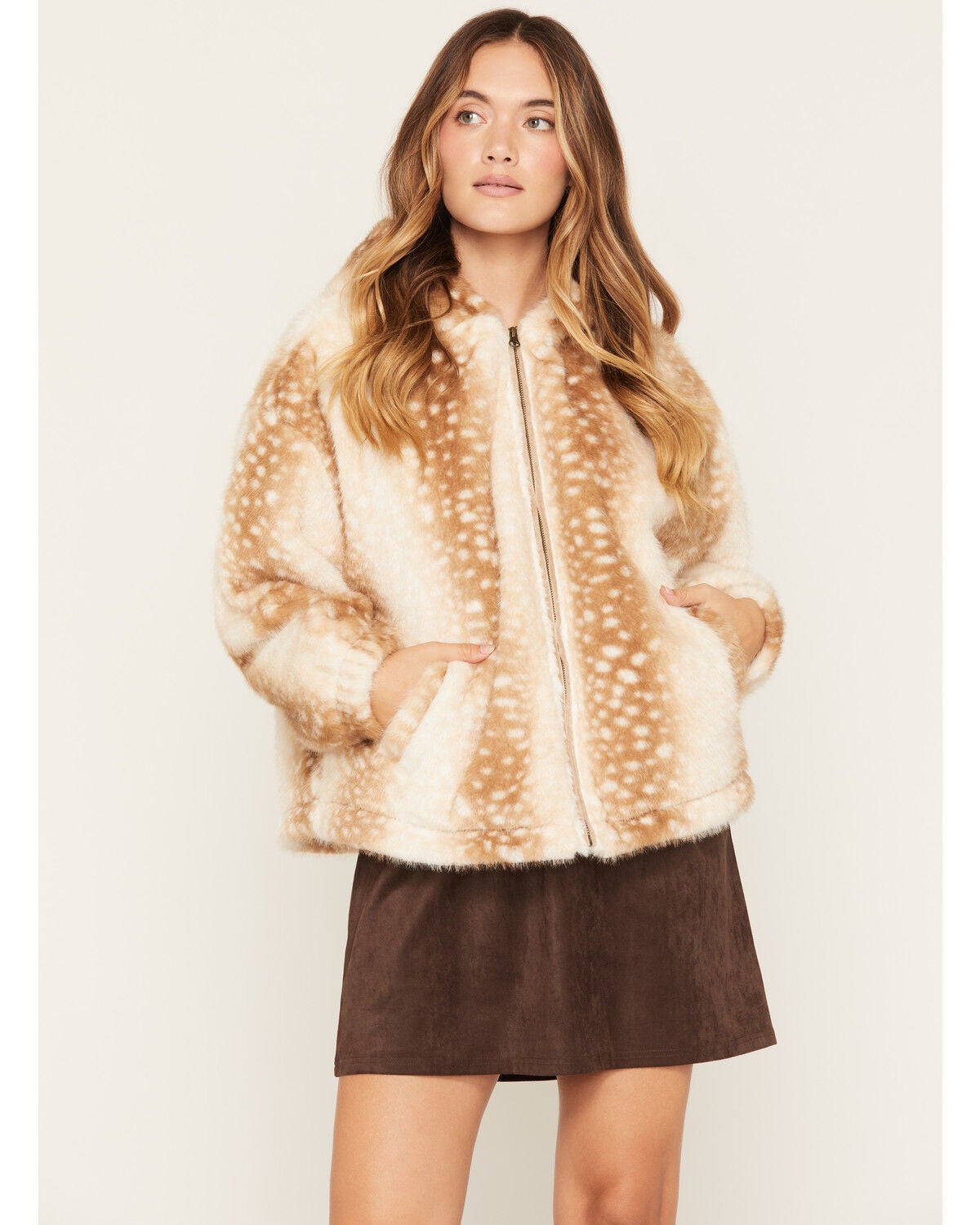
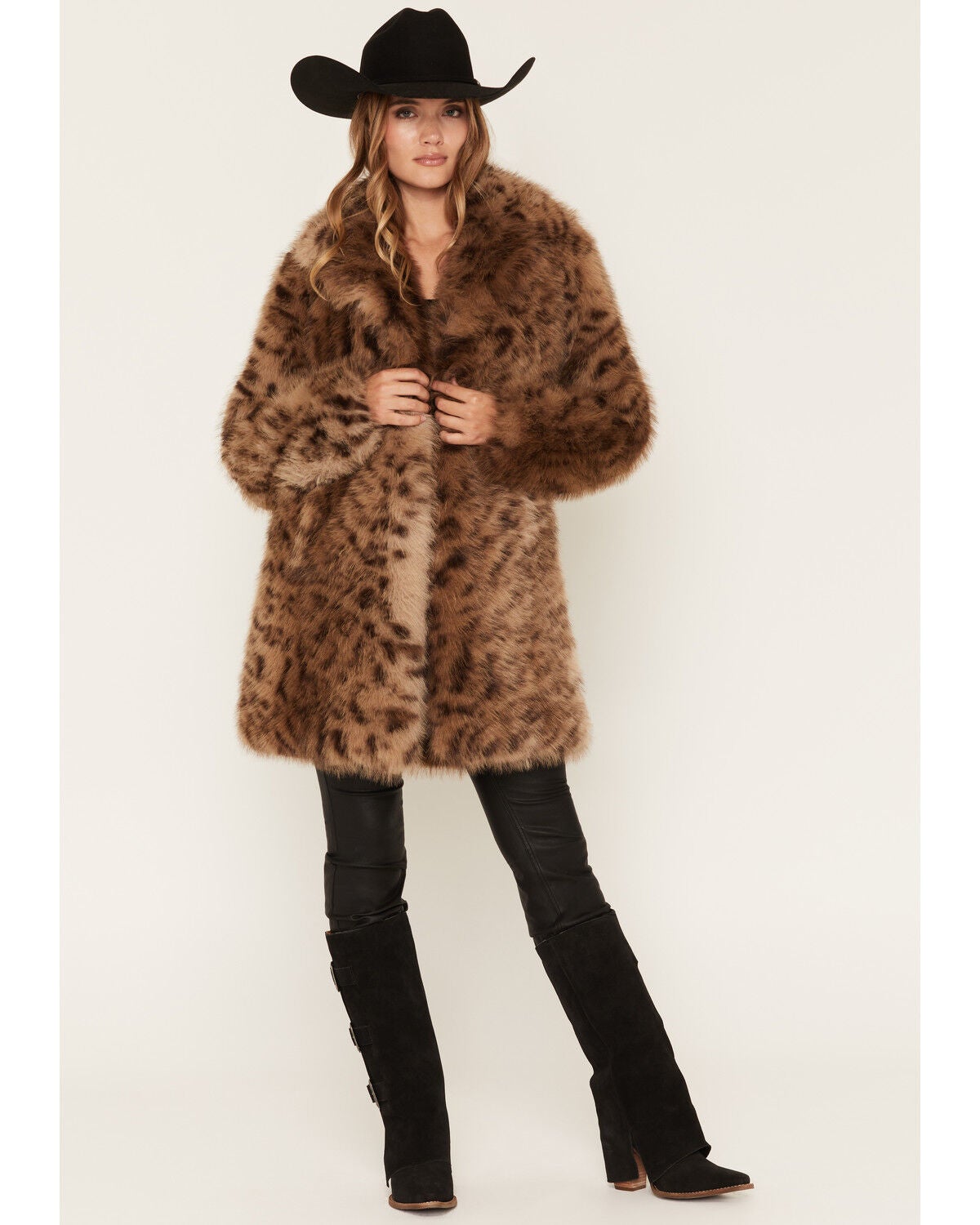
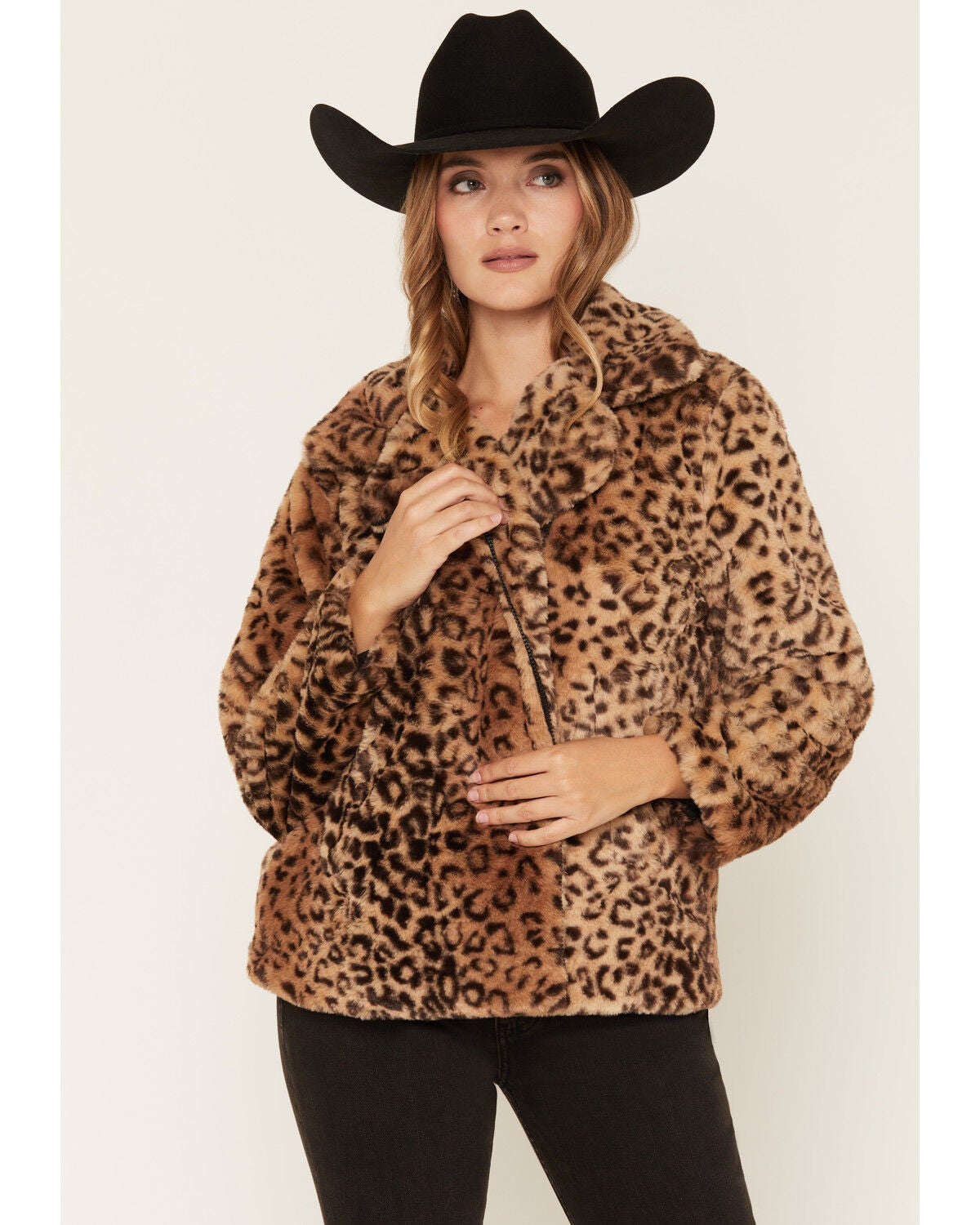
Find a women's leopard-print coat or jacket for fall outfits, concert nights, and everyday wear. Compare lengths, textures, and silhouettes to choose a layer that works with your jeans, boots, and personal style.
Women’s leopard-print coats and jackets bring a distinctive spotted pattern to outerwear ranging from cropped casual layers to longer, tailored silhouettes. The print can appear on faux fur, fleece, woven fabric, wool blends, and quilted shells, with each construction offering a different feel and purpose. Leopard print describes the surface pattern, not the fabric, warmth, or weather protection. A smooth woven jacket has a cleaner outline than a plush faux-fur coat, while a quilted design adds dimension through its stitching and insulation. Traditional tan, brown, and black spots work well with denim, leather, and solid-colored clothing. More muted patterns offer less contrast, and larger spots make a stronger visual statement. The scale of the print matters as much as its color: small markings create a finer texture from a distance, while broad markings remain distinct across a room. With such a recognizable pattern, straightforward clothing often makes the strongest pairing. Dark jeans, a plain knit top, and leather boots give leopard-print outerwear room to stand on its own. A longer coat over straight-leg denim creates a different proportion than a short jacket worn with high-rise jeans. Dresses and skirts also work with the pattern, particularly when their colors repeat a shade already present in the fabric. For a western wardrobe, leopard print fits naturally alongside denim shirts, simple belt buckles, and cowboy boots without requiring every piece to carry a decorative detail. Lapels, point collars, shirt-style fronts, and collarless necklines each change the overall character. A structured collar reads more tailored, while a soft, open front feels less formal. These differences make women’s leopard-print jackets and coats useful for everyday wear, dinners, travel, and occasions that call for something more distinctive than a plain outer layer. The strongest combination is usually a clear silhouette, comfortable movement, and a pattern that works with clothing already in the closet. That gives the coat a practical place in a wardrobe rather than limiting it to a single outfit.
Fabric and construction determine how leopard-print outerwear feels through a full day of wear. Faux fur offers a plush surface, but its weight, pile length, backing, and lining affect comfort and bulk. Fleece generally provides a softer, more relaxed layer, while woven fabrics can support sharper seams and a more defined shape. Wool blends vary in warmth and texture according to their fiber content, fabric weight, and construction. Quilted jackets rely on the shell, fill, and stitching together; a padded appearance alone does not establish how warm a jacket will feel. A leopard pattern also does not indicate water resistance, so protection from rain should be supported by the garment’s stated features. Fit deserves the same attention as fabric. Shoulder seams should sit comfortably, sleeves should allow the elbows to bend, and the front closure should fasten without pulling across the chest or hips. Enough room for a sweater can be useful in a coat intended for cold-weather wear, but excess fabric may interfere with movement or make the sleeves feel cumbersome. Cropped lengths leave more of the waistband visible, hip-length jackets offer familiar everyday coverage, and longer coats extend coverage over dresses or trousers. Sitting down changes how a garment fits, especially through the hips and thighs. A coat that feels comfortable while standing should also allow room to sit in a vehicle, reach forward, and carry a bag. Pockets add practical value when their placement and depth suit everyday needs. Secure closures help hold small essentials, while open pockets provide easier access. Smooth linings help sleeves slide over shirts and knitwear, and neatly finished seams reduce friction inside the garment. Belts, adjustable cuffs, and different closure styles can refine the fit, though each adds its own feel and function. For regular use, sound stitching, firmly attached buttons, and a zipper that moves without catching are more meaningful durability details than the print itself. Those details support an outer layer that remains comfortable beyond the first wear.
Care requirements are worth considering before adding any patterned coat or jacket to a regular rotation. The care label should guide cleaning because similar-looking leopard prints can appear on fabrics with very different needs. Some fleece and synthetic constructions permit machine washing, while certain tailored coats, wool blends, trims, and linings require professional cleaning. Faux fur needs particular attention to heat and handling; high temperatures can damage synthetic fibers or alter the pile. Where spot cleaning is permitted, a gentle method suited to the fabric helps address small marks without treating the entire garment. Vigorous rubbing can disturb a textured surface, and an untested cleaner may affect color. Letting damp outerwear dry fully before storage helps protect its condition, while following the label’s drying directions reduces the risk of shrinkage or distortion. A supportive hanger is useful for structured coats, though heavy knit constructions may need flat storage to avoid stretching. Leaving space around plush fabrics helps keep their surface from being compressed. Bags, seat belts, and frequent contact at cuffs and pocket edges create wear points, making those areas worth checking during routine care. A loose button or small seam opening is easier to address before it develops into a larger repair. For someone who wears mostly solid colors, a leopard-print jacket can add variety without requiring a different set of jeans, boots, or everyday shirts. For someone who already favors patterned clothing, it offers another option, with color and scale helping keep combinations deliberate. As a gift, this type of outerwear is best suited to a recipient whose preferred fit, coat length, and interest in animal prints are already known. Familiar measurements and care preferences matter more than guessing from appearance alone. For a different approach to patterned outerwear, Women's Striped Print Jackets offer straight lines in place of spots. Leopard print remains a distinctive choice when its fabric, construction, and proportions suit the way the coat or jacket will actually be worn.
Read More
FAQs
Pair it with straight-leg or bootcut jeans, cowboy boots, and a solid shirt. Keep other patterns limited so the coat and Western details each have room to stand out.
Black, cream, brown, and denim are straightforward choices. Use the tones in the print as a starting point, or add one solid accent color while keeping the rest of the outfit simple.
Yes. Wear it with a plain tee and jeans for a casual look, or pair it with a solid dress and boots for a concert. Simple layers make it easier to wear the same jacket different ways.
No. Leopard print describes the pattern, not the material. Check the product description to confirm the fabric and texture rather than assuming a spotted coat has a faux-fur finish.
Follow the care label for the specific garment. Cleaning methods vary by fabric, lining, and trim. Do not assume a faux-fur coat can be machine washed or tumble dried.