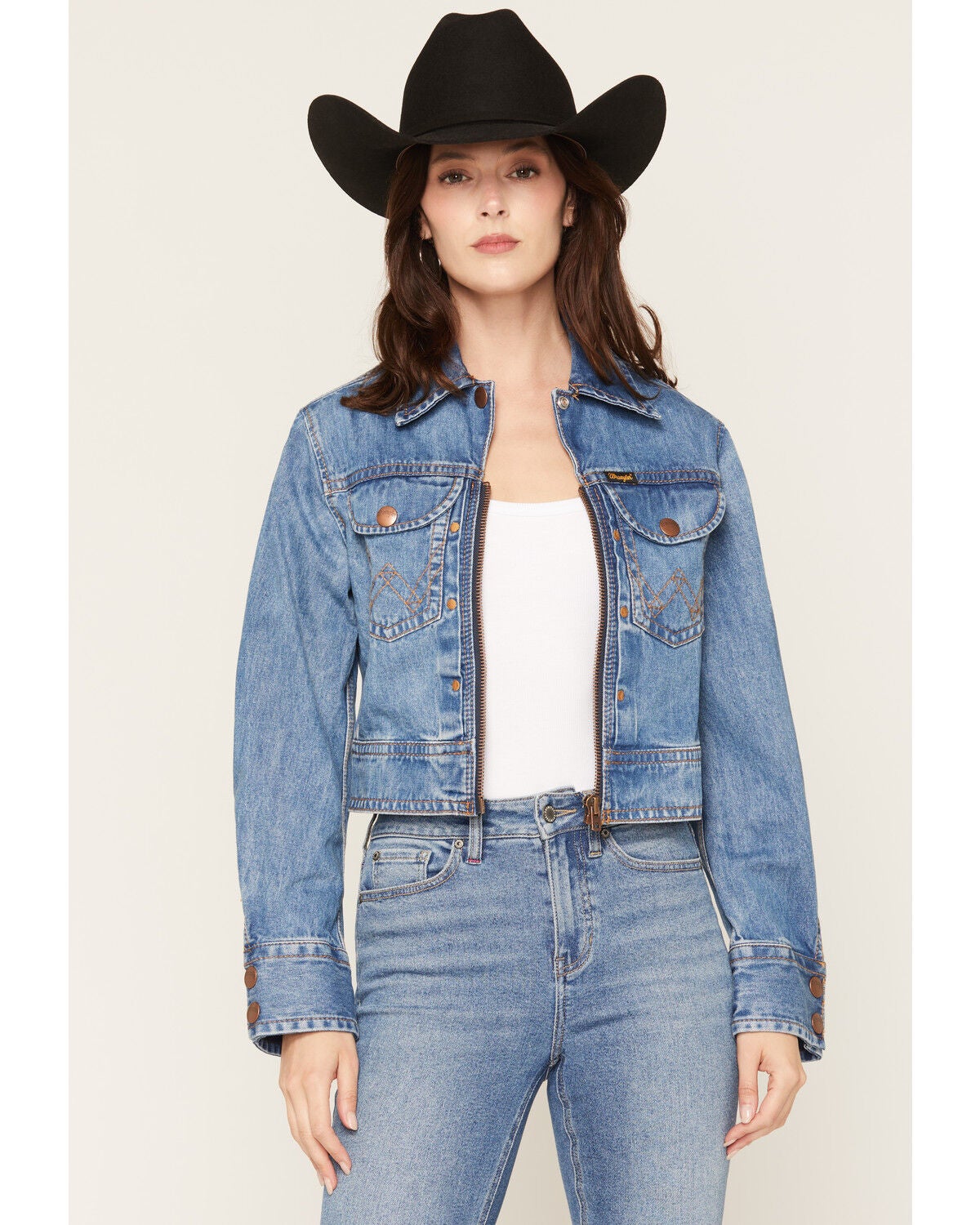
Western-Style Denim Jackets

Shop western-style denim jackets for a casual layer that pairs with jeans, boots, and everyday shirts. Browse the selection to find a jean jacket that suits your style, and check individual listings for fit and details before choosing.

Shop Your Store: Shop Your Store: Find a Store

(Turn off Shop Your Store to see all items)

(Turn off Shop Your Store to see all items)

close
  • Recommended
  • Lowest Price
  • Highest Price
Skip pass products
  • Women's Wrangler Dark Wash Classic Fit Denim Jacket
    Original Price $74.99 $51.97
    31% Total Savings
  • Women's Lola Denim Blazer
    Original Price $99.99 $68.97
    31% Total Savings
  • Women's RANK 45 Signature Denim Pocket Stitch Rancher Jacket
    Original Price $64.99 $44.97
    31% Total Savings
  • Women's Cleo + Wolf Oversized Plaid Mix Denim Cropped Jacket
    Original Price $69.99 $47.97
    31% Total Savings
  • Girls' Shyanne Forks Light Wash Frayed Embroidered Denim Jacket
    Original Price $49.99 $33.97
    32% Total Savings
  • Women's Shyanne Printed Cropped Frayed Jacket
    Original Price $89.99 $61.97
    31% Total Savings
  • Women's Wrangler X Fender Cropped Moto Jacket
    Original Price $250.99 $174.97
    30% Total Savings
  • Girls' Shyanne Kent Dark Wash Frayed Denim Jacket
    Original Price $49.99 $33.97
    32% Total Savings

End of products

Western-Style Denim Jackets

Western-style denim jackets bring together the practical construction of traditional workwear and the distinct details of western clothing. A pointed shoulder yoke, shaped seams, flap chest pockets, and metal snaps can give a familiar denim silhouette a different character without making it difficult to wear. Some designs keep those details subtle, while others use contrast stitching, embroidery, fringe, or a faded finish for a more noticeable look. The fabric matters as much as the trim. All-cotton denim generally has a firm hand at first and develops a softer feel with repeated wear. Denim blended with a small amount of stretch fiber offers more give through the shoulders and arms, which can be useful for driving, reaching, or spending a full day on the move. Fabric weight also affects how a jacket hangs: heavier denim tends to hold its shape, while lighter denim usually drapes more easily. Neither is automatically better; the right choice depends on the feel and structure someone prefers. Blue washes remain closely tied to denim’s workwear roots, ranging from deep indigo to worn-in light blue. The familiar look of Blue Western Denim Jackets works with dark jeans, canvas pants, western shirts, and simple knit tops. Black, gray, and other denim colors offer a different look while keeping the same recognizable construction. A dark, even wash can look more polished with a collared shirt, while fading and worn edges give a jacket a more relaxed appearance. Western details do not need to compete with everything else in an outfit. A jacket with prominent stitching or fringe often works best beside straightforward pieces that let its construction stand out. With a plain denim jacket, a patterned western shirt, a belt with a substantial buckle, or a pair of cowboy boots can carry more of the character. The appeal is straightforward: a familiar garment with enough detail to feel distinct, whether worn for an evening out, a concert, or everyday errands.

Fit determines whether a western denim jacket becomes a regular part of a wardrobe or stays on a hanger. The shoulder seams should sit close to the natural edge of the shoulders unless the cut is intentionally relaxed. Across the back, there should be enough room to reach forward without the fabric pulling hard between the armholes. Sleeves that look right with the arms at rest can feel restrictive behind a steering wheel, so movement matters just as much as measurements. A comfortable jacket should allow the elbows to bend and the front to close over the shirt normally worn beneath it. Stretch denim can help with movement, but it does not replace a well-proportioned cut. Traditional waist-length designs leave a belt visible and sit neatly above the pockets of jeans. Longer cuts provide more coverage, while cropped shapes create a different proportion with high-rise pants, skirts, or dresses. A fitted jacket gives a cleaner outline over a simple shirt; a relaxed cut leaves more space for a substantial western shirt or sweatshirt. The hem should sit comfortably when seated rather than bunching heavily at the waist. Adjustable side tabs, where included, can fine-tune the shape without changing the room through the shoulders. Pocket placement is another useful consideration. Chest pockets may hold small essentials, but their shape and position also affect the appearance of the jacket’s front. Hand pockets add everyday convenience, while a streamlined design may rely on chest pockets alone. Snaps can be easy to fasten, and buttons offer the familiar feel of a traditional denim closure. For casual workdays, road trips, or a night at a dance hall, the most useful jacket is one that moves naturally and suits the rest of the outfit. Denim over denim also works without an exact color match. A lighter jacket with darker jeans creates a clear separation, while similar washes produce a more uniform look. Simple differences in texture, shirt color, or belt leather can keep either combination from feeling overly matched.

Durability comes from the fabric and the way the jacket is put together. Look for even stitching, secure pocket corners, firmly attached hardware, and seams that lie flat rather than twisting. Areas that take repeated strain, such as pocket openings, cuffs, and the underarms, deserve particular attention. Heavier denim can provide a substantial feel, but strong construction matters across fabric weights. Distressing changes that equation in specific places: a worn patch or open tear is part of the design, not the same as an intact section of fabric. A jacket intended for frequent wear benefits from details that can handle regular movement and repeated fastening. Denim has a long connection to working clothes, but an ordinary denim jacket is not a substitute for required protective clothing on a jobsite. Its role here is everyday wear, with western styling that fits naturally beside boots, jeans, and a well-used leather belt. Care helps preserve that role. The garment’s care label should guide washing and drying, especially when stretch fibers, embroidery, fringe, or mixed materials are involved. Turning a washable jacket inside out and fastening its closures can help limit rubbing against the outer surface. Dark indigo may transfer color onto lighter fabrics, particularly early in the jacket’s life, so washing with similar colors and checking the label are sensible precautions. Excessive heat can affect fit and stretch recovery; the recommended drying method helps reduce that risk. Surface marks may only need careful spot cleaning rather than a full wash after every wear. Hardware, trim, and stitching also benefit from occasional attention before a loose thread or fastening becomes a larger repair. As a gift, a western-style denim jacket makes sense for someone who already wears western shirts, cowboy boots, or denim regularly. The recipient’s usual jacket measurements and preferred fit are more useful than shirt size alone. A restrained design is easier to work into an established wardrobe, while distinctive stitching or fringe suits someone who already chooses those details. A sound fit, comfortable fabric, and construction suited to regular use give the jacket lasting purpose beyond its appearance.

FAQs