Western Button Shirts

Shop western button shirts for everyday wear, work, or a night out. Browse button-front styles with a western look, and find a shirt that fits the way you dress, whether worn on its own or layered.

Shop Your Store: Shop Your Store: Find a Store

(Turn off Shop Your Store to see all items)

(Turn off Shop Your Store to see all items)

close
  • Recommended
  • Lowest Price
  • Highest Price
Skip pass products

End of products

Western Button Shirts

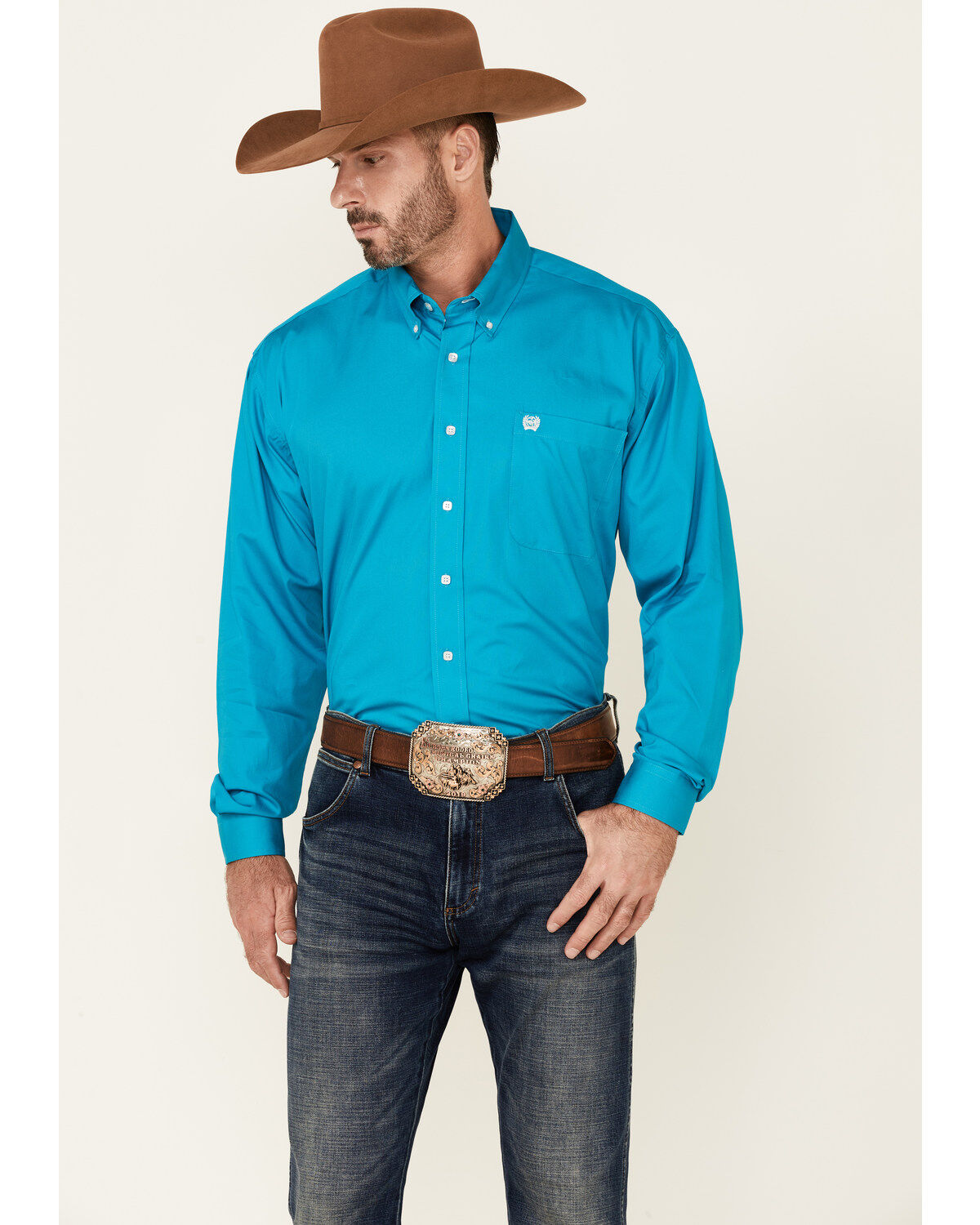
Western button shirts combine a full button front with details rooted in western workwear: shaped shoulder yokes, chest pockets, sturdy collars, and fabrics suited to regular wear. The yoke is the panel across the shoulders, often cut with points that give a western shirt its recognizable outline. Pocket flaps, contrast stitching, and patterned fabric can add character without changing the shirt’s practical purpose. Traditional buttons pass through stitched buttonholes, while snap-front western shirts use fasteners that press together. Pearl-look snaps are a familiar western detail, but they are not the same closure as a button front. The term button-down also has a separate meaning: it describes a collar with points that fasten to the shirt. These distinctions matter for anyone who prefers a particular closure or wants a collar that stays neatly positioned. Solid colors offer a clean look for work, dinners, and occasions that call for a more polished outfit. Plaids, stripes, and small repeating prints bring more detail while remaining easy to pair with jeans. Fabric has just as much influence as the pattern. Cotton offers a familiar feel, while cotton twill has a diagonal weave often associated with a substantial hand. Denim and chambray can look similar, but their construction differs; chambray is generally lighter than traditional denim. Cotton blends may offer easier care or better wrinkle resistance, depending on their composition and finish. A small amount of stretch can help a shirt move comfortably through the shoulders and arms. Fabric weight, weave, and finish all contribute to how a shirt hangs, feels, and holds up. A crisp woven shirt creates a more structured appearance, while a softer fabric drapes more loosely. Neither is automatically better. The useful choice depends on whether the shirt will spend most of its time tucked into jeans at a desk, worn for riding, or paired with trousers for an evening out.

Fit determines whether those details look right and remain comfortable through a full day. Western button-up shirts may have a close, shaped cut or a roomier fit through the chest and waist. A closer fit should still allow the front to lie flat without pulling between the buttons. A relaxed fit leaves more room for movement, but excess fabric can bunch under a belt or make the shoulders look oversized. Shoulder seams generally sit near the edge of the shoulder, and sleeves should allow the elbows to bend without drawing the cuffs too far up the arms. Reaching forward to hold reins, lifting an arm toward a shelf, or sitting behind a steering wheel gives a better sense of useful room than standing still. Stretch helps with movement, but it does not correct a shirt that is too small across the back. Length matters as well. A longer shirttail is useful for keeping a shirt tucked while bending or reaching. A shirt worn untucked should fall neatly rather than cover too much of the seat. The intended cut is a better reference than a single rule about length. Long-sleeve western shirts offer a traditional profile, with cuffs that can be worn closed for a finished look. Short-sleeve styles keep the same western character with less coverage. For ranch chores or other hands-on work, freedom of movement, secure closures, and practical fabric deserve more attention than decorative detail. A standard western shirt is not a substitute for required protective workwear. For a dinner, dance, or family gathering, a clean collar and a smooth fit often make more difference than an elaborate pattern. Jeans, boots, and a leather belt form a straightforward pairing. Dark trousers can give the same shirt a dressier setting. Shirts for men, women, and kids may use different proportions and shaping, so measurements and the intended fit are more useful than assuming every western cut wears alike.

Durability starts with fabric and construction, then depends on how the shirt is used and cared for. Even stitching, secure buttons, and neatly finished buttonholes are useful details to look for in a shirt intended for frequent wear. Reinforcement at pocket corners and other stress points can help where repeated movement puts pressure on the fabric. Heavier fabric is not always the best choice; a shirt also needs enough flexibility and room for the work it will do. Care requirements vary by fiber, finish, and decoration. The sewn-in care label is the right reference for washing, drying, and ironing, especially with stretch blends or detailed trim. Separating dark colors from lighter garments can help prevent color transfer. Prompt attention to spills and marks is generally easier on fabric than repeated heavy treatment after a stain has set. Drying as directed and smoothing collars, cuffs, and pocket flaps before hanging can help preserve a neat appearance. Any ironing should follow the label’s heat setting, with extra care around fasteners and decorative stitching. A loose button is worth securing before it comes off, and a small seam opening is easier to repair before it grows. For shoppers drawn to more decorative western styling, Western Embellished Shirts offer a related direction, with emphasis on details such as embroidery and ornamental accents. A western button shirt can also be a useful gift for someone who already wears western clothing, rides, or prefers a structured shirt over a T-shirt. Familiar colors, preferred sleeve length, and the fit of a shirt the recipient already enjoys provide practical starting points. An understated solid or small-scale pattern is often easier to work into an established wardrobe than a bold print. The strongest choice reflects the person’s routine: enough room for an active day, fabric they are comfortable caring for, and details they will want to wear again.

FAQs