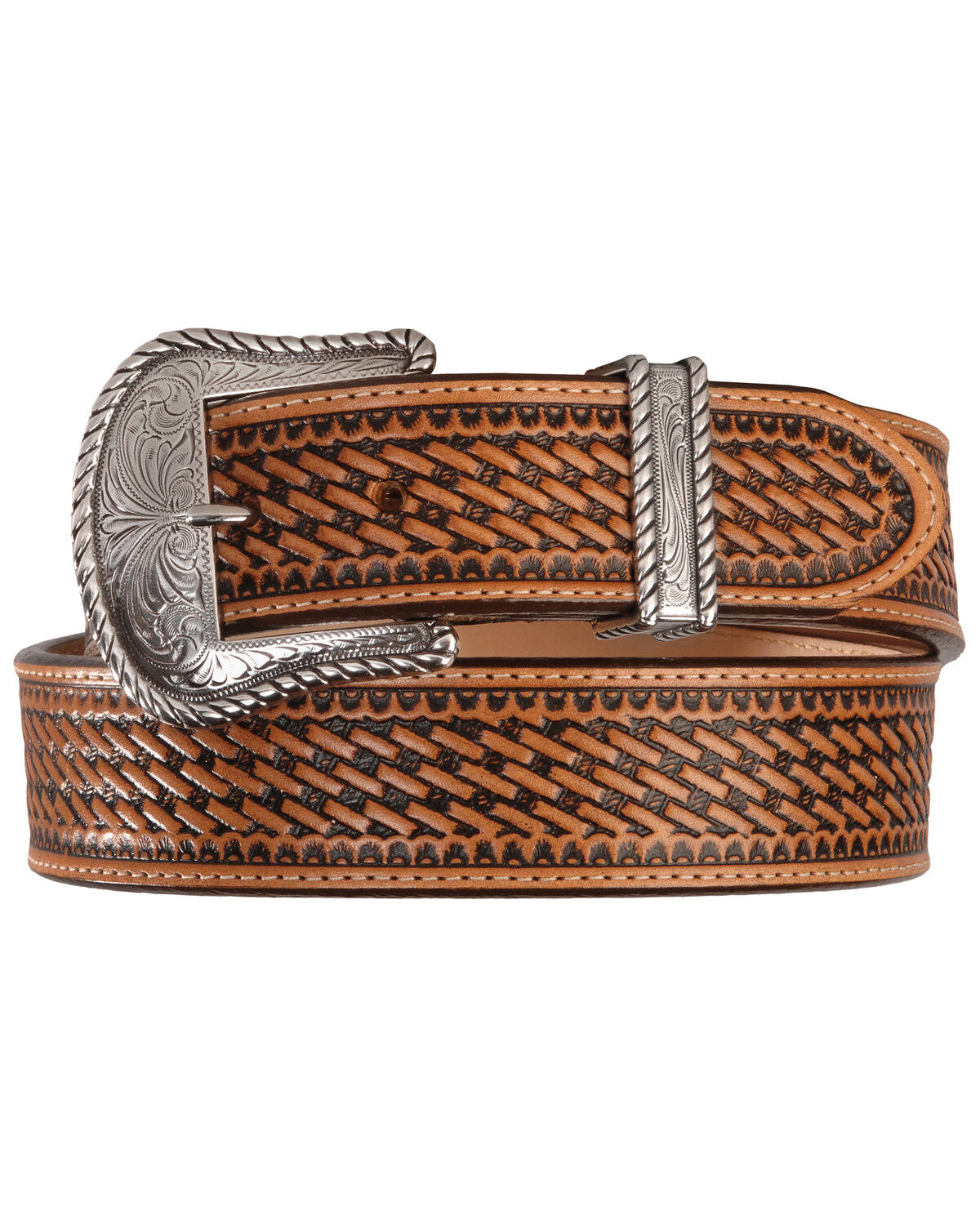
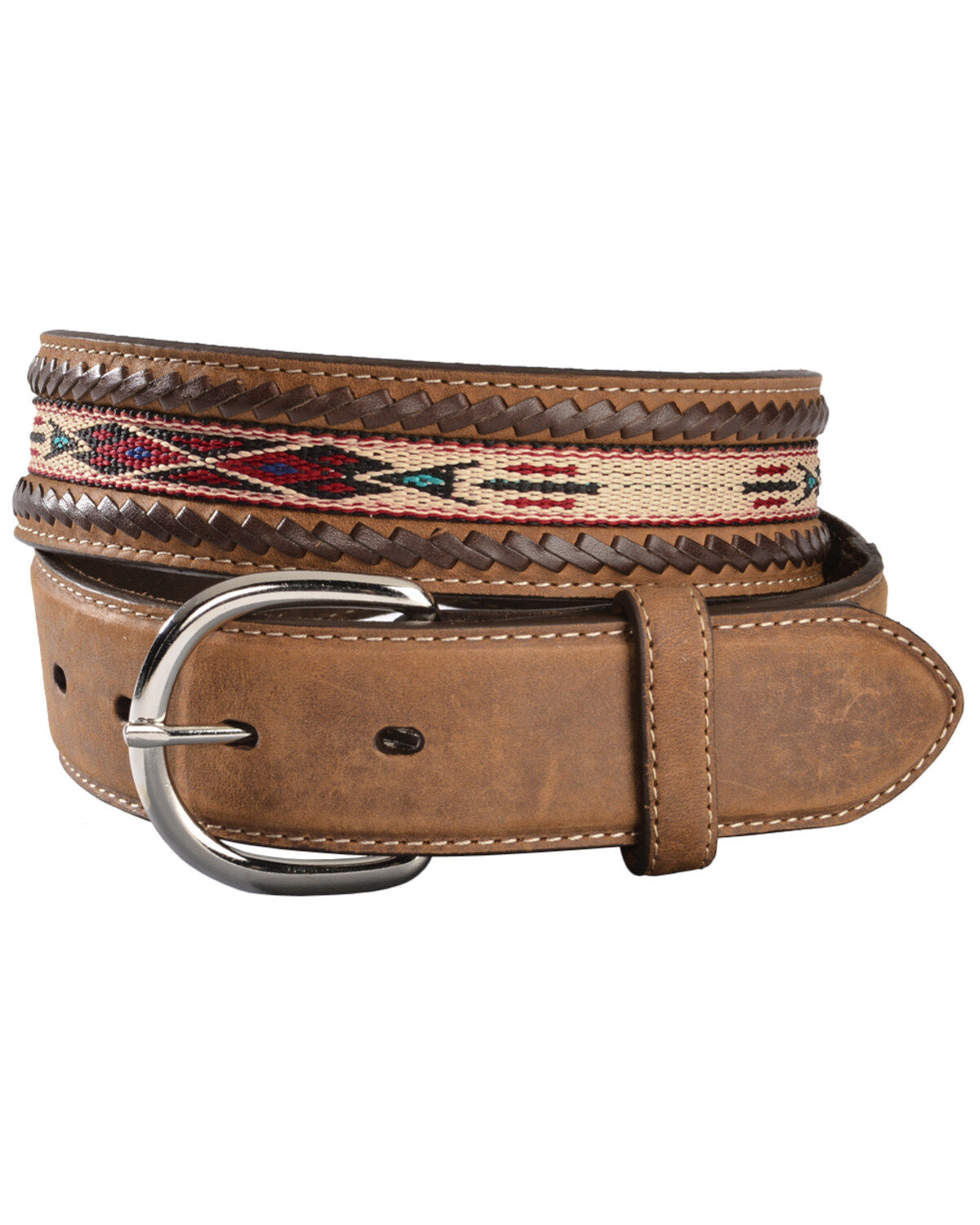
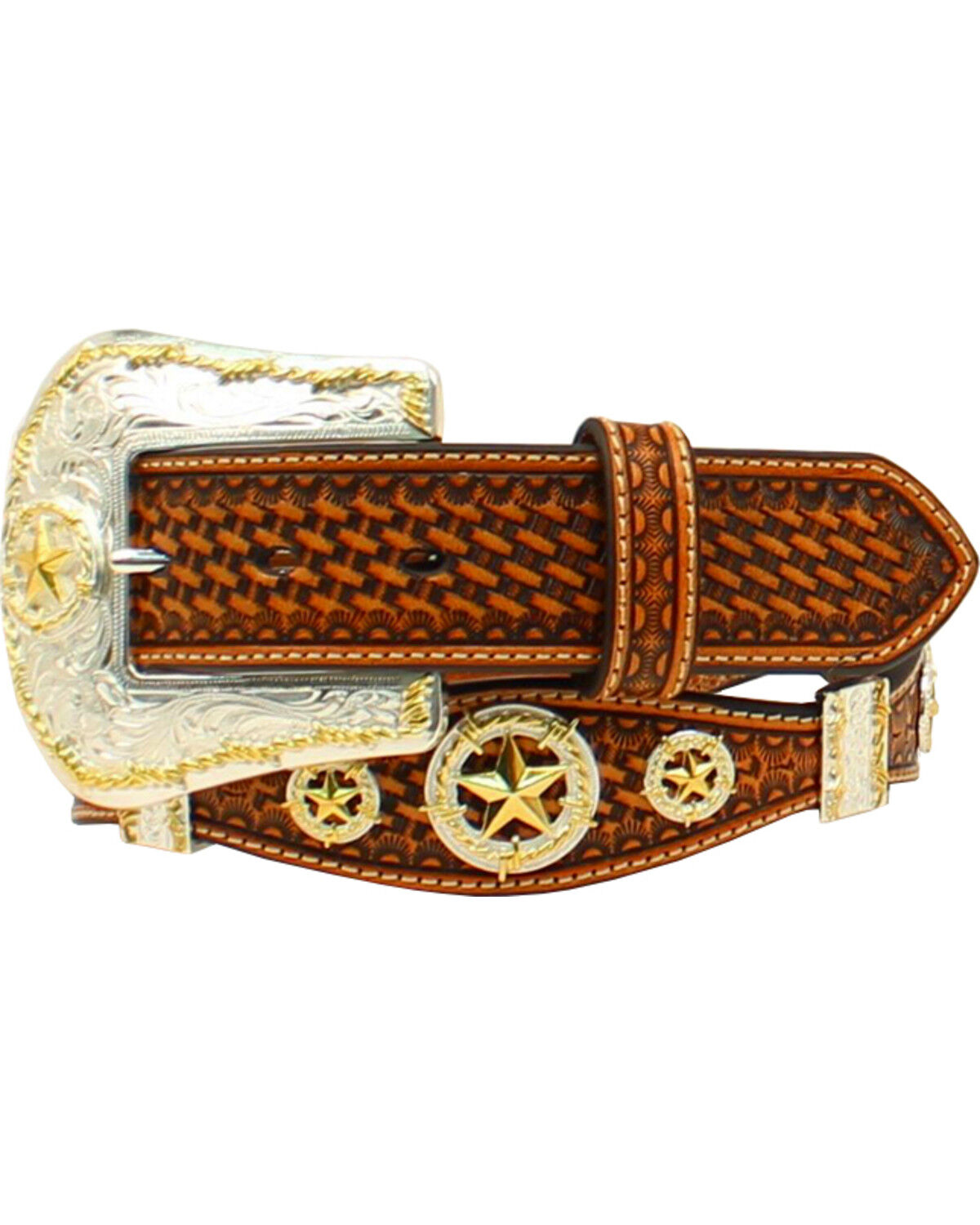
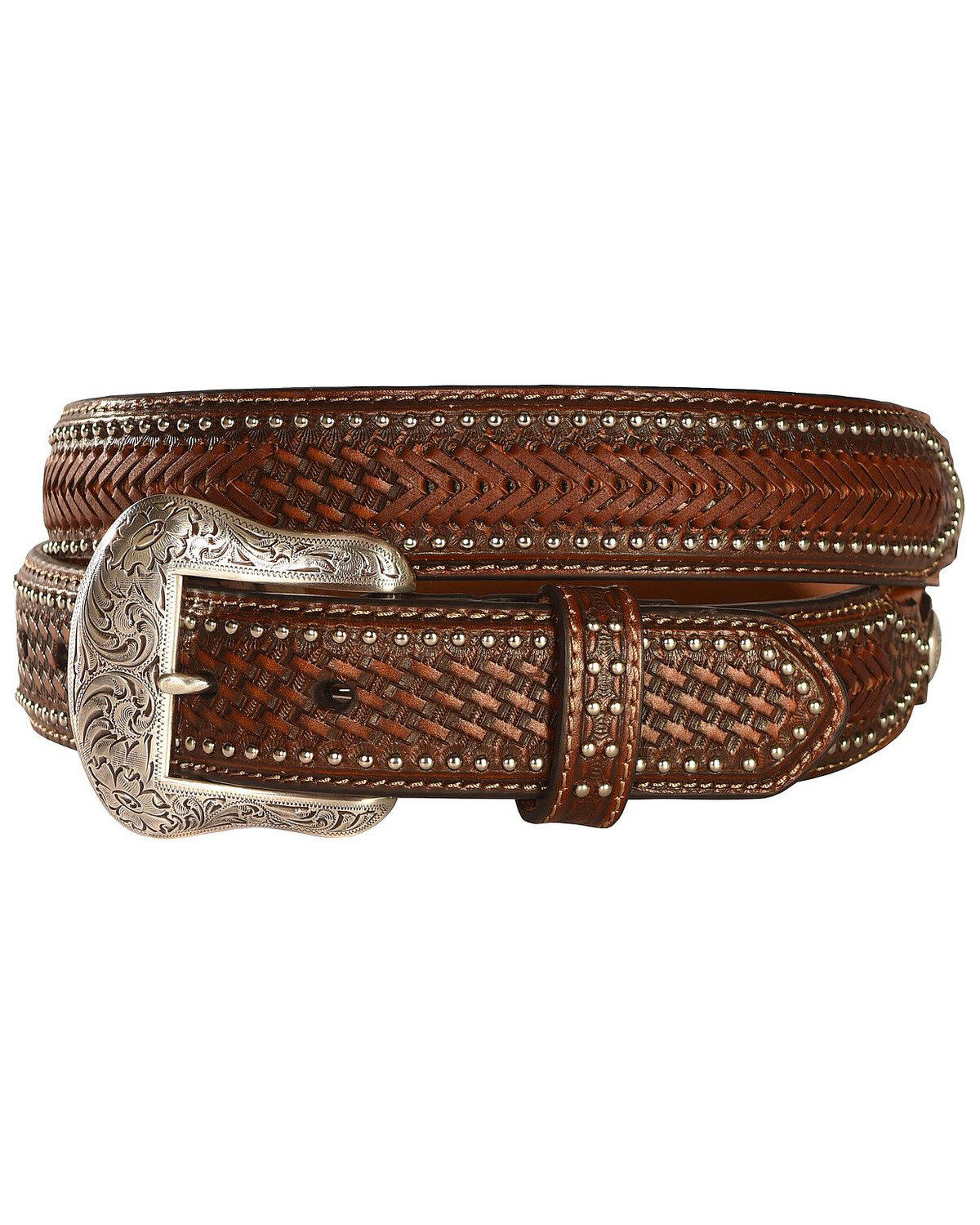
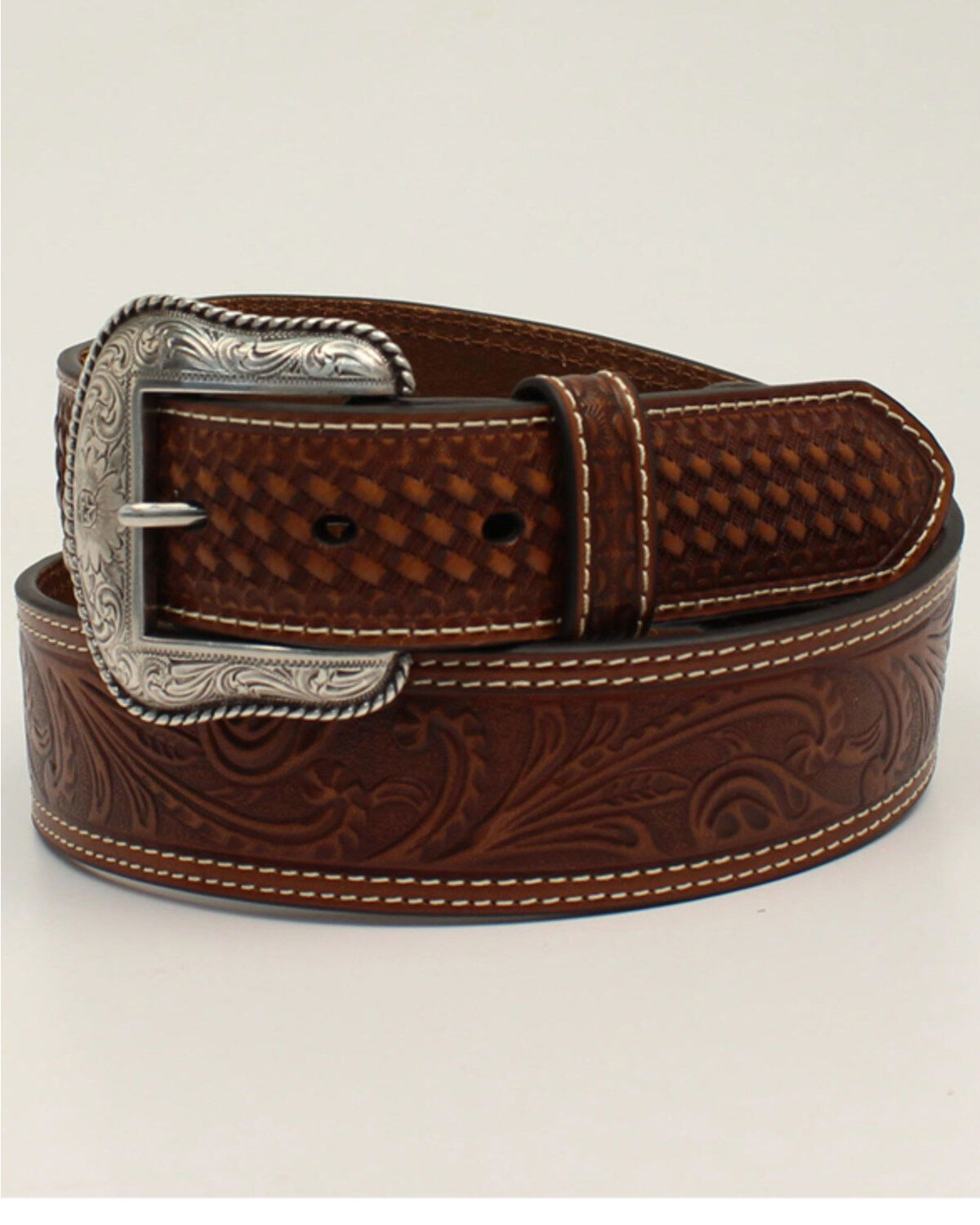
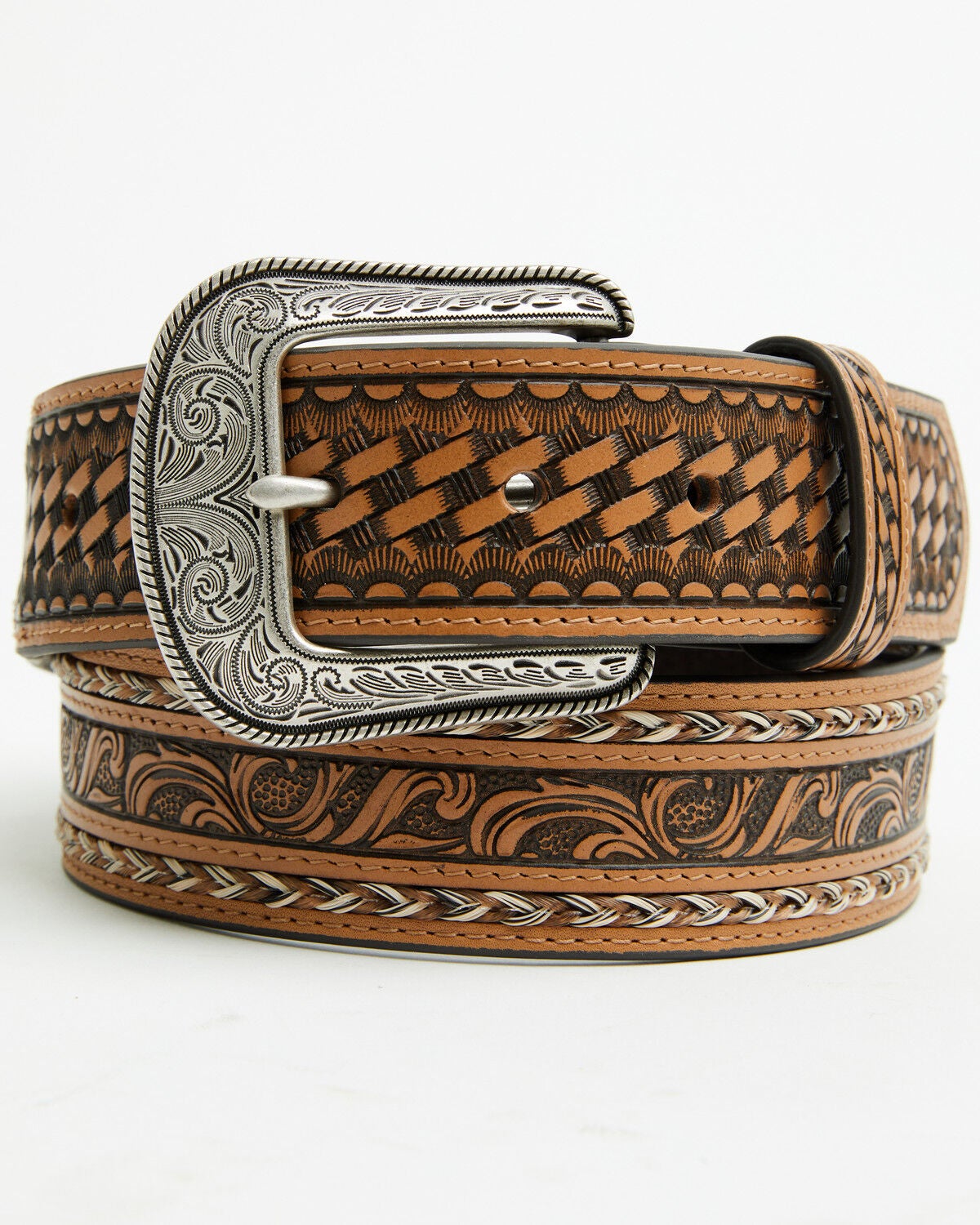
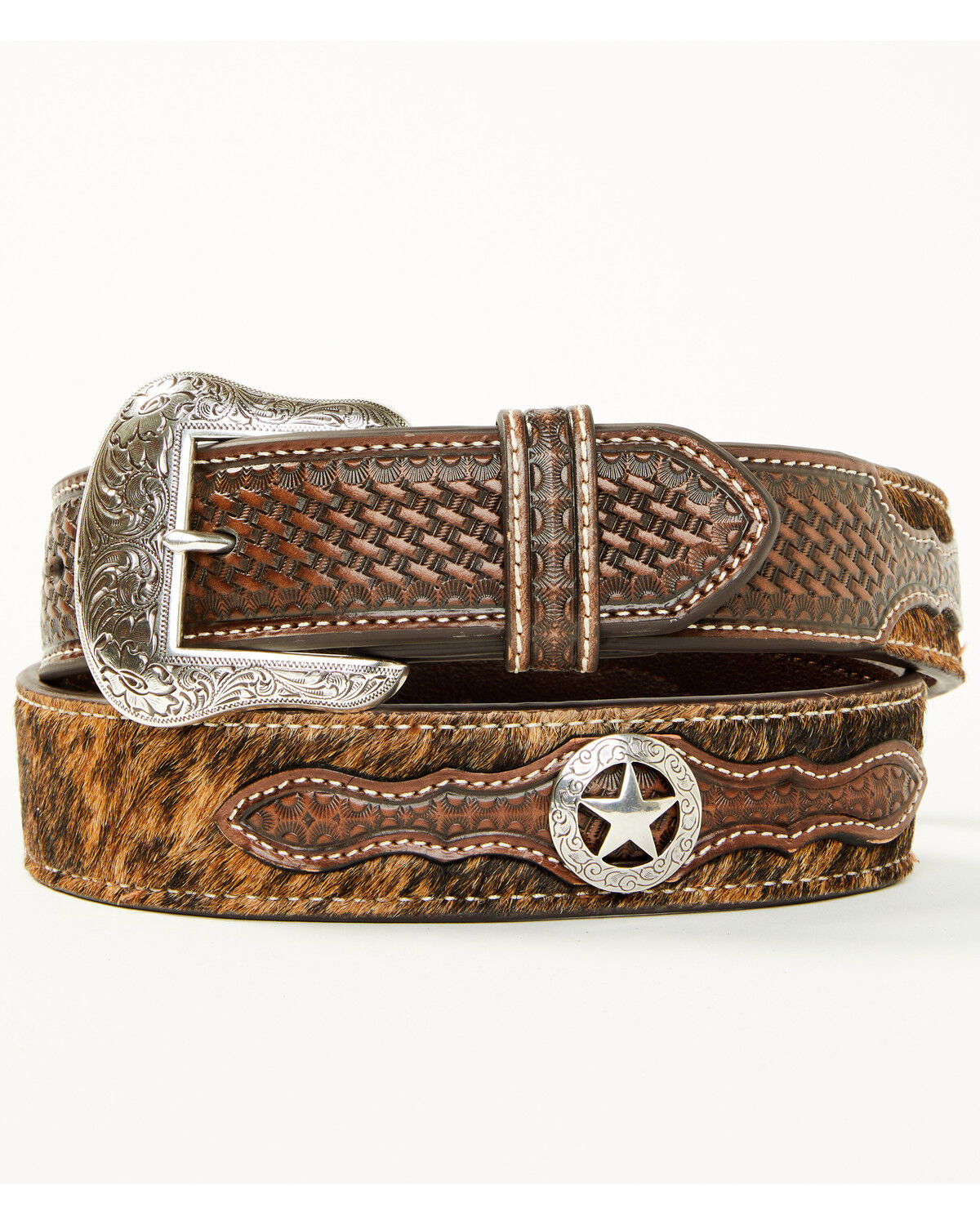
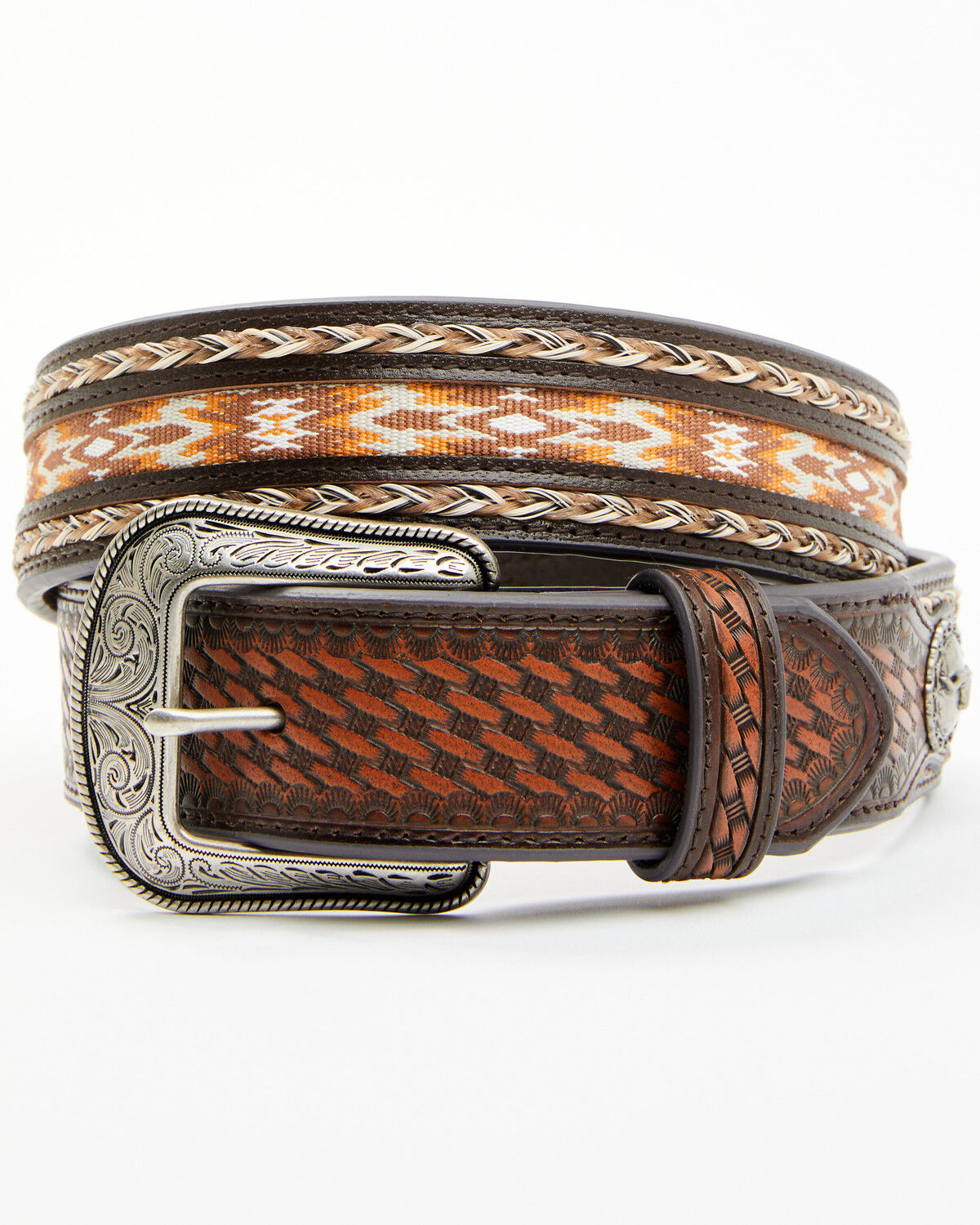
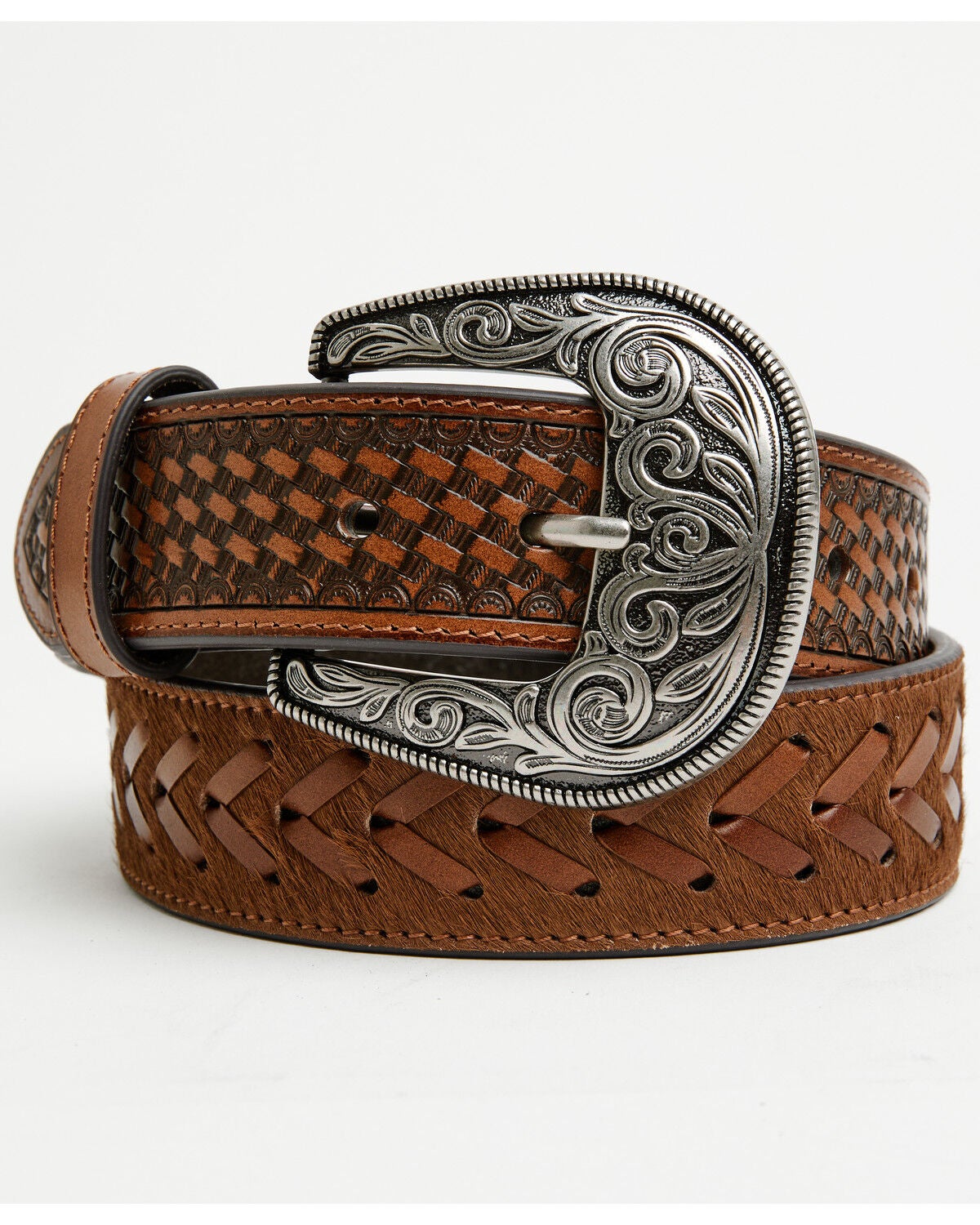
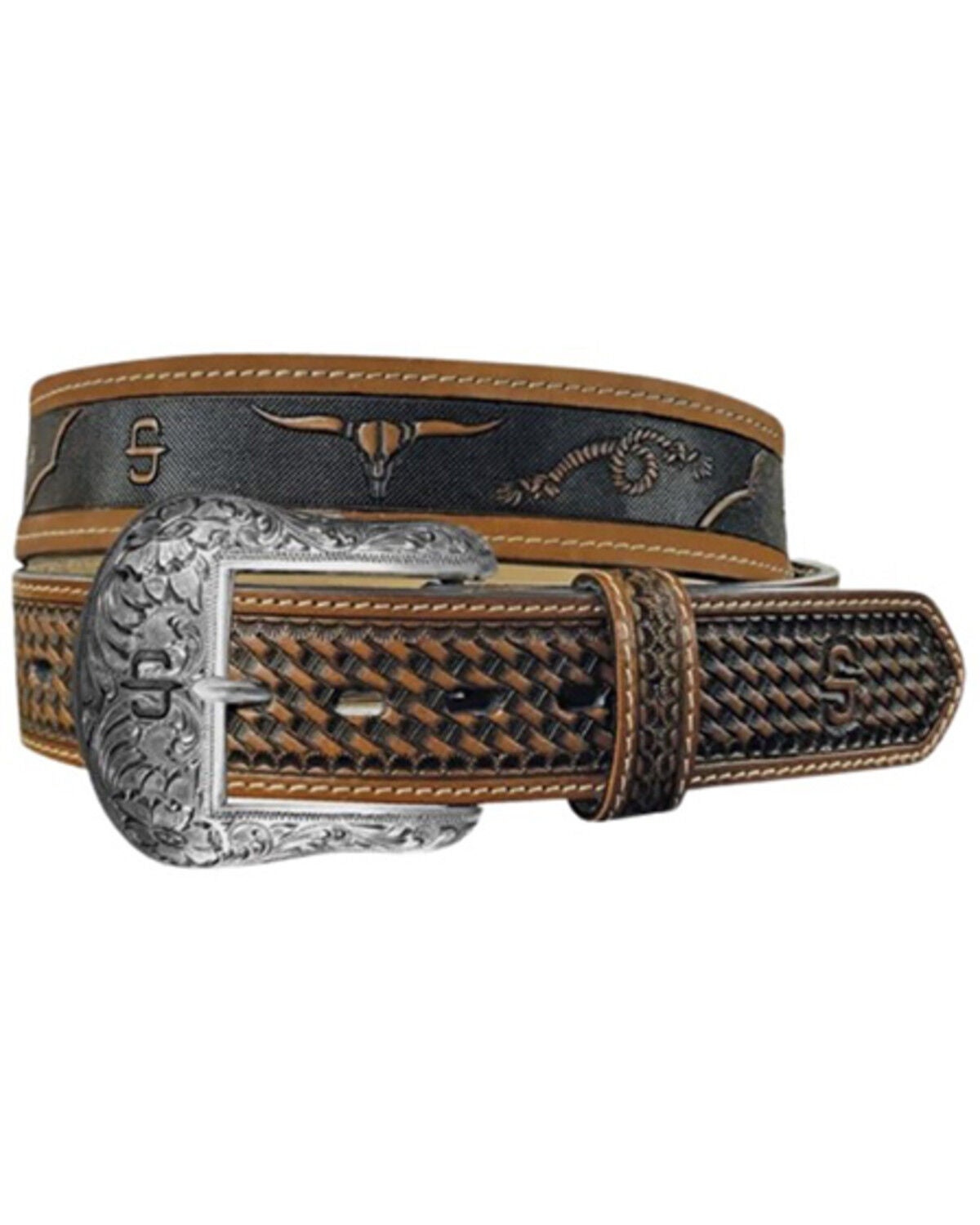
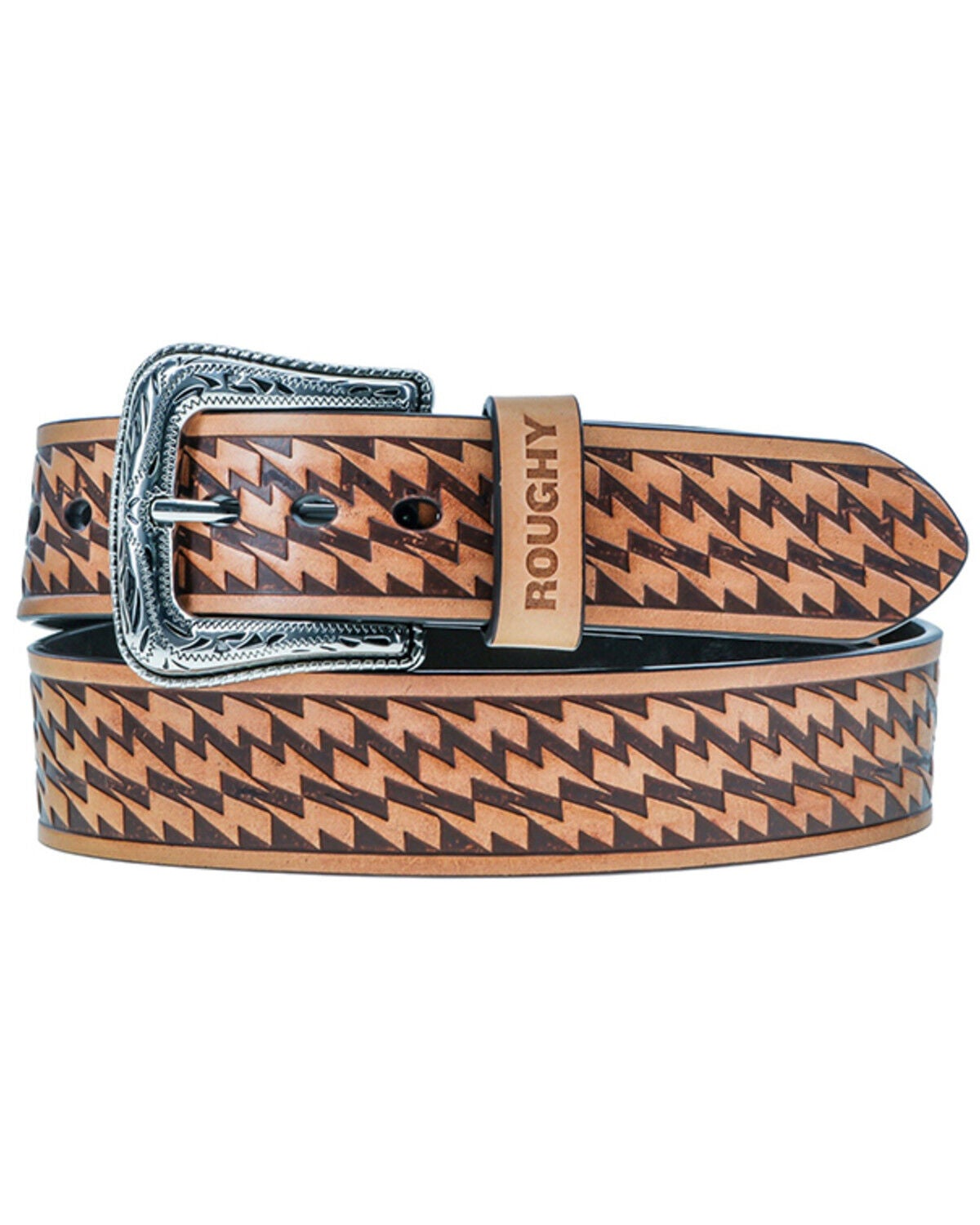
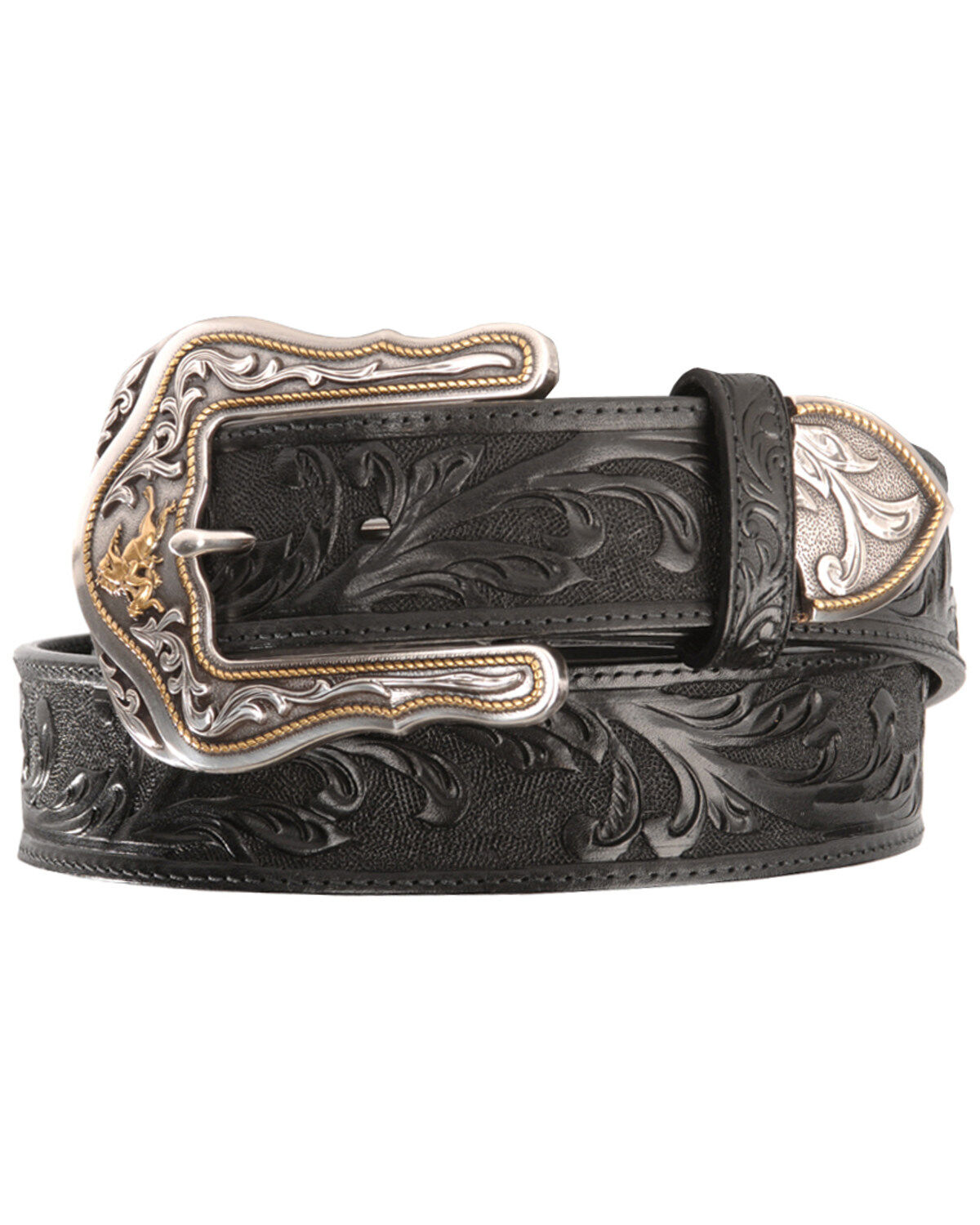
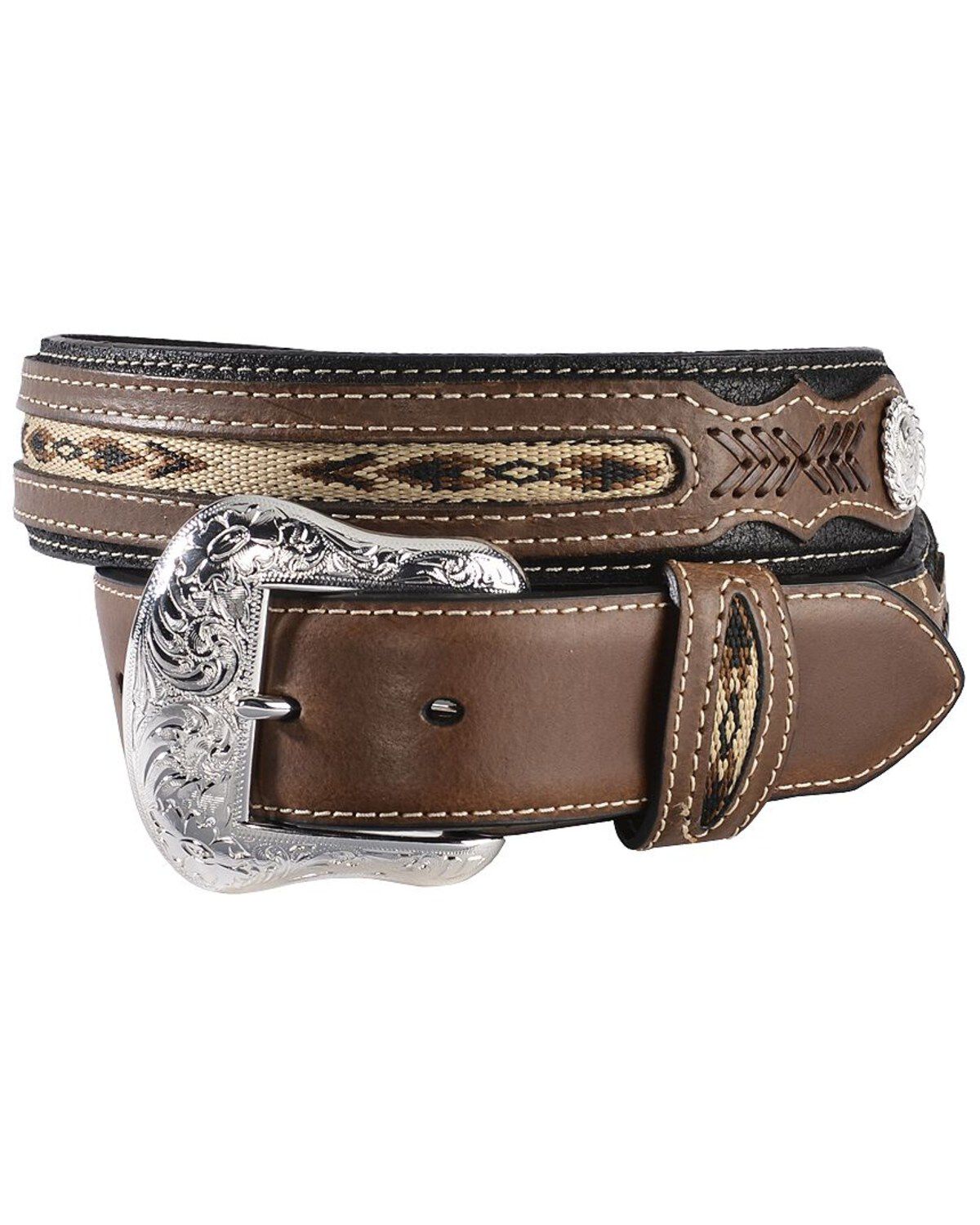
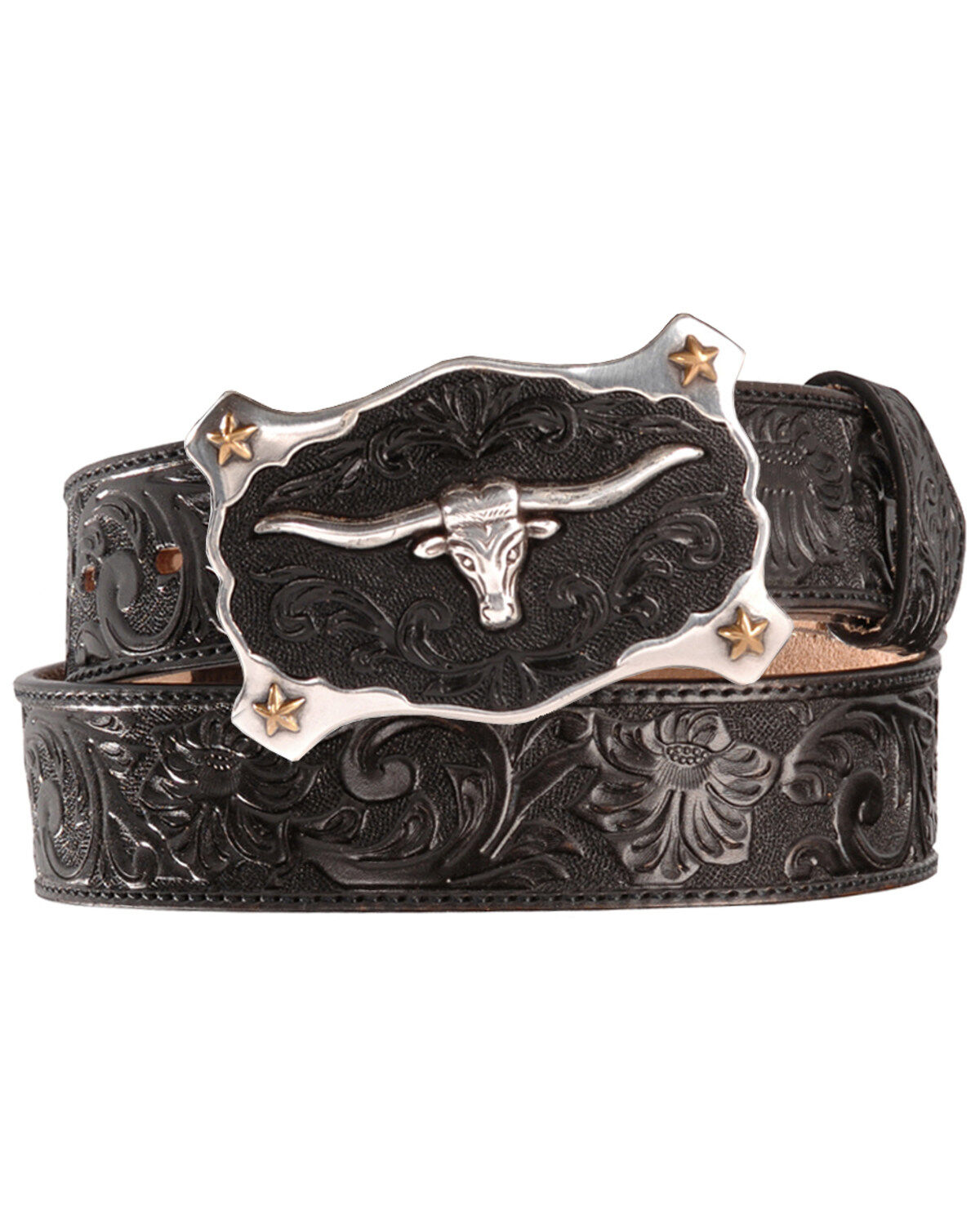
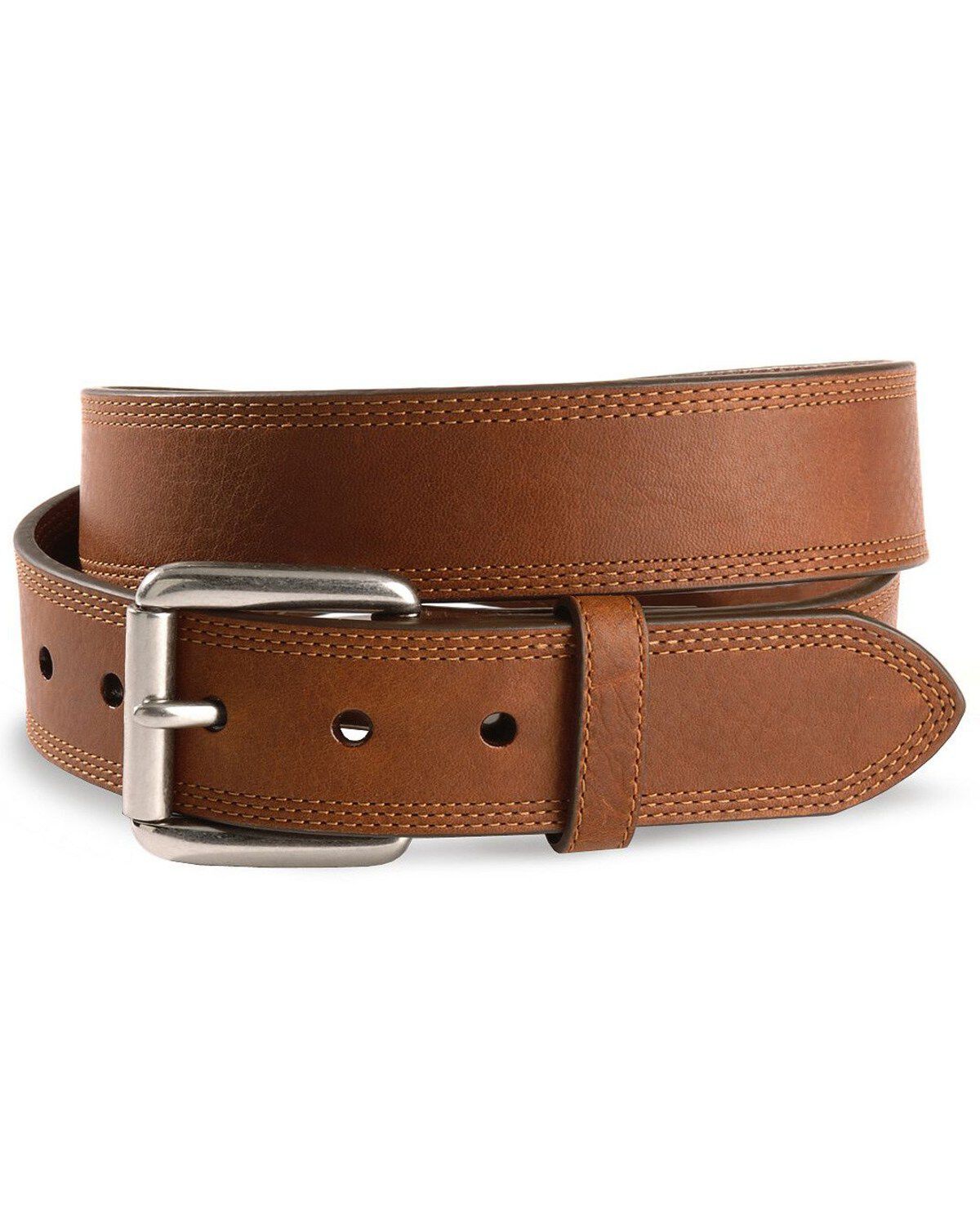
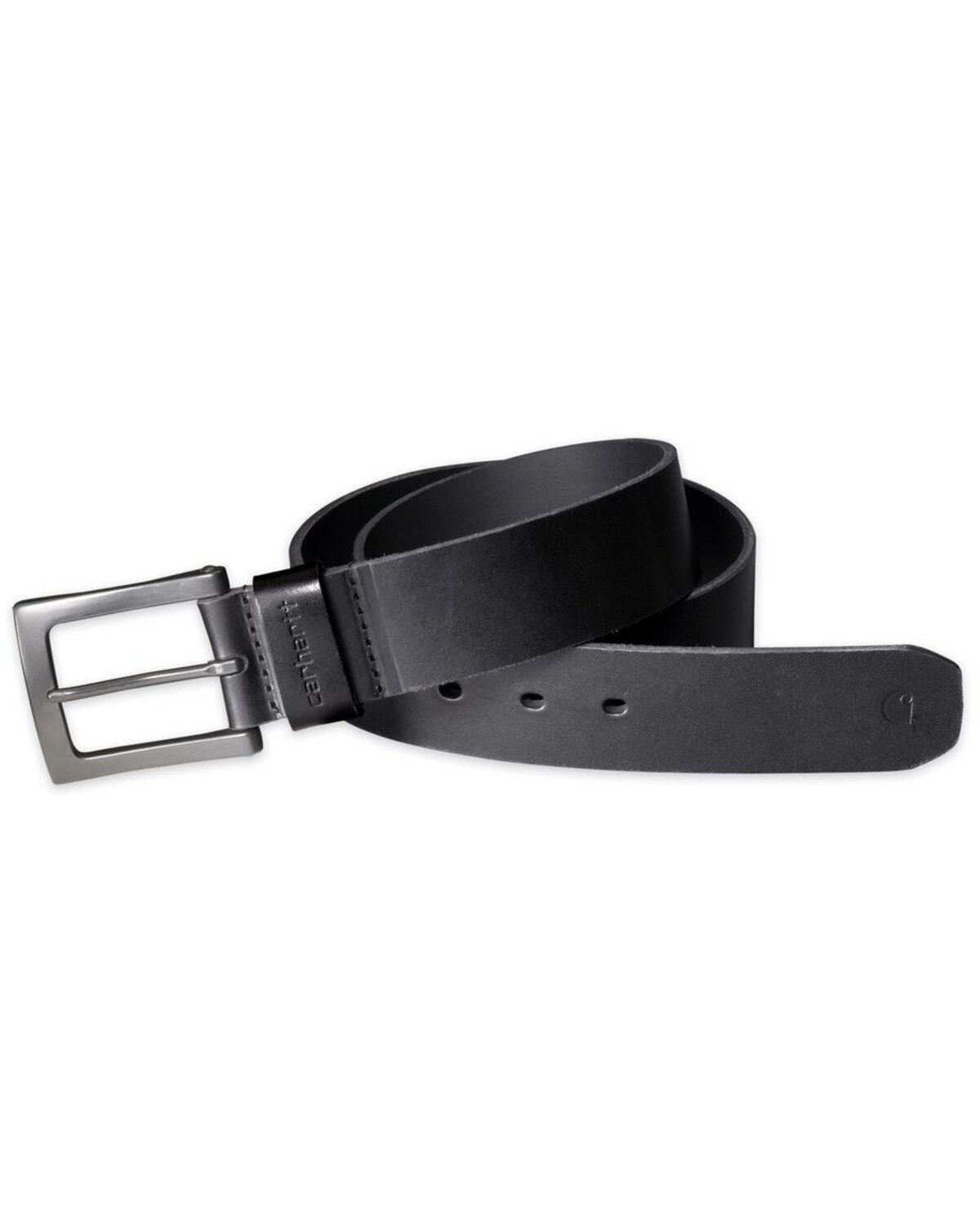
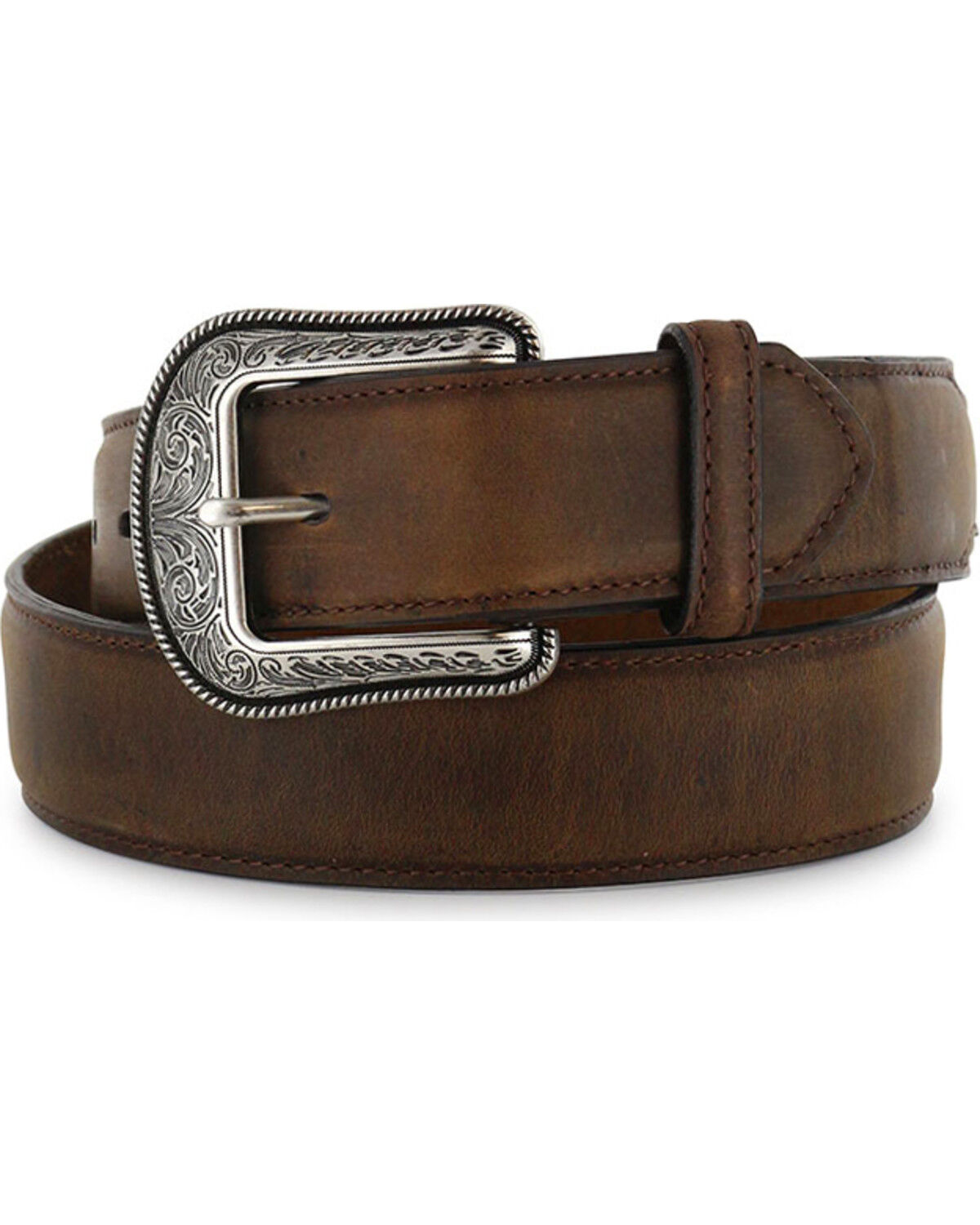
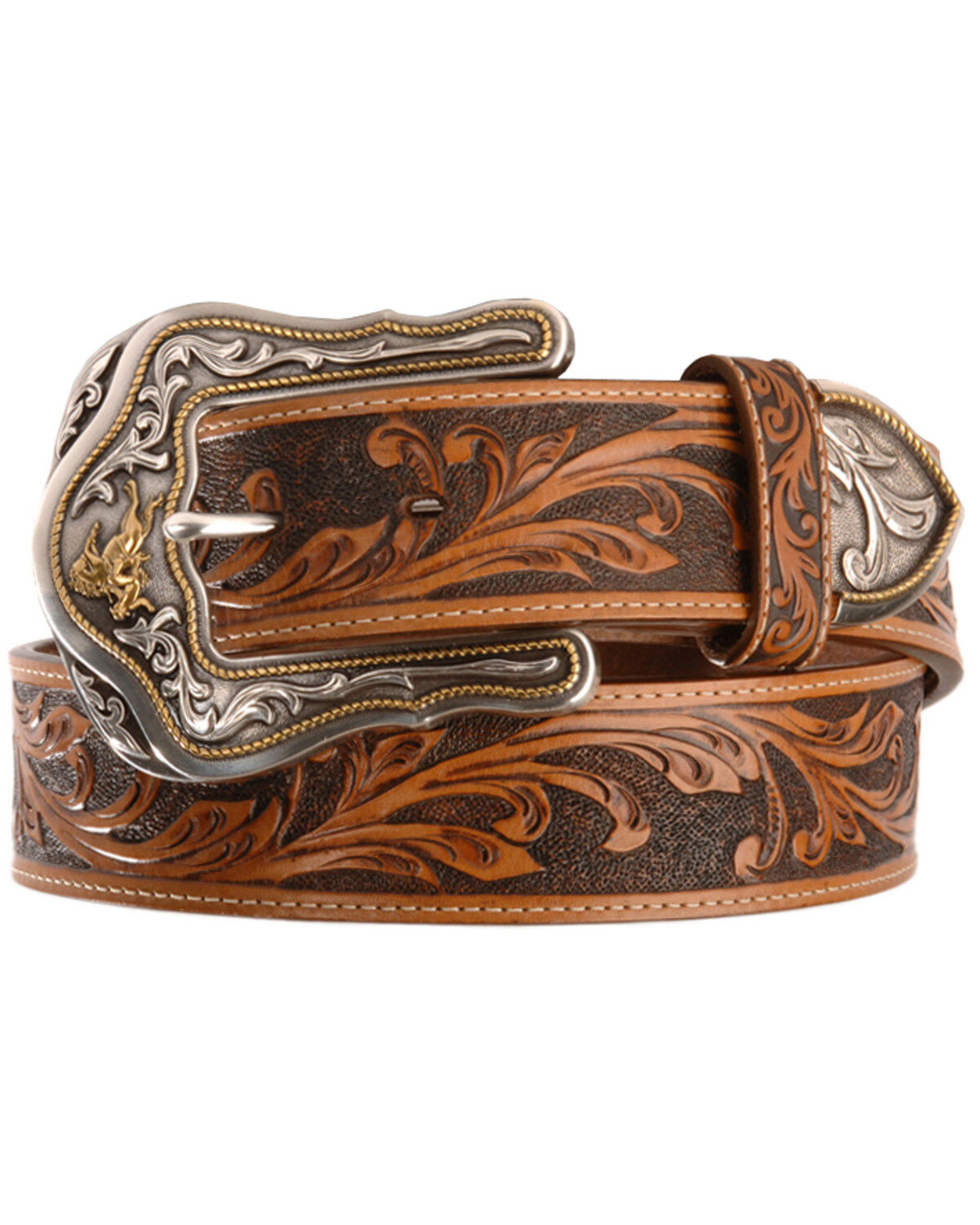
Men's wide basketweave leather belts bring a distinctive touch of Western craftsmanship to any outfit. Designed for those who appreciate both style and... substance, these belts feature classic patterns that complement jeans, dress pants, and workwear alike. Whether you're heading out on the ranch or into town, men's wide basketweave leather belts offer a timeless look that stands out in any setting. Discover the perfect addition to your wardrobe and showcase your appreciation for authentic Western tradition.
Read more
Mens Wide Basketweave Leather Belts
Men's wide basketweave leather belts bring a distinctive touch of Western craftsmanship to any outfit. Designed for those who appreciate both style and... substance, these belts feature classic patterns that complement jeans, dress pants, and workwear alike. Whether you're heading out on the ranch or into town, men's wide basketweave leather belts offer a timeless look that stands out in any setting. Discover the perfect addition to your wardrobe and showcase your appreciation for authentic Western tradition.
Men’s wide basketweave leather belts pair a substantial leather strap with an interlocking pattern pressed or tooled into the surface. The name describes the appearance of woven strips, but a basketweave belt is generally made from a continuous strap rather than separate strands braided together. That distinction gives it the familiar feel of a traditional leather belt with more surface detail than a smooth finish. Common widths run from 1.5 to 1.75 inches, providing a broad profile that works well with many jeans and work pants. Actual width, thickness, and construction vary, and belt loops need enough clearance for the strap to pass through without forcing it. The repeating pattern brings texture to a plain shirt and denim without relying on bright color or oversized hardware. Brown leather sits naturally alongside worn jeans and brown cowboy boots, while black leather offers a more uniform look with dark denim or black footwear. A close match between belt and boot color creates a coordinated outfit, though the shades do not have to be identical. Basketweave patterns also vary in scale and depth. Fine impressions can appear understated from a distance, while larger, deeper tooling gives the leather a more pronounced surface. Border stamping or stitching may frame the pattern and give the strap a defined edge. These details suit everyday wear, an evening out, or a setting where western clothing is part of the routine. During cooler months, a wide belt still looks proportionate beneath a flannel shirt, canvas jacket, or heavier overshirt. For men who prefer some detail but do not want prominent ornament, basketweave offers a practical middle ground between plain leather and elaborate tooling. The same textured finish can work with a tucked-in work shirt during the day and a clean button-down later. Its usefulness comes from that balance: enough character to stand on its own, with a familiar shape that does not demand a different wardrobe.
Leather quality and construction affect how a wide basketweave belt feels, holds its shape, and wears over time. Full-grain leather retains the natural grain surface and can develop changes in color and character with regular use. Top-grain leather has had its surface refined, while the broad term genuine leather alone does not establish thickness, grade, or expected service life. A single-piece strap and a layered, stitched strap can both serve well, but their performance depends on the leather, assembly, and intended use. Thickness adds substance, although the thickest belt is not always the most comfortable choice for sitting through a long drive or bending repeatedly at work. Firm leather may soften with wear, but a belt should not pinch or restrict movement from the start. A wider strap can spread pressure over more area than a narrow one, provided it fits the pants and the wearer properly. Width alone does not make a belt suitable for carrying heavy tools or specialized equipment; that use calls for construction specifically intended to support the load. For ordinary wear, useful details include neatly finished edges, sound stitching where present, cleanly punched holes, and hardware that sits securely. The buckle should move freely without feeling loose at its attachment. Some designs have removable buckles secured with snaps or screws, while others have fixed hardware. A removable attachment can allow a different buckle, but the buckle must fit the strap width and fastening arrangement. Men drawn to other tooling patterns or different hardware treatments may also find a suitable style among men’s wide western leather belts. Basketweave remains a distinct choice within that broader style, especially when the goal is repeated texture rather than a large focal design. Whether worn at a desk, around a property, or through a day of errands, the best fit combines enough structure to keep pants in place with enough flexibility for normal movement.
Sizing deserves as much attention as the leather finish. Belt size is commonly measured from the buckle attachment area to a designated adjustment hole, often the center hole, rather than from one end of the belt to the other. Measuring methods differ, so the stated sizing directions matter more than an assumed relationship to pant size. Going about two inches above a labeled pant waist is a common starting point, not a guarantee of fit. Measuring a belt that already fits well, using the specified measuring points, gives a more useful comparison. Fastening near the middle of the adjustment range leaves room for changes in clothing weight and everyday comfort. The remaining strap should tuck through the keeper and sit neatly without an excessive tail. A 1.75-inch belt may feel right with roomy denim loops yet be too wide for some chinos or dress trousers, making loop clearance an important detail for a belt expected to move between outfits. Once in regular rotation, basic care helps preserve both the leather and the stamped pattern. Dust can settle into the recessed marks, where a soft brush or dry cloth can lift it without scraping the finish. When moisture is needed for cleaning, a lightly dampened cloth is preferable to soaking, unless the maker specifies otherwise. Wet leather should dry naturally away from a heater or direct heat. A leather conditioner suited to the finish can help limit dryness, but heavy application may darken the strap or leave residue in the tooling. Testing a small, hidden area first helps avoid an unwanted color change. Hanging the belt or storing it in a loose roll prevents sharp folds, and checking removable hardware occasionally helps keep the buckle secure. These everyday details also make a wide basketweave leather belt a useful gift for a father, husband, brother, or anyone who regularly wears jeans and boots. Knowing the recipient’s usual belt size, preferred leather color, and buckle style matters more than choosing the boldest design. A well-matched belt is something he can wear often, with a pattern that adds detail without limiting where it belongs.