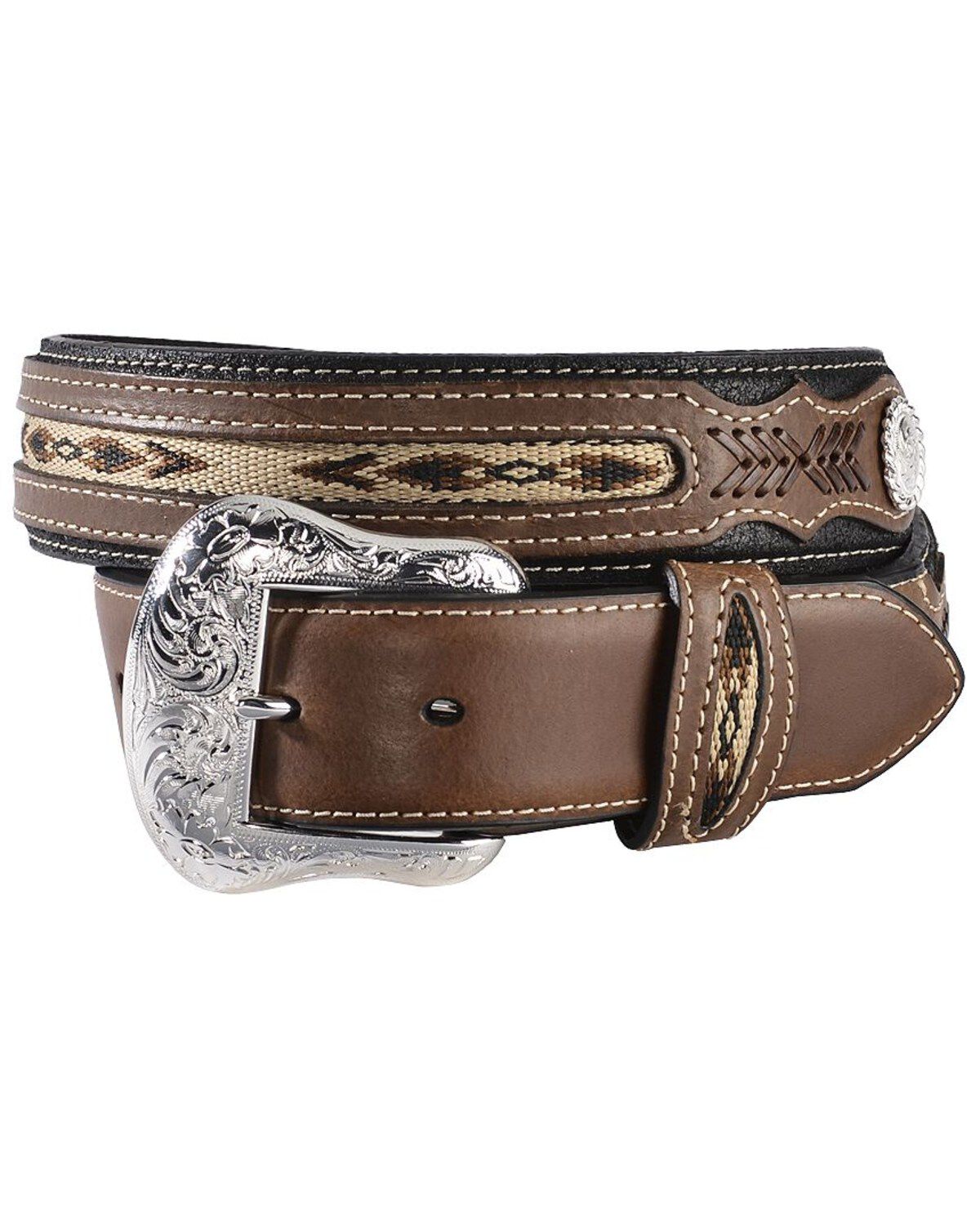
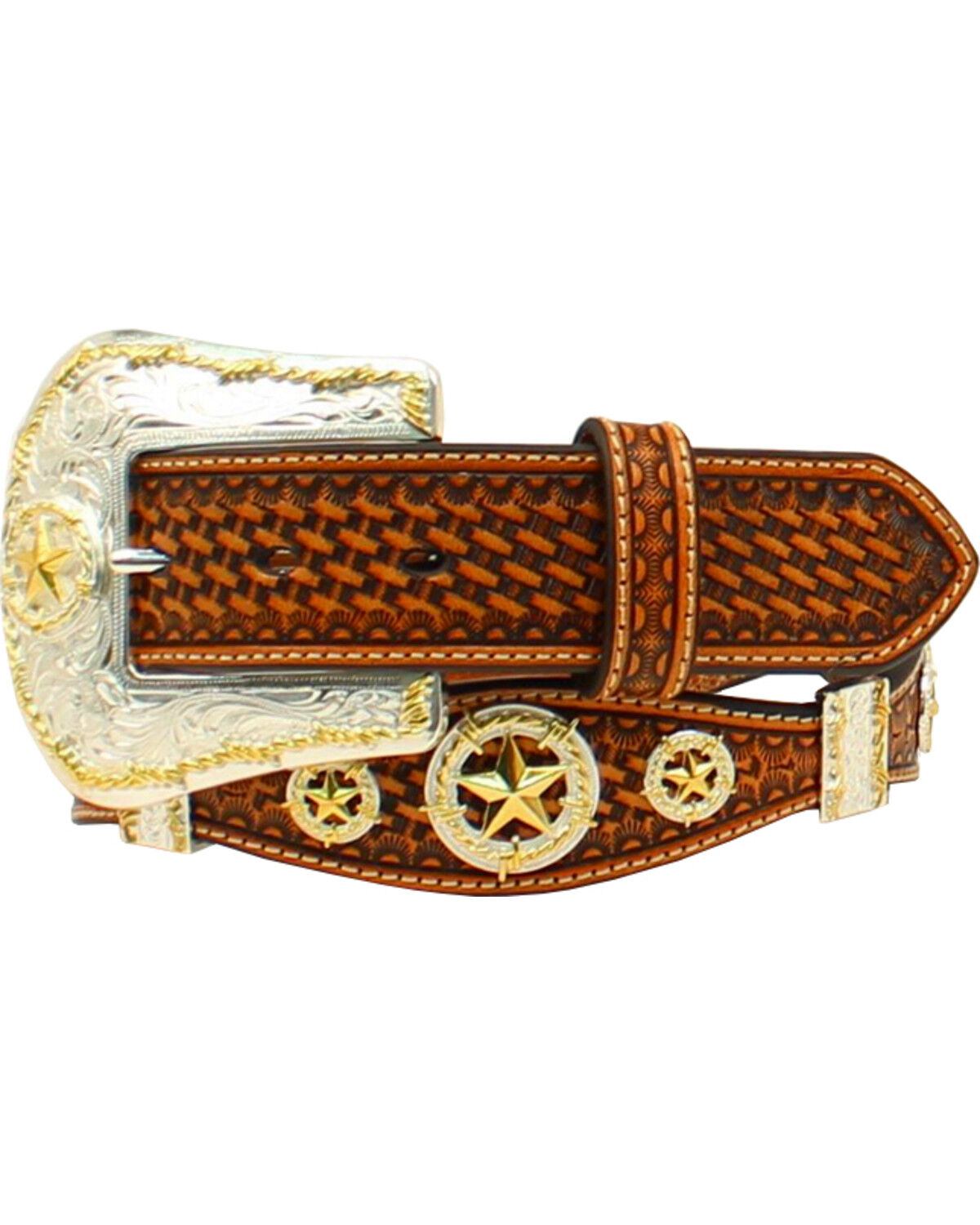
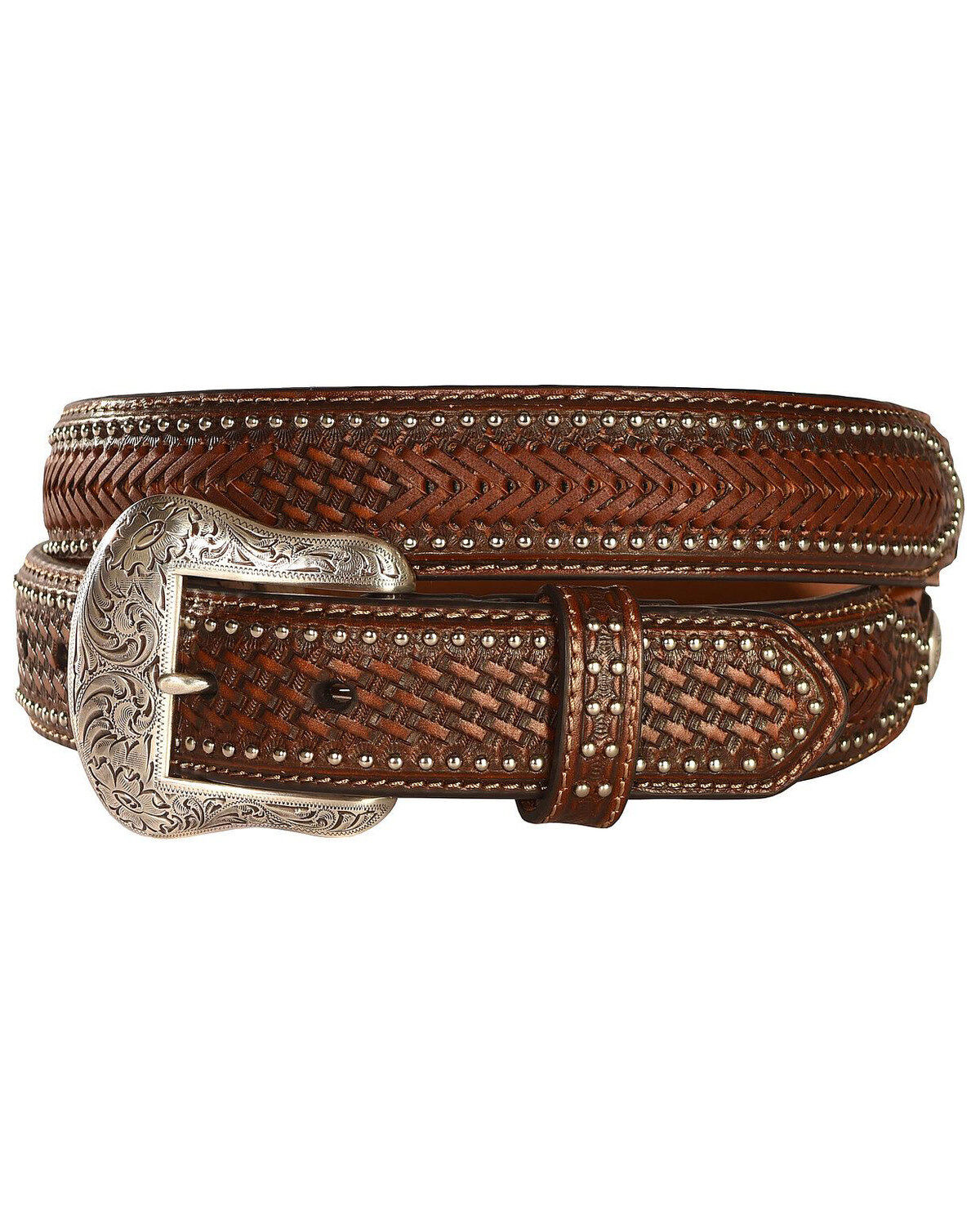
Leather Concho Belts

Shop leather concho belts for a western accent to wear with jeans or dresses. Browse available designs, and check each belt’s sizing information and concho details to find the right fit and look.

Read More

Shop Your Store: Shop Your Store: Find a Store

(Turn off Shop Your Store to see all items)

(Turn off Shop Your Store to see all items)

close
  • Recommended
  • Lowest Price
  • Highest Price
Skip pass products
  • Women's Ariat Embossed Concho Western Belt
    Original Price $78.99 $53.97
    32% Total Savings

End of products

Leather Concho Belts

Leather concho belts pair a leather strap with ornamental metal pieces called conchos. These pieces are often round or oval, with stamped, engraved, or raised details that give the belt its Western or Southwestern character. The leather provides the structure, while the conchos add texture and weight. Some designs use a few widely spaced accents; others place larger conchos close together for a more pronounced look. Material, fit, and hardware matter when choosing Concho Belts. Brown leather can show warm color variation, while black leather gives silver-tone hardware a sharper contrast. Tan straps and antiqued finishes offer other combinations, from understated to bold. Smooth leather keeps the focus on the hardware. Tooled or stamped leather adds pattern between the conchos, making the strap part of the design rather than just a backing. Leather type also affects feel and appearance. Full-grain leather retains the hide’s natural surface, including small variations in grain. Top-grain leather has undergone surface refinement for a more uniform finish. A label that says genuine leather identifies real leather but does not, by itself, establish a particular quality level. Thickness, flexibility, edge finishing, and hardware attachment matter alongside the material description. A substantial strap may feel firm at first, while a thinner one may drape more easily over clothing. Neither feel alone tells the whole story of durability. Conchos may be attached with rivets, screws, or loops, depending on the construction. Secure attachments reduce shifting, and smooth edges help prevent rough spots against clothing. Metal color is a finish description unless the material is specified; silver-tone hardware should not be assumed to be sterling silver. Together, these details influence how a belt feels, how it wears, and whether its construction matches its intended use.

Fit depends on where a leather concho belt sits and how it fastens. A belt worn through jeans loops needs a different fit from one resting lower on the hips over a dress. For many traditional buckle-and-hole leather belts, a size 2 to 3 inches larger than the labeled pants waist is a starting point, not a universal rule. The maker’s size chart and measuring method take priority because pants sizing and belt measurements vary. Many belts are measured from the buckle’s attachment point to the center hole, but that convention is not used for every design. Measuring a comfortable belt by the same method gives a more useful comparison than relying on the total strap length. For styles worn over clothing, the measurement needs to follow the intended wearing position with that clothing in place. Strap width matters, too. A narrow leather strap may pass through belt loops even when its conchos do not, so the widest part of the design needs enough clearance. Larger conchos also add weight and can press against the waist when sitting. Smooth backs and balanced spacing make a noticeable difference during a long dinner, concert, or day spent on the move. Buckle-and-hole closures offer fixed adjustment points, while some decorative designs use hooks, chains, or other fastening arrangements. Those differences affect both fit and function. Not every concho belt is intended to hold up jeans; some are primarily accessories worn over a shirt, skirt, or dress. With denim and a tucked shirt, a leather concho belt can provide the main detail at the waist. Over a plain dress, evenly spaced metalwork creates a defined line without requiring a large buckle. Hardware that sits close to the strap generally catches less on loose knits than raised edges or projecting details. The right proportions leave room to move and keep the belt from competing with every other accessory.

Regular wear gives leather concho belts character, but wear and damage are not the same thing. Gentle creasing and gradual color changes can be normal, depending on the leather and finish. Cracking, loose hardware, torn holes, or separating layers need attention rather than being treated as part of the patina. Care starts with the material instructions because smooth, suede, distressed, and coated leathers do not all respond to the same treatment. For many smooth leather straps, a soft, dry cloth removes surface dust before it works into the grain or collects around the conchos. Any cleaner or conditioner should be intended for that leather type and tested in a hidden area first. Too much conditioner can darken the strap, soften it excessively, or leave residue near the hardware. Metal polish requires equal care. A formula meant for solid metal can damage plating, remove an intentionally darkened finish, or stain nearby leather. A soft cloth is often the safest starting point, with further cleaning based on the stated hardware material and care directions. If the belt gets damp, it should dry naturally away from direct heat. Storage also matters: laying it flat or hanging it without a tight fold helps avoid sharp bends and pressure against the conchos. Rough surfaces can scratch raised metalwork, while repeated pulling at one hole can stretch the leather. Using the closure as intended and checking accessible screw attachments when permitted by the maker can help prevent avoidable damage. These practical details matter for frequent wear and for a belt chosen as a gift. Someone who regularly wears jeans, boots, or simple dresses may appreciate leather concho detailing that works with familiar clothing. For a birthday, anniversary, or personal milestone, the most useful choice reflects the recipient’s usual leather colors, preferred metal finish, and wearing position. Accurate sizing and a comfortable weight make the belt easier to wear, not just admire.
Read More

FAQs