Hand Tooled Leather Belts

Shop hand tooled leather belts for detailed leatherwork that pairs naturally with jeans and western wear. Compare designs to find your preferred look, and check each belt’s sizing and buckle details before choosing.

Shop Your Store: Shop Your Store: Find a Store

(Turn off Shop Your Store to see all items)

(Turn off Shop Your Store to see all items)

close
  • Recommended
  • Lowest Price
  • Highest Price
Skip pass products

End of products

Hand Tooled Leather Belts

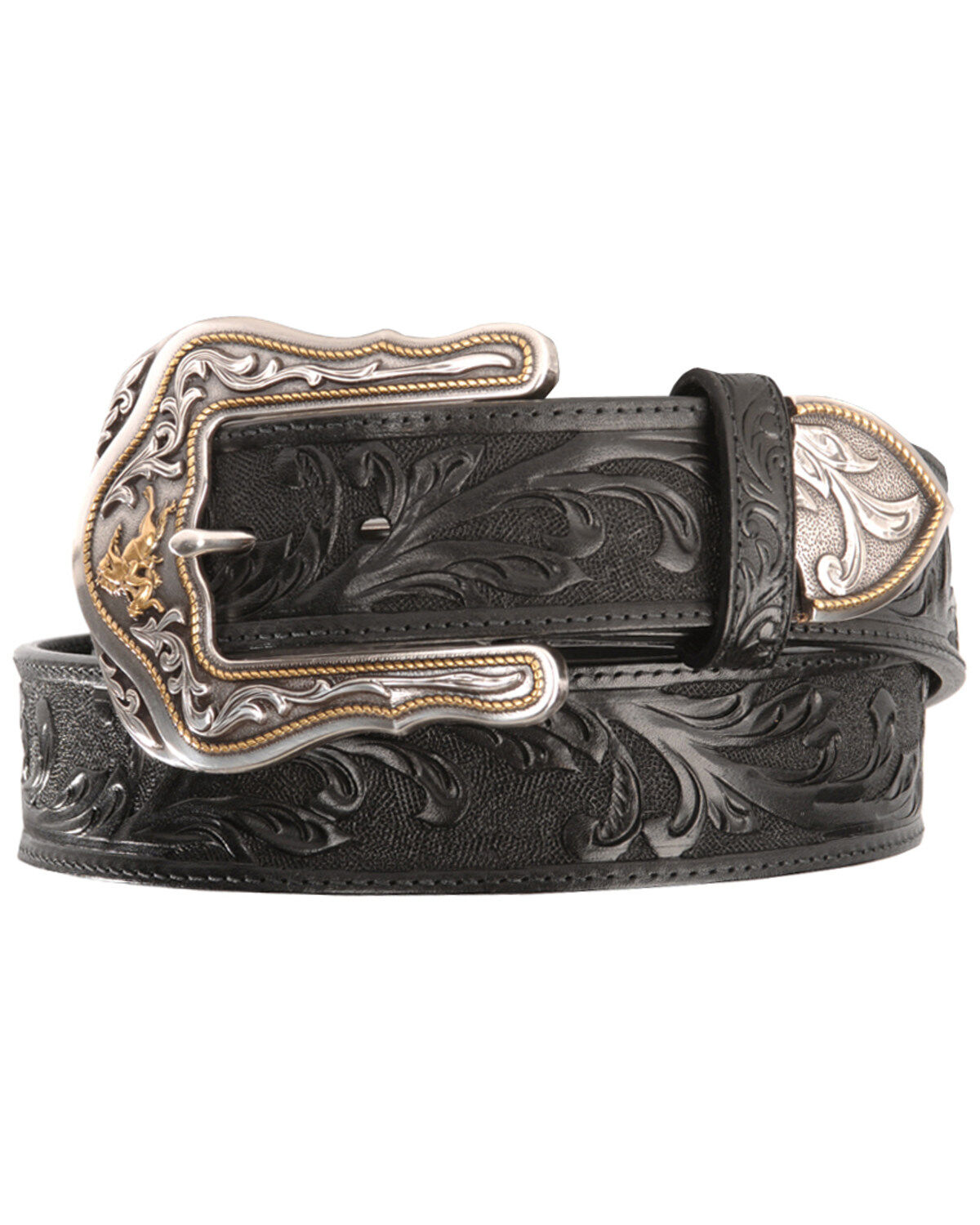
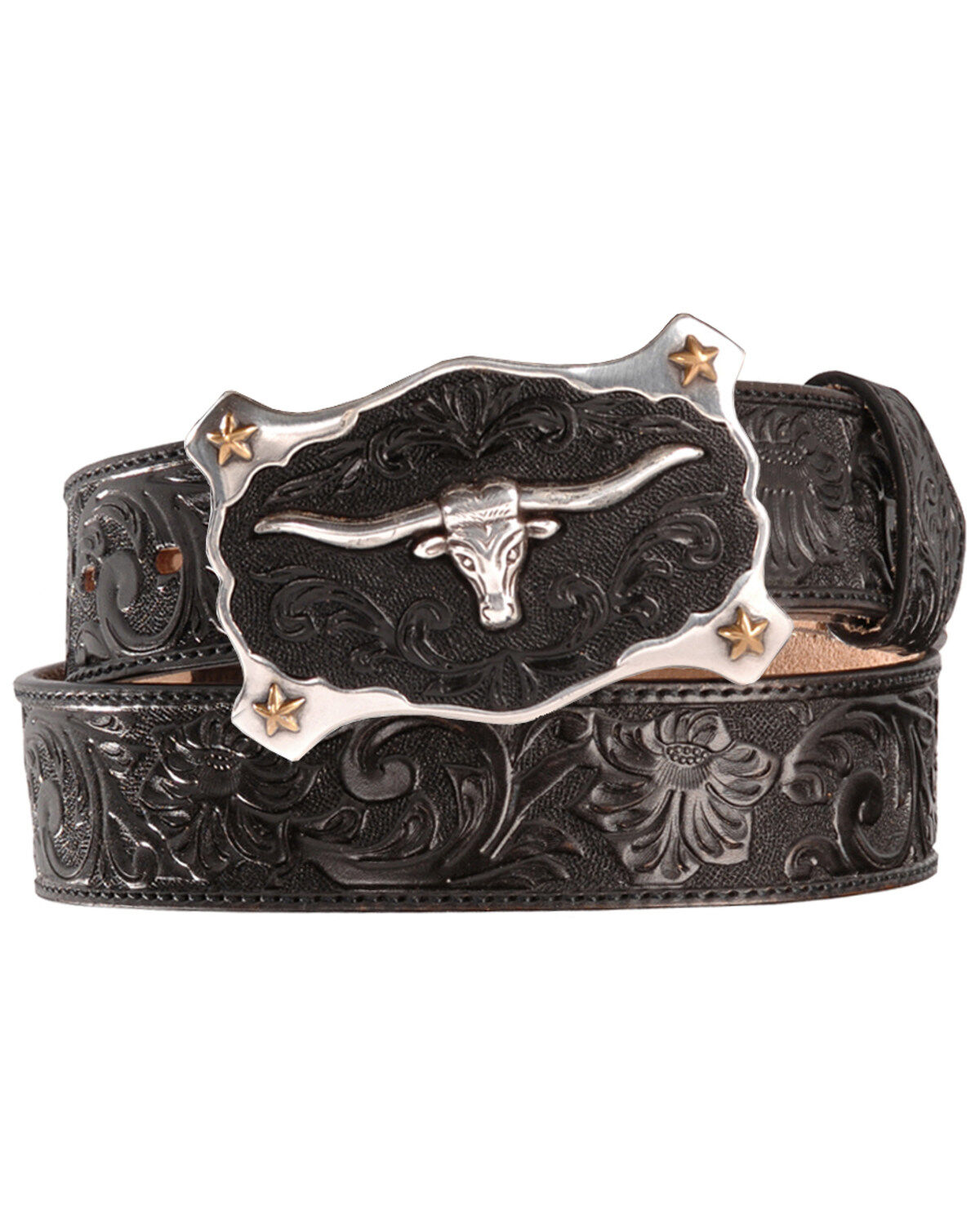
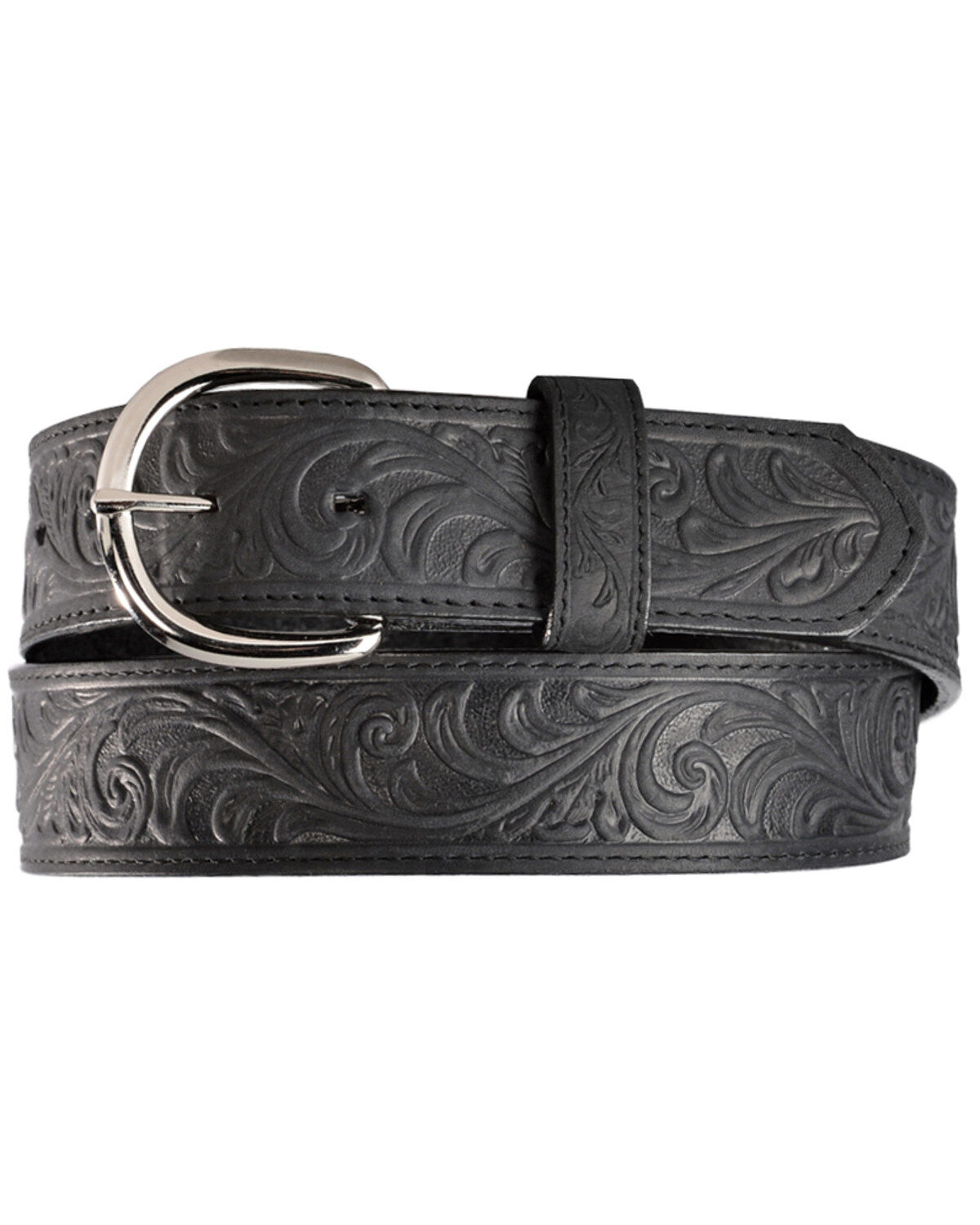
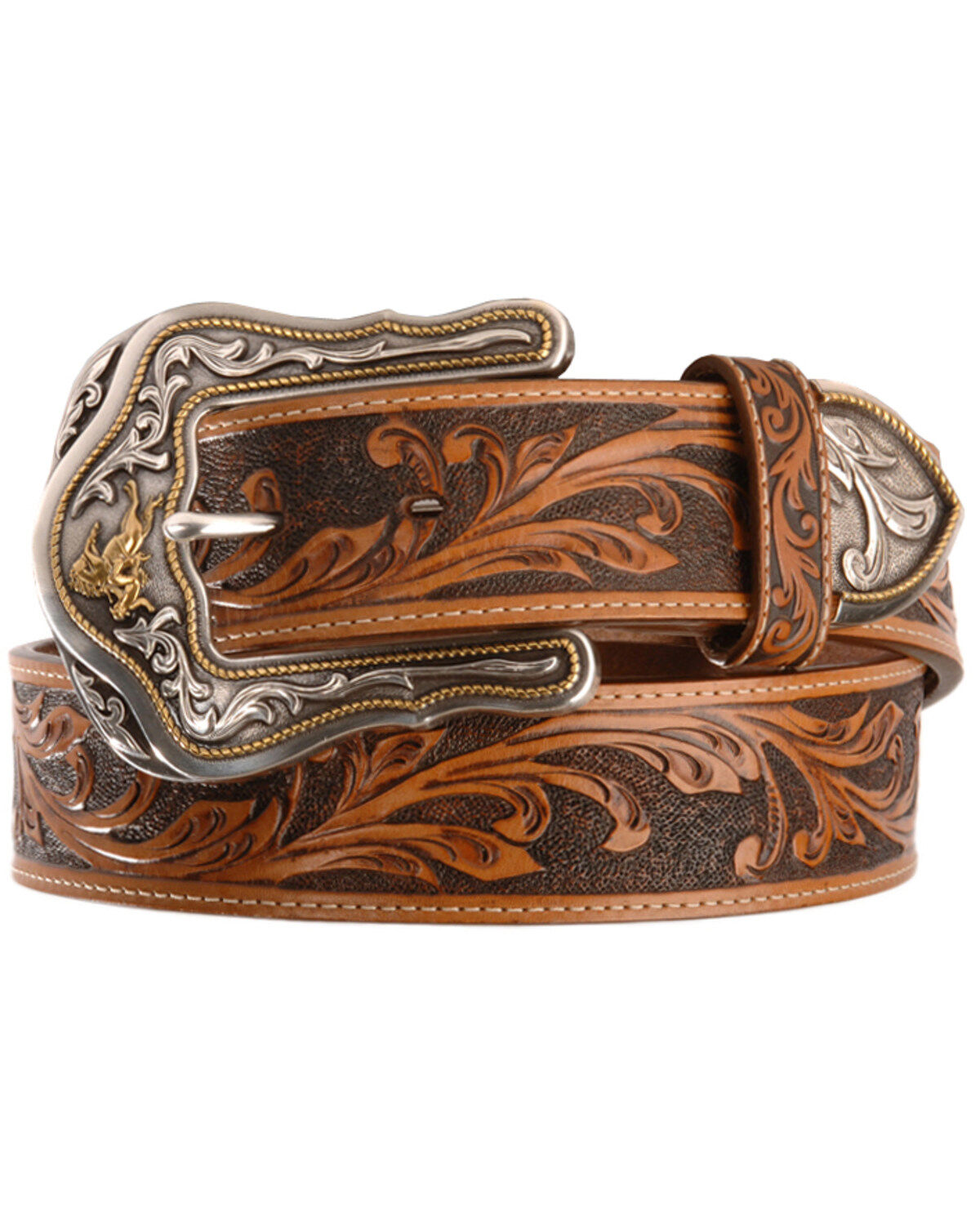
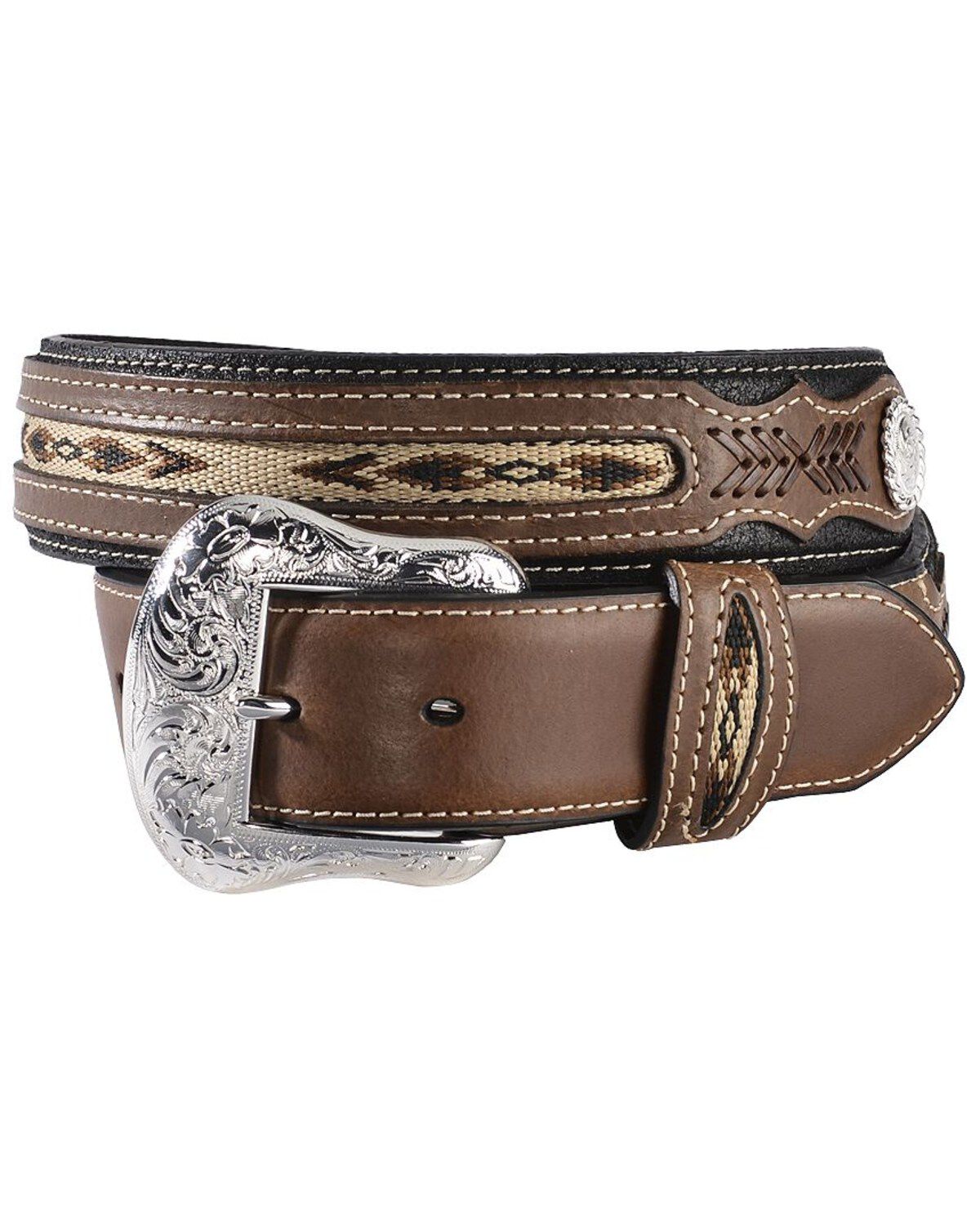
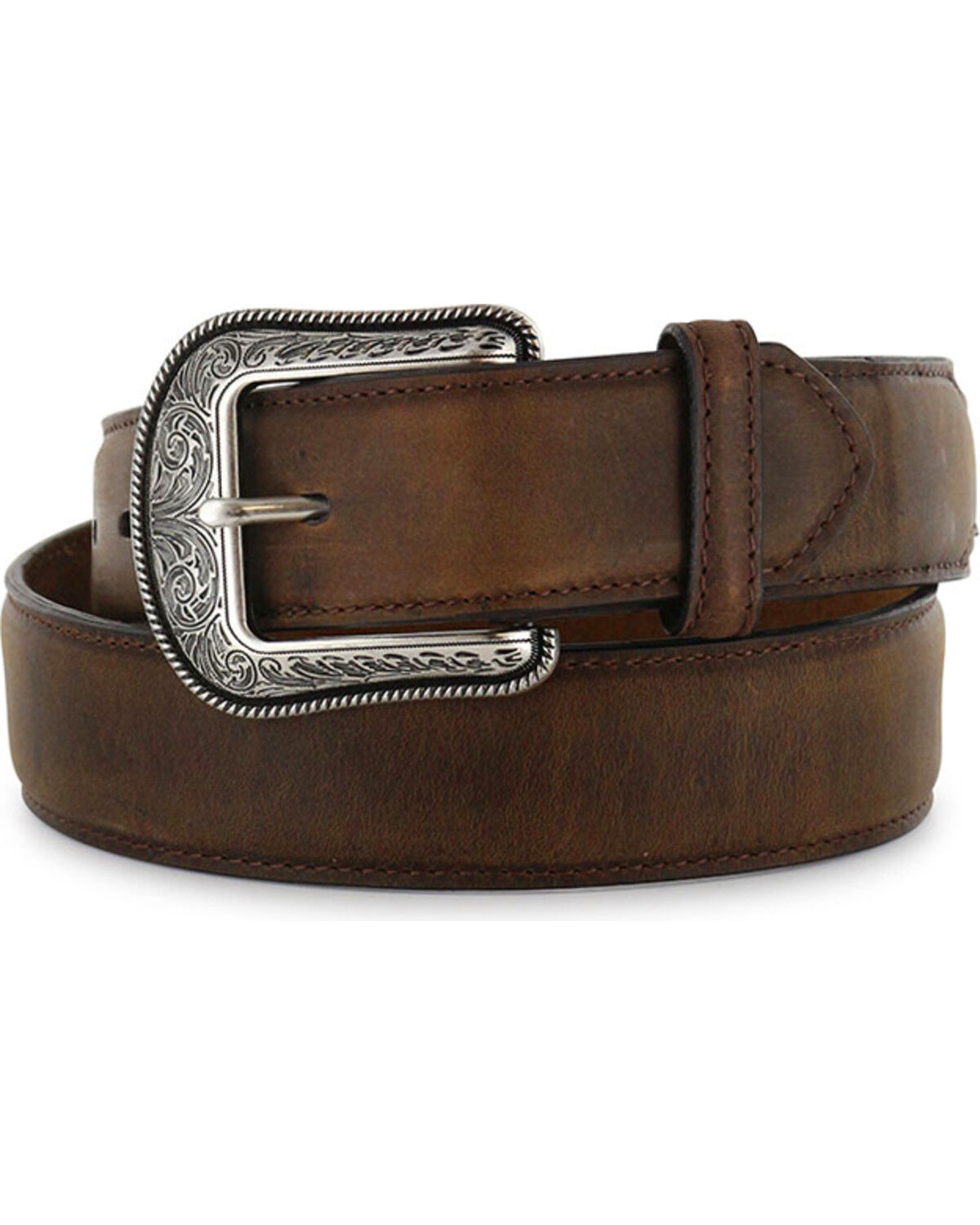
Hand-tooled leather belts combine a practical leather strap with patterns worked into the surface by hand. Leatherworkers use knives, stamps, and shaping tools to create depth, outline flowers, form scrolling leaves, or build repeating basketweave patterns. Floral tooling often has flowing lines and raised detail, while basketweave creates a more regular, textured surface. Sheridan-style work is known for fine floral detail and closely arranged scrolls. These techniques give a belt dimension that a flat printed pattern does not have. Small differences in tool placement can be part of handwork, although clean edges, balanced patterns, and consistent construction still matter. The leather underneath the pattern is just as important as the design. Firm vegetable-tanned leather is commonly used for traditional tooling because it accepts impressions well when properly prepared. Full-grain leather retains the hide’s outer grain, while top-grain leather has had some surface refinement; either description should be considered alongside thickness, finish, and overall construction. A full-grain label alone does not establish how deeply a belt is tooled or how its hardware is attached. Some belts use a single substantial strap, while others have a lining or multiple layers. Smooth edges and a finished underside help the belt move through belt loops without unnecessary friction. Even stitching helps secure layered construction and gives the border a clean outline. Natural, tan, brown, and black finishes each bring out tooling differently. Lighter finishes can make carved lines easy to see, while darker finishes tend to give the pattern a quieter appearance. An antiqued finish can emphasize recessed areas and add contrast around leaves, petals, and borders. With hand-tooled leather belts, the strongest design is not always the busiest one. A narrow border or simple basketweave pattern can provide enough texture for everyday jeans, while deeper floral work creates a more noticeable accent. The choice comes down to how much detail suits the clothing and how the belt will be worn.

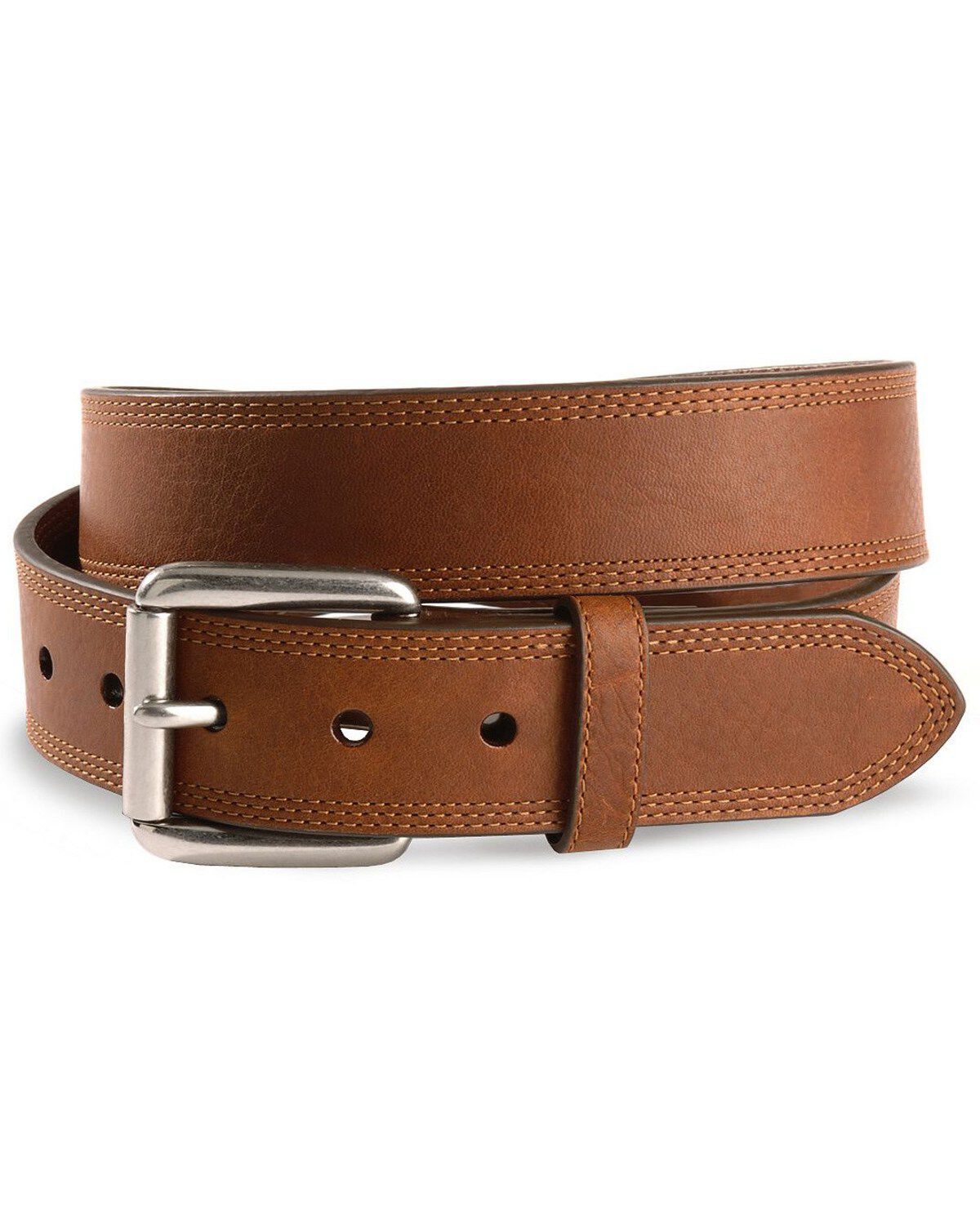
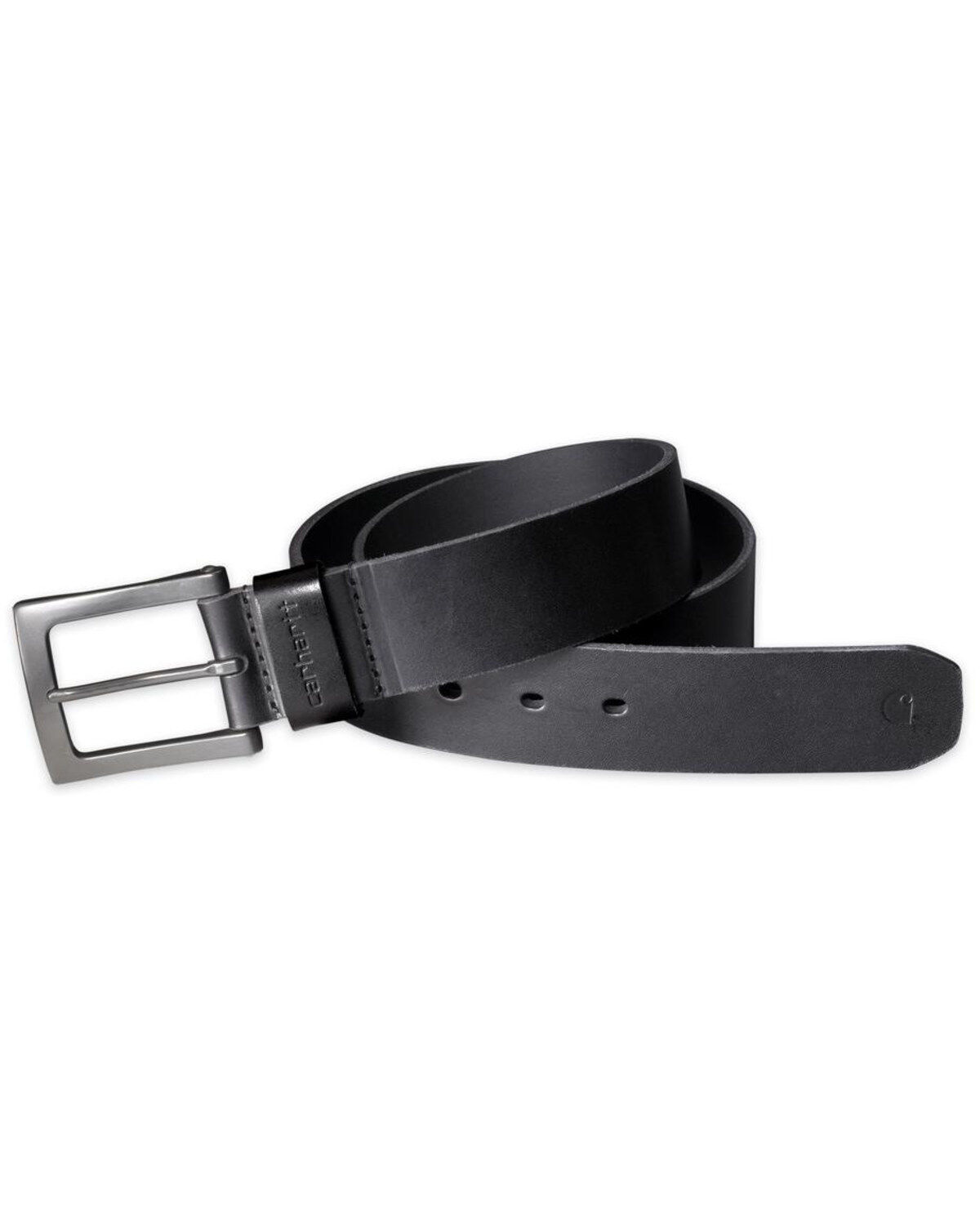
Fit determines whether that craftsmanship works comfortably throughout the day. A belt should hold the waistband securely without needing to be pulled tight enough to bunch the fabric. The right length leaves enough strap to pass through the keeper without leaving an excessive tail. Pants size is a starting point, not a universal belt measurement, because waistband height, clothing thickness, and the maker’s sizing method can change the fit. Measuring a belt that already fits provides a useful comparison, particularly when the measurement is checked against the stated sizing method. Room on either side of the most-used hole allows for normal adjustments. Width matters just as much as length. A belt around 1 1/2 inches wide is common with jeans, but the actual belt loops should determine what passes through comfortably. Narrower straps can suit smaller loops and a less prominent look. Wider straps need enough clearance to move without scraping the edges or forcing the leather to fold. Thickness also affects comfort, especially when sitting, bending, or wearing a tucked-in shirt. A firm leather belt may soften with use, but it should not depend on excessive stretching to fit properly. Buckle size and shape influence how the belt sits against the body. A larger buckle makes a stronger visual statement, while a smaller buckle may feel less intrusive during long periods behind the wheel or at a desk. Removable buckle attachments can provide flexibility, but replacement hardware must match the strap width and attachment style. For everyday wear, hand-tooled leather belts pair naturally with denim, western shirts, and leather boots. A restrained pattern also works with plain shirts and clean-cut trousers when the belt width suits the loops. Matching every leather finish exactly is not necessary; similar tones usually create a more consistent appearance. Heavily tooled leather often stands out best against simpler clothing, where its depth and texture remain visible rather than competing with several other patterns. For another approach to leather detail, Engraved Leather Belts offer a related option to consider.

Regular care helps preserve both the strap and the detail that makes a hand-tooled belt distinctive. Dust can settle into recessed patterns, so a soft brush is useful for lifting it out before wiping the surface with a clean cloth. Grit left around the buckle holes or along the edges can contribute to wear as the belt moves. Cleaning should stay gentle, with products suited to the leather and its finish. A small test on an inconspicuous area helps reveal whether a cleaner or conditioner changes the color. Heavy applications can darken leather, leave residue in the tooling, or make a firm strap softer than intended. Conditioner is best used sparingly and according to the leather-care directions rather than applied whenever the belt looks dusty. If the leather gets wet, blot away excess moisture and allow it to dry naturally away from direct heat. A dryer, heater, or strong sun can dry the strap unevenly and leave it stiff. Hanging a belt straight or storing it in a loose coil helps avoid sharp bends that strain the same spot repeatedly. Hardware deserves attention, too. Loose screws, worn stitching, and cracks near frequently used holes are worth addressing before the damage spreads. Normal creasing around the buckle and gradual color changes can develop with wear, but deep cracking and separating layers call for closer inspection. Intended use should shape expectations: a detailed leather belt suits everyday clothing and occasions that call for a finished appearance, but it is not a substitute for equipment designed to support heavy tools or safety gear. As a gift, it works well for someone who wears jeans, appreciates leatherwork, or prefers practical accessories with visible craftsmanship. Knowing the recipient’s belt size, preferred width, and usual buckle style makes the choice more personal and more useful. A balanced pattern, sound construction, and comfortable fit give the belt a place in regular wear rather than leaving it reserved for a single outfit.

FAQs