FR Sweatshirts

Shop FR sweatshirts for a flame-resistant layer in your workwear rotation. Compare available styles and check each sweatshirt’s listed safety ratings and care instructions to find an option that meets your job’s requirements.

Shop Your Store: Shop Your Store: Find a Store

(Turn off Shop Your Store to see all items)

(Turn off Shop Your Store to see all items)

close
  • Recommended
  • Lowest Price
  • Highest Price
Skip pass products
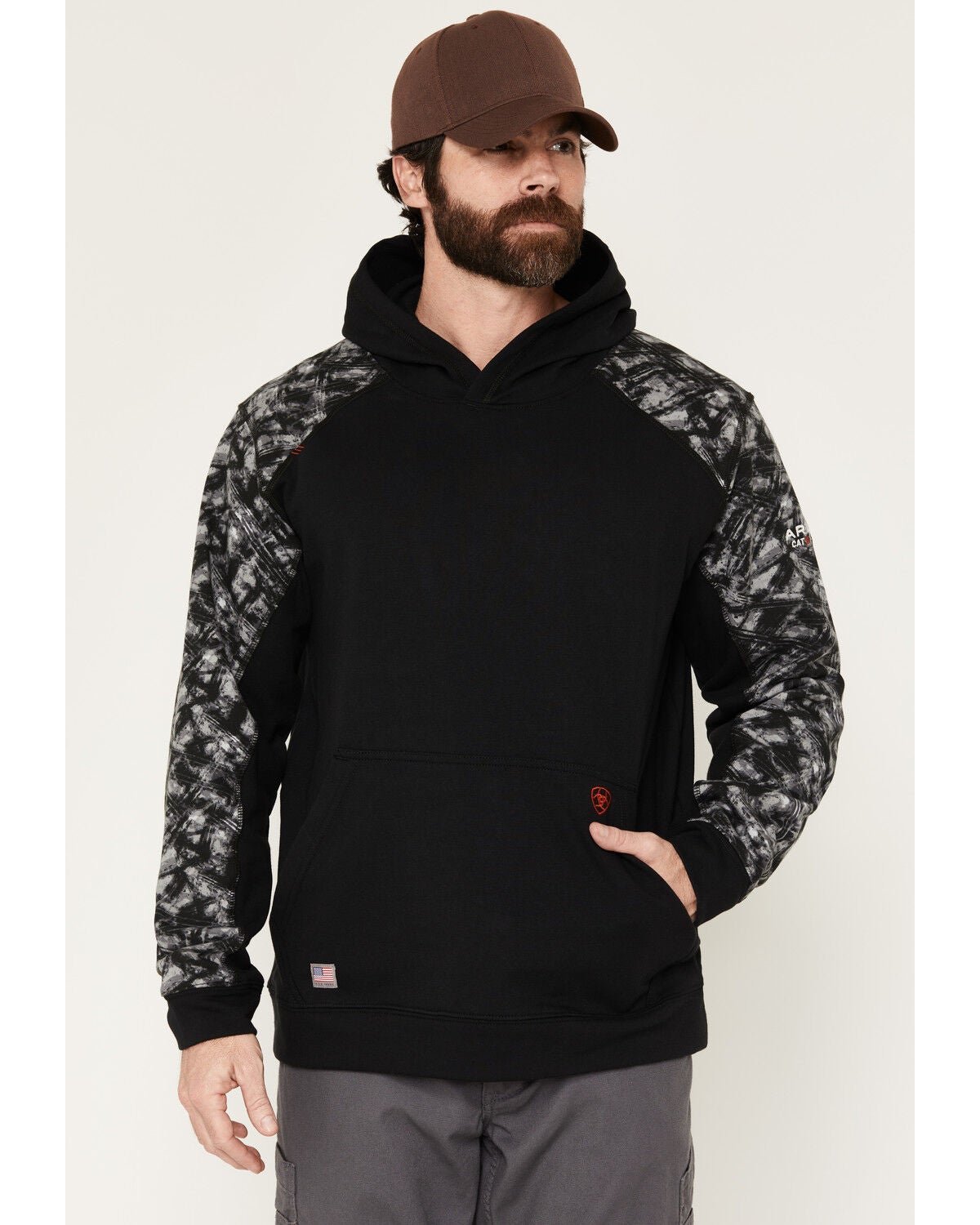
  • Men's Ariat FR DuraStretch Patriot Camo Print Hooded Sweatshirt
    Original Price $219.99 $152.97
    30% Total Savings

End of products

FR Sweatshirts

Flame-resistant sweatshirts combine the familiar feel of a work sweatshirt with protection designed for specific workplace hazards. Often called FR sweatshirts, these garments are made to resist ignition and stop burning after the ignition source is removed, helping reduce burn injury from brief thermal exposure. They are not fireproof, and their protection depends on the fabric, garment construction, condition, and correct use. Electrical workers, utility crews, refinery personnel, and workers in other industrial settings may wear them when a job requires protective clothing for electric arc or flash fire exposure. Those hazards call for different qualifications, so the garment label matters more than its appearance. An arc-rated sweatshirt has been tested for exposure to an electric arc and carries an arc rating expressed in calories per square centimeter. That rating must meet the protection level identified by the employer’s hazard assessment. Flame resistance alone does not establish an arc rating. NFPA 2112 certification addresses garments intended to protect against short-duration thermal exposure from fire, while NFPA 70E addresses electrical safety practices, including the selection and use of protective clothing. A garment described as suitable for electrical work still needs the appropriate arc rating; NFPA 70E is not a garment certification. When an employer uses the arc flash protective equipment category method, a Category 2 clothing system requires a minimum arc rating of 8 calories per square centimeter. The category and rating on a label are useful only when they match the job’s requirements. Some workplaces require protection against both arc flash and flash fire, making both qualifications relevant. A sweatshirt worn around energized equipment or on a site with a flash fire hazard serves a different purpose than an ordinary sweatshirt worn for everyday comfort. The right choice starts with the required protection, then considers the cut and features that suit the work. Familiar crewneck, pullover, and zip-front designs can provide practical options without changing that order of priorities.

Materials influence how an FR sweatshirt feels, moves, and holds up through repeated wear. Flame-resistant fabrics may use treated cotton, fibers with built-in flame resistance, or blends engineered to meet protective performance requirements. Cotton-rich fabrics often offer a familiar hand, while other blends may provide stretch, moisture management, or resistance to abrasion. An ordinary cotton sweatshirt is not a substitute for a tested protective garment, and an ordinary synthetic fleece should not be assumed suitable for hazardous work. The finished garment’s labeling establishes its intended protection, not a fiber name alone. Fleece interiors and brushed surfaces can feel comfortable against the body, while fabric weight affects bulk and how easily the sweatshirt fits with other required clothing. Heavier fabric does not automatically mean a higher arc rating. Fit matters throughout a shift, especially when reaching into a panel, climbing a ladder, or carrying equipment. A useful work fit allows those movements without pulling the hem above the waistband or exposing the wrists. Enough room through the shoulders and sleeves supports movement, but excessive loose fabric can interfere with tools or create a snag hazard around machinery. Crewneck sweatshirts offer a simple neckline and fewer loose components. Quarter-zip and full-zip designs can make dressing easier, though closures must be secured as required for the garment’s protection. Hooded FR sweatshirts need to fit the workplace rules and remain compatible with required head protection. A hood is not a replacement for arc-rated head or face protection, and drawstrings may be unsuitable around moving equipment. Pockets, ribbed cuffs, and reinforced seams can add everyday usefulness, provided their design does not interfere with the task or required protective equipment. Layering also needs attention. Arc ratings cannot simply be added together to establish the rating of an outfit; a tested clothing system provides that information. Undershirts and outer layers must meet the employer’s requirements, including restrictions on fabrics that can melt. The most practical sweatshirt is one that works with the entire required outfit, from the base layer to the outer garment.

Care is part of keeping flame-resistant workwear ready for use. The care label identifies the washing, drying, and handling practices approved for that garment, and those instructions take priority over a general laundry routine. Many FR garments prohibit chlorine bleach, fabric softeners, or starch because these products can affect protective performance or leave unwanted residue. Approved detergent, proper rinsing, and the specified drying method help maintain the garment without introducing avoidable wear. Fabric treatments or repairs should not be added unless the manufacturer permits them. Dirt alone can make a sweatshirt uncomfortable, but oil, grease, fuel, and other combustible contamination can create a more serious problem by burning on the fabric. A contaminated garment needs the approved cleaning process before returning to service; contamination that cannot be removed may require replacement. Regular inspection is equally important. Holes, torn seams, damaged closures, and areas worn thin can compromise coverage, even when the rest of the sweatshirt still looks sound. Repairs need suitable materials and an approved method rather than an ordinary patch or household thread. Ribbed cuffs should still hold their shape, and the hem should provide coverage during normal work movements. Durable construction supports repeated use, but no sweatshirt has a service life determined by appearance alone. The manufacturer’s guidance and the employer’s clothing program establish when it needs repair or replacement. For everyday clothing beyond protective workwear, Adult Sweatshirts includes the broader sweatshirt category; only garments specifically labeled for the required hazard belong in a protective clothing system. An FR sweatshirt can also be a practical gift for someone whose work requires one, provided the required rating, permitted style, and size are known beforehand. Whether worn for a full shift or as one part of an approved layered outfit, flame-resistant sweatshirts earn their place through dependable coverage, workable fit, and care that preserves their intended protection. Those details matter each time the garment goes back to work.

FAQs