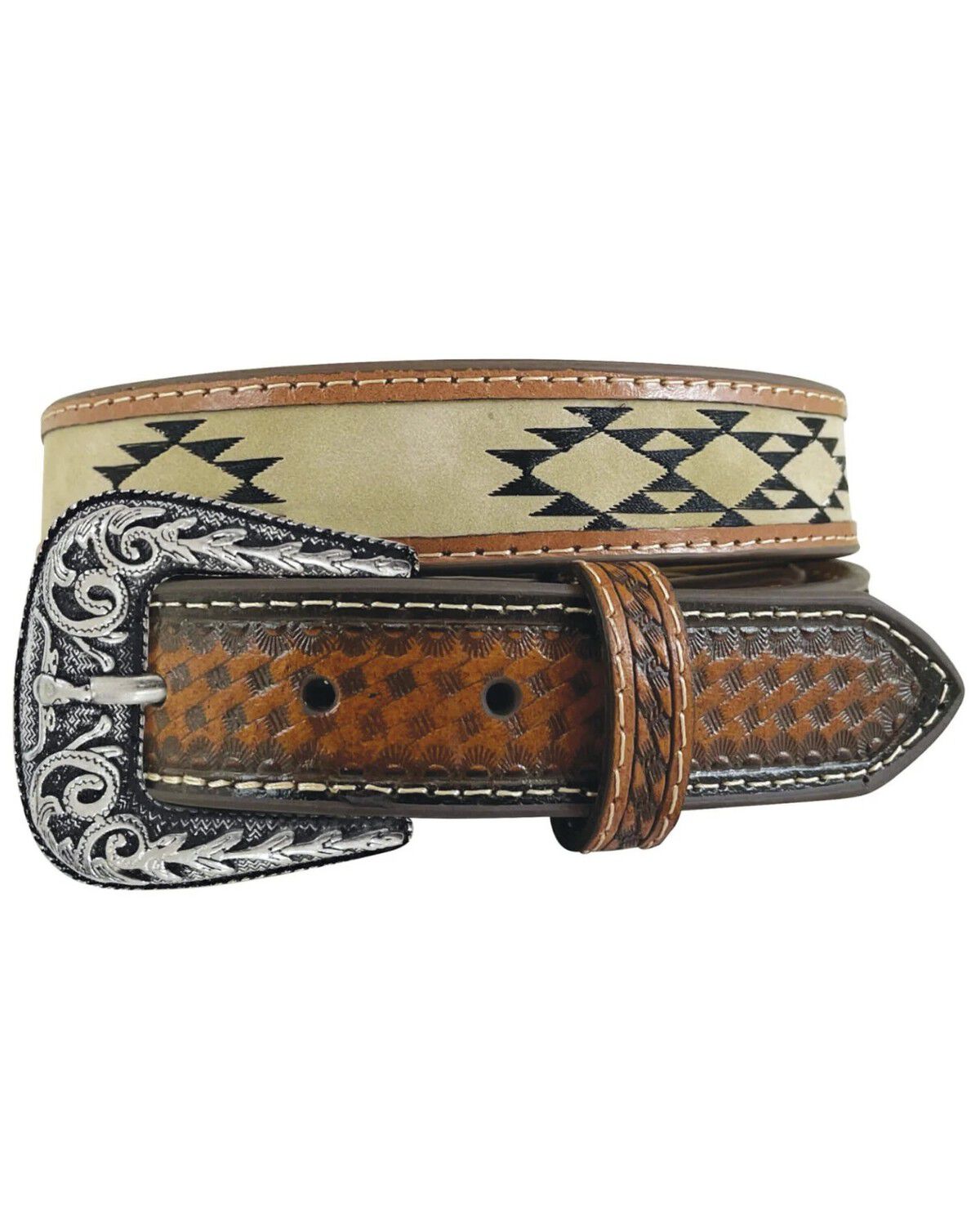
Gear up for a new school year with back to school western belts that add a touch of rugged style to any outfit. Whether you're heading to class or showing... off your western spirit at after-school events, these belts are designed to complement jeans, skirts, and more. Find the perfect accessory to complete your look and make a statement from the first bell to the last. Explore our selection of back to school western belts and start the year off with confidence and flair.
Read more
Back To School Western Belts
Gear up for a new school year with back to school western belts that add a touch of rugged style to any outfit. Whether you're heading to class or showing... off your western spirit at after-school events, these belts are designed to complement jeans, skirts, and more. Find the perfect accessory to complete your look and make a statement from the first bell to the last. Explore our selection of back to school western belts and start the year off with confidence and flair.
Back-to-school western belts give everyday school clothes a practical finishing touch, holding jeans in place while adding the texture of leather, the detail of tooling, or the contrast of a metal buckle. Their Western character comes from familiar leatherworking details: stamped borders, floral patterns, basketweave textures, contrast stitching, and shaped buckle designs. A plain brown or black strap keeps that character understated, while deeper tooling and metal accents make the belt more noticeable against a tucked-in shirt. For students who wear denim throughout the school week, Student's Western Belts can connect familiar jeans, button-down shirts, and cowboy boots without making the outfit feel dressed up. Leather is a common choice because it offers structure and can develop a more personal appearance with repeated wear. Full-grain leather retains the outer grain, including natural markings, while other leather constructions may have a smoother, more uniform finish. The material label matters, but so do strap thickness, flexibility, edge finishing, and the quality of the stitching. A substantial belt should still bend comfortably around the waist rather than feel rigid against the body. Nonleather materials offer a different feel and care routine, so their construction deserves the same attention as their appearance. Color also changes how a belt works with a school wardrobe. Medium brown shows tooling clearly and pairs easily with blue denim. Dark brown and black give patterned shirts and detailed boots a quieter backdrop. Matching every shade exactly is not necessary; similar tones usually create a balanced look. For classrooms, assemblies, and ordinary days on campus, a simple strap and modest buckle often have the broadest use. More detailed designs can express individual taste while still serving the same everyday purpose. School dress requirements remain part of that choice, especially where uniforms, tucked shirts, or limits on accessories apply. A belt that fits those requirements earns its place through regular use, not just appearance.
Fit determines how well a western belt handles a full school day. The right length leaves enough strap to pass securely through the buckle and nearby belt loop without creating a long tail that hangs down or folds awkwardly. Belt sizing does not always match pants sizing, and youth and adult measurements can differ between makers. A reliable reference is a belt that already fits, measured from the buckle attachment point to the hole used most often, then compared with the maker’s sizing instructions. Measuring around the waist where the pants actually sit can also help when those instructions call for a body measurement. A student who wears jeans lower on the hips may need a different belt length than someone wearing trousers at the natural waist. Multiple adjustment holes provide room to fine-tune the fit, but buying far too much extra length can leave an uncomfortable amount of strap to manage. Width matters just as much. Belts around 1 to 1.5 inches wide are common everyday options, though smaller children’s loops and some uniform trousers may require a narrower strap. The belt needs to pass through every loop easily, without stretching the fabric or bunching the waistband. Buckle size also affects comfort during long stretches at a desk, in a car, or on a school bus. A broad plate buckle makes a stronger visual statement, but a lower-profile buckle may sit more comfortably when bending forward or carrying a backpack with a waist strap. Smooth edges and hardware that fastens securely are useful details for younger students managing their own clothes. Removable buckles allow changes in style when the belt construction supports them; stitched-in buckles stay part of the original design. For a gift, an existing belt measurement and a clear sense of the recipient’s usual clothing are more useful than an age alone. The result should feel familiar enough for everyday wear.
Durability comes from the whole belt, not just the leather or buckle viewed separately. Even stitching, firmly attached hardware, smooth edges, and a secure buckle connection all matter when an accessory gets worn several days a week. High-friction areas deserve particular attention: the adjustment holes, the point where the strap bends around the buckle, and the edges that pass through belt loops. Thick material is not automatically the best choice for every student. A smaller waist may be more comfortable with a lighter, more flexible strap, while a broader belt can suit larger loops and heavier denim. Intended use helps narrow those differences. A belt worn mainly with school uniforms has different demands than one moving between class, family gatherings, and time spent helping with chores. Western styling can work across those settings, but detailed metal accents and large buckles may be less practical where they could catch or press against equipment. Any school, sports, or activity rules take priority. Routine care helps preserve both appearance and function. Dust and surface dirt can usually be removed from leather with a soft cloth; more involved cleaning should follow the maker’s directions for that particular finish. A lightly damp cloth may suit some leathers, but soaking, machine washing, and direct heat can damage the strap. Leather conditioner should be compatible with the material and tested in a discreet spot, since some treatments darken the color or change the finish. Suede, hair-on leather, coated surfaces, and nonleather straps can require different methods. Buckles and metal accents need gentle cleaning suited to their finish rather than harsh polishing compounds. Letting a damp belt dry naturally and storing it without a tight fold helps avoid unnecessary stress. With the right proportions and straightforward care, a western belt can remain useful beyond the first days of school, bringing the same dependable fit to class, weekend plans, and occasions that call for a tucked-in shirt.